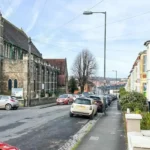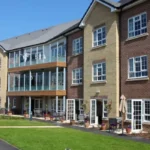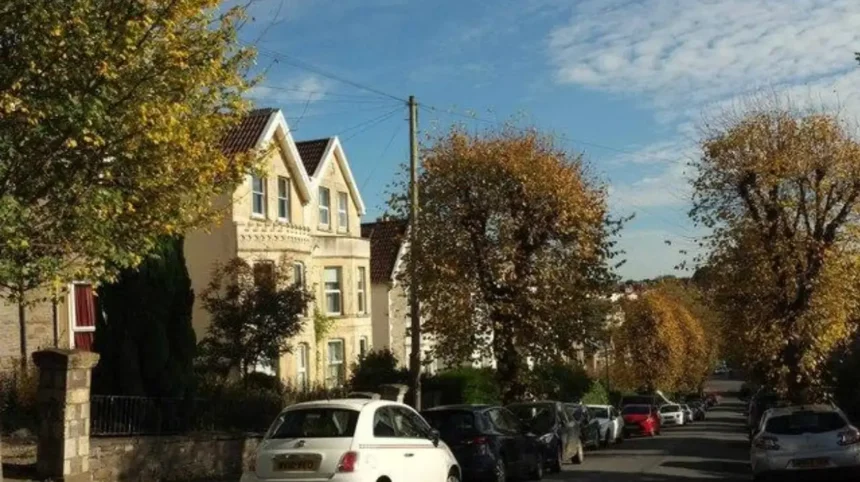
Bishopston is a well-established residential neighbourhood in north Bristol, centred on the Gloucester Road corridor and surrounded by areas including Redland, St Andrews, Horfield and Ashley Down. It is known for Victorian housing, independent businesses, restaurants, cafés, community facilities and convenient access to central Bristol.
- Why do people choose to live in Bishopston?
- What is Bishopston known for historically?
- What types of homes are available in Bishopston?
- How does Gloucester Road affect everyday life in Bishopston?
- Is Bishopston a good area for families?
- What green spaces are available near Bishopston?
- How easy is it to travel from Bishopston?
- What is shopping and dining like in Bishopston?
- What is the community atmosphere like in Bishopston?
- What are the main disadvantages of living in Bishopston?
- What should you check before moving to Bishopston?
- How does Bishopston compare with nearby Bristol neighbourhoods?
- Is Bishopston a good place to live in Bristol?
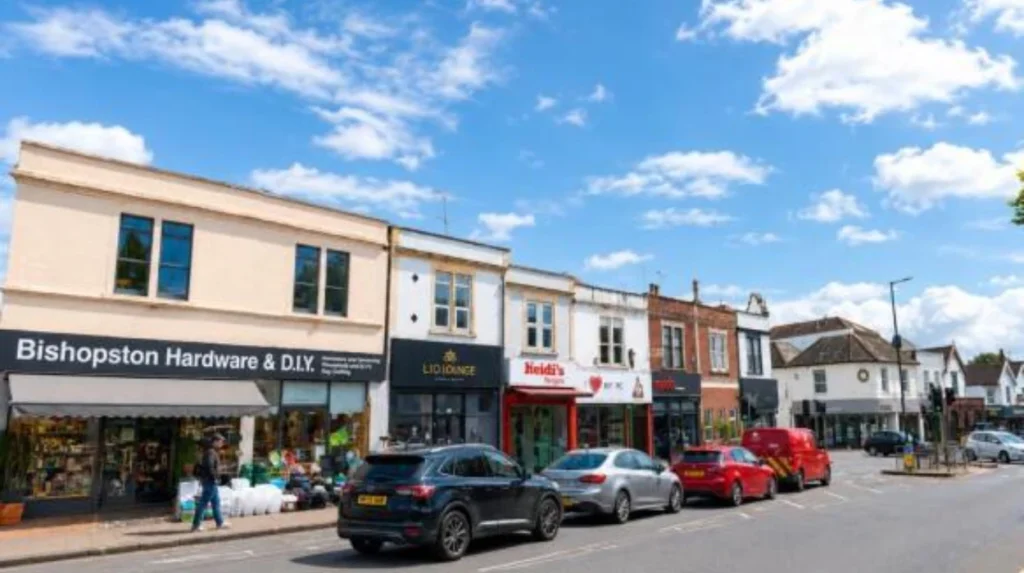
The area combines established residential streets with one of Bristol’s strongest independent shopping destinations. Gloucester Road runs through Bishopston as part of a longer commercial corridor extending towards Stokes Croft and Horfield. Visit Bristol describes Gloucester Road as one of Europe’s longest streets of independent shops, with cafés, restaurants, delis, vintage retailers, food shops and other local businesses.
Bishopston is also a significant residential area. The modern Bishopston and Ashley Down ward recorded 13,304 residents in the 2021 Census. The ward included 2,288 people aged 15 and under, 2,436 aged 16 to 24, 2,593 aged 25 to 34, 2,993 aged 35 to 49, 1,749 aged 50 to 64 and 1,245 aged 65 or over. The ward boundary is larger than Bishopston itself, so these figures should not be treated as a precise population count for the neighbourhood.
Living in Bishopston therefore involves more than choosing a property. The neighbourhood offers access to employment, schools, independent retail, food, public transport, green space and Bristol’s wider cultural network. Its Victorian housing stock and busy commercial road also create practical considerations involving parking, traffic, property maintenance and planning controls.
Why do people choose to live in Bishopston?
Bishopston attracts residents through its central north Bristol location, Victorian residential streets, independent Gloucester Road businesses, schools, community facilities and access to parks. It combines neighbourhood services with relatively quick connections to central Bristol, making everyday living highly convenient.
Bishopston occupies an important position between central Bristol and the northern suburbs. Gloucester Road provides the main commercial spine, while residential streets branch east and west from the road. Redland lies to the south, Horfield to the north, Ashley Down to the east and parts of St Andrews sit closer to the city centre.
The neighbourhood has a strong local-service economy. Residents can access food shops, cafés, restaurants, pubs, specialist retailers, pharmacies, professional services and other businesses without travelling into Bristol city centre for every routine purchase.
The commercial character is particularly strong along Gloucester Road. Visit Bristol identifies the road as a major independent shopping destination, with businesses ranging from vintage retailers and delis to cafés, restaurants and specialist food shops.
Bishopston also benefits from its position within Bristol’s wider north-central urban area. Residents can reach neighbouring districts such as Redland, Cotham, Horfield and St Andrews on foot or by local transport, while central Bristol is relatively close compared with more distant suburban districts.
The area is therefore suitable for people who value access to local services. It also attracts households seeking established housing, access to education and a strong concentration of everyday amenities.
What is Bishopston known for historically?
Bishopston developed substantially during Bristol’s Victorian expansion, when agricultural land and smallholdings were replaced by streets of terraced housing. The Gloucester Road corridor became increasingly urban during the nineteenth century, establishing much of the neighbourhood’s present built character.
The history of Bishopston is closely connected with the expansion of Bristol beyond its historic core. Gloucester Road existed as an established route before the intensive Victorian development of the surrounding neighbourhood.
Bristol City Council’s historic assessment of the Gloucester Road corridor records relatively limited development in the 1840s. The area contained smallholdings, gardens and individual dwellings associated with Horfield parish. By the 1880s, rapid development had transformed the corridor. Earlier smallholdings had been replaced by terraced streets, including Raglan Road, Wolseley Road and Shadwell Road.
This transformation explains the distinctive layout found across parts of Bishopston today. Many residential streets contain closely spaced terraced properties constructed during the period of rapid urban expansion.
The 1946 aerial photography examined by Bristol City Council shows that much of the Victorian urban structure remained intact. The assessment notes that Bishopston survived the Second World War largely unscathed compared with heavily damaged parts of Bristol.
The historic development remains visible in the scale and arrangement of residential streets. Terraced houses, front gardens, rear gardens, narrow roads and traditional architectural details contribute to the neighbourhood’s established appearance.
This historical continuity also affects modern property ownership. Older buildings require maintenance that differs from modern housing, while alterations to properties in designated conservation areas can face additional planning requirements.
What types of homes are available in Bishopston?
Bishopston housing is dominated by established urban properties, particularly Victorian and Edwardian terraces, with additional flats, converted houses, purpose-built homes and modern developments. Property size, condition, garden space and parking availability vary significantly between streets.
Victorian terraces form an important part of Bishopston’s housing identity. Many properties were constructed during the late nineteenth-century expansion documented along the Gloucester Road corridor.
Typical houses include two-storey and larger terraced properties with front entrances, front gardens or small forecourts, rear gardens and several bedrooms. Some larger houses have been divided into flats, creating a mixture of owner-occupied and rented accommodation.
The surrounding neighbourhoods also influence the housing market. Redland provides another concentration of period housing to the south, while Horfield contains a broader mixture of residential property further north. Ashley Down provides additional housing options east of Bishopston.
Property condition is an important consideration. Older homes can contain original timber windows, roof structures, masonry details, fireplaces and traditional layouts. These features contribute to architectural character but require appropriate maintenance.
Space also varies considerably. Some terraced homes have generous rear gardens, while others have compact outdoor areas. Off-street parking is not standard across the older housing stock.
Prospective residents should therefore assess the entire property rather than relying on the neighbourhood name. Street location, orientation, garden size, parking arrangements, insulation, roof condition and previous conversions all influence practical living conditions.
How does Gloucester Road affect everyday life in Bishopston?
Gloucester Road functions as Bishopston’s principal commercial corridor, providing independent shops, food businesses, cafés, restaurants, pubs and services. It also creates traffic, pedestrian and parking pressures because commercial activity shares a busy urban road with buses, cyclists and residential access.
Gloucester Road is central to the identity of Bishopston. The road connects several north Bristol neighbourhoods and creates a continuous commercial environment rather than a small isolated shopping parade.
Visit Bristol describes Gloucester Road as one of the longest stretches of independent shops in Europe. Businesses include delis, vintage clothing shops, record stores, cafés, restaurants and specialist food retailers.
This concentration supports convenient local shopping. Residents can purchase fresh food, household goods, gifts and specialist products close to home.
The food scene is another defining feature. Bishopston has independent cafés, restaurants, pubs and takeaway businesses serving different cuisines. Visit Bristol’s Bishopston guide highlights independent food and drink businesses around Gloucester Road, including cafés, restaurants and pubs.
The commercial environment also has practical disadvantages. Bristol City Council’s Local Centres Study identifies moderate to heavy traffic along Gloucester Road and pressure between different road uses, including deliveries, buses, cycling, parking and pedestrian crossings.
This means the exact position of a home matters. Properties directly beside the commercial corridor experience a different environment from homes on quieter residential streets.
Residents who value easy access to shops often benefit from living close to Gloucester Road. People seeking quieter conditions generally focus on residential streets away from the busiest sections.
Is Bishopston a good area for families?
Bishopston is well suited to families because it combines residential streets, primary schools, parks, playgrounds, local shops and community facilities. Its location also provides access to wider Bristol education, healthcare, leisure and transport services without requiring long journeys across the city.
Families form an important part of the Bishopston and Ashley Down population profile. Census 2021 data recorded 2,288 residents aged 15 or under within the wider ward, alongside substantial numbers of adults in family-forming and working-age groups.
Bishop Road Primary School is one of the local primary schools associated with the neighbourhood. Bristol City Council includes Bishop Road Primary among schools using the council’s determined admission arrangements for the 2026–2027 academic year.
School admissions remain an important factor when choosing a home. Catchment boundaries, admission criteria and annual applications can change, so families should check the current official admissions information rather than relying on historic assumptions.
The neighbourhood’s local shops also support family life. Grocery shops, cafés, pharmacies and other services are concentrated around the Gloucester Road corridor.
Outdoor access provides another benefit. Nearby green spaces include Horfield Common, which provides play areas, tennis courts, a bowling green, a wildlife pond, a community café and marked walking and running routes.
Bishopston’s proximity to St Andrews, Redland and other north Bristol neighbourhoods expands the range of parks and recreational spaces available to families.
The main family considerations remain housing size, garden space, school admissions, traffic levels and parking. These factors vary considerably from one street to another.
What green spaces are available near Bishopston?
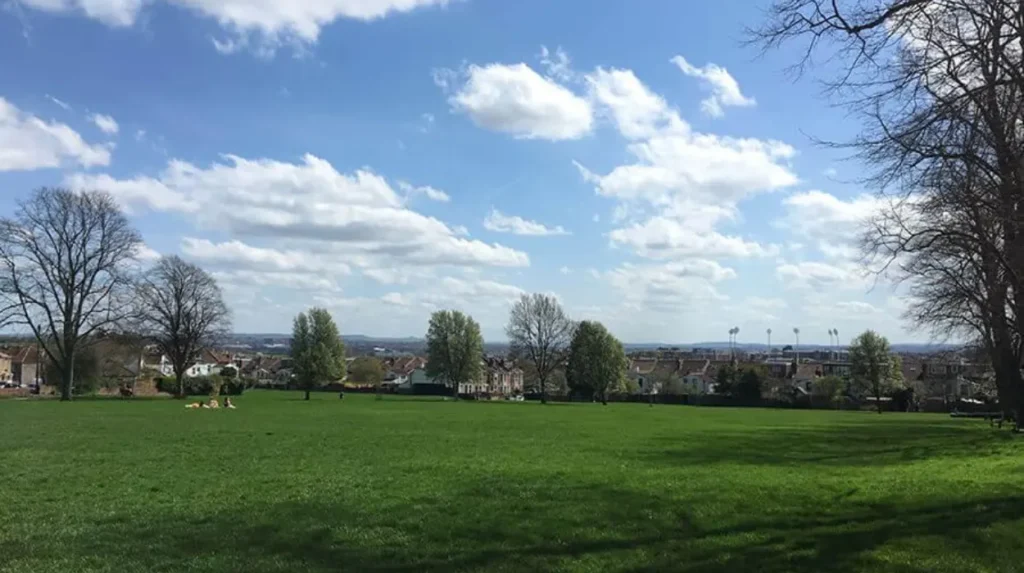
Residents have access to several parks and open spaces around Bishopston, including Horfield Common and nearby green areas in St Andrews, Redland and Ashley Down. These spaces provide playgrounds, walking routes, sports facilities and opportunities for informal outdoor recreation.
Horfield Common is one of the most useful nearby open spaces. Bristol City Council describes it as an open space in north Bristol and lists a community café, two dog-free play areas, tennis courts, a bowling green, wildlife pond and measured routes of 500 metres, 1 kilometre and 5 kilometres.
The availability of formal recreation is important because Bishopston is an urban neighbourhood with a relatively dense residential pattern.
Nearby parks also provide alternatives to private gardens. This matters for residents living in flats or smaller terraced houses where outdoor space is limited.
St Andrews and Ashley Down provide additional recreational opportunities within the wider north Bristol area. Eastville Park is another significant nearby city park, with children’s playgrounds and green space listed by Bristol City Council.
Outdoor facilities support several types of activity. Walking and running routes provide everyday exercise. Playgrounds support children’s recreation. Sports facilities provide opportunities for tennis and other organised or informal activities.
Green-space access also influences the choice of property. A home near a park offers different daily routines from a property located directly on Gloucester Road.
How easy is it to travel from Bishopston?
Bishopston has strong local transport connections through Gloucester Road and surrounding routes, with buses serving north Bristol and central destinations. Walking and cycling are also practical for many journeys, although traffic, road space and parking create challenges on busy corridors.
Gloucester Road provides a major transport corridor through north Bristol. Bus services use the route to connect residential neighbourhoods with central Bristol and other parts of the city.
The neighbourhood’s position also makes walking useful for local trips. Residents can reach shops, cafés, schools and services without depending on a car for every journey.
Cycling is another important transport option. Gloucester Road and surrounding streets form part of Bristol’s broader urban cycling network, although the road environment includes competing demands from buses, deliveries, pedestrians, cyclists and parked vehicles.
Bristol City Council’s Local Centres Study specifically identifies congestion and pressure between road users on Gloucester Road. The study refers to interactions between deliveries, bus operations, cycling, parking and pedestrian crossings.
For commuters, the main advantage is Bishopston’s proximity to central Bristol. The area sits north of the city centre, reducing the distance compared with more remote northern suburbs.
Car ownership requires more planning. Older terraces frequently lack private driveways, while busy commercial streets have substantial competition for kerbside space.
The most practical transport choice therefore depends on the exact property and daily destination. A resident working in central Bristol has different transport requirements from someone commuting beyond Bristol.
What is shopping and dining like in Bishopston?
Bishopston has one of Bristol’s strongest concentrations of independent shopping and dining, particularly around Gloucester Road. Residents have access to specialist food shops, cafés, restaurants, pubs, vintage retailers, ethical businesses and everyday services within the neighbourhood.
Local shopping is one of Bishopston’s strongest advantages. Gloucester Road supports a diverse commercial ecosystem rather than a retail environment dominated by national chains.
Visit Bristol lists independent businesses across food, fashion, gifts, vintage retail, cafés and restaurants. Examples include specialist cheese shops, Spanish food businesses, bakeries, vintage stores and independent cafés.
The Bristol Cheesemonger is one example of specialist retail on Gloucester Road. Its Bishopston premises are located at 123 Gloucester Road, BS7 8AX, and the business specialises in British cheese, with an emphasis on South West producers.
Food choices extend beyond specialist retail. Bishopston has restaurants, cafés, pubs and takeaway businesses representing a range of cuisines and formats.
The independent economy also creates a strong daytime and evening presence. Cafés support breakfast and lunch trade, restaurants provide evening dining, while pubs and live-music venues add nightlife.
Shopping convenience is therefore a major component of everyday life. Residents can complete many routine purchases locally while also supporting independent businesses.
The trade-off is that the same commercial popularity increases traffic and pedestrian activity. Homes close to busy premises can experience more activity than properties deeper inside residential streets.
What is the community atmosphere like in Bishopston?
Bishopston has a strong neighbourhood identity built around independent businesses, schools, parks, community organisations and long-established residential streets. Gloucester Road provides the main social and commercial focus, while surrounding streets provide a quieter residential environment.
Community identity is closely linked to the physical structure of the neighbourhood. Residents have access to local shops and services along Gloucester Road while living within established residential streets.
Independent businesses contribute to local economic identity. Visit Bristol describes Bishopston as having a thriving independent restaurant and bar community, alongside local shopping and food businesses.
Community groups also contribute to the management of local spaces. Friends of Horfield Common, for example, supports the park and provides a mechanism for local residents to engage with the open space.
The neighbourhood’s residential character supports different household types. Census data for the wider Bishopston and Ashley Down ward shows residents across all major age groups, including children, young adults, working-age adults and older residents.
This demographic range supports services that cater to different stages of life.
Bishopston’s community identity is therefore based on a combination of housing, commerce, education, recreation and local organisations rather than a single attraction.
What are the main disadvantages of living in Bishopston?
The main practical challenges include busy Gloucester Road traffic, parking pressure, limited road space, older housing maintenance and competition for desirable properties. Conditions vary between streets, so prospective residents should assess the exact location rather than judging the whole neighbourhood uniformly.
Traffic is one of the clearest documented challenges. Bristol City Council’s Local Centres Study records moderate to heavy traffic along Gloucester Road and identifies conflicts between buses, deliveries, cycling, parking and pedestrians.
Parking is closely connected to housing design. Many Victorian terraces were built before modern car ownership became widespread, so private driveways are not standard.
Older properties also require careful inspection. Roofs, windows, damp protection, insulation, electrical systems and plumbing can require investment depending on the age and previous maintenance of the property.
Noise levels vary considerably. Homes directly facing Gloucester Road experience more commercial and traffic activity than properties on quieter side streets.
Planning restrictions can also matter. Bristol has 33 conservation areas, and conservation areas receive additional protection because of their special character and appearance. Bristol City Council states that stricter planning controls apply within conservation areas.
A prospective buyer planning an extension, replacement windows, roof alterations or other exterior changes should therefore check the property’s planning constraints before purchase.
These disadvantages do not apply equally to every property. The most important assessment is street-level rather than neighbourhood-level.
What should you check before moving to Bishopston?
Before moving to Bishopston, check the property’s exact street, transport options, parking arrangements, school admission position, garden and storage space, building condition, planning restrictions, noise levels and proximity to Gloucester Road. These factors have a direct effect on everyday residential experience.
The first consideration is location within Bishopston. A property beside Gloucester Road offers maximum access to shops and services but sits closer to traffic and commercial activity.
The second consideration is housing condition. Buyers and renters should inspect windows, roof condition, damp, heating, insulation, electrical systems and plumbing. Older construction requires particular attention to maintenance history.
The third consideration is parking. Confirm whether a property has private parking, a permit arrangement or only on-street options. Do not assume that a street has unrestricted parking.
The fourth consideration is school access. Families should verify the current admissions arrangements and catchment position using Bristol City Council’s latest information. Admission arrangements for Bristol schools are formally published by the local authority.
The fifth consideration is planning. Bristol City Council recommends checking whether a property lies within a conservation area and whether proposed alterations require permission.
The sixth consideration is outdoor space. Compare private garden space with nearby parks such as Horfield Common.
The final consideration is commuting. Test the actual journey to work or education during realistic travel periods rather than relying only on distance.
Explore More Area Guide
Living in Bedminster: Complete Bristol Guide 2026
Living in Redland: Homes, Costs and Lifestyle Bristol 2026
How does Bishopston compare with nearby Bristol neighbourhoods?
Bishopston sits within a connected group of north Bristol neighbourhoods, including Redland, St Andrews, Horfield and Ashley Down. Each has different housing, commercial and recreational characteristics, while Bishopston is particularly associated with Gloucester Road and its independent business community.
Redland lies south of Bishopston and has a strong concentration of period housing, local services and access to the wider Clifton and Cotham area.
St Andrews is closer to central Bristol and is known for residential streets and access to St Andrews Park.
Ashley Down lies east of Bishopston and provides additional residential and recreational facilities. The Bishopston and Ashley Down ward recorded 13,304 residents in Census 2021, although ward boundaries do not represent Bishopston’s exact neighbourhood boundary.
Horfield lies north of Bishopston and extends the Gloucester Road commercial corridor. Visit Bristol describes Horfield as having restaurants, independent shops, pubs and green spaces, including Horfield Common.
The distinction is important for people searching for homes. A property advertised as being near Bishopston can sometimes sit close to another neighbourhood boundary.
Comparing the exact street, transport route, housing type and amenities provides a more accurate assessment than comparing neighbourhood names alone.
Is Bishopston a good place to live in Bristol?
Bishopston is a well-connected Bristol neighbourhood with established housing, strong independent retail, varied food and drink, schools, parks and access to central Bristol. Its main practical challenges are traffic, parking and maintaining older properties, especially near Gloucester Road.
Bishopston’s long-term appeal is supported by its combination of residential stability and commercial activity. The neighbourhood has retained much of the Victorian urban structure created during Bristol’s nineteenth-century expansion.
Its location provides access to a large range of services without requiring frequent journeys into the city centre. Gloucester Road remains a major independent shopping corridor, while surrounding neighbourhoods add further parks, schools, leisure facilities and services.
The area’s demographic profile also demonstrates a broad residential population. Census 2021 data for Bishopston and Ashley Down shows substantial representation among children, young adults and working-age residents, alongside older age groups.
Bishopston also benefits from nearby green infrastructure. Horfield Common provides formal recreational facilities, while other north Bristol parks expand the available outdoor space.
For property owners, the historic character creates both value and responsibility. Bristol City Council’s conservation policies recognise the importance of historic buildings, architectural details, road patterns and distinctive neighbourhood character.
For renters, the key factors are property condition, exact street, transport access, noise, parking and proximity to work or education.
Overall, living in Bishopston means living in one of north Bristol’s most established mixed residential and commercial districts. Its strongest characteristics are local convenience, independent commerce, period housing, community facilities and access to the wider city. Its main challenges are associated with the same urban intensity that makes the area well connected: traffic, parking pressure and competition for well-located homes.
As Bristol continues to evolve, Bishopston’s existing infrastructure and established commercial identity remain important assets. The neighbourhood’s future relevance is closely linked to maintaining its historic character while accommodating modern housing, transport, environmental and community needs.
Is Bishopston a good place to live in Bristol?
Yes. Bishopston is a popular residential area in north Bristol with Victorian housing, independent shops, restaurants, cafés, schools, parks and convenient transport links. Gloucester Road provides a major local shopping and dining corridor.