Key Points
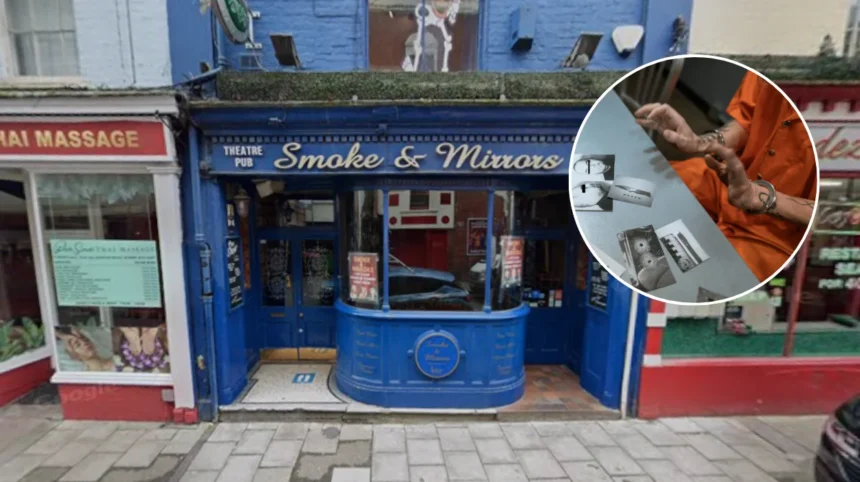
- Location of the Incident: Smoke and Mirrors, a theatre pub, located on Denmark Street in Bristol city center.
- Date and Time: On the morning of Tuesday, September 22, 2026, at around 4:28 am.
- Details of the Crime: The two windows were broken using a brick held in a plastic bag. The intruder managed to break into the establishment without triggering the alarm system.
- Damage Caused: The theft was approximately £90 in the till float, while repair work for the Grade II listed building’s windows is expected to cost much more.
- Context: The owner, Mark Bennett, chose not to make use of insurance owing to likely increase in premiums. He pointed out that rising parking charges, congestion charges, and ULEZ make Bristol city center an unfriendly place for independent hospitality venues.
- Neighborhood Issues: There have been reports that another business on Denmark Street was attacked the week before, making traders nervous about becoming their next target.
- Help from the Community: The Bristol Association of Restaurants, Bars and Independent establishments (BARBI) helped find the glazier in a hurry.
Bristol City Centre (Bristol Express News) September 25, 2026 — As reported by Maxine Denton of BristolLive, the owner of a popular theatre pub located in the heart of Bristol has voiced his profound frustration and anger after his establishment was targeted in an early-morning burglary. Smoke and Mirrors, situated on Denmark Street, suffered extensive property damage when two of its front windows were smashed before an intruder gained access to the building and made off with cash from the till float.
- Key Points
- Why Are Bristol City Centre Business Owners Feeling the Pinch Following Recent Crime?
- How Are Local Independent Venues Coping With Structural and Financial Setbacks?
- What Are Traders Saying About the Cumulative Pressures Facing Bristol’s Nighttime Economy?
- Is a Spate of Opportunistic Crimes Threatening Denmark Street Traders?
- Background of the Particular Development
- Impact on the Particular Audience
Why Are Bristol City Centre Business Owners Feeling the Pinch Following Recent Crime?
The incident unfolded at approximately 4:28 am on Tuesday, September 22, when a perpetrator managed to bypass the venue’s security alarms. As reported by Maxine Denton of BristolLive, publican Mark Bennett discovered the devastation after receiving an unexpected notification from a neighbor whose builders were working nearby.
Recounting the stressful moments following the discovery, Mark Bennett told BristolLive, “I drove here as quickly as I could to assess the situation and obviously it was instant anger first of all and on the drive, I had gone through in my head all the situations about what could have happened and when I got here, it was just like ‘well it is what it is’, there’s nothing else I can do and I just had to try and make it safe.”
According to details gathered by Maxine Denton of BristolLive, the intruder stole roughly £90 in cash from the till float. However, Mark Bennett emphasised that the physical damage inflicted on the property will result in financial consequences far heavier than the stolen currency itself. Because Smoke and Mirrors operates out of a protected Grade II listed building, the exterior repairs must strictly match historical specifications, adding considerable expense to the restoration process.
How Are Local Independent Venues Coping With Structural and Financial Setbacks?
Faced with steep insurance excess payments and the certainty of soaring future premiums, Mark Bennett confirmed to BristolLive that making an insurance claim is financially unviable.
As reported by Maxine Denton of BristolLive, Mark Bennett explained the dilemma regarding insurance and repairs:
“With insurance, if you claim, the premiums go up and your excess stays the same so you just have to find the money and try and hope that people will spend a bit more money behind the bar. There’s no point in claiming so it’s tough.”
Quick action was taken to secure the property, facilitated largely by external local networks. Mark Bennett expressed gratitude to BARBI (the Bristol Association of Restaurants, Bars and Independent establishments), which helped him source a local glazier capable of repairing the smashed windows within a matter of hours.
What Are Traders Saying About the Cumulative Pressures Facing Bristol’s Nighttime Economy?
Beyond the immediate burglary, the incident has magnified broader anxieties surrounding the viability of running independent enterprises in central Bristol. Mark Bennett pointed to a compounding list of economic hurdles currently punishing the hospitality sector, including shifts in consumer drinking habits and a decline in footfall.
As reported by Maxine Denton of BristolLive, Mark Bennett stated:
“Hospitality is having a good kicking as it is at the moment, with the way things have changed with people drinking less and they want a reason to come out into the city centre.”
He further criticized local municipal factors adding to commercial strain, noting to BristolLive reporter Maxine Denton:
“Bristol city centre is getting tougher and tougher every day with the rising parking charges, the congestion charged, the ULEZ, all this kind of stuff is against any city centre businesses so everything that we do, we try to make it a reason to come to the pub.”
Is a Spate of Opportunistic Crimes Threatening Denmark Street Traders?
Investigating the mechanics of the break-in, Mark Bennett described the intruder as an opportunistic criminal roaming the street with heavy tools concealed in everyday items.
As reported by Maxine Denton of BristolLive, Mark Bennett detailed the method of the break-in:
“You have a chancer who walks around with a plastic bag with a massive brick in it smashing in two windows, climbing in through the windows, and not setting off the alarm, and taking the money from the till.”
Adding to the local unease, this event does not appear to be an isolated occurrence on Denmark Street. Mark Bennett noted that a neighboring bistro was similarly vandalised and targeted just the week prior, creating a palpable sense of apprehension among neighboring business owners.
Reflecting on the spreading anxiety along the commercial strip, Mark Bennett told BristolLive,
“A bistro on Denmark Street was also hit last week as well, someone put their window through and obviously all of us are thinking ‘are we next’? We’re hoping that we’re not, it seems like it’s just a chancer.”
Explore more City Centre Crime News:
Bristol Nightclub Sexual Assault CCTV Appeal Launched in Bristol 2026
Courtroom Project and Bristol Women’s Prison, City Centre 2026
Background of the Particular Development
The recent break-in at Smoke and Mirrors reflects a mounting tension between independent urban business owners and the evolving operational landscape of central Bristol. Over recent years, Bristol’s hospitality and night-time economy sectors have faced severe post-pandemic financial headwinds, compounded by inflationary pressures on goods, utilities, and labor. Concurrently, municipal policies aimed at reducing carbon emissions and traffic congestion—such as the Clean Air Zone (often referred to via ULEZ-style discussions), rising parking tariffs, and congestion pricing—have frequently faced criticism from trade bodies like BARBI for potentially deterring casual visitors from entering the city center during evening hours. When physical security threats, such as opportunistic window-smashing and till thefts, intersect with high baseline operating costs and stringent conservation rules governing Grade II listed structures, independent traders experience heightened vulnerability.
Impact on the Particular Audience
For independent hospitality operators, retailers, and night-time economy stakeholders in central Bristol, developments like the Denmark Street break-in signal a deeply concerning trend where minor opportunistic crimes yield disproportionate financial and emotional tolls. Given that insurance claims often trigger prohibitive long-term premium hikes, small business owners are forced to absorb repair costs directly out of pocket during a period when consumer discretionary spending on leisure and alcohol is already tightly constrained.
Moving forward, this incident is likely to accelerate calls for enhanced coordinated security patrols, improved urban lighting, and closer cooperation between local businesses and municipal authorities. Furthermore, it may force independent venues to invest more heavily in private deterrents—such as upgraded shutter systems, reinforced laminated security glass, and advanced motion-detection equipment—further stretching tight profit margins. If a series of similar street-level offences continues unchecked, local traders may face declining consumer confidence as visitors grow hesitant to frequent urban commercial strips perceived as increasingly difficult or unprotected.