Key Points
- Cambridgeshire Police scanned 5,992 faces in Peterborough city centre.
- The live facial recognition operation produced five alerts and three arrests.
- The arrests involved alleged breach of a court order, burglary, theft and failing to appear at court.
- Police said images without a match were deleted immediately.
- The operation took place on Long Causeway as part of a wider city-centre crime crackdown.
Peterborough (Peterborough Today) November 18, 2026 – Cambridgeshire Police used a live facial recognition van in Peterborough city centre, scanning 5,992 faces and making three arrests during an operation on Long Causeway. The force said the deployment aimed to identify wanted people and those considered a risk to the public. Five alerts were generated, while police also located another wanted man following information from closed-circuit television operators.
- Key Points
- How many people were arrested during the facial recognition operation?
- How did Cambridgeshire Police describe the technology?
- What other action took place during the Peterborough crackdown?
- What is the background to facial recognition policing in Peterborough?
- What could the operation mean for future policing?
How many people were arrested during the facial recognition operation?
As reported by Peterborough Today in a report published on November 18, 2026, police arrested three people after the live facial recognition system produced five alerts.
Cambridgeshire Police said a 61-year-old man was arrested for allegedly breaching a court order. A 32-year-old man wanted in connection with offences including dwelling burglary and theft was also arrested. A 32-year-old woman wanted for failing to appear at court was arrested as well.
The force added that closed-circuit television operators alerted officers to another wanted 34-year-old man, who was located and arrested during the operation.
How did Cambridgeshire Police describe the technology?
A Cambridgeshire Police spokesperson said live facial recognition compares images from a live camera feed with a police-generated watchlist in real time. The spokesperson said images were automatically and immediately deleted when the system found no match.
Police said the van was parked on Long Causeway on Saturday as part of efforts to tackle crime in Peterborough city centre.
What other action took place during the Peterborough crackdown?
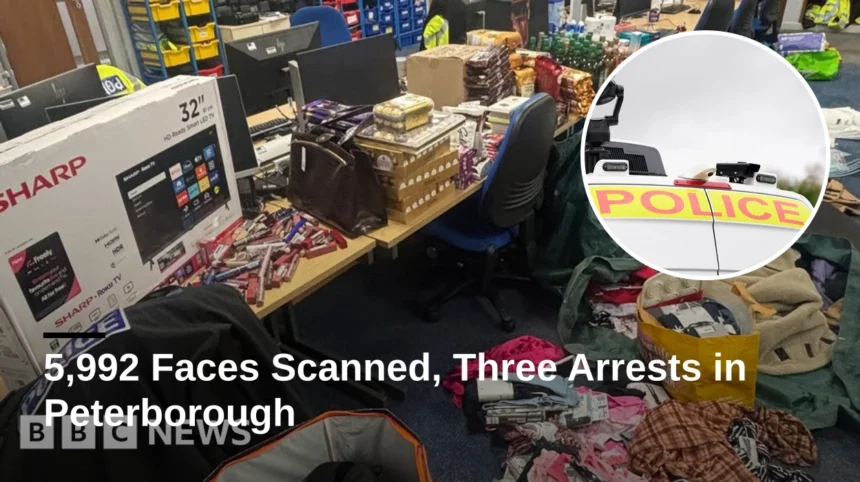
BBC News reported that Cambridgeshire Police also worked with Peterborough City Council enforcement officers and Peterborough Positive during a visit to a Wellington Street car boot sale. Officers seized suspected stolen goods valued at about £10,000.
The BBC reported that a 39-year-old man and a 36-year-old woman were arrested on suspicion of handling stolen goods and released on bail while inquiries continued.
Greatest Hits Radio Cambridgeshire reported that Inspector Sam Tucker described the operation as a coordinated effort to tackle crime and improve safety in the city centre. Peterborough Positive representative Pep Cipriano also emphasised cooperation between organisations.
What is the background to facial recognition policing in Peterborough?
Live facial recognition technology compares faces captured by a camera with images on a police watchlist. Cambridgeshire Police said the technology is intended to help officers identify wanted individuals more quickly. The Peterborough operation followed a broader city-centre enforcement effort involving police, council officers and local partners. Separate reporting has highlighted continuing scrutiny of facial recognition, including concerns about oversight, bias and the need for officers to corroborate possible matches through further inquiries.
What could the operation mean for future policing?
The scanning of 5,992 faces and three arrests may encourage Cambridgeshire Police to continue using live facial recognition at targeted city-centre operations. Its immediate effect is likely to be greater police attention on people named on watchlists and closer coordination with closed-circuit television operators. However, continued use will depend on public confidence, transparency and safeguards against mistaken identification. A facial recognition alert remains an investigative lead rather than conclusive identification, so officers must verify matches before taking enforcement action.