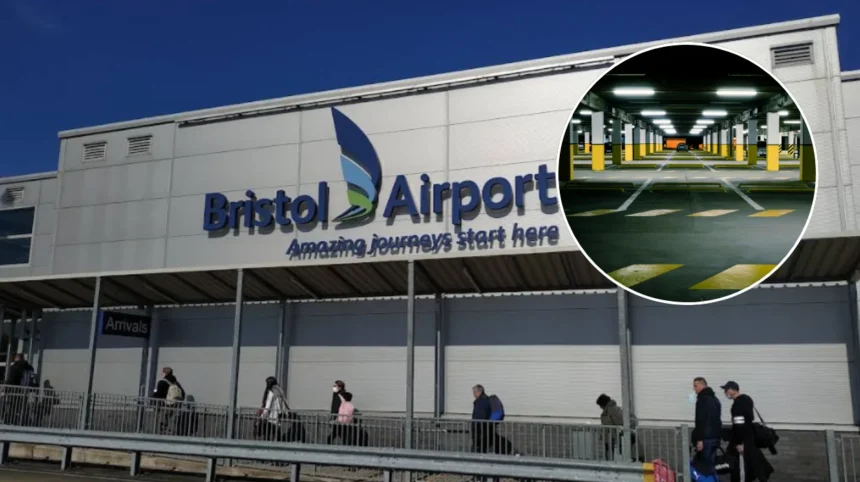
Key Points
- Waiting Zone at Bristol Airport is temporarily moved from the current site near the car hire center to an adjacent car park.
- This change was introduced on 19th October 2026 and is set to continue up until 18th December 2026.
- The purpose of this temporary change is to allow the completion of a £1 million investment project, including EV charging facilities and bus stops placed right outside the zone.
- Signposting and pedestrian routes as well as bus services are provided to facilitate access during the upgrading period.
- The zone offers parking free of charge for up to an hour, after which higher charges are applied, and there is also a rule not to return within 30 minutes.
- Drivers are warned about a strict no stopping policy along the internal red routes, with fines up to £100 for not complying with this policy.
- This infrastructure improvement is connected to public consultations concerning a £500 million plan for expanding Bristol Airport up to 15 million people per year by the end of the 2030s.
Bristol (Bristol Express News) October 27, 2026 – Bristol Airport has temporarily relocated its popular free waiting zone to a neighbouring parking area to facilitate a £1 million refurbishment project. As reported by Hannah Baker, Business Editor of Bristol Live, the temporary changes took effect on October 19 and will remain operational until December 18, 2026, while customer facilities near the car rental centre undergo comprehensive upgrades. The improvements include the installation of new electric vehicle charging infrastructure and relocated bus stops positioned right outside the zone.
Why Is the Bristol Airport Waiting Zone Being Moved?
The temporary relocation is designed to allow construction teams safe access to upgrade customer amenities. As detailed by Hannah Baker of Bristol Live, a spokesperson for Bristol Airport stated that
“the Waiting Zone will be temporarily relocated from 19 October to 18 December 2026 while refurbishment works are carried out to enhance customer facilities.”
The upgraded area will feature modernised amenities, including new electric vehicle charging stations and convenient bus stops designed to streamline drop-offs and pick-ups directly adjacent to the zone.
How Does the Temporary Parking Arrangement Work for Drivers?
Motorists accustomed to using the free parking facility will find that the operational rules remain largely consistent during the construction period. The waiting zone continues to offer up to 60 minutes of free parking for drivers waiting to collect arriving passengers.
However, overstaying the free allocation incurs substantial fees. According to reporting by Hannah Baker of Bristol Live, vehicles that stay longer than one hour are charged £20 for the first extra hour (1 to 2 hours total) and £20 per hour for every subsequent hour or part thereof. Additionally, the airport enforces a strict no-return policy within 30 minutes.
To assist motorists navigating the alterations, the airport has implemented clear navigational aids. As noted by Hannah Baker of Bristol Live, the airport confirmed that “signposts have been provided so drivers know where to find it and pedestrian and bus links have also been clearly marked.”
What Are the Rules Regarding No-Stopping Zones and Fines?
Alongside the car park adjustments, airport authorities have issued a stern reminder regarding general site circulation. A strict no-stopping policy remains enforced across all internal airport roads and designated red routes.
Drivers are prohibited from stopping, unloading, or parking on these networks even when actively collecting or dropping off travellers. According to Bristol Airport statements cited by Hannah Baker of Bristol Live, these measures are maintained “to high levels of road safety,” with non-compliant motorists facing financial penalties of up to £100.
Furthermore, management clarified that red routes situated along the A38 and the entrance layby fall under the jurisdiction of North Somerset Council and local police forces rather than internal airport operations alone.
Explore more Local Bristol News:
Bristol Restaurant Sonny Stores Expands Upstairs Flat in 2026
Cabot Circus Gaining Retail and Leisure Momentum in Bristol 2026
How Do These Changes Fit into Wider Airport Development Plans?
The £1 million car park overhaul occurs against a backdrop of broader strategic growth for the transport hub. Bristol Airport currently maintains some of the highest parking tariffs in the United Kingdom, charging £8.50 for a 10-minute stay in its primary drop-off and pick-op zone—surpassed nationally only by Gatwick and Stansted airports.
Concurrently, the infrastructure improvements coincide with public consultations regarding ambitious long-term growth. As highlighted by Hannah Baker of Bristol Live, the transport hub is actively gathering further community feedback on its controversial £500 million expansion proposals. The blueprint targets an increase in annual passenger throughput to 15 million people and introduces long-haul flight connections to destinations across the United States and the Middle East by the late 2030s.
Background of the Development
The temporary relocation of the Bristol Airport waiting zone represents a localized phase of ongoing infrastructural adjustments at one of South West England’s primary international transport hubs. Over recent years, regional airports across the United Kingdom have faced mounting pressure to balance expanding passenger volumes with ground-transportation efficiency and local environmental standards.
The current £1 million upgrade project specifically targets customer-facing amenities, addressing long-standing motorist demands for enhanced electric vehicle infrastructure and modernized public transport links. Bristol Airport’s parking and drop-off structures have frequently been subjects of public scrutiny due to high tariff structures and strict enforcement policies, making incremental investments in waiting facilities a critical component of managing passenger relations and traffic flow along the congested A38 corridor.
The temporary relocation of the waiting zone and subsequent facility upgrades are expected to cause minor short-term navigation adjustments for local motorists and frequent flyers utilizing Bristol Airport through December 2026. For everyday drivers and local commuters, the clear signposting and enhanced bus links should mitigate severe congestion, while the introduction of new electric vehicle charging points directly addresses the growing demand for sustainable transport infrastructure.
However, for regional travellers and local residents, these localized construction works serve as a visible precursor to the much larger £500 million expansion proposals. As the airport pushes toward accommodating 15 million passengers annually by the late 2030s, local communities and motorists will likely experience heightened debates regarding traffic density, environmental impact, and parking affordability across the wider North Somerset transport network.