Key Points
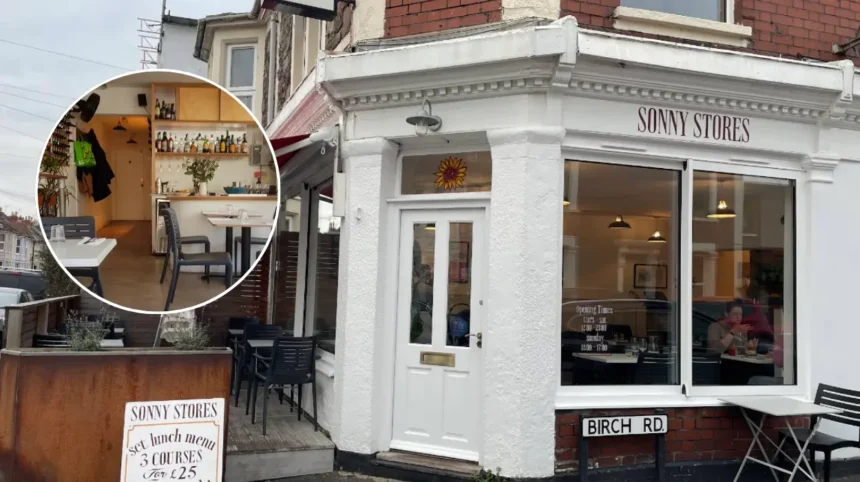
- Southville local favorite Sonny Stores has applied retrospectively to Bristol City Council in order to extend their premises upwards to cover the residential flat above the restaurant.
- This family-run Mediterranean seasonal cuisine restaurant, which opened its doors in 2020, converted the residential flat upstairs into an area reserved for private dining, food prep, storage, and administrative offices in 2024.
- Planning papers submitted by the premises stress that the ability to be flexible and diversified is important for the sustainability of small independent businesses.
- The extension of the restaurant allows them to utilize the space of the building to the fullest extent possible while accommodating more customers and being able to change their needs over time.
- In addition to the proposal for Sonny Stores, some recently approved applications for planning permission to Bristol City Council involve repair work on the 1850s Grade II-listed wall at Silverthorne Lane, which is owned by the University of Bristol, as well as demolition of the building in order to construct supported housing for disabled people or people with autism in Hartcliffe.
Bristol (Bristol Express News) October 26, 2026 – A popular neighbourhood restaurant in Southville has applied for retrospective planning permission to permanently convert an upstairs residential flat into extended commercial space, according to recent public filings submitted to local authorities.
Why Has Sonny Stores Submitted a Retrospective Planning Application for Its Upstairs Flat?
As reported by Alex Seabrook, local democracy reporter of Bristol Live, Sonny Stores has lodged a retrospective planning application with Bristol City Council to change the use of a two-bedroom residential flat located directly above the dining establishment on Raleigh Road, Southville. The family-run neighbourhood restaurant, which first opened its doors in 2020 and specializes in seasonal Mediterranean cuisine, has previously drawn strong national praise from prominent food critics such as Jay Rayner.
According to planning documentation cited by Alex Seabrook of Bristol Live, the physical alterations converting the residential flat into usable space for private dining, food preparation, storage, and administration actually took place in 2024. The current retrospective application has now been formally submitted to secure official local authority approval for these operational changes.
What Are the Key Operational Drivers Behind the Restaurant’s Expansion?
Explaining the rationale for the spatial modification, planning documents detailed by Alex Seabrook of Bristol Live state:
“As a small independent business, flexibility and diversification are important to the long-term sustainability and resilience of the operation.”
The documents further outline that utilizing the upper-floor space permits the business to optimise the efficient use of the entire building footprint, deliver additional customer accommodation, expand operational capacity, and respond effectively to evolving commercial demands within the local hospitality sector.
Explore more Local Bristol News:
Cabot Circus Gaining Retail and Leisure Momentum in Bristol 2026
Bristol City Leap Clean Energy Project Unchanged After Sale in Bristol 2026
How Does This Proposal Fit Into the Wider Planning Landscape Across Bristol?
The planning application for Sonny Stores forms part of a broader weekly round-up of planning submissions validated by Bristol City Council, as detailed by Alex Seabrook of Bristol Live. While the majority of standard applications are determined by planning officers using delegated powers, select proposals may be referred to elected councillors sitting on municipal planning committees. No specific determination dates have yet been scheduled by the local authority, and all documents remain accessible for public inspection via the Bristol City Council planning portal.
In the same weekly planning cycle, several other notable developments across the city were highlighted by Alex Seabrook of Bristol Live. These encompass a preservation project concerning a 200-metre long, Grade II-listed stone wall along Silverthorne Lane built in the 1850s, which previously formed part of the Avon Street Gasworks. Managed by the University of Bristol due to ownership responsibilities, the 4.8-metre high structure has experienced leaning sections and vulnerability to wind damage during recent severe storms, prompting an application for structural maintenance and protective netting.
Furthermore, separate proposals submitted in Hartcliffe involve the proposed demolition of a two-bedroom house on Newland Road, originally constructed between 1955 and 1965, to be replaced by a three-storey supported housing block capable of accommodating up to eight individuals with learning disabilities or autism, complete with dedicated staff accommodation and parking facilities.
Background
The evolution of Sonny Stores reflects ongoing structural shifts within independent urban dining, where neighborhood eateries increasingly seek spatial diversification to withstand economic pressures and shifting consumer habits. Established in Southville in 2020, the restaurant quickly established a strong culinary reputation, attracting critical acclaim from national reviewers. Across the wider Southville and Bedminster districts, independent hospitality businesses have continually adapted their physical properties to balance neighbourhood residential integration with commercial viability. Simultaneously, concurrent infrastructural changes across nearby regeneration zones—such as the Temple Quarter development framework surrounding Silverthorne Lane—demonstrate a city-wide pattern of balancing heritage preservation with contemporary urban expansion.
This planning development directly impacts local residents, regular patrons of Southville’s independent hospitality scene, and neighboring property owners in the Raleigh Road area. For the local community, the formalization of the upper-floor conversion solidifies Sonny Stores’ long-term operational footprint, ensuring continued employment and commercial activity on the street without introducing new structural footprints. However, ongoing municipal review of retrospective commercial conversions in residential quarters may set a precedent for how independent operators balance residential space with hospitality expansion across Bristol. For patrons, the authorized use of private dining and enhanced preparation spaces secures the restaurant’s capacity to host events and maintain service quality, reinforcing Southville’s reputation as a thriving culinary hub.