Key Points
- Job Cuts: Channel 4 has unveiled plans to shed 340 jobs by the year 2026, which will be more than one-quarter (about 28%) of its national work force.
- Uncertainty Regarding Bristol Hub: According to the report of Tristan Cork from Bristol Live, the effects of such job cuts at Channel 4’s creative hub at Finzel’s Reach in Bristol that has about 50 employees is still not known.
- Explanation from the Leadership: The CEO, Priya Dogra, appointed in March, said that these cuts were just the beginning of a long-term plan of transformation for reducing non-program costs, reducing layers of management, and reinvesting the money in original programming.
- Parliamentary Inquiry: Caroline Dinenage MP, the Chair of the Select Committee on Culture, Media and Sport, has called it very concerning and asked for clarification regarding what the restructuring will mean for the commitments of the company.
Bristol (Bristol Express News) September 10, 2026 — Uncertainty surrounds the future of Channel 4’s regional hub in Bristol after the public service broadcaster officially announced a sweeping nationwide reduction of 340 jobs.
The extensive cuts amount to more than 25 percent of the network’s total workforce. However, as reported by Tristan Cork of Bristol Live, a corporate spokesperson confirmed that the precise ramifications for Channel 4’s regional base situated in Bristol have “not yet been determined”.
When questioned by Bristol Live regarding whether the regional hub would face complete closure, scaled-back operations, or remain untouched, a Channel 4 spokesperson reiterated that the office falls under an ongoing internal consultation process.
As reported by Tristan Cork of Bristol Live, a Channel 4 spokesperson stated that:
“As these proposals are subject to consultation and the final outcome has not yet been determined, we’re not able to provide details or any comment on what they could mean in particular offices.”
What Does the Long-Term Transformation Strategy Entail for Channel 4?
The sweeping redundancies arrive alongside the announcement of a comprehensive long-term transformation strategy spearheaded by the network’s leadership team to tackle escalating operational costs and shifting digital habits.
As reported by Julian Clover of Broadband TV News, Chief Executive Priya Dogra explained that the structural overhaul is designed to create a simpler, more focused organization capable of channeling a higher proportion of revenues directly into original programming.
As reported by Julian Clover of Broadband TV News, Channel 4 Chief Executive Priya Dogra stated that:
“Today marks the first phase of our transformation, ensuring Channel 4 is the right shape and size to deliver its future strategy and focus investment in the programmes audiences love. The challenges we face require a fundamental transformation in how we work.”
Further elaborating on the financial pressures facing the broadcaster, Priya Dogra noted that while revenues have stayed relatively flat over recent years, operational expenses have surged.
As reported in The Talent Manager, Priya Dogra stated:
“In 2019, running Channel 4 cost us around 32p for every £1 of revenue we generated; today that figure is around 40p. That means less of our revenue is available to invest in programmes, and as that declines, so does our ability to drive audience and revenue growth.”
Dogra further acknowledged the severe human cost of the restructuring program across the network.
As reported in The Talent Manager, Priya Dogra stated:
“I know the proposals we are announcing today will be very difficult for many colleagues and will have a significant impact across the organisation. Many talented people who have made an enormous contribution to Channel 4 will be leaving as a result.”
Explore more Local Bristol News:
Bristol City Centre Bus Route Changes Cause Pandemonium 2026
Modular Housing Scheme Cuts Temporary Hotel Costs For Families In Bristol 2026
How Will the Restructuring Impact the Bristol Regional Hub and Creative Sector?
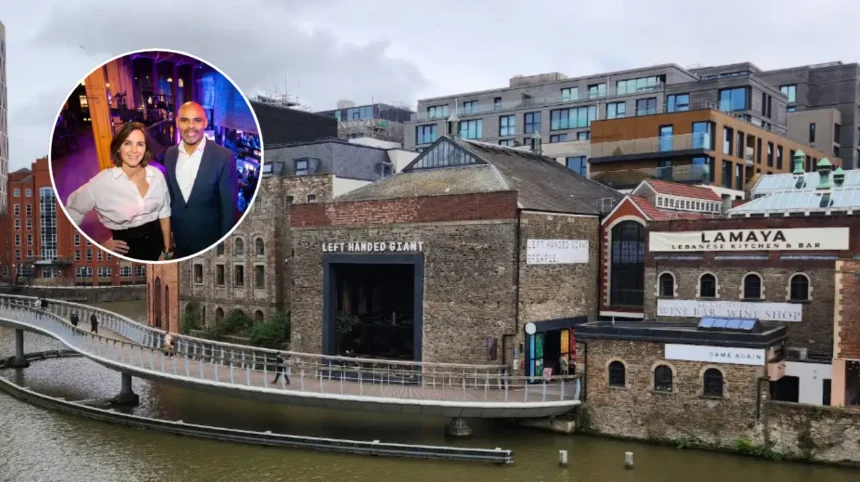
The Bristol office, located in the Finzel’s Reach area of the city’s harbourside, currently employs approximately 50 members of staff primarily focused on programme commissioning. The hub was originally established following a concerted regional campaign launched in 2018 by Bristol City Council under then-Mayor Marvin Rees.
While national headlines focus on the broader reduction of 340 roles from a total workforce of roughly 1,276 employees, local media and creative industry participants in the South West are monitoring the consultation closely to see if regional programming and out-of-London commitments will bear the brunt of the cuts.
The uncertainty has also triggered a swift response from Westminster. As reported by Julian Clover of Broadband TV News, Dame Caroline Dinenage MP, Chair of the House of Commons Culture, Media and Sport Committee, warned that the announcements are deeply concerning.
As reported by Julian Clover of Broadband TV News, Dame Caroline Dinenage MP stated that the news would be “deeply worrying” for staff and raised direct questions regarding “what the changes could mean for the broadcaster’s presence in the nations and regions”.
Background of the Particular Development
The announcement of 340 job cuts represents the single largest round of redundancies in Channel 4’s 43-year operational history. Founded in 1982, the publicly owned yet commercially funded broadcaster has faced mounting financial headwinds driven by a volatile advertising market, intense competition from global streaming giants, and evolving audience consumption trends favoring digital catch-up platforms.
This restructuring follows previous cost-cutting measures, including roughly 200 job losses under former Chief Executive Alex Mahon. The appointment of Priya Dogra as Chief Executive in March 2026, following her tenure at Warner Bros. Discovery, signaled a pivot toward a more aggressive internal review. Concurrently, Channel 4 opened regional hubs in Glasgow and Leeds (which serves as its official national headquarters outside London) following a government-backed initiative to decentralize creative industries across the United Kingdom.
The ongoing consultation process and potential downscaling at the Finzel’s Reach hub threaten to destabilize the South West’s independent production ecosystem, which relies heavily on accessible local commissioning editors. If regional commissioning teams face disproportionate downsizing, independent production companies in Bristol and the wider West of England region may experience reduced funding opportunities and fewer avenues to pitch regional content. This could weaken the decentralization gains achieved since 2018, potentially forcing regional media talent to relocate back to London or leave the industry entirely.