Key Points
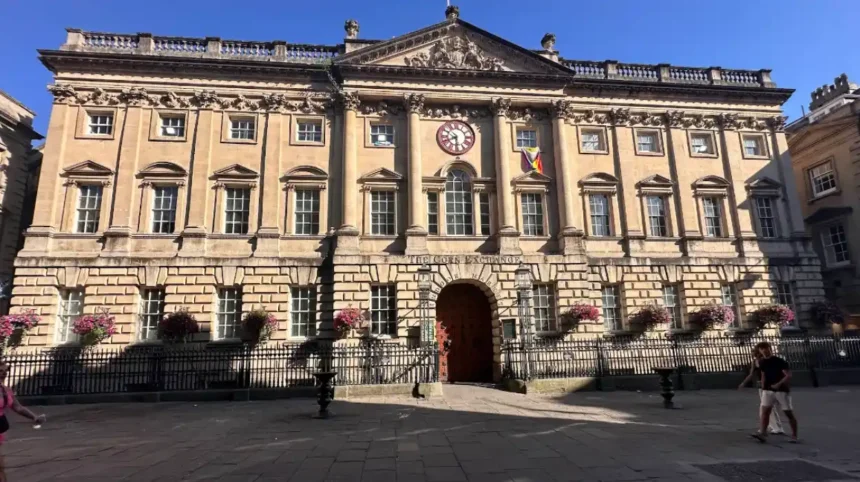
- The famous Exchange building in Bristol has been listed as at-risk in the Heritage at Risk Register of Historic England.
- This Grade I-listed structure was designed by the famous architect John Wood the Elder from 1741 to 1743, and forms an essential element in the St Nicholas Market complex as well.
- It is important to note that listing in this register means that there are sites around England that are in danger of deterioration, decay, or neglect.
- According to Historic England, it is keen to work with the Bristol City Council as regards the new vision for St Nicholas Market.
Bristol (Bristol Express News) November 5, 2026 — Bristol’s historic Exchange building has been officially inducted into Historic England’s annual Heritage at Risk Register, flagging urgent structural requirements and maintenance challenges for one of the city’s most architecturally significant municipal landmarks.
Why has the Bristol Exchange been placed on the Heritage at Risk Register?
As reported by regional news outlets, the inclusion of the Grade I-listed Exchange onto the national register stems from a comprehensive health assessment of England’s valued historic assets. Constructed originally in the mid-18th century, the building requires targeted conservation interventions to arrest physical deterioration.
As detailed in records highlighted by Historic England, the structure was designed between 1741 and 1743 by the celebrated architect John Wood the Elder to function as a central meeting place for merchants. Over subsequent centuries, including the enclosing of its central courtyard in 1872, the building has evolved into a vibrant anchor for the wider St Nicholas Market (affectionately known as St Nick’s) complex. However, ongoing upkeep demands and economic pressures facing municipal property portfolios have elevated the urgency for restorative action.
What do heritage officials say about the listing?
National conservation bodies have emphasized that placement on the risk register is designed to catalyse collaborative rescue efforts rather than signal permanent decline.
As reported by local media sources covering the national announcement, co-CEOs of Historic England Claudia Kenyatta and Emma Squire noted:
“Our historic buildings and places help tell the story of where we live and contribute to the character and identity of local communities.”
They further explained regarding the broader national framework:
“The most effective way to protect our buildings is to bring them back into use as places that create connection and enjoyment for local people. The sites saved and removed from the Register this year show what can be achieved when partners and communities work together to deliver positive, lasting change.”
Regarding the specific situation in Bristol, representatives from Historic England emphasized active engagement with local authorities. As noted in local reporting, the organization stated that it is
“looking forward to supporting Bristol City Council with its new St Nicholas Market Vision and seeing the project progress.”
Explore More City Centre News
Cabot Circus Gaining Retail and Leisure Momentum in Bristol 2026
Bristol Road Closed As Bomb Squad Called to Assess ”Suspicious” Item
Background of the particular development
The Heritage at Risk Register is published annually by Historic England to provide a transparent national health check of valued historic buildings, archaeological sites, places of worship, and industrial monuments facing threats from decay, neglect, or structural vulnerability. The Exchange in Bristol, originally designated as a Grade I-listed building on January 8, 1959, represents a premier example of English Palladian architecture featuring intricate stonework and historic trading heritage. Over recent years, structural and financial pressures on local government heritage assets across the United Kingdom have amplified the need for strategic public-private partnerships to secure long-term capital funding for repairs.
how this development can affect the local community and stakeholders
The formal classification of the Bristol Exchange as “at risk” is anticipated to act as a crucial catalyst for securing targeted conservation grants and fast-tracking municipal regeneration strategies. For local traders, small business operators within the St Nicholas Market complex, and Bristol residents, this heightened national attention could unlock vital financial backing and specialist engineering oversight. While immediate remediation projects will require careful logistical coordination to minimize disruption to daily commerce, the collaborative focus between Historic England and Bristol City Council substantially increases the likelihood of long-term structural preservation, economic revitalization, and enhanced civic pride in the city’s historic core.