Key Points
- Ten Arrests Made: Avon and Somerset Police arrested ten individuals following dual demonstrations in central Bristol.
- Protest March Route: Demonstrations commenced in Queen’s Square at approximately 10:30 BST, proceeding to Bristol Bridge and Bridewell Police Station, before terminating at the Cenotaph.
- Turnout Numbers: Police estimated that around 150 anti-immigration protesters and 300 counter-protesters attended the demonstrations.
- Pockets of Disorder: Temporary Chief Inspector Gareth Bank reported that pockets of disorder occurred during the event, particularly concentrated around the Cenotaph.
- Enforcement of Face Covering Rules: Six of the ten arrests were made on suspicion of concealing identity at a protest—a specific offence under updated legislation allowing police to designate zones where face coverings are prohibited.
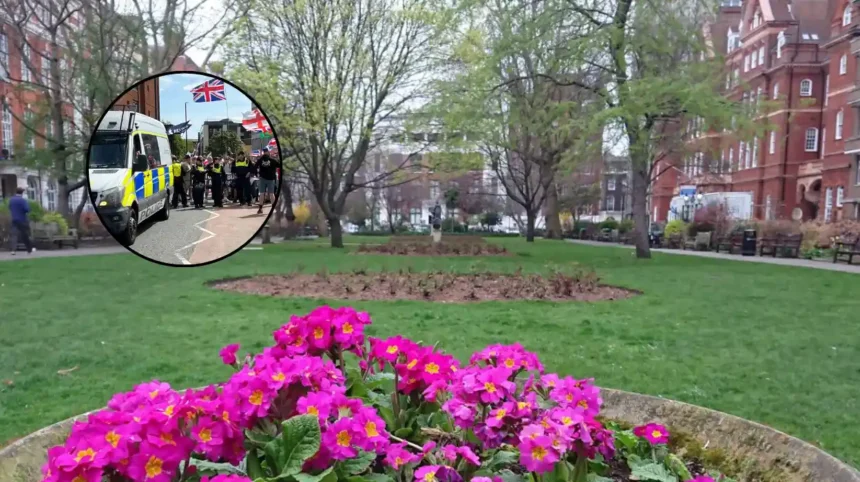
Bristol (Bristol Express News) August 8, 2026 – Ten individuals have been taken into police custody following clashes between anti-immigration demonstrators and counter-protesters as both groups marched through central Bristol. Avon and Somerset Police confirmed that the demonstrations began in Queen’s Square at roughly 10:30 BST before moving through several key landmarks across the city, including Bristol Bridge and Bridewell Police Station, before concluding at the Cenotaph.
How Did the Protests Unfold Across Central Bristol?
As reported by BBC News, law enforcement officers monitored the opposing crowds as they traversed the city centre. According to figures provided by Avon and Somerset Police, approximately 150 people joined the anti-immigration march, while an estimated 300 individuals gathered for the counter-protest.
The demonstration route saw both groups move from Queen’s Square across Bristol Bridge and pause outside Bridewell Police Station before reaching the Cenotaph. As reported by BBC News, Temporary Chief Inspector Gareth Bank of Avon and Somerset Police stated that while officers worked to maintain order along the route, there were
“pockets of disorder, especially at the Cenotaph.”
Why Were Ten People Arrested During the Demonstrations?
As reported by BBC News, police intervened when public order offences and non-compliance with legal conditions arose during the march. Of the ten total arrests made during the operation, six were specifically linked to individuals suspected of concealing their identity at a protest.
This specific charge falls under new legal powers that allow senior police officers to establish designated zones prohibiting face coverings when there is a reasonable belief that criminal activity or public disorder may take place.
Officers exercised these powers within designated areas during the Bristol demonstrations, leading to detention for those who refused to comply with requests to remove facial coverings.
Explore More City Centre News
Bristol Bus Routes Rerouted from Broadmead Shopping Streets 2026
Victoria Street Overnight Closure for Resurfacing Works Bristol 2026
What Is the Background to the Protests and Updated Public Order Legislation?
The demonstrations in Bristol form part of a broader nation-wide pattern of heightened activity surrounding immigration debates, public order management, and community relations across the United Kingdom.
Over recent years, major UK cities have witnessed repeated assembly actions by both right-wing anti-immigration groups and opposing counter-demonstrations organised by anti-racism coalitions and local activism networks.
Bridewell Police Station and the Cenotaph in Bristol have historically served as focal points for public gatherings and civil disruption.
In response to recurring violent clashes and public disruption at mass gatherings across England and Wales, Parliament introduced updated public order measures under the Public Order Act 2023 and associated legislative provisions.
These regulatory updates expanded police authority regarding section 60AA orders, empowering senior police officers to temporarily ban face coverings in specific geographical zones if they suspect individuals are using masks to conceal identity to commit offences or avoid detection.
The arrests made in Bristol reflect the active deployment of these newer statutory measures by regional police forces during managed public order events.
How Will This Development Affect Local Residents, Demonstrators, and Future Policing Strategies?
The legal actions taken by Avon and Somerset Police during the Bristol demonstrations carry several implications for local residents, activist groups, and public safety management.
For residents and commercial entities operating within Bristol city centre, public order events of this scale trigger localized disruptions to traffic, public transport routes, and footfall in major retail zones like Queen’s Square and the surrounding commercial streets.
Increased police presence and temporary section powers may reassure local trade owners against property damage, but repeated tensions around historic sites such as the Cenotaph raise ongoing concerns regarding civic disruption.
The arrest of six individuals under face-covering legislation marks a stringent application of newly granted police powers. Demonstrators on both sides of the political spectrum now face closer surveillance and strict legal bounds regarding anonymity during rallies.
Civil liberties groups and protest participants will closely scrutinise the usage of designated mask-prohibition zones, assessing whether such enforcement serves public safety or acts as a barrier to peaceful assembly.
For Avon and Somerset Police and other regional UK police services, the deployment of designated face-covering restrictions provides a tactical operational framework to identify potential agitators early.
The arrest outcomes from the Bristol demonstrations are likely to inform how police command structures prepare for future dual-protest scenarios, balancing the constitutional right to lawful assembly against public safety enforcement.