Key Points
- Arrests Made: Ten individuals were taken into custody following clashes between anti-immigration activists and counter-protesters in Bristol city centre on Saturday, 8 August.
- Attendance Numbers: The anti-immigration march comprised approximately 150 demonstrators at its peak, while the opposing counter-protest group numbered around 300 individuals.
- Protest Route: Demonstrators gathered at Queen Square at 10:30 am, proceeding via Bristol Bridge and Bridewell Police Station before culminating at the Cenotaph.
- Face Covering Law Enforced: Six individuals were arrested on suspicion of concealing their identity under recent legislation allowing officers to establish designated zones where facial coverings are prohibited.
- Additional Offences: Further arrests included charges of assaulting emergency workers, assault by beating, intentionally causing harassment, public order offences, and highway obstruction.
- Major Operation: The event represented the largest policing deployment in the Avon and Somerset force area since 2024, utilising 300 officers supported by ten external regional forces.
Bristol city centre (Bristol Express News) August 10, 2026 – Ten individuals have been arrested in Bristol following significant public demonstrations that saw opposing anti-immigration and counter-protest groups clash across multiple central locations.
- Key Points
- What Happened During the Bristol Demonstrations on 8 August?
- How Many People Were Arrested and What Were the Charges?
- How Did Avon and Somerset Police Manage the Public Order Operation?
- Background of the Development
- Prediction: How Will This Development Affect the Local Community and Public Order Policy?
What Happened During the Bristol Demonstrations on 8 August?
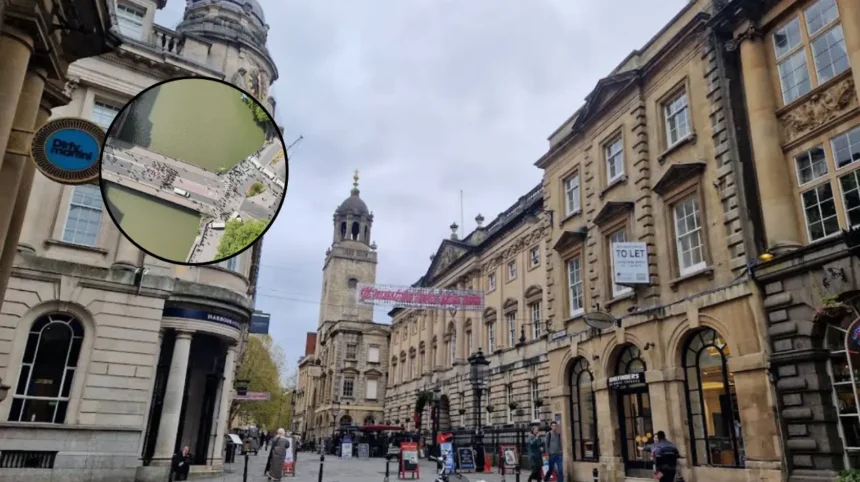
At its peak, the anti-immigration group drew approximately 150 participants, whereas the counter-protest group assembled around 300 people. As detailed by local law enforcement officials, the anti-immigration march commenced at Queen Square at roughly 10:30 am. The marchers proceeded through central thoroughfares, making key stops on Bristol Bridge and outside Bridewell Police Station for speeches, before the gathering concluded at the Cenotaph.
Throughout the designated route, counter-protesters met the marching group at each primary location, resulting in tense standoff situations and localized disruptions.
How Many People Were Arrested and What Were the Charges?
A total of ten individuals drawn from both opposing groups were arrested during the course of the day’s event. Six of these arrests were executed on suspicion of concealing identity at a protest. This specific charge falls under updated legal powers enabling police commanders to designate defined geographical zones wherein face coverings are legally prohibited.
As outlined by police representatives, officers made additional arrests for offences including:
- Assaulting an emergency worker
- Intentionally causing harassment
- Assault by beating
- Acting in a disorderly manner
- Obstructing a public highway
- Using threatening, abusive, or insulting words or behaviour
How Did Avon and Somerset Police Manage the Public Order Operation?
The public order action marked the largest policing operation within the Avon and Somerset jurisdiction since 2024. A force of approximately 300 police officers was deployed to the scene, bolstered by specialized mutual aid support drafted in from ten separate regional police forces across the country.
Superintendent Karen Corrigan expressed gratitude to the operational personnel involved in maintaining public safety throughout the day’s events.
Superintendent Karen Corrigan stated:
“First and foremost, I would like to thank and recognise the officers on the ground and those behind the scenes who enabled today’s protest and counter-protest.”
Superintendent Karen Corrigan further noted:
“Protest policing is challenging, dynamic and ever-changing; one action or word can take a peaceful protest closer to disorder and our officers must quickly and effectively adapt and change.”
Commenting on the specific points of conflict observed during the operation, Superintendent Karen Corrigan added:
“Today, we experienced pockets of disorder, especially at the Cenotaph, between officers and the counter-protesters and then between the two groups.”
Background of the Development
The public order operation in Bristol reflects broader trends in public assembly, civil demonstration, and police strategy across the United Kingdom. Since late 2024, police forces nationwide have increasingly relied upon updated statutory powers granted under recent public order legislation. These provisions include Section 60AA powers under the Criminal Justice and Public Order Act 1994, alongside expanded measures introduced in the Public Order Act 2023, which allow senior officers to mandate the removal of face coverings within defined zones where disorder or crime is anticipated.
The deployment of mutual aid—drawing personnel from ten external police forces—demonstrates the operational demands placed on regional forces managing co-located protests and counter-demonstrations. The Bristol Cenotaph and surrounding city centre locations have historically served as focal points for public gatherings and counter-demonstrations, requiring extensive strategic planning to separate rival factions and protect historic civic monuments.
Prediction: How Will This Development Affect the Local Community and Public Order Policy?
The outcomes of the policing operation in Bristol are expected to influence local operational frameworks and broader community dynamics in several distinct ways:
- Impact on Local Residents and Business Owners: Continued large-scale public demonstrations in central Bristol require rolling road closures and police cordons. Local businesses along key routes such as Bristol Bridge and Bridewell Street may face temporary operational disruptions during future events, while residents in the city centre are likely to experience heightened security measures and periodic transport diversions.
- Increased Utilization of Section 60AA Directives: The successful execution of six arrests specifically targeting identity concealment signals that law enforcement agencies will likely continue to deploy powers restricting face coverings as a standard tactic during high-risk public demonstrations.
- Resource Allocation and Mutual Aid Dependency: Relying on support from ten external forces highlights the substantial operational costs associated with managing dual protest events. Police forces may seek refined regional coordination mechanisms to balance daily local policing needs alongside large public order deployments.