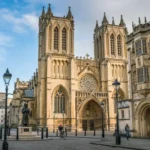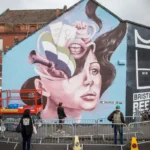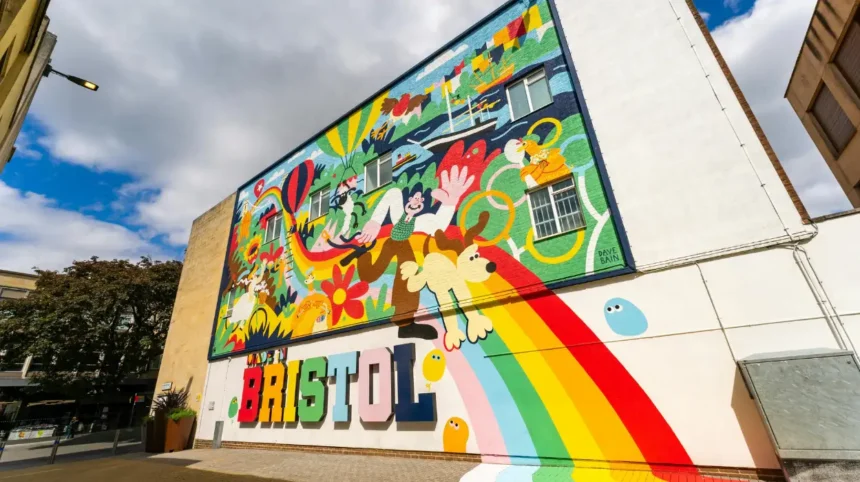
Cultural experiences in Bristol consist of public art exhibitions, live theatrical performances, historic maritime preservation, independent music venues, and community cultural festivals. These activities reflect the city’s history of trade, artistic innovation, radical social movements, and diverse multicultural demographic groups.
- How did Bristol evolve into a global cultural destination?
- Where can visitors find iconic street art in Bristol?
- Which museums define the historical heritage of Bristol?
- What role do performing arts venues play in Bristol culture?
- How do independent galleries support contemporary artists in Bristol?
- What annual cultural festivals occur in Bristol?
- How does film and media production contribute to Bristol’s culture?
- What impact does Bristol’s cultural sector have on its economy?
- What future cultural developments are planned for Bristol?
Cultural experiences in Bristol derive their identity from centuries of economic evolution, urban development, and grassroots creative production. Located in South West England, Bristol operates as a primary cultural hub for the region. The city combines historic heritage sites with modern contemporary art movements. Institutional bodies such as the Arts Council England provide continuous funding to support local arts venues, visual art centers, and community projects.
The geography of Bristol shapes its cultural distribution. The floating harbour area contains major maritime engineering monuments and converted industrial warehouses that now serve as art galleries and museum spaces. Urban districts like Stokes Croft and Bedminster feature outdoor murals that function as public visual art collections.
Public engagement in Bristol’s arts sector is driven by high resident participation rates and strong tourism inflows. According to Visit West data, the region records over 31 million annual day and staying visits. Visitors engage with three distinct sectors of cultural programming: civic heritage sites, contemporary visual arts, and live stage performances.
How did Bristol evolve into a global cultural destination?
Bristol evolved into a cultural hub through its historical reliance on maritime trade, industrial engineering developments during the nineteenth century, and the rise of counterculture street art movements and trip-hop music genres during the late twentieth century.
The history of cultural development in Bristol began with its establishment as a port town. During the eighteenth century, Bristol grew into a major global trading port. Economic prosperity funded civic infrastructure, including the construction of the Bristol Old Vic theater in 1766. However, this trade history was intrinsically tied to the transatlantic slave trade, an legacy that continues to inform modern political art, historical exhibitions, and public monuments throughout the city.
The Victorian era transformed Bristol into a center of civil engineering. Isambard Kingdom Brunel designed key structural landmarks, including the Clifton Suspension Bridge in 1831 and the SS Great Britain in 1843. These physical structures established an architectural baseline that modern cultural institutions preserve today.
In the late twentieth century, industrial decline created vacant urban spaces across central Bristol. During the 1980s and 1990s, local youths utilized these spaces to create underground music and visual arts movements. The “Bristol Sound” emerged through musical acts such as Massive Attack, Portishead, and Tricky, blending hip-hop, reggae, and electronic genres. Simultaneously, local graffiti artists used stencils and aerosol paint on public walls, laying the foundation for modern global street art movements.
Where can visitors find iconic street art in Bristol?
Visitors can view iconic street art in the Stokes Croft district, along North Street in Bedminster, across the Central Historic Quarter, and at the outdoor walls of Nelson Street, featuring original works by Banksy, Inkie, and Cheo.
Street art in Bristol functions as a free, outdoor visual museum network. The city’s official policy toward urban art evolved from strict abatement to active preservation and event sponsorship. Today, hundreds of murals cover residential buildings, retail facades, and concrete bridges.
The Stokes Croft neighborhood contains high concentrations of political stencils and large-scale spray paintings. Banksy’s mural The Mild Mild West, painted in 1999, remains displayed on a wall overlooking Jamaica Street. This piece depicts a teddy bear throwing a Molotov cocktail at riot police officers, symbolizing local resistance to police enforcement during underground events.
In Bedminster, along North Street, the annual Upfest festival provides permanent space for new mural installations. Artists from over 70 countries apply to paint designated walls. Examples of active street artists featured in these zones include 3 original creators:
- Banksy: Creator of Well Hung Lover on Park Street and Girl with a Pierced Eardrum on Hanover Place.
- Inkie: A pioneer of the 1980s Bristol graffiti scene known for Art Nouveau-inspired spray works.
- Cheo: Famous for comic-style character designs and cartoon murals displayed across the city center.
Which museums define the historical heritage of Bristol?
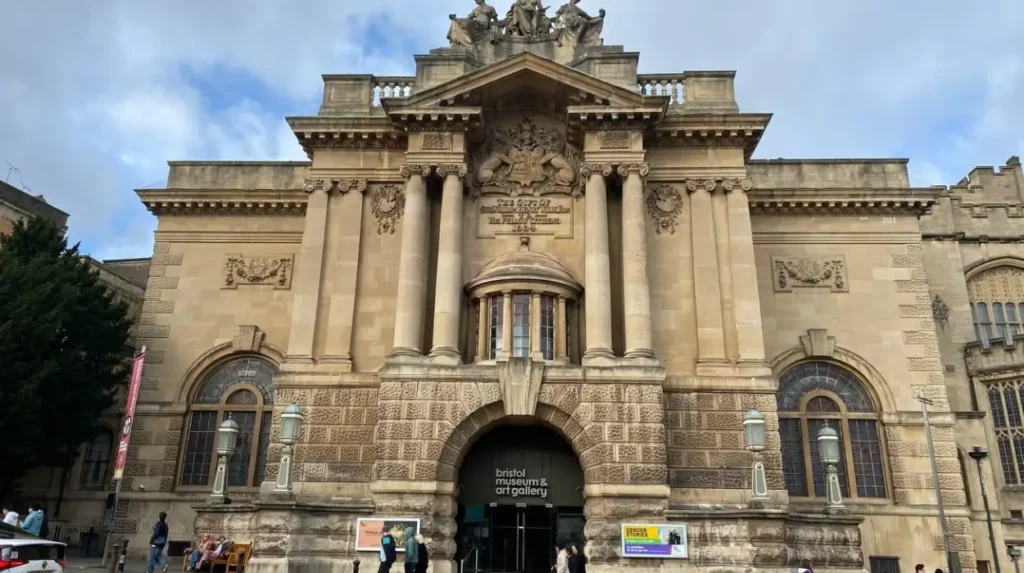
The museums that define Bristol’s heritage include M Shed, the Bristol Museum and Art Gallery, the SS Great Britain maritime museum, Aerospace Bristol, and the Georgian House Museum.
Bristol’s public museums host collections documenting local industrial history, fine arts, natural sciences, and global archaeology. These institutions operate under civic management or independent educational trusts, providing public access to physical artifacts.
M Shed, located on the Princes Wharf, displays 3,000 objects across three galleries dedicated to the city’s history, workers, and social movements. Key physical artifacts include working electric cranes, steam locomotives, and the original spray-painted canvas of Banksy’s Grim Reaper, formerly attached to the hull of the floating music venue Thekla.
The Bristol Museum and Art Gallery, situated in Clifton, houses over two million objects. Its galleries feature 20 specific visual display halls, including collection categories such as:
- French Impressionist Paintings: Works by Renoir, Pissarro, and Sisley.
- Assyrian Reliefs: Carved gypsum panels dating back to 1050 BCE.
- Bristol Blue Glass: Glassware manufactured in Bristol glasshouses during the late eighteenth century.
At the Great Western Dockyard, the SS Great Britain presents maritime engineering history. Designed by Isambard Kingdom Brunel and launched in 1843, this vessel was the world’s first iron-hulled, screw-propeller passenger steamship. The site preserves the ship in a dry dock sealed by a glass plate covering a climate-controlled chamber that prevents hull corrosion.
What role do performing arts venues play in Bristol culture?
Performing arts venues in Bristol host classical drama, contemporary theater, orchestral music, and underground performance art, serving as primary venues for regional artistic development and national tour stops.
Performing arts institutions generate cultural activity through daily theatrical runs, musical concerts, and dance showcases. These spaces provide infrastructure for resident companies and touring international acts.
The Bristol Old Vic, built in 1766 on King Street, holds the status of the oldest continuously operating theater in the English-speaking world. Its primary auditorium retains its Georgian horseshoe layout. The venue hosts original stage productions, classic Shakespearean revivals, and modern adaptations. Attached to the historic theater is a modern studio space used to develop works by emerging regional playwrights.
Bristol Beacon, located on Trenchard Street, functions as the city’s primary concert venue. Following a comprehensive £132 million transformation project completed in late 2023, the venue contains three acoustic halls. The venue hosts orchestral performances by the Bournemouth Symphony Orchestra, contemporary jazz ensembles, and international rock artists.
Independent performance spaces complement these large institutions. The Tobacco Factory Theatres in South Bristol stage experimental productions and Shakespearean plays inside a converted cigarette processing plant. The Wardrobe Theatre in Old Market provides a platform for alternative comedy, puppetry, and improvised theater.
How do independent galleries support contemporary artists in Bristol?
Independent galleries support contemporary artists by providing physical exhibition space, artist studios, production grants, international residency programs, and public lecture schedules.
Contemporary art spaces in Bristol operate outside the traditional council-run museum network. These spaces focus on living artists, experimental medium uses, and social commentary art projects.
Arnolfini, situated along the floating harbour, operates as an international center for contemporary art. Established in 1961, Arnolfini features three floors of gallery space, a cinema, and a specialized arts bookshop. The institution presents free exhibitions of visual art, performance, dance, and poetry. Artists such as Richard Long, Bridget Riley, and Grayson Perry have staged major early-career exhibitions within this space.
Spike Island, located in a 80,000-square-foot former tea packing factory, functions as a combined production and gallery hub. The facility houses over 70 individual artist studios, printmaking workshops, and a gallery space dedicated to contemporary sculpture, video art, and installation work.
Other independent gallery spaces operating in Bristol include 3 specific venues:
- Royal West of England Academy (RWA): An artist-led gallery in Clifton providing exhibition space for visual painters and sculptors since 1844.
- Centrespace: A cooperative studio complex near the Old City running artist-led, short-term exhibitions.
- Trinity Centre: A converted Victorian church in Easton offering community art installations and local cultural events.
What annual cultural festivals occur in Bristol?
Annual cultural festivals in Bristol include the Bristol International Balloon Fiesta, St Pauls Carnival, Upfest, the Bristol Harbour Festival, and the Encounters Film Festival.
Bristol’s annual festival calendar delivers free and ticketed arts programming directly to public spaces. These events utilize parks, waterways, and public roads, attracting hundreds of thousands of participants each year.
The Bristol International Balloon Fiesta takes place every August at Ashton Court Estate. Founded in 1979, this four-day event is Europe’s largest hot air ballooning gathering. Over 100 hot air balloons launch at mass ascents during dawn and dusk. The festival highlights Bristol’s historic connection to balloon manufacturing, led by local company Cameron Balloons.
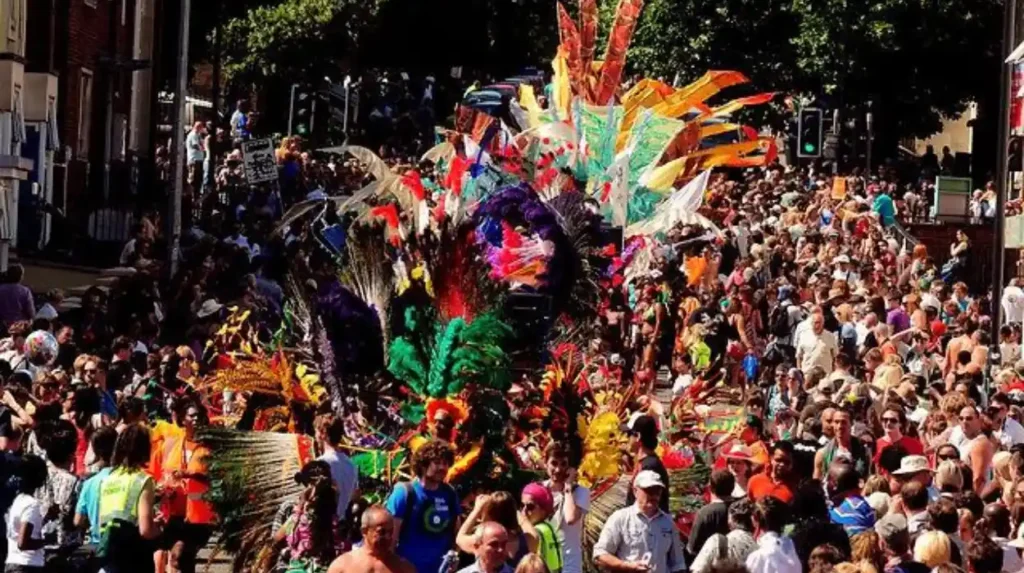
St Pauls Carnival is a celebration of Caribbean culture held on the first Saturday of July. Established in 1968, the carnival features a procession, sound systems, traditional music, and food vendors serving African-Caribbean cuisine across the St Pauls neighborhood.
The Bristol Harbour Festival occupies a 2-mile circuit around the city’s central waterways. The festival showcases dance stages, live music arenas, maritime displays, and circus performances.
Key annual cultural festivals in Bristol include 5 major events:
- Bristol International Balloon Fiesta: August hot air balloon showcase at Ashton Court.
- St Pauls Carnival: July African-Caribbean cultural street parade.
- Upfest: Europe’s largest street art and graffiti festival held in Bedminster.
- Bristol Harbour Festival: July maritime and performing arts showcase along the floating harbour.
- Encounters Film Festival: September qualifying short film and animation festival held at Watershed.
Explore more Area Guide
Best Theatres to Visit in Bristol | Bristol 2026
Best Art Galleries and Museums in Bristol | Bristol 2026
How does film and media production contribute to Bristol’s culture?
Film and media production contributes to Bristol’s culture through independent cinema screenings, commercial film shoots, and production work managed by local institutions like the Watershed and The Bottle Yard Studios.
Bristol received official designation as a UNESCO City of Film. This title recognizes the city’s infrastructure for film production, educational programs, and public cinema events.
The Watershed, located on Canon’s Road, opened in 1982 as the UK’s first dedicated media center. Operating within converted harbourside warehouses, it houses three digital cinema screens, a media lab, and event spaces. The Watershed screens international world cinema, independent British films, and archival restorations. It serves as an incubator for creative technology talent, running residency programs for digital artists.
Physical film production occurs at The Bottle Yard Studios, located in Whitchurch. This facility is the largest dedicated film and television studio in the West of England, featuring 11 sound stages. Major television dramas, including Poldark, Sherlock, and The Outlaws, were produced inside these studios.
Bristol is also the global center for natural history filmmaking. The BBC Studios Natural History Unit, established in Bristol in 1957, produces world-renowned nature documentaries such as Planet Earth and Blue Planet. This concentration of media professionals supports a network of post-production facilities, sound design studios, and independent production companies across the city.
What impact does Bristol’s cultural sector have on its economy?
Bristol’s cultural sector impacts the economy by generating over £1 billion in annual visitor expenditure, sustaining thousands of employment positions, and driving urban regeneration across legacy industrial quarters.
The arts and tourism sectors serve as economic drivers for Bristol and the wider West of England region. Visitor spend directly supports local businesses in hospitality, retail, transportation, and event management.
According to official economic data published by Visit West, staying visitors in the region spend over £1 billion annually. Bristol accounts for 53.7% of all staying visits and 56% of international visits across the West of England. The city welcomed 28 million day visitors, with 60% of total attraction spending generated directly by day trips.
Cultural venues drive physical regeneration. Development projects, such as the conversion of derelict dockyards into the Arnolfini, M Shed, and SS Great Britain sites, transformed former industrial zones into high-density commercial and residential quarters. Cultural investments increase property values, attract corporate sponsorships, and sustain employment for over 54,000 university students and residents working within creative industries.
What future cultural developments are planned for Bristol?
Future cultural developments planned for Bristol include the expansion of the Temple Quarter regeneration scheme, the opening of new performance halls at the YTL Arena Bristol, and enhanced public art trail installations.
Bristol continues to invest in physical cultural infrastructure to accommodate expanding audience numbers and evolving performance formats. Strategic city plans emphasize sustainability, digital accessibility, and adaptive reuse of historic properties.
The YTL Arena Bristol project represents the city’s largest venue construction effort. Located at the historic Brabazon Hangars in Filton—the site where Concorde was developed—the project converts three industrial hangars into a 19,000-capacity arena complex. This space will host major international concert tours, sports events, and multi-day convention exhibitions.
The Temple Quarter Enterprise Zone represents one of the largest urban regeneration projects in the United Kingdom. Spanning 135 hectares around Bristol Temple Meads railway station, the project includes designated spaces for creative technology hubs, digital media labs, and community art studios.
Future development projects in Bristol focus on 3 key initiatives:
- YTL Arena Bristol: A 19,000-capacity entertainment venue inside Brabazon Hangars.
- Temple Quarter Cultural Hubs: Integration of digital art labs within urban regeneration zones.
- Harbourside Heritage Trail Extensions: Expanded walking routes connecting public art displays from M Shed to the Cumberland Basin.
What defines cultural experiences in Bristol?
Cultural experiences in Bristol consist of public art exhibitions, live theatrical performances, historic maritime preservation, independent music venues, and community cultural festivals. These activities reflect the city’s history of trade, artistic innovation, radical social movements, and diverse multicultural demographics.