Choosing among the best schools in Bristol requires more than comparing examination results. Bristol has a broad education system covering maintained schools, academies, faith schools, independent schools, sixth-form providers and specialist settings. School quality also depends on curriculum, admissions, location, pastoral support, facilities and the needs of each child.
- What makes a school one of the best schools in Bristol?
- Which types of schools are available in Bristol?
- Which Bristol primary schools have strong recent Key Stage 2 results?
- Which Bristol secondary schools have strong recent GCSE results?
- Which Bristol independent schools are well known for academic provision?
- Which Bristol schools are suitable for sixth-form education?
- How should parents compare Bristol schools before applying?
- What role does Ofsted play when choosing a Bristol school?
- How important are school locations and catchment areas in Bristol?
- What should families consider for children with special educational needs?
- How can families use Bristol school performance data correctly?
- Why does Bristol’s educational history matter?
- What is the best way to choose among the best schools in Bristol?
- What are the long-term prospects for school education in Bristol?
Official Department for Education performance data provides a useful starting point. For 2025, Bristol had performance information covering 140 primary schools, 49 secondary schools and 37 sixth-form providers or colleges in the national comparison system. These figures demonstrate the scale and variety of education available across the city.
A school appearing strongly in examination data does not automatically represent the best choice for every family. Parents should examine the specific year group, admissions arrangements, published performance measures, inspection information, curriculum and practical travel requirements before making an application.
What makes a school one of the best schools in Bristol?
The best schools in Bristol combine strong educational outcomes with effective teaching, supportive pastoral systems, suitable curricula, good leadership, inclusive provision, appropriate facilities and accessible locations that match individual pupils’ educational and personal needs.
School quality has several measurable components. Academic attainment is one component. It shows how pupils performed in national tests and examinations. Other components include attendance, behaviour, safeguarding, curriculum breadth, special educational needs provision, extracurricular opportunities and progression after school.
The Department for Education’s school performance service allows families to compare schools using official measures. These measures include Key Stage 2 results for primary schools, Key Stage 4 outcomes for secondary schools and post-16 results for sixth forms and colleges.
Inspection information provides another important source. Ofsted, the Office for Standards in Education, Children’s Services and Skills, inspects state-funded schools in England and evaluates areas such as education, behaviour and attitudes, personal development and leadership.
Independent schools operate under a different inspection framework. The Independent Schools Inspectorate (ISI) inspects many independent schools against the Independent School Standards and evaluates educational quality and other regulatory requirements.
For families, the strongest approach is therefore a multi-factor assessment rather than a single league-table ranking.
Which types of schools are available in Bristol?
Bristol offers several school types, including maintained schools, academies, faith schools, independent schools, special schools and sixth-form providers, giving families different educational structures, admissions systems, curricula and fee arrangements across primary, secondary and post-16 education.
Maintained schools are funded and overseen through the state education system. Academies are state-funded schools operated through academy trusts. Both provide education without tuition fees for eligible pupils, although their governance and organisational structures differ.
Faith schools have a religious character. Bristol has schools associated with Christian denominations, including Church of England and Catholic schools. Admissions policies for faith schools can include specific criteria relating to religious affiliation.
Independent schools operate outside the state-funded school system and normally charge fees. They have their own admissions procedures, curriculum structures and governance arrangements.
Special schools provide education for pupils with particular special educational needs and disabilities. Bristol also has specialist educational provision alongside mainstream schools.
Sixth-form education covers the 16-to-18 age range. Students can study A levels, vocational qualifications and other post-16 programmes at schools, sixth-form colleges and further education institutions.
Understanding these categories is essential because two schools with similar examination results can have very different admissions requirements, funding arrangements and educational structures.
Which Bristol primary schools have strong recent Key Stage 2 results?
Recent official 2025 data identifies Bishop Road Primary School, Bridge Farm Primary School, Brunel Field Primary School, Cotham Gardens Primary School and several other Bristol schools with notable Key Stage 2 attainment measures, providing useful evidence for primary-school comparisons.
The Department for Education’s 2025 Bristol data provides school-level Key Stage 2 information. Bishop Road Primary School, for example, recorded 86% of pupils reaching the expected standard in reading, writing and mathematics, with 23% reaching the higher standard. Its reported average scaled scores were 110 for reading and 109 for mathematics.
Bridge Farm Primary School recorded 72% reaching the expected standard, with 3% reaching the higher standard. Its average scaled scores were 106 for reading and 104 for mathematics.
Other schools with published 2025 results include Brunel Field Primary School, which recorded 70% reaching the expected standard, and Cotham Gardens Primary School, which recorded 53%. The same official dataset lists schools such as Air Balloon Hill Primary School, Ashley Down Primary School, Blaise Primary and Nursery School, Brentry Primary School and Glenfrome Primary School.
These figures should be interpreted carefully. The Department for Education states that attainment measures show how pupils performed in assessments but do not account for their starting points. Progress 8 is also unavailable for the 2024/25 and 2025/26 academic years because the necessary Key Stage 2 baseline data was disrupted by the COVID-19 pandemic.
Consequently, Key Stage 2 results are useful indicators but should not be treated as complete measures of school quality.
Which Bristol secondary schools have strong recent GCSE results?
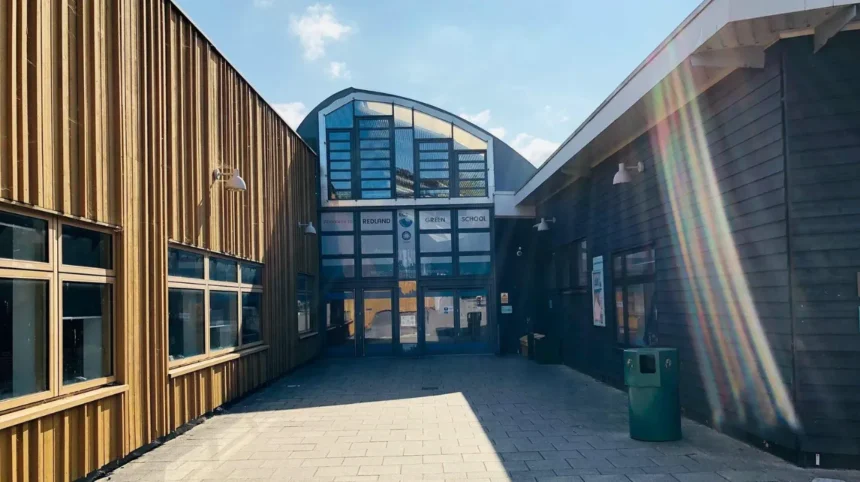
Bristol secondary schools with strong 2025 published measures include Redland Green School, Bristol Free School, E-ACT Montpelier High School, Bristol Cathedral Choir School and Cotham School, based on official Key Stage 4 attainment data.
The Department for Education’s 2025 Key Stage 4 dataset provides comparable measures for Bristol secondary schools. Redland Green School recorded a Progress 8-related figure that is not officially available for 2024/25, while its published attainment figures included 68.7% achieving the relevant English Baccalaureate measure and 73.4% achieving the listed threshold measure.
Bristol Free School recorded 56.3% for the listed English Baccalaureate measure and 66.3% for the corresponding attainment measure in the 2025 dataset. E-ACT Montpelier High School recorded 57.3% and 61.1% respectively. Bristol Cathedral Choir School recorded 54.6% and 60.1%, while Cotham School recorded 51.8% and 54.1%.
These figures demonstrate why parents should inspect individual measures rather than relying on a single overall ranking.
GCSE results also need contextual interpretation. The qualification landscape includes GCSE grades from 9 to 1, with grade 4 generally representing a standard pass and grade 5 representing a strong pass. Schools also offer different subject combinations, so pupils should compare the curriculum as well as headline results.
A school with strong results in a particular year does not guarantee identical outcomes for future cohorts. Families should therefore review recent performance alongside inspection findings, curriculum information and current school policies.
Which Bristol independent schools are well known for academic provision?
Bristol’s independent sector includes Bristol Grammar School, Queen Elizabeth’s Hospital, Redmaids’ High School, Badminton School and Collegiate School, with official 2025 post-16 data showing strong A-level performance across several independent providers.
Independent education has a long history in Bristol. Bristol Grammar School was founded by Royal Charter on 17 March 1532 during the reign of Henry VIII. The school was established with support from Bristol merchants Robert and Nicholas Thorne. It later moved to Tyndalls Park, where it remains today.
Bristol Grammar School became independent in 1979 following the abolition of the direct grant system. It became fully coeducational in 1980 after previously admitting girls to its sixth form. The school now provides education from the early years through to age 18 and reports more than 1,300 pupils.
The Department for Education’s 2025 post-16 data records several independent Bristol providers with above-average A-level performance measures. Redmaids’ High School recorded an average result of A and a point score of 49.23 in the listed measure. Bristol Grammar School recorded an average result of B+ and a point score of 44.16. Queen Elizabeth’s Hospital recorded B+ and 44.38, while Badminton School recorded B+ and 43.83.
These schools have different age ranges, admissions processes and educational models. Fees also vary between institutions and should be checked directly with each school.
Which Bristol schools are suitable for sixth-form education?
Bristol has a substantial sixth-form sector comprising school sixth forms, sixth-form colleges and further education providers, with A-level performance, subject availability, progression and specialist facilities providing key factors for post-16 school selection.
Sixth-form education is an important stage because students normally choose a smaller set of subjects for deeper study. Common A-level subjects include mathematics, English literature, biology, chemistry, physics, history, geography, economics and modern languages.
The 2025 Department for Education dataset lists 37 Bristol schools and colleges within the post-16 performance dataset. It records examination entries, average results and point scores for eligible institutions.
Independent providers feature prominently in the city’s post-16 performance data. Bristol Grammar School recorded 142 A-level examination entries, with 138 students included in the relevant measure. Redmaids’ High School recorded 53 examination entries, while Queen Elizabeth’s Hospital recorded 116.
State-funded providers also form an important part of Bristol’s sixth-form landscape. St Mary Redcliffe and Temple School recorded an average A-level result of B- in the 2024 official dataset, while Bristol Free School recorded B- in the same dataset.
Parents and students should compare individual subjects, entry requirements, class sizes, enrichment, university progression and vocational alternatives rather than focusing solely on average grades.
How should parents compare Bristol schools before applying?
Parents should compare academic results, inspection evidence, curriculum, admissions rules, SEND provision, pastoral support, attendance, facilities, transport, school culture and current capacity before deciding which Bristol school best matches their child’s educational requirements.
Admissions are a practical starting point. State-funded schools follow published admissions arrangements. Some schools use catchment areas, while others apply criteria such as sibling priority, distance or religious affiliation.
Catchment areas are particularly important because living close to a school does not always guarantee a place. Families should check the school’s current admissions policy and the relevant Bristol City Council information before applying.
Academic results provide another comparison point. Families should review several years of published information where available rather than treating one cohort’s results as a permanent characteristic.
Curriculum is equally important. A pupil interested in science needs access to appropriate laboratory teaching and subject choices. A pupil focused on music needs relevant performance opportunities. A pupil requiring additional support needs clear information about special educational needs and disabilities provision.
Travel time also affects school choice. Bristol has geographically dispersed communities, and daily journeys influence punctuality, attendance and family routines.
Parents should also visit schools where possible. Open events provide opportunities to inspect classrooms, sports facilities, libraries, laboratories and performance spaces while discussing admissions and pastoral arrangements.
What role does Ofsted play when choosing a Bristol school?
Ofsted provides independent inspection evidence for state-funded schools in England, but inspection findings should be considered alongside current performance data, safeguarding information, curriculum details, admissions arrangements and the individual needs of each child.
Ofsted is responsible for inspecting education and children’s services in England. School inspections assess important areas including the quality of education, behaviour and attitudes, personal development and leadership.
Inspection reports provide structured evidence about a school’s operation. They do not replace examination statistics because inspections and performance measures assess different aspects of education.
The distinction is particularly important when comparing independent schools. Many independent schools are inspected by the Independent Schools Inspectorate rather than Ofsted.
Families should therefore confirm the appropriate inspection body for each school. They should also check the date of the most recent inspection and read the complete report rather than relying solely on a headline grade.
Current information matters because school leadership, teaching staff, curriculum arrangements and pupil outcomes change over time.
How important are school locations and catchment areas in Bristol?
Location is a major factor in Bristol school selection because admissions catchments, school capacity, transport routes and residential distance influence access, daily travel and application outcomes for families seeking places in popular schools.
Bristol is a large urban authority with communities including Clifton, Redland, Bishopston, Henleaze, Horfield, Southville, Bedminster, Brislington, Knowle, Fishponds and Westbury-on-Trym.
Different neighbourhoods have different school profiles. A family searching for the best school should therefore begin with the child’s residential area and identify schools within a realistic daily travel distance.
Catchment arrangements vary between schools. Some use defined geographical areas, while others use distance-based criteria or additional admissions priorities.
Families should not rely on historic catchment maps because boundaries and admissions policies can change. The current admissions documentation is the authoritative source for application decisions.
Travel planning also matters for secondary pupils. Walking, cycling, buses and other transport options can produce significantly different journey times across Bristol.
A school with strong results that requires a long daily journey is not automatically a better practical choice than a strong local school.
What should families consider for children with special educational needs?
Families should assess each school’s special educational needs and disabilities provision, accessibility, specialist staff, support systems, communication with parents and ability to meet individual education requirements before selecting a Bristol school.
Special educational needs and disabilities, commonly abbreviated to SEND, covers a broad range of educational needs. These include communication and interaction needs, cognition and learning needs, social and emotional needs and sensory or physical requirements.
Mainstream schools provide different levels of SEND support. Some pupils receive additional classroom support, targeted interventions or specialist input. Other children require more specialised provision.
Parents should examine each school’s published SEND information report. They should ask specific questions about classroom support, accessibility, communication, sensory requirements, educational plans and transition arrangements.
For children with an Education, Health and Care Plan, known as an EHCP, the admissions and placement process follows specific statutory arrangements. An EHCP identifies a child’s special educational needs and the support required.
Bristol families should use official council SEND information alongside school-level documentation. A school’s general reputation does not establish whether it can meet an individual child’s specific requirements.
How can families use Bristol school performance data correctly?
Official performance data works best as a comparison tool rather than a definitive ranking because attainment varies between cohorts, subjects and schools, while individual pupil starting points, needs and educational circumstances also differ.
The Department for Education publishes school performance information through its official comparison service. Families can search by location, school type and educational stage.
For primary schools, Key Stage 2 information includes reading, writing and mathematics measures. For secondary schools, Key Stage 4 data includes GCSE-related attainment measures. Post-16 information covers measures such as A-level results.
The Department for Education explicitly warns that attainment measures do not account for pupils’ starting points. This distinction matters when interpreting differences between schools.
The pandemic also affected the availability of certain progress measures. The Department for Education states that Progress 8 cannot be calculated for academic years 2024/25 and 2025/26 because there is no suitable Key Stage 2 assessment baseline following COVID-19 disruption.
Therefore, families should use attainment figures alongside inspection evidence, curriculum information, admissions data and direct communication with schools.
Why does Bristol’s educational history matter?
Bristol has a long educational history that includes historic independent institutions, church schools and modern state academies, creating a diverse education landscape that continues to shape school choice across the city today.
Bristol Grammar School provides one of the clearest historical examples. Its Royal Charter dates to 1532, making it one of the city’s oldest educational institutions. The original purpose focused on teaching literature and good manners to boys connected with Bristol’s merchant and trading community.
The school moved to Unity Street in 1767 and then to its current Tyndalls Park site in 1879. Its history includes rebuilding after wartime damage and major developments in science, technology, sport, music and performing arts.
Modern Bristol has a substantially broader education structure. State-funded academies, maintained schools, faith schools and independent schools now operate alongside specialist and post-16 providers.
This historical development explains why Bristol’s school landscape contains institutions with very different traditions and governance models.
Explore More Area Guide
Bristol’s Creative Economy: How Visual Art & Street Culture Drive the City’s Growth
Comprehensive Guide to Street Art in Bristol City Centre 2026
What is the best way to choose among the best schools in Bristol?
The strongest school-selection process starts with a child’s needs, identifies suitable local schools, checks official performance and inspection information, examines admissions requirements, visits shortlisted schools and evaluates curriculum, support, travel and long-term educational fit.
Start by identifying the child’s educational stage. Primary applicants require Key Stage 1 and Key Stage 2 considerations, while secondary applicants require GCSE curriculum and transition information. Sixth-form students need subject choices and entry requirements.
Next, identify schools that are realistically accessible. Check admissions criteria, catchment arrangements and previous application information where available.
Then examine official performance data. Bristol’s 2025 datasets show substantial variation between schools, demonstrating why school-level comparison is more useful than city-wide assumptions.
The next step is to inspect curriculum and support. Check subjects, extracurricular provision, SEND support, pastoral systems, enrichment and facilities.
Finally, visit shortlisted schools. Ask direct questions about admissions, teaching, behaviour, attendance, safeguarding, homework, transition and progression.
The best school is therefore determined by the interaction between school quality and pupil fit. Strong examination outcomes provide important evidence, but they represent only one part of a complete decision.
What are the long-term prospects for school education in Bristol?
Bristol’s school system will remain shaped by demographic demand, academy governance, curriculum development, SEND requirements, examination reforms, post-16 pathways and changing local education needs, making current official information essential for future school decisions.
Education policy in England continues to evolve. Examination specifications, accountability measures, inspection arrangements and admissions policies can change.
Bristol’s diverse school population also creates different educational requirements across neighbourhoods. Schools must respond to changing pupil numbers, additional learning needs and curriculum expectations.
Digital learning has also become an established part of modern education. Schools increasingly use online platforms for homework, communication, revision and administrative services.
For parents, the most reliable approach is to revisit official information when making an actual application. Historic results remain useful for understanding patterns, but current admissions arrangements and school policies determine present decisions.
The Department for Education’s school comparison service remains a central source for published performance data. Bristol City Council provides local admissions and education information, while individual schools publish admissions policies, curriculum information and SEND documentation.
For families researching the best schools in Bristol, combining these sources provides a more accurate and responsible picture than relying on a single ranking.
Bristol offers a substantial and diverse education system covering primary schools, secondary schools, academies, maintained schools, faith schools, independent schools, special schools and sixth-form providers. Official 2025 data covers 140 primary schools, 49 secondary schools and 37 post-16 providers or colleges within the city’s performance datasets.
Schools such as Bishop Road Primary School, Redland Green School, Bristol Free School, Bristol Cathedral Choir School, Cotham School, Bristol Grammar School, Redmaids’ High School and Queen Elizabeth’s Hospital illustrate the range of institutions available. Their published results provide useful evidence, but they should not be interpreted as a universal ranking.
The most effective school choice combines academic evidence with curriculum, admissions, location, SEND provision, pastoral care, inspection information and individual pupil requirements. Families should always confirm the latest information directly through official government, council and school sources before applying.
What are the best schools in Bristol?
The best schools in Bristol include high-performing primary, secondary and independent schools such as Bishop Road Primary School, Redland Green School, Bristol Free School, Bristol Grammar School, Redmaids’ High School and Queen Elizabeth’s Hospital. School suitability depends on individual pupil needs.