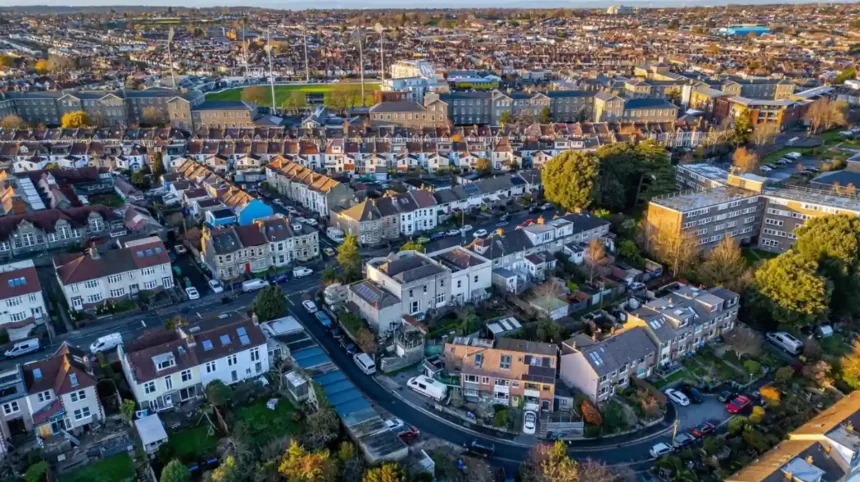
Bristol is one of the South West’s strongest housing markets, but it is also one of the region’s least affordable cities. The city combines strong employment, universities, transport connections, cultural attractions and extensive regeneration with house prices that sit above many comparable UK locations.
- What makes an area affordable in Bristol?
- Which areas of Bristol are generally considered more affordable?
- Is Southmead one of the more affordable areas to buy in Bristol?
- Is Lawrence Weston a good affordable area in Bristol?
- Are Hartcliffe and Knowle West affordable places to live?
- Is Filwood an affordable area for first-time buyers?
- Is Lawrence Hill one of Bristol’s cheaper inner-city areas?
- Is Lockleaze an affordable place to buy a home?
- Is East Bristol affordable compared with central Bristol?
- Which affordable Bristol areas are best for access to transport?
- How much cheaper are affordable Bristol areas than the city average?
- What should buyers check before choosing an affordable Bristol neighbourhood?
- How has Bristol’s housing affordability changed over time?
- Which affordable Bristol areas should buyers consider first?
- What is the long-term outlook for affordable housing in Bristol?
The most recent Office for National Statistics data shows that the average Bristol house price reached £357,000 in June 2026, compared with £305,000 across the South West. Bristol prices increased by 3.5% over the year. The average price for first-time buyers was £317,000.
Affordability varies considerably between neighbourhoods. Areas such as Southmead, Lawrence Weston, Hartcliffe, Knowle West, Filwood, Lockleaze, Lawrence Hill and parts of Stockwood and Bishopsworth provide lower-cost housing opportunities than premium locations such as Clifton, Redland and Stoke Bishop.
Affordability does not depend only on the purchase price. Buyers also need to consider property type, mortgage costs, commuting expenses, council tax, energy efficiency, maintenance requirements, local amenities and future development.
What makes an area affordable in Bristol?
An affordable Bristol area combines lower property prices with manageable household costs, transport access and practical amenities. Affordability is relative to local earnings, property type and household circumstances, so a lower purchase price does not automatically mean lower overall living costs.
The Office for National Statistics uses an affordability measure based on the relationship between house prices and earnings. Its 2026 neighbourhood affordability tool defines an area as affordable when average homes cost up to five times average annual earnings.
This measure provides a useful framework, but buyers should also assess their personal finances. A household with a larger deposit has different affordability constraints from a household relying on a high loan-to-value mortgage.
Property type is another major factor. In Bristol, the average price in June 2026 was approximately £246,000 for flats and maisonettes, £388,000 for terraced homes, £452,000 for semi-detached properties and £696,000 for detached properties.
This means a buyer searching for a flat has a very different set of affordable neighbourhoods from a buyer searching for a three-bedroom house.
Location also influences the total cost of ownership. A cheaper home far from a workplace can create higher commuting expenses. A property requiring major renovation can have a low purchase price but a substantially higher total investment.
For this reason, “affordable areas” should be understood as neighbourhoods where buyers can find comparatively lower entry prices while retaining reasonable access to employment, schools, shops, transport and other essential services.
Which areas of Bristol are generally considered more affordable?
The more affordable parts of Bristol include Southmead, Lawrence Weston, Hartcliffe, Knowle West, Filwood, Lockleaze, Lawrence Hill and selected parts of Stockwood and Bishopsworth. Prices vary by street, property type, condition and tenure, so individual listings require careful comparison.
Bristol does not have one single affordable district. Lower-cost opportunities are distributed across several parts of the city.
Southmead is in north Bristol and contains a large amount of housing close to Southmead Hospital and major employment facilities. Its housing stock includes terraces, maisonettes and flats.
Lawrence Weston is in north-west Bristol near Henbury and Avonmouth. The area contains substantial post-war housing and provides access to employment areas around Avonmouth and Severnside.
Hartcliffe is in south Bristol. It has a large concentration of residential housing and generally provides lower entry prices than many central and western neighbourhoods.
Knowle West is another established south Bristol residential area. It contains extensive post-war housing and benefits from its position close to broader south Bristol employment and transport networks.
Filwood sits in south Bristol and includes traditional terraces alongside other forms of residential development. Its location provides access towards central Bristol and surrounding southern neighbourhoods.
Lockleaze is situated in north-east Bristol. The neighbourhood contains a significant amount of twentieth-century housing and provides connections towards Horfield, Filton and central Bristol.
Lawrence Hill is an inner-city area east of Bristol city centre. Its housing stock includes Victorian terraces, flats and other converted properties. Recent sold-price information demonstrates the importance of property type, with flats substantially cheaper than terraced homes in some transactions.
Stockwood and Bishopsworth also provide lower-cost options compared with some of Bristol’s most expensive western and central districts.
The precise affordability of each area changes as properties are sold, renovated and redeveloped. Buyers should therefore compare current sold prices rather than relying on an old neighbourhood ranking.
Is Southmead one of the more affordable areas to buy in Bristol?
Southmead is one of the established lower-cost housing locations in north Bristol, with a large supply of twentieth-century homes and strong access to major employment facilities. Its affordability makes it relevant to first-time buyers seeking houses rather than central Bristol flats.
Southmead’s location is one of its major practical advantages.
The neighbourhood is close to Southmead Hospital, one of Bristol’s principal healthcare and employment sites. The wider north Bristol area also contains major employers, educational institutions and commercial centres.
Housing varies considerably. Buyers encounter terraces, flats, maisonettes and larger family homes. This creates different entry points within the same neighbourhood.
Southmead also connects to nearby areas including Horfield, Filton, Lockleaze and Henleaze. The M4 and M5 motorway network is accessible from the wider north Bristol area.
The main affordability advantage is the combination of residential supply and proximity to employment. Buyers who prioritise a house with several bedrooms often find the north Bristol market more accessible than premium neighbourhoods closer to Clifton and central Bristol.
The trade-off involves property condition and street-level variation. Some homes require modernisation, while others have already undergone substantial refurbishment. Buyers should inspect individual properties carefully rather than treating the whole neighbourhood as uniform.
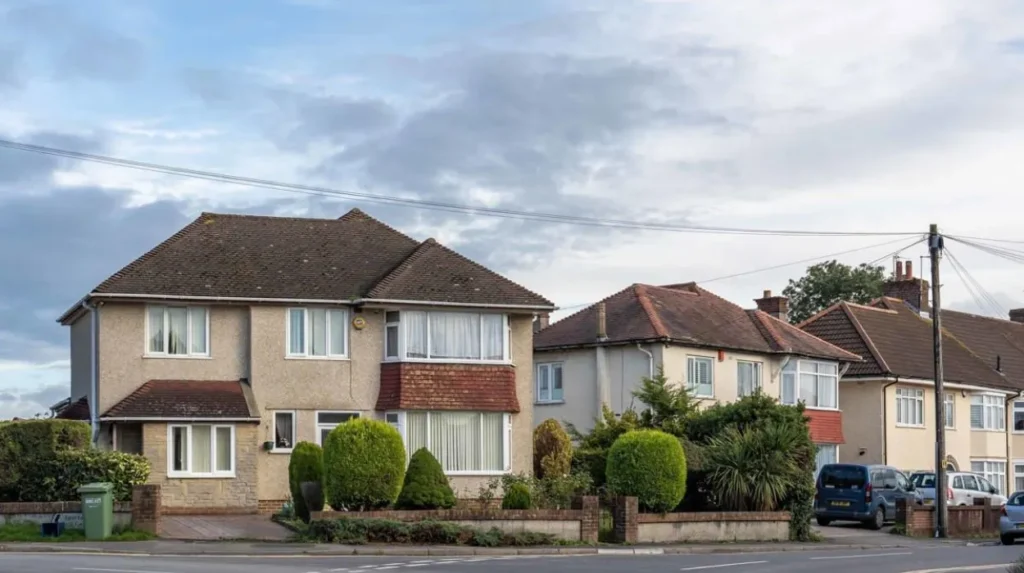
Is Lawrence Weston a good affordable area in Bristol?
Lawrence Weston provides relatively accessible housing in north-west Bristol, particularly for buyers seeking houses rather than premium inner-city property. Its location near Avonmouth and employment corridors adds practical value, while transport distance from central Bristol remains an important consideration.
Lawrence Weston sits between Henbury, Shirehampton and the Avonmouth employment area.
The neighbourhood contains a substantial amount of post-war housing. Many properties were developed during the twentieth century to accommodate Bristol’s expanding population.
Its position gives residents access to employment in Avonmouth and Severnside, where industrial, logistics, manufacturing and commercial activities form an important part of the local economy.
The area is also close to the M5, providing road access towards South Wales, Gloucestershire and other parts of the South West.
Lawrence Weston is particularly relevant to buyers who value space and a house over proximity to Bristol’s central districts.
The affordability equation needs to include commuting. A buyer working in central Bristol should compare daily travel time and transport costs with the lower property price.
Regeneration and improvements to local infrastructure also influence long-term housing conditions. Bristol City Council’s planning and regeneration programmes should be checked before buying close to major development sites.
Are Hartcliffe and Knowle West affordable places to live?
Hartcliffe and Knowle West are established south Bristol neighbourhoods with comparatively accessible housing and substantial residential stock. They are particularly relevant to buyers seeking family-sized homes at prices below many central and western Bristol locations.
Hartcliffe and Knowle West form part of Bristol’s southern residential area.
Both neighbourhoods contain extensive twentieth-century housing. This includes terraces, semi-detached properties, maisonettes and other residential formats.
Their position provides access to south Bristol employment areas and routes towards the city centre.
Knowle West has a strong concentration of residential streets and community facilities. It sits close to Filwood, Hartcliffe, Whitchurch and Knowle.
Current sold-price data illustrates how property type changes affordability. Rightmove records an overall average sold price of approximately £373,185 in Knowle over the last year, with flats averaging about £233,040, although this figure covers a broad housing market and should not be treated as a precise valuation for every property.
Hartcliffe provides another lower-cost option in south Bristol. Housing prices can be significantly below those found in more expensive parts of the city.
The buyer should assess individual streets, property condition, transport connections and local services. Neighbourhood-wide averages can conceal significant differences between individual properties.
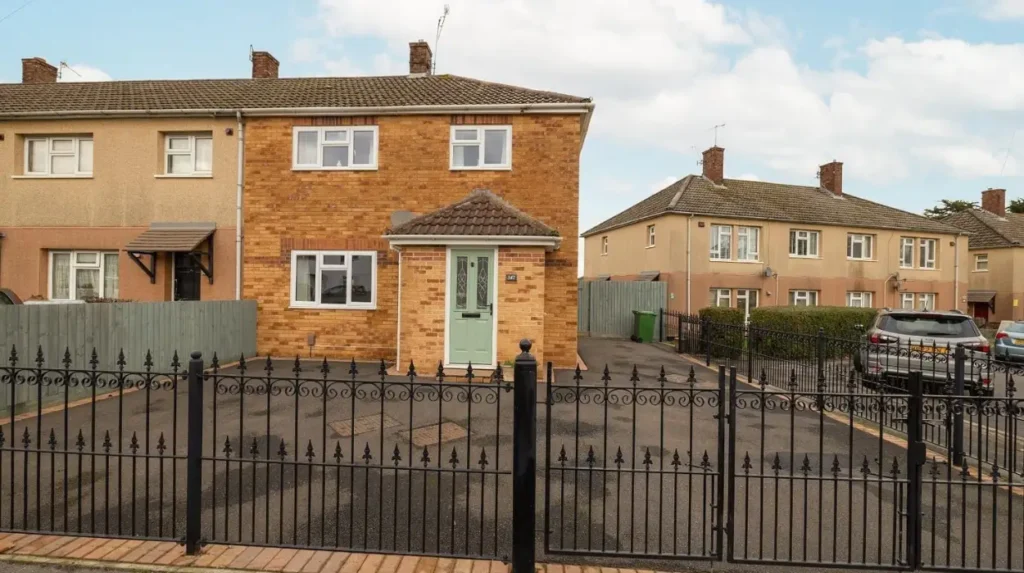
Is Filwood an affordable area for first-time buyers?
Filwood is an established south Bristol neighbourhood where terraces and other lower-cost housing provide opportunities for buyers with smaller budgets. Its location close to central and southern Bristol makes it relevant to first-time buyers prioritising purchase price and urban accessibility.
Filwood is located south of Bristol city centre and connects with Knowle West, Brislington, Bedminster and other southern neighbourhoods.
Traditional terraced housing forms an important part of the local housing supply. Terraced properties generally have lower purchase prices than detached and semi-detached homes, although condition and floor area create substantial differences.
Filwood also has local shops, community facilities and public transport connections. The neighbourhood’s proximity to major south Bristol routes supports access towards central Bristol.
The area has also been subject to regeneration attention. Bristol City Council’s planning and investment programmes should be reviewed when assessing a property near a proposed redevelopment area.
First-time buyers should pay particular attention to leasehold terms when considering flats. Service charges, ground rent arrangements where applicable, building insurance and planned major works can materially change the monthly cost.
For houses, buyers should investigate roof condition, damp, windows, insulation, heating systems and previous structural alterations.
Is Lawrence Hill one of Bristol’s cheaper inner-city areas?
Lawrence Hill provides relatively accessible inner-city housing compared with premium central neighbourhoods, particularly through flats and smaller properties. Its location near Bristol city centre, major transport corridors and employment areas makes it attractive to buyers prioritising accessibility.
Lawrence Hill is part of east Bristol and sits close to the city centre.
Its housing market contains a mixture of Victorian terraces, flats, converted buildings and newer developments. This diversity creates a broad range of entry prices.
Recent Rightmove sold-price information shows an overall average of £243,875 for Lawrence Hill over the last year, with flats averaging approximately £173,250 and terraced properties approximately £314,500.
These figures demonstrate why property type matters when assessing affordability.
Lawrence Hill also benefits from its position close to Lawrence Hill railway station, the Bristol-Bath railway corridor and major bus routes.
Its proximity to central Bristol reduces commuting distances for people working in the city centre.
The trade-off is that central accessibility does not eliminate property-level risks. Buyers should inspect lease length, service charges, building condition and local planning proposals when purchasing flats.
Is Lockleaze an affordable place to buy a home?
Lockleaze is a north-east Bristol residential neighbourhood with a substantial supply of twentieth-century housing. It provides comparatively accessible options for buyers seeking houses while maintaining connections to central Bristol, Horfield, Filton and wider employment areas.
Lockleaze occupies a strategic position between north Bristol and the city centre.
The neighbourhood includes many post-war properties and family-sized homes. This housing stock creates opportunities for buyers who need more space than a central flat provides.
Its proximity to Filton is important because Filton contains major aerospace, engineering and technology employment. The wider north Bristol area also includes the University of the West of England at Frenchay.
Transport accessibility is therefore a significant part of Lockleaze’s housing value.
The area also sits near Horfield and Ashley Down, giving residents access to shops, schools, parks and community facilities.
Buyers should examine the age and condition of individual properties. Older housing requires particular attention to insulation, heating systems, windows and roof condition.
The total cost of ownership should include energy performance. A lower purchase price does not automatically mean lower monthly expenditure if the property has poor insulation or an inefficient heating system.
Is East Bristol affordable compared with central Bristol?
East Bristol contains several comparatively accessible neighbourhoods, including Lawrence Hill and parts of Easton, while remaining close to central employment and services. Its affordability comes from diverse housing stock, but demand and regeneration have produced significant variation between streets.
East Bristol has undergone substantial housing and economic change over recent decades.
Easton is one of the best-known inner-east neighbourhoods. It contains Victorian terraces, converted properties and flats and has strong connections towards central Bristol.
Lawrence Hill sits nearby and provides another housing market with comparatively lower-cost properties.
East Bristol’s principal advantage is accessibility. Residents can reach central Bristol relatively quickly by bus, bicycle and on foot from several neighbourhoods.
The area also benefits from shops, independent businesses, community facilities and proximity to Bristol’s central employment districts.
However, strong demand has affected prices. Buyers should not assume that every East Bristol property represents a low-cost opportunity.
Affordability is particularly sensitive to property size and condition. A small flat can sit at a much lower price than a renovated three-bedroom Victorian terrace in the same general area.
Which affordable Bristol areas are best for access to transport?
Transport-friendly affordable areas include Lawrence Hill, Easton, Lockleaze, Southmead and parts of south Bristol. These locations provide access to bus corridors, rail stations, major roads or employment centres, reducing the financial impact of longer commutes.
Transport should be treated as part of housing affordability.
A property that costs £20,000 less but requires expensive daily commuting can have a higher long-term household cost than a more expensive property close to work.
Lawrence Hill benefits from its railway station and position close to the central area.
Easton has strong bus and cycling connections into central Bristol.
Lockleaze benefits from access to north Bristol employment locations and nearby transport corridors.
Southmead is particularly useful for people working at Southmead Hospital or in surrounding north Bristol employment areas.
Lawrence Weston provides strong road access towards Avonmouth and the M5, although journeys into central Bristol require more consideration.
South Bristol neighbourhoods such as Filwood, Knowle West and Hartcliffe rely more heavily on bus and road connections.
Bristol’s transport strategy and planned infrastructure can influence property demand over time. Buyers should check current Bristol City Council transport and planning information before making a purchase based on a future infrastructure project.
How much cheaper are affordable Bristol areas than the city average?
The gap between affordable neighbourhoods and Bristol’s overall market varies by property type and transaction. The city average was £357,000 in June 2026, while flats averaged £246,000, showing how property selection strongly influences the entry cost.
The Bristol-wide average provides useful context but does not determine the price of an individual neighbourhood.
In June 2026, the ONS recorded:
- Average Bristol house price: £357,000
- Average first-time buyer price: £317,000
- Average flat or maisonette price: £246,000
- Average terraced property price: £388,000
- Average semi-detached property price: £452,000
- Average detached property price: £696,000.
These figures show that the property type itself can create a large affordability difference.
Bristol’s rental market is also expensive. The average private rent reached £1,880 per month in July 2026, with one-bedroom properties averaging £1,223 and two-bedroom properties averaging £1,541.
Bristol City Council’s housing analysis also identifies a significant long-term affordability problem. The average Bristol house price was £351,000 in the year ending September 2025, while the affordability ratio reached 8.88 in April 2025.
This means affordable neighbourhoods remain important because the citywide market is expensive relative to earnings.
What should buyers check before choosing an affordable Bristol neighbourhood?
Buyers should compare sold prices, property condition, transport, council tax, energy efficiency, flood risk, planning applications, tenure, local services and future development before choosing an affordable Bristol neighbourhood. A low asking price is only one part of genuine housing affordability.
The first step is checking recent sold prices rather than relying exclusively on asking prices. Sold-price information provides stronger evidence of what buyers actually paid.
The second step is comparing the property with similar homes. A two-bedroom terrace should be compared with other two-bedroom terraces rather than the neighbourhood’s overall average.
The third step is assessing property condition. A cheap property requiring a new roof, boiler, windows and electrical work can quickly lose its affordability advantage.
The fourth step is checking tenure. Leasehold flats require additional investigation into service charges, lease length, building insurance and planned major works.
The fifth step is assessing transport. Buyers should calculate weekly commuting costs and travel times before deciding that a neighbourhood is financially suitable.
The sixth step is checking planning information. Major developments can change roads, housing supply, amenities and local demand.
Flood risk is also important in Bristol because several parts of the city are located near the River Avon, Frome and other waterways. Buyers should use official flood-risk information rather than relying on informal neighbourhood descriptions.
Energy efficiency also matters. The property’s Energy Performance Certificate provides information about energy efficiency and estimated energy use.
How has Bristol’s housing affordability changed over time?
Bristol became significantly less affordable relative to earnings after the mid-2010s. City house prices increased faster than national prices, producing a large gap between local earnings and housing costs and increasing demand for lower-cost neighbourhoods.
Bristol’s housing market changed substantially during the twenty-first century.
Bristol City Council’s 2026/27 Joint Strategic Needs Assessment reports that between 2002 and 2014, Bristol house prices were broadly similar to or below the national average. From 2015 onwards, prices increased faster than the national rate.
Over the decade to 2025, average Bristol house prices increased by approximately 69%, compared with a 45% increase across England and Wales, according to the council’s analysis.
The affordability ratio reached 8.88 in April 2025. Bristol therefore had one of the most difficult affordability positions among England’s Core Cities.
This history explains the importance of neighbourhood-level housing searches.
As citywide prices increased, buyers increasingly examined locations outside premium districts. Lower-cost areas became relevant to first-time buyers, families, investors and households prioritising space.
The long-term trend also explains why affordability should be measured against earnings rather than price alone. A £300,000 home is not automatically affordable if household income cannot support the mortgage and associated costs.
Explore More Area Guide
Best Areas to Invest in Bristol: Property Guide 2026
Buying a Home in Bristol: Complete Property Guide 2026
Which affordable Bristol areas should buyers consider first?
Buyers seeking affordability should initially compare Southmead, Lawrence Weston, Hartcliffe, Knowle West, Filwood, Lockleaze and Lawrence Hill, then assess Stockwood and Bishopsworth according to budget and transport needs. Each neighbourhood requires property-level research before purchase.
Southmead is particularly relevant to buyers working in north Bristol.
Lawrence Weston suits buyers prioritising lower housing costs and access to Avonmouth and north-west employment areas.
Hartcliffe and Knowle West provide established south Bristol housing markets with substantial residential supply.
Filwood combines comparatively accessible housing with proximity to central and southern Bristol.
Lockleaze provides north Bristol access and proximity to employment areas around Filton.
Lawrence Hill offers inner-city accessibility and a broad range of flats and terraces.
Stockwood and Bishopsworth provide further southern alternatives for buyers comparing house prices across the city.
The right choice depends on budget, household size, employment location, transport requirements and property type.
The strongest affordability strategy is therefore not simply choosing the cheapest postcode. It is comparing the purchase price, monthly housing cost, commuting cost, property condition and long-term suitability of several neighbourhoods.
What is the long-term outlook for affordable housing in Bristol?
Affordable housing will remain a major Bristol housing issue because prices continue to exceed local earnings by a substantial margin. Lower-cost neighbourhoods will remain important as first-time buyers and households seek alternatives to premium areas and central property.
Bristol’s population, employment base and regional importance continue to support housing demand.
The city’s economy includes professional services, technology, creative industries, advanced engineering, education, healthcare and financial services. These sectors support employment demand and contribute to housing pressure.
At the same time, housing affordability remains constrained.
The ONS recorded an average Bristol house price of £357,000 in June 2026, while the average first-time buyer price stood at £317,000.
Rental costs are also elevated, with average private rent reaching £1,880 per month in July 2026.
This environment makes lower-cost neighbourhoods an important part of Bristol’s housing market.
Future affordability will depend on housing supply, new development, infrastructure investment, household earnings, mortgage conditions and local planning decisions.
For buyers, the most reliable approach is to use current transaction data and official planning information rather than assuming that a neighbourhood will remain at a particular price level.
Affordable areas in Bristol therefore represent a moving target. Southmead, Lawrence Weston, Hartcliffe, Knowle West, Filwood, Lockleaze and Lawrence Hill provide useful starting points for research, but affordability must ultimately be assessed at the property and household level.
Bristol remains an expensive housing market by regional standards. The city’s affordability challenge makes careful neighbourhood selection essential for buyers seeking a realistic balance between price, space, transport, amenities and long-term housing costs.
What are the most affordable areas in Bristol?
Some of the more affordable areas in Bristol include Southmead, Lawrence Weston, Hartcliffe, Knowle West, Filwood, Lockleaze and Lawrence Hill. Property prices vary by street, property type, condition and tenure, so buyers should compare recent sold prices.