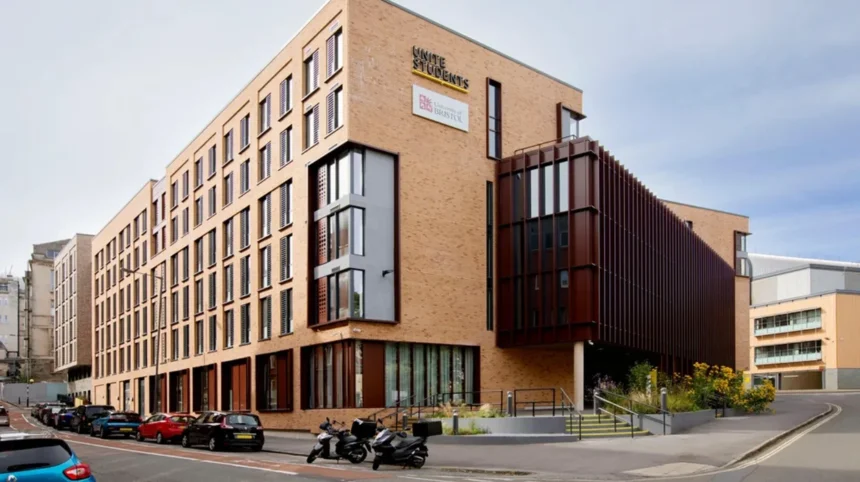
Bristol is one of the United Kingdom’s major student cities. It combines large higher-education institutions, established academic districts, strong transport connections, a diverse population, a large creative economy, and extensive cultural infrastructure.
- Why is Bristol an important student city?
- Which universities and campuses should students know in Bristol?
- What accommodation options are available for students in Bristol?
- How can students travel around Bristol?
- What student support services are available in Bristol?
- How does Bristol’s student economy support part-time work and careers?
- What can students do outside university in Bristol?
- What should students know about council tax and everyday responsibilities?
- How has Bristol developed as a higher-education city?
- What should a new student do before arriving in Bristol?
The city is home to two major universities: University of Bristol and UWE Bristol. Bristol City Council recorded 68,800 students registered at the two main universities in 2024/25. The city’s estimated population reached 495,300 in mid-2025.
The student population contributes significantly to Bristol’s housing market, transport demand, retail economy, hospitality sector, cultural life, and employment base. Students live across neighbourhoods including Clifton, Redland, Cotham, Stokes Croft, Bedminster, Fishponds, Horfield, Filton, and areas around Frenchay.
The University of Bristol is particularly associated with Clifton and the central university precinct. UWE Bristol has its principal Frenchay Campus northeast of central Bristol, alongside Glenside and city-centre facilities.
Why is Bristol an important student city?
Bristol is a major UK student city built around two universities, a strong creative economy, historic neighbourhoods, and extensive transport links. The city offers undergraduate, postgraduate, vocational, research, and international study options, supported by accommodation, services, cultural venues, and jobs.
Bristol’s student importance comes from the scale and diversity of its higher-education sector. The University of Bristol recorded 31,132 students in 2024/25, including 10,903 international students. The university also employed 9,055 staff during the same academic year.
UWE Bristol recorded 37,742 enrolled students in 2024/25, including 24,900 undergraduates and 12,842 postgraduate students. Its student population included 9,474 international students.
Bristol City Council reported that student registrations at the two main universities increased by 44% over the decade to 2023/24, representing an increase of approximately 21,000 students. The council recorded 68,070 students in 2023/24.
This scale creates a substantial student infrastructure. Universities operate libraries, laboratories, lecture facilities, sports centres, careers services, accommodation, students’ unions, wellbeing services, and specialist academic departments.
Bristol also has a major creative and cultural economy. The city contains theatres, museums, galleries, music venues, independent retailers, markets, restaurants, festivals, and creative workplaces. These facilities contribute to the wider student experience while also creating employment and volunteering opportunities.

Which universities and campuses should students know in Bristol?
Students in Bristol are concentrated around the University of Bristol, UWE Bristol, and student neighbourhoods. The University of Bristol centres on Clifton and central areas, while UWE Bristol operates campuses at Frenchay, Glenside, and city-centre locations, creating distinct housing patterns.
The University of Bristol has a research-intensive academic structure covering subjects across arts, humanities, social sciences, sciences, engineering, medicine, health, and other disciplines. Its main academic environment is concentrated around Clifton and neighbouring central areas.
The university began as University College, Bristol, in 1876. It opened at 32 Park Row with two professors and five lecturers teaching 15 subjects. During its first academic session, 99 day students and 238 evening students registered.
A Royal Charter established the University of Bristol in 1909. The institution became one of England’s early universities to admit women on an equal basis to men.
UWE Bristol has a different institutional history. Its educational roots extend to 1595, when the Bristol Society of Merchant Venturers’ Navigation School was founded. Bristol Polytechnic subsequently developed into UWE Bristol, which gained university status in 1992.
UWE’s main Frenchay Campus serves a broad range of academic disciplines. Glenside has a strong connection with health and social care education. City-centre facilities support creative and cultural subjects through locations associated with Bower Ashton, Spike Island, Arnolfini, and Watershed.
Understanding campus location is important when choosing accommodation. A student attending Frenchay has different transport and housing considerations from a student studying near Clifton or central Bristol.
What accommodation options are available for students in Bristol?
Student accommodation in Bristol includes university residences, private halls, shared houses, studios, and privately rented flats. Location, contract length, transport, facilities, and total costs determine suitability. Students should compare accommodation before signing, understand deposits and contracts, and budget for utilities.
University-managed accommodation provides a structured option for many first-year students. Private student accommodation provides another option, with buildings offering facilities such as en-suite rooms, shared kitchens, communal areas, study spaces, and secure access.
UWE Bristol offers accommodation at Frenchay, Glenside, and city-centre locations. Its city accommodation includes properties such as Marketgate, Phoenix Court, Nelson and Drake House, Blenheim Court, Cherry Court, and other residences.
Private rented accommodation is common among students who move into shared houses after their first year. Shared housing often places several students under one tenancy and divides rent and household responsibilities.
Location is a major consideration. Clifton and Redland provide convenient access to the University of Bristol but can have higher housing costs. Areas further from central Bristol provide different combinations of rent, transport time, and local amenities.
UWE Bristol provides accommodation guarantees for eligible new students who meet the relevant application requirements and deadlines. For September 2026 entry, the university states that its guarantee covers qualifying first-year undergraduate and postgraduate students.
Students should check the exact contract period before accepting accommodation. A lower weekly rent does not automatically represent a lower overall cost if the contract covers a longer period.
Other costs include electricity, heating, broadband, contents insurance, transport, food, laundry, deposits, and household supplies.
How can students travel around Bristol?
Students can travel around Bristol using buses, Metrobus services, trains, cycling infrastructure, walking routes, and shared transport. Bristol Temple Meads and Bristol Parkway provide major rail connections, while campus-specific bus routes link universities with neighbourhoods, the centre, and surrounding areas.
Bus travel is central to student transport in Bristol. First Bus operates extensive services across the city, while Metrobus provides rapid bus connections on selected routes.
UWE Bristol states that its campuses are connected through bus and Metrobus services. Bristol Bus Station provides wider regional and national connections, while Frenchay Campus has access to coach services.
Students can use journey-planning applications to check routes and live departure information. The First Bus app provides live bus times and journey planning, while Travelwest provides transport information for the Bristol area.
Rail connections are also important. Bristol Temple Meads is the city’s principal central railway station. Bristol Parkway provides a major rail connection north of the city and is particularly relevant to students travelling towards Frenchay and surrounding areas.
Cycling provides another transport option. UWE Bristol provides secure bike parking across campuses, together with facilities such as showers, lockers, and bike maintenance stations.
Walking is practical for students living close to their university. Clifton, Redland, Cotham, central Bristol, and parts of Bedminster provide strong pedestrian connections to major destinations.
Transport costs should form part of an accommodation decision. A cheaper room located far from campus can create higher recurring travel costs and longer daily journeys.

What student support services are available in Bristol?
Bristol provides academic and practical support through university services, students’ unions, libraries, careers teams, wellbeing services, disability support, international offices, and financial guidance. These services help students manage study, accommodation, employment, immigration requirements, personal welfare, and transitions into university life.
Student support begins before arrival. Universities provide registration guidance, accommodation information, academic preparation, financial information, and orientation resources.
The University of Bristol provides students with access to academic and assessment advice, Blackboard, teaching timetables, IT support, Microsoft 365, financial information, careers advice, volunteering opportunities, and student-life resources.
The university also provides dedicated support for international students. This includes information concerning visas, healthcare access, arrival procedures, and university registration.
Academic support is important throughout a degree. Libraries provide access to books, journals, electronic resources, study spaces, and specialist collections. Departments provide subject-specific academic guidance.
Students’ unions represent student interests and provide societies, activities, advice, campaigns, and opportunities for participation. Joining a society provides a structured way to develop interests outside formal coursework.
Careers services provide support with CV preparation, applications, interviews, placements, internships, graduate employment, and career planning.
Financial support is another important component. Students should understand tuition fees, accommodation payments, maintenance costs, scholarships, bursaries, student finance, and emergency financial assistance.
Bristol City Council also provides student-specific information covering council tax, housing, waste collection, voting, parking, and other local services.
How does Bristol’s student economy support part-time work and careers?
Bristol has a substantial student economy supported by retail, hospitality, creative industries, technology, healthcare, professional services, and education. Students can find part-time work, volunteering, placements, and graduate opportunities through university careers services and local employers, while developing transferable skills alongside study.
Bristol’s employment base extends across multiple sectors. The city has established financial, professional, technology, engineering, healthcare, education, retail, hospitality, media, and creative industries.
Students commonly seek part-time employment in hospitality, retail, administration, customer service, tutoring, events, leisure, and university services. The availability of work varies according to sector, employer demand, academic schedules, and student experience.
University careers services provide a structured route into employment. Students can access careers advice, employer events, application support, placements, internships, and graduate recruitment.
Volunteering also provides useful professional experience. The University of Bristol specifically promotes volunteering and paid work opportunities as part of student life.
Students should consider employment alongside academic requirements. Degree programmes with laboratory sessions, placements, clinical training, studio work, or substantial coursework require careful scheduling.
Bristol’s location within the South West also provides connections to employers across the wider region. The city’s transport links make commuting between Bristol and surrounding areas possible for internships and employment.
The student economy also affects local businesses. Students create demand for cafés, restaurants, supermarkets, entertainment venues, transport services, accommodation providers, retailers, and leisure facilities.
What can students do outside university in Bristol?
Student life in Bristol extends beyond university campuses through music venues, museums, galleries, theatres, markets, parks, sports facilities, independent businesses, and community events. Students can explore neighbourhoods such as Clifton, Redland, Stokes Croft, Bedminster, and the Harbourside while maintaining access to services.
Bristol provides a broad cultural environment for students. The city’s historic centre includes major landmarks, shopping areas, markets, cultural venues, and waterfront attractions.
The Harbourside is a major leisure district. It contains cultural institutions, restaurants, public spaces, and waterfront routes.
Clifton is closely associated with the University of Bristol and includes residential streets, independent businesses, green spaces, and the Clifton Suspension Bridge area.
Stokes Croft has a strong connection with independent businesses, street art, music, food, and creative activity. It sits close to central Bristol and provides access to multiple transport routes.
Bedminster provides another established residential and commercial district. North Street is particularly associated with independent retailers, cafés, restaurants, and community activity.
Redland and Cotham are popular student residential areas because of their proximity to central university facilities and city amenities.
Bristol also has significant green space. Students can use parks and outdoor areas for exercise, walking, recreation, and informal study.
The city’s cultural infrastructure supports academic interests as well. Museums, galleries, theatres, libraries, historic buildings, and exhibitions provide opportunities for students studying arts, history, architecture, design, media, politics, and related subjects.
Sport is another part of student life. Universities provide sports clubs, fitness facilities, recreational activities, and competitive opportunities.
What should students know about council tax and everyday responsibilities?
Living successfully as a Bristol student requires planning for accommodation, transport, food, study time, finances, safety, healthcare, and community participation. Understanding university procedures and Bristol City Council services helps students manage everyday responsibilities, protect their budget, and make informed decisions during study.
Council tax is an important issue for students renting privately. Bristol City Council states that a property occupied entirely by full-time students generally qualifies for a council tax exemption.
Different rules apply where non-students live in the same property. Students should check their individual circumstances with the council rather than assuming every household receives the same treatment.
Waste collection is another household responsibility. Students renting private accommodation should understand bin collection schedules and local waste rules.
Tenancy responsibilities also require attention. Students should retain copies of tenancy agreements, understand payment schedules, record the condition of accommodation when moving in, and report maintenance problems through the correct landlord or accommodation provider.
Food budgeting is a major recurring expense. Students should plan weekly grocery spending and compare supermarket prices, meal preparation costs, and eating-out expenses.
Healthcare registration is also important after moving. Students should understand how to access local NHS services and university health and wellbeing support.
International students have additional administrative responsibilities. Visa conditions, registration requirements, immigration documentation, and healthcare arrangements should be checked through official university guidance.
Personal safety remains important in any large city. Students should understand emergency procedures, campus security arrangements, accommodation security, and local support services.
Financial planning should continue throughout the academic year. Students should account for rent, bills, food, transport, study materials, mobile services, social activities, and unexpected expenses.
Bristol’s student environment is therefore best understood as a combination of academic study and city living. University services provide the academic structure, while Bristol’s neighbourhoods, transport network, employers, cultural institutions, and public services shape everyday student life.
Explore More Area Guide
Food Guide to Gloucester Road, Bristol 2026
Independent Businesses in Clifton: Bristol Shopping Guide 2026
How has Bristol developed as a higher-education city?
Bristol’s higher-education history reflects the city’s industrial, commercial, scientific, and maritime development. The University of Bristol traces its direct institutional history to University College, Bristol, established in 1876.
The college became formally incorporated into the University of Bristol after a major campaign for university status. A £100,000 donation pledged by H.O. Wills in 1908 helped accelerate the campaign, followed by the Royal Charter in 1909.
UWE Bristol follows a separate educational tradition. Its history begins with the Merchant Venturers’ Navigation School in 1595 and later includes technical and vocational institutions, Bristol Polytechnic, and the university established in 1992.
This history explains why Bristol has two major universities with different institutional identities and campus structures.
The University of Bristol has a long research-university tradition. UWE Bristol has strong roots in vocational, professional, applied, and technical education.
Bristol’s educational history also connects to wider questions about the city’s past. The University of Bristol has documented its historical links to Bristol’s involvement in the transatlantic trafficking of enslaved African people and the financial histories of individuals and families connected with the university’s development.
Understanding this history gives students important context for the city’s institutions, architecture, public spaces, and cultural debates.
What should a new student do before arriving in Bristol?
Students should begin with practical preparation. Accommodation should be confirmed before arrival where possible. Travel routes should be checked between the accommodation and campus. University registration requirements should be completed within the published deadlines.
Academic preparation should include reviewing course information, reading lists, timetables, assessment structures, and digital learning systems.
Students should also identify the nearest supermarket, pharmacy, healthcare provider, transport stop, and essential services after moving into accommodation.
Budgeting should be completed before the academic year begins. Rent and tuition are significant costs, but smaller recurring expenses also affect the overall student budget.
International students should check visa documentation, travel requirements, university registration, accommodation arrangements, and arrival instructions through their institution.
Students moving into private accommodation should understand their tenancy agreement before moving in. Rent dates, deposit arrangements, utility responsibilities, notice requirements, and repair procedures should be clear.
University orientation provides an important introduction to academic and social services. New students should identify their students’ union, library, careers service, academic department, wellbeing service, and accommodation support.
The University of Bristol provides a dedicated new-student information service covering registration, accommodation, fees, study preparation, student support, and student-life resources.
For UWE Bristol students, accommodation applications, campus information, transport routes, and university registration should be checked through the relevant UWE systems.
Bristol is a large and diverse student city. Its two major universities provide different academic environments, while its neighbourhoods, transport system, employment market, cultural institutions, and public services create the wider student experience.
The city’s student population has grown significantly over the past decade. Bristol City Council’s latest figures show almost 69,000 students registered at its two main universities in 2024/25, demonstrating the continuing importance of higher education to the city.
For students, successful living in Bristol depends on understanding both sides of university life: the institution and the city. Academic planning, accommodation, transport, financial management, employment, health, and community participation all contribute to a practical and sustainable student experience.
Is Bristol a good city for students?
Yes. Bristol is a major UK student city with two large universities, extensive student accommodation, strong public transport, cultural attractions, employment opportunities, green spaces, and established student communities across neighbourhoods such as Clifton, Redland, and Fishponds.