Bristol has a diverse restaurant scene shaped by independent businesses, international cuisines and neighbourhood dining. Mediterranean food fits naturally into this landscape because the term covers a broad family of culinary traditions from countries bordering the Mediterranean Sea, including Greece, Turkey, Spain, southern Italy, France and parts of the Middle East. Bristol’s restaurant listings reflect this breadth, with Mediterranean, Greek, Turkish, Spanish, Lebanese and related cuisines represented across the city.
- What does Mediterranean cuisine mean in Bristol?
- Which Mediterranean cuisines can you find in Bristol?
- Where are the best Mediterranean restaurants in Bristol?
- Which Bristol Mediterranean restaurants are best for Greek food?
- Which Bristol Mediterranean restaurants are best for Turkish food?
- Which Bristol Mediterranean restaurants are best for Spanish tapas?
- What dishes should you order at a Mediterranean restaurant in Bristol?
- Why is olive oil important in Mediterranean restaurants?
- Are Mediterranean restaurants in Bristol suitable for vegetarian and vegan diners?
- Which Mediterranean restaurants in Bristol are suitable for groups?
- Which Bristol areas are useful for a Mediterranean food trail?
- What makes Bristol’s Mediterranean restaurant scene distinctive?
- How should you choose the best Mediterranean restaurant in Bristol?
- What is the long-term relevance of Mediterranean dining in Bristol?
This guide focuses on what makes a Mediterranean restaurant in Bristol distinctive, the dishes and cooking methods to look for, the areas with strong choices, and established restaurants that provide useful starting points for visitors and residents.
What does Mediterranean cuisine mean in Bristol?
Mediterranean cuisine describes food traditions built around ingredients such as olive oil, vegetables, legumes, grains, seafood, herbs, nuts and dairy, with major regional differences. Bristol restaurants represent these traditions through Greek, Turkish, Spanish, Lebanese and broader Mediterranean menus.
Mediterranean cuisine is not one standardised national cuisine. It is a geographical and culinary category. The Mediterranean Sea borders Europe, North Africa and western Asia, creating a wide collection of food traditions.
Greek cuisine commonly features olive oil, vegetables, pulses, seafood, yoghurt, herbs and grilled meats. Turkish cuisine adds dishes such as meze, kebabs, pide, grilled vegetables and yoghurt-based preparations. Spanish cuisine includes tapas, seafood, cured products, peppers, tomatoes and olive oil. Lebanese and Levantine cooking uses ingredients such as chickpeas, tahini, aubergine, parsley, lemon and garlic.
This diversity is visible in Bristol. Current restaurant listings include businesses classified as Mediterranean and Turkish, Mediterranean and Greek, Mediterranean and European, and Lebanese and Mediterranean.
The Mediterranean diet is also a recognised dietary pattern rather than a restaurant cuisine. It emphasises fruits, vegetables, whole grains, legumes, nuts, seeds and olive oil, with moderate amounts of fish, poultry and dairy and lower consumption of red and processed meat.
Bristol’s food scene provides a strong environment for this range. Visit Bristol describes the city as having an established independent restaurant culture, with different neighbourhoods offering distinct international food traditions.
Which Mediterranean cuisines can you find in Bristol?
Bristol offers several Mediterranean-related cuisines, including Greek, Turkish, Spanish, Lebanese and wider eastern Mediterranean cooking. Examples include Greek grills, Turkish meze restaurants, Spanish tapas bars, Lebanese kitchens and restaurants using Mediterranean ingredients.
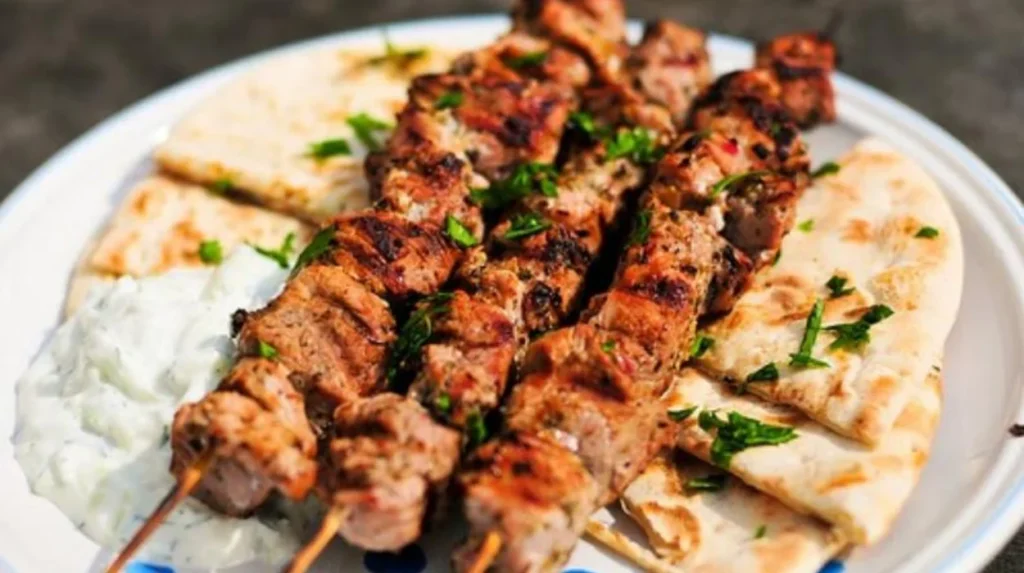
Greek food is one of the clearest categories. Typical dishes include souvlaki, moussaka, grilled halloumi, tzatziki, Greek salad and seafood.
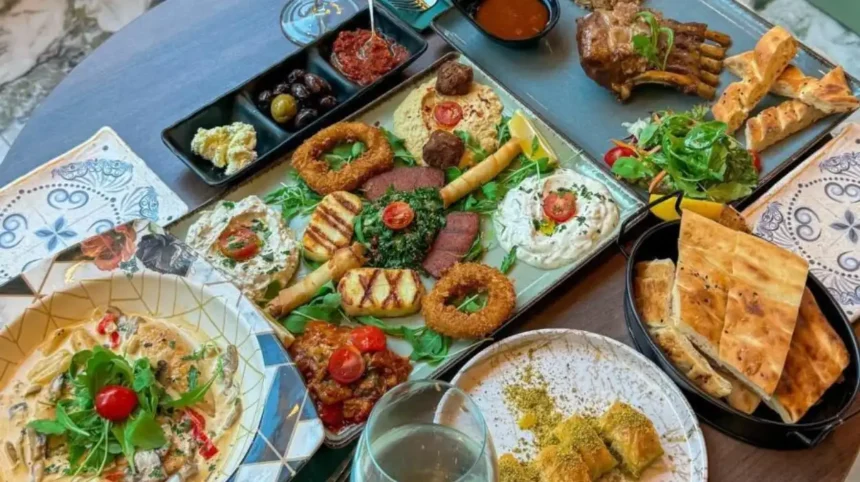
Turkish restaurants provide another major part of Bristol’s Mediterranean dining landscape. Their menus often include meze, hummus, cacik, grilled meats, pide, aubergine dishes and Turkish pastries.
Spanish restaurants approach Mediterranean food through tapas and small plates. Typical examples include gambas, patatas bravas, tortilla española, grilled seafood and vegetable dishes. Bristol has dedicated tapas venues alongside broader Mediterranean restaurants. Current listings include Bravas, Poco Tapas Bar and Gambas.
Lebanese and Levantine restaurants focus heavily on plant-based dishes, grilled meats, flatbreads and mezze. Baba ganoush, falafel, hummus, tabbouleh and grilled aubergine are common examples.
Italian food is also Mediterranean in geographical terms, but restaurant searches often classify Italian restaurants separately. A search for the best Mediterranean restaurants therefore works best when it focuses on restaurants explicitly operating within the broader Mediterranean category rather than treating every Italian restaurant as Mediterranean.
Where are the best Mediterranean restaurants in Bristol?
Bristol’s Mediterranean restaurants are spread across central and neighbourhood areas, with notable choices in the city centre, Clifton, Bishopston, Southville, Horfield, Fishponds and other districts. Examples include Baldwin Street, Whiteladies Road and Gloucester Road.
Central Bristol is useful for visitors because several Mediterranean-related restaurants sit within or close to the main commercial and visitor areas.
Cappadocia Restaurant is located at 30–34 Baldwin Street and serves Mediterranean, Turkish, Greek and Middle Eastern food. Its menu includes mixed cold and hot tapas-style dishes, providing a broad introduction to eastern Mediterranean flavours.
Hat Bistro is on Denmark Street and is classified as a Mediterranean and Greek restaurant. It provides a central option for diners looking specifically for Greek-influenced Mediterranean food.
Clifton is another important dining district. Table Five Restaurant is on Whiteladies Road and focuses on Turkish food with Mediterranean, Greek, Lebanese and Middle Eastern influences. Its menu includes hummus, baba ghanoush, cacik, smoked aubergine and other small plates.
Bishopston and the Gloucester Road corridor contain several Mediterranean-related options. Eléa Greek Grill is located at 161 Gloucester Road and focuses on Greek food. Lazz Lounge Bristol Meze Bar at 272 Gloucester Road provides a Turkish meze-oriented option.
Southville also has a strong selection. La Mediterranean is located at 242 North Street, while Souk Kitchen operates at 277 North Street. Both provide Mediterranean-focused choices within the neighbourhood restaurant scene.
Which Bristol Mediterranean restaurants are best for Greek food?
Greek-focused restaurants in Bristol serve dishes such as grilled meats, souvlaki, halloumi, tzatziki, salads and seafood. Examples include Eléa Greek Grill, Olympus Greek Restaurant, Hat Bistro and Rhapsody Greek Wine Bar & Restaurant.
Eléa Greek Grill provides a dedicated Greek option on Gloucester Road. Its location makes it practical for diners exploring Bishopston and the wider Gloucester Road area.
Olympus Greek Restaurant operates on Two Mile Hill Road in Bristol and provides another dedicated Greek restaurant option outside the central dining area.
Rhapsody Greek Wine Bar & Restaurant is located on Denmark Street. It combines Greek restaurant dining with a wine-bar format and provides an evening-oriented option near central Bristol.
Hat Bistro is another central choice. Its classification as Mediterranean and Greek places it within both broader Mediterranean searches and more specific Greek restaurant searches. Current Bristol listings identify six establishments in the Greek special-occasion category, including Hat Bistro, La Mediterranean, Opa Bristol, Zest and Bristol Lido.
Greek cuisine has a strong emphasis on fresh vegetables, olive oil, herbs, yoghurt, cheese, grains and seafood. Grilled meat dishes are also important. This makes Greek restaurants particularly suitable for diners looking for menus containing both meat-based and vegetarian dishes.
Which Bristol Mediterranean restaurants are best for Turkish food?
Turkish Mediterranean restaurants in Bristol commonly combine grilled meats, meze, vegetables, yoghurt, flatbreads and seafood. Examples include Cappadocia, Table Five, Zest, Istanbul Grill & Meze Restaurant and PASHA Lounge.
Cappadocia is one of the most prominent Turkish-Mediterranean choices in central Bristol. Its current listing identifies Mediterranean, Turkish, Greek and Middle Eastern cuisines. Its menu includes hummus, tzatziki, beetroot kisir, baba ghanoush, shakshuka, borek, calamari, sucuk and halloumi.
Table Five provides another Turkish-focused option in Clifton. Its small-plate menu demonstrates the overlap between Turkish, eastern Mediterranean and Middle Eastern food traditions.
PASHA Lounge operates on Gloucester Road and provides a Turkish restaurant and late-evening lounge format.
Ezo Cafe Lounge is another Turkish option on Gloucester Road, combining café and restaurant characteristics.
Zest Mediterranean Restaurant operates at 408 Gloucester Road in Horfield. Current listings classify its cuisine as Mediterranean, European, Turkish and Greek, with vegetarian and vegan options.
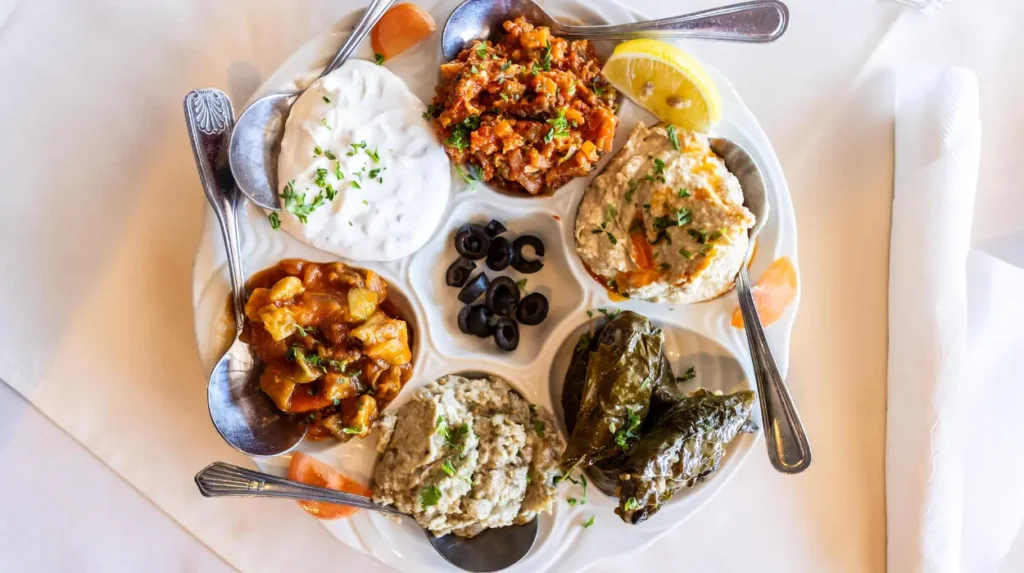
Turkish cuisine is particularly associated with meze. Meze means a collection of small dishes served individually or shared. Hummus, aubergine, yoghurt, olives, salads and grilled foods are common examples.
Which Bristol Mediterranean restaurants are best for Spanish tapas?
Spanish tapas restaurants provide Mediterranean-style small-plate dining built around ingredients such as seafood, vegetables, olive oil, peppers and cured foods. Examples in Bristol include Bravas, Poco Tapas Bar, Gambas and ACENTO.
Bravas is located at Cotham Hill and operates as a tapas bar. Its location makes it a useful option for diners looking for Spanish small-plate dining in the Redland and Cotham area.
Poco Tapas Bar – Bristol is on Jamaica Street and provides a tapas-focused dining format. Current listings classify it within Mediterranean and European cuisine.
Gambas operates at Cargo 2 on Museum Street. Its name reflects its seafood focus, while its restaurant format fits Bristol’s wider Mediterranean and Spanish dining landscape.
ACENTO on King’s Road in Clifton is another tapas-focused restaurant.
Tapas is important because it changes how Mediterranean food is consumed. Instead of ordering one large main course, diners can order several smaller dishes. This creates opportunities to sample vegetables, seafood, meat, bread and sauces during one meal.
What dishes should you order at a Mediterranean restaurant in Bristol?
The best dishes depend on regional cuisine, but strong Mediterranean menus commonly include hummus, grilled vegetables, Greek salad, halloumi, meze, grilled meats, seafood, tapas and olive-oil-based salads. Examples include tzatziki, baba ghanoush and calamari.
Hummus is a chickpea and tahini preparation commonly associated with Levantine and wider Middle Eastern cuisine. Lemon and garlic provide acidity and flavour.
Tzatziki is a yoghurt-based preparation containing cucumber, garlic and herbs. Greek and Turkish versions are widely served.
Baba ghanoush is made primarily from cooked or smoked aubergine combined with tahini and other flavourings. It is common across Levantine and eastern Mediterranean food traditions.
Halloumi is a semi-hard cheese traditionally associated with Cyprus. Restaurants commonly grill or fry it and serve it with vegetables, salads or bread.
Kisir is a Turkish bulgur-based salad prepared with ingredients such as herbs, peppers and tomato-based seasoning. Cappadocia’s current menu lists beetroot kisir as one of its cold tapas options.
For meat dishes, diners can look for grilled lamb, chicken, köfte, kebabs and souvlaki. Seafood menus commonly include calamari, prawns, grilled fish and mussels.
Spanish tapas adds another layer. Patatas bravas, tortilla, gambas and grilled vegetables provide small portions suitable for sharing.
Why is olive oil important in Mediterranean restaurants?
Olive oil is a foundational Mediterranean ingredient used for cooking, dressings, marinades and finishing. Research links Mediterranean dietary patterns and olive-oil consumption with favourable cardiovascular and metabolic outcomes, although individual restaurant dishes remain part of a wider diet.
Olive oil is central to many Mediterranean food traditions. It provides fat for cooking and acts as a dressing for salads, vegetables, bread and grilled foods.
Extra virgin olive oil is produced mechanically without the refining processes used for refined olive oils. It also contains bioactive compounds such as polyphenols.
An umbrella review published in 2024 assessed 31 meta-analyses and found that olive-oil consumption was associated with outcomes involving cardiovascular disease, diabetes, inflammation and mortality.
A separate review of Mediterranean dietary evidence identified strong associations between greater adherence to the dietary pattern and lower risks of cardiovascular disease, coronary heart disease, myocardial infarction, overall cancer incidence, neurodegenerative disease and diabetes.
These findings relate to dietary patterns rather than individual restaurant meals. A Mediterranean restaurant can provide ingredients associated with the Mediterranean dietary pattern, but portion size, preparation methods, salt, sauces, desserts and alcohol also influence the nutritional profile of a meal.
Are Mediterranean restaurants in Bristol suitable for vegetarian and vegan diners?
Mediterranean restaurants often provide substantial plant-based choices because vegetables, pulses, grains, herbs, nuts and olive oil are fundamental ingredients. Examples include hummus, falafel, salads, grilled vegetables, aubergine dishes, lentils and bean-based preparations.
Plant-based eating has a strong presence across Mediterranean food traditions.
Greek menus often contain gigantes beans, Greek salad, grilled vegetables, aubergine dishes and vegetable-based starters. Turkish menus commonly feature hummus, ezme, stuffed vegetables, lentil dishes and vegetable meze. Lebanese menus frequently include falafel, tabbouleh, fattoush, hummus and baba ghanoush.
Current Bristol restaurant listings explicitly identify vegetarian and vegan options at establishments including Cappadocia and Zest.
Diners should distinguish between vegetarian and vegan food. Halloumi, feta, yoghurt and tzatziki are vegetarian but contain dairy. Some breads and sauces also contain animal-derived ingredients.
For strict vegan dining, checking ingredients directly with the restaurant remains important. Cross-contact during preparation is also relevant for diners with allergies.
Which Mediterranean restaurants in Bristol are suitable for groups?
Mediterranean restaurants suit group dining because many cuisines use sharing formats such as meze and tapas. Examples include mixed cold meze, hot starters, grilled meats, salads and shared vegetable dishes served across a table.
Sharing is an important structural feature of Mediterranean dining.
Turkish meze provides multiple small dishes that can be ordered together. Spanish tapas uses a similar small-plate principle. Greek restaurants also offer starters and side dishes that work well across a group.
Cappadocia’s current menu illustrates this approach with mixed cold tapas and a chef’s assortment for two containing several different dishes.
Bristol’s official tourism organisation also notes that many restaurants across the city cater for group bookings and recommends advance planning for larger groups.
For group dining, the practical considerations include table capacity, reservation requirements, dietary restrictions and whether the kitchen can accommodate shared menus.
Which Bristol areas are useful for a Mediterranean food trail?
Gloucester Road, Clifton, the city centre and Southville provide useful clusters for exploring Mediterranean-related food in Bristol. Examples include Turkish restaurants on Gloucester Road, Mediterranean restaurants around central Bristol and independent venues on North Street.
Gloucester Road is one of the most useful areas for Mediterranean-related dining. Eléa Greek Grill, Lazz Lounge and PASHA Lounge provide Greek and Turkish options within the broader corridor. Zest is also located on Gloucester Road in Horfield.
Clifton provides Turkish and Mediterranean choices around Whiteladies Road and nearby streets. Table Five is positioned at 50 Whiteladies Road, while ACENTO operates on King’s Road.
Central Bristol provides easy access to Cappadocia, Hat Bistro and other international restaurants. The central location also connects Mediterranean dining with Bristol’s shopping, cultural attractions and waterfront areas.
Southville provides a strong independent restaurant environment. La Mediterranean and Souk Kitchen are both located on North Street.
Visit Bristol highlights the city’s independent restaurant culture and identifies different neighbourhoods as having distinct food identities.
What makes Bristol’s Mediterranean restaurant scene distinctive?
Bristol’s Mediterranean restaurant scene combines independent neighbourhood businesses with established city-centre restaurants, covering Greek, Turkish, Spanish, Lebanese and broader Mediterranean traditions. Its strength comes from culinary diversity and the city’s established independent food culture.
Bristol is not dependent on one Mediterranean culinary tradition. Its restaurants represent multiple geographical interpretations of Mediterranean food.
The distinction matters for searchers. Someone searching for “Mediterranean restaurants Bristol” can encounter Greek grills, Turkish meze, Spanish tapas and Lebanese restaurants. Someone searching for “Greek restaurants Bristol” receives a narrower selection.
This breadth reflects the wider structure of Bristol’s food scene. Visit Bristol describes the city as having independent restaurants, food markets and international cuisines across different neighbourhoods.
The city’s food culture also supports different price points. Casual cafés, takeaway-oriented restaurants, neighbourhood bistros, tapas bars and more formal dining rooms all operate within the wider Mediterranean category.
Explore More Area Guide
Best Mexican Restaurants in Bristol: Top Places 2026
Best Japanese Restaurants in Bristol: Sushi & Ramen 2026
How should you choose the best Mediterranean restaurant in Bristol?
Choose by cuisine, location, dining format, dietary requirements and occasion rather than using the Mediterranean label alone. Greek, Turkish, Spanish and Lebanese restaurants provide different menus, while central and neighbourhood venues suit different travel plans.
Start with the cuisine. Choose Greek food for dishes such as souvlaki, moussaka and halloumi. Choose Turkish food for meze, grilled meats and pide. Choose Spanish food for tapas and seafood. Choose Lebanese or Levantine food for hummus, falafel, grilled meats and vegetable mezze.
Next consider location. Central restaurants suit visitors combining food with sightseeing. Clifton and Gloucester Road work well for neighbourhood dining. Southville provides independent options around North Street.
Dietary requirements should be checked before ordering. Mediterranean menus often contain nuts, sesame, dairy and gluten. Tahini contains sesame, while hummus and baba ghanoush commonly contain tahini. Flatbreads often contain wheat.
For groups, check whether the restaurant accepts reservations and whether sharing dishes forms a major part of the menu.
Restaurant information changes. Opening hours, menus, prices and availability should be checked directly before travelling.
What is the long-term relevance of Mediterranean dining in Bristol?
Mediterranean dining remains relevant because it combines established regional cuisines with ingredients increasingly associated with balanced dietary patterns. Bristol’s diverse food culture provides a strong setting for Greek, Turkish, Spanish and eastern Mediterranean restaurants.
The Mediterranean dietary pattern has an extensive research base. A 2026 review describes it as one of the most extensively studied dietary patterns for chronic disease prevention and management. Its defining characteristics include high consumption of plant foods and olive oil, moderate fish and dairy consumption and lower red and processed meat intake.
Research also supports the importance of considering the complete dietary pattern rather than isolating one ingredient. A major evidence review involving more than 12.8 million participants across observational and randomised-trial meta-analyses found robust evidence connecting greater adherence to the Mediterranean diet with reduced risks across several major health outcomes.
For Bristol diners, this translates into a broad culinary choice rather than a single menu formula. Mediterranean restaurants provide access to vegetables, legumes, seafood, grains, olive oil, herbs, nuts, yoghurt and grilled foods across different regional traditions.
Bristol’s official food and drink information also confirms the city’s continuing emphasis on independent restaurants, international cuisines and varied dining experiences.
The strongest way to identify the best Mediterranean restaurant in Bristol is therefore to match the restaurant’s regional cuisine and dining format with the purpose of the meal. Greek, Turkish, Spanish, Lebanese and broader Mediterranean venues each provide different culinary experiences, while neighbourhoods such as the city centre, Clifton, Gloucester Road and Southville offer convenient starting points for exploring them.
What are the best Mediterranean restaurants in Bristol?
Bristol has a wide range of Mediterranean restaurants serving Greek, Turkish, Spanish, Lebanese and broader eastern Mediterranean cuisine. Notable options include Cappadocia, Table Five, Zest, Eléa Greek Grill, Bravas and Poco Tapas Bar.