Key Points
- On Thursday, councillors of Bristol voted to form a cross-party working group to spend the next several months studying the options for investing the income from the Clean Air Zone.
- It includes a £4m improvement project, which includes a circular bus service through the city center and a one-hour ticket.
- The one-hour ticket allows passengers to change buses without paying extra fees, similar to those used in London and Manchester.
- According to Matty Edwards and Alex Seabrook of the Local Democracy Reporting Service, the proposed counter-clockwise circular route will connect such places as Temple Meads, Old Market, Cabot Circus, Broadmead, The Centre, and Redcliffe.
- “Ultimately we want to turn public transport in Bristol into something that works ‘as a network and not individual routes,'” explained Cllr Ed Plowden, Chair of the Transport Committee.
- The working group will also consider any funding arrangements that could come from a proposed workplace parking levy, which was to undergo consultations at a later stage in the autumn.”
Bristol (Bristol Express News) September 21, 2026 – Bristol City Council has initiated formal steps toward modernising local public transport after councillors voted on Thursday to set up a dedicated cross-party task group. As detailed by Matty Edwards and Alex Seabrook of the Local Democracy Reporting Service, this collaborative committee will spend the upcoming months deciding how best to allocate and invest income derived from the city’s Clean Air Zone. At the heart of the discussions is a £4m upgrade package designed to tackle persistent congestion and reshape how residents navigate the urban core.
The primary initiatives under consideration include the introduction of an integrated one-hour ticket alongside a dedicated city centre circular bus route. According to the reporting by Matty Edwards and Alex Seabrook of the Local Democracy Reporting Service, local councillors heard evidence suggesting that a timed ticket system would remove financial barriers for commuters who currently must pay twice when transferring between separate services.
How Would the One-Hour Ticket and Circular Route Operate in Practice?
Under the proposed arrangements, passengers purchasing a one-hour ticket would gain the ability to switch buses within a 60-minute window without facing supplementary charges. Similar multi-service ticketing frameworks are already operational in major urban centres such as London and Manchester, as noted by the Local Democracy Reporting Service. While standard single fares in Bristol currently cost £2.60 (£5.20 for two individual journeys), this total would drop to £4 from January due to an existing national cap on bus fares.
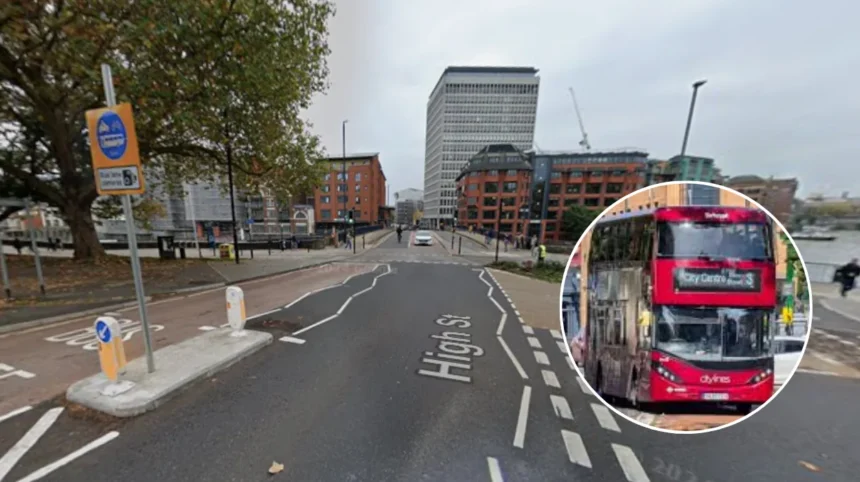
The proposed loop service would run in an anti-clockwise direction. The mapped alignment incorporates key transport hubs and commercial zones, connecting Temple Meads railway station, Old Market, Cabot Circus, Broadmead, the Centre, and Redcliffe. Because a significant portion of this infrastructure already benefits from established bus lanes, planners believe services can avoid severe traffic delays.
Elaborating on the strategic vision behind the project, Councillor Ed Plowden, the chair of the transport committee, stated to Matty Edwards and Alex Seabrook of the Local Democracy Reporting Service that “One of the things we recognise is people tend to see the bus network in Bristol not as a network but a series of individual routes.”
Councillor Ed Plowden further remarked to the Local Democracy Reporting Service that “People are quite reluctant to change and I’m not surprised because you have to pay all over again.”
What Future Technologies and Additional Funding Sources Are Being Explored?
To maintain high frequency and reliability, transport planners estimate that as few as three dedicated vehicles could maintain a five-minute service interval along the circular loop, thanks to reserved bus lanes keeping them clear of regular traffic congestion. Furthermore, Councillor Ed Plowden told the Local Democracy Reporting Service that the route could eventually accommodate “the next generation of buses”—electric vehicles styled similarly to modern trams, equipped with three doors to accelerate passenger boarding and alighting times.
Addressing the collaborative nature of the initiative, Councillor Ed Plowden told Matty Edwards and Alex Seabrook of the Local Democracy Reporting Service:
“What we’s started is a process of councillors getting their heads together across party to have proper, grown-up discussions about how we can invest whatever money we’ve got in the future of buses in Bristol.”
Beyond managing revenue from the Clean Air Zone, the newly formed task group has been tasked with evaluating potential financial returns from a proposed workplace parking levy. Public consultations regarding this levy scheme were scheduled to take place later in the autumn season.
Explore more City Centre News:
Council Refuses Repair Timetable for Closed Pero’s Bridge City Centre 2026
Flaking Bristol City Centre Mural Repaint Set For Bristol 2026
Background of the Development
The consideration of a £4m transport upgrade in Bristol emerges against a backdrop of long-standing structural challenges within the city’s public transport network. For years, passenger advocacy groups and local commuters have criticised the fragmented nature of Bristol’s bus services, which are operated by commercial companies rather than a municipal franchising authority. High fare costs for multi-stage journeys and chronic road congestion have historically discouraged wider public transport adoption.
The establishment of the Clean Air Zone in Bristol, implemented to lower nitrogen dioxide levels and improve urban air quality, generated surplus revenue streams. City leaders faced increasing public and political pressure to reinvest these funds directly into sustainable, green infrastructure. Concurrently, national policy changes, including the government-backed bus fare cap, created a supportive financial environment for local authorities seeking to trial innovative ticketing initiatives and simplify commuter journeys.
How This Development Can Affect Bristol Commuters and Local Businesses
The implementation of a £4m upgrade programme featuring a circular loop and a one-hour ticket stands to significantly alter daily travel patterns for Bristol commuters, students, and shoppers. For the everyday commuter, the removal of double-fare penalties for multi-leg journeys lowers the cost barrier of public transit, making cross-town travel financially predictable and more appealing than driving personal vehicles into the congested city centre.
Local businesses located around Cabot Circus, Broadmead, Old Market, and Redcliffe could experience a boost in footfall. By streamlining access into the commercial heart of Bristol and offering frequent, tram-like electric bus options, the scheme enhances urban mobility and reduces the friction of visiting retail and leisure districts. However, the success of these projections relies heavily on whether the cross-party task group can secure reliable long-term funding beyond the initial Clean Air Zone revenues, particularly as plans for a workplace parking levy move toward public consultation and potential pushback from local employers.