The best areas near the University of Bristol are concentrated around Clifton, Clifton Down, Cotham, Redland, Kingsdown, Stoke Bishop, Bishopston, and Bristol city centre. Each area provides different combinations of walking access, public transport, housing, green space, shops, restaurants, and student facilities.
- Why are Clifton and the surrounding neighbourhoods important for the University of Bristol?
- Is Clifton the best-known area near the University of Bristol?
- Is Clifton Down a good area for living near the university?
- Is Cotham suitable for students and university staff?
- Is Redland one of the best areas near the University of Bristol?
- Is Kingsdown close enough to the University of Bristol?
- Is Stoke Bishop a good area near the University of Bristol?
- Is Bishopston a practical area near the University of Bristol?
- Is Bristol city centre a good place to live near the University of Bristol?
- How easy is it to travel from nearby areas to the University of Bristol?
- What should students consider when choosing an area near the University of Bristol?
- How do the best areas near the University of Bristol compare geographically?
- Why will these Bristol neighbourhoods remain relevant for University of Bristol visitors and residents?
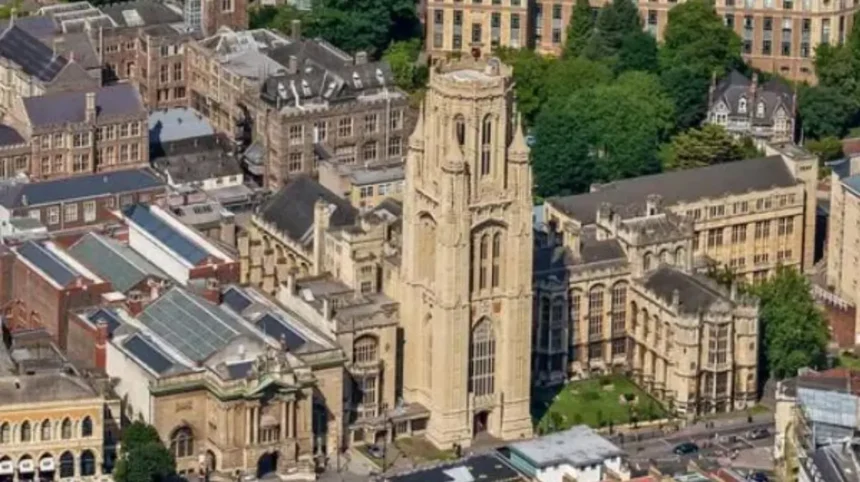
The University of Bristol is centred on its Clifton campus, with the Wills Memorial Building, Senate House, Beacon House, and other major academic buildings forming a dense university district. Most Clifton Campus buildings are close enough to reach on foot, while several surrounding neighbourhoods connect through walking routes, buses, and cycling infrastructure.
The university traces its origins to University College, Bristol, which opened on Park Row in 1876. It received its Royal Charter as the University of Bristol in 1909. The institution is now a Russell Group university and attracts students from more than 145 countries.
Location therefore matters for more than distance. A nearby neighbourhood affects the daily journey to lectures, access to supermarkets and food outlets, proximity to parks, housing choices, and connections with Bristol city centre.
Why are Clifton and the surrounding neighbourhoods important for the University of Bristol?
Clifton and its neighbouring districts form the main residential and urban environment around the University of Bristol’s Clifton Campus, providing direct access to academic buildings, shops, cafés, restaurants, parks, student facilities, and major Bristol transport connections.
Clifton is the most closely associated neighbourhood with the university. The Clifton Campus sits within the wider Clifton and Clifton Down area, with major university buildings distributed around Woodland Road, Park Row, Queens Road, Tyndall Avenue, and nearby streets.
Bristol City Council identifies Clifton, Clifton Down, Cotham, and Hotwells and Harbourside as wards within the city’s Area Committee 3. Redland, Bishopston and Ashley Down, and Stoke Bishop sit within Area Committee 2.
This administrative structure helps explain why several adjacent areas appear in searches for accommodation near the University of Bristol. They are separate neighbourhoods, but their streets and transport routes form a connected urban area around the university.
The university itself describes its Clifton residences as being close to independent shops, cafés, and restaurants in Clifton Village. Its Stoke Bishop residences sit near the open space of Clifton Down, while city-centre residences provide access to shops, cafés, bars, and Bristol Harbourside.
For students, staff, parents, visitors, and prospective applicants, this creates several practical choices. Living immediately beside campus prioritises walking time. Living farther north prioritises green space and residential surroundings. Living towards the city centre prioritises transport, shopping, and access to central Bristol.
Is Clifton the best-known area near the University of Bristol?
Clifton is the best-known neighbourhood near the University of Bristol because the main Clifton Campus sits within it and the area contains university buildings, student residences, independent businesses, historic streets, green spaces, and direct routes towards Bristol city centre.
Clifton is a historic Bristol neighbourhood with a strong connection to the university. Its built environment includes Georgian and Victorian architecture, residential terraces, independent businesses, and major landmarks.
The University of Bristol’s main teaching campus is located in Clifton. The university states that most buildings on the Clifton Campus are close together and can be reached from one another in less than ten minutes on foot.
This makes Clifton particularly relevant for students whose schedules involve frequent movement between academic buildings.
Clifton also contains several university residences. Current university accommodation includes Clifton Hill House, Manor Hall, Richmond Terrace, and other residences located in or around the district.
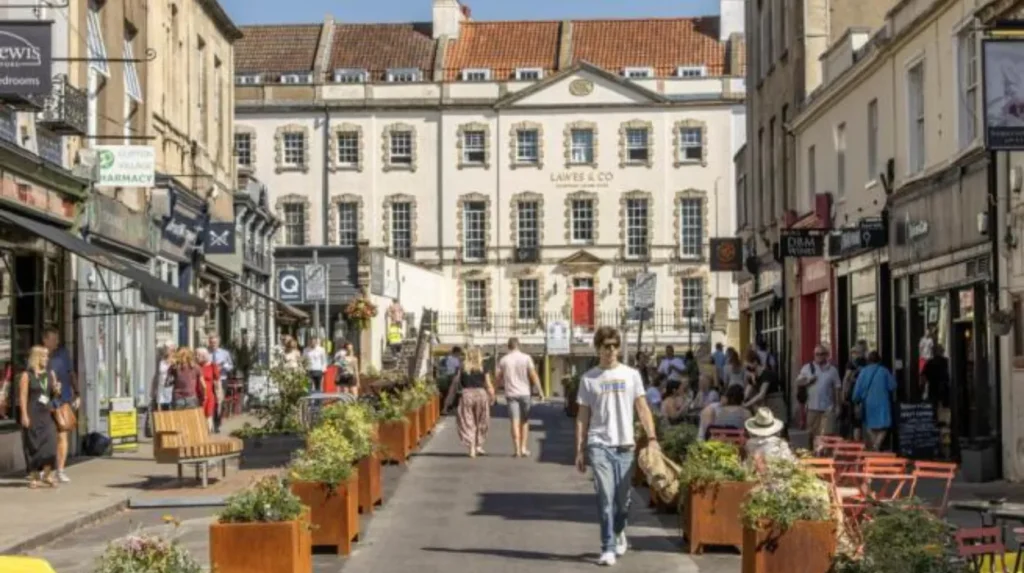
Clifton Village provides a distinct local centre. It contains independent shops, cafés, restaurants, and services. The wider Clifton area also connects easily with Park Street, Triangle, Queen’s Road, and the city centre.
The area has substantial historic importance. Bristol City Council has a dedicated Clifton and Hotwells Conservation Area Character Appraisal, reflecting the architectural and historic significance of the district.
For visitors, Clifton provides proximity to university landmarks and central Bristol attractions. For students, it reduces the need for daily public transport when accommodation sits within walking distance.
Is Clifton Down a good area for living near the university?
Clifton Down is a well-connected residential area north of the main campus, with university access, green space, local shops, cafés, and transport links. Its location provides a practical connection between central Clifton, Redland, Stoke Bishop, and Bristol’s northern neighbourhoods.
Clifton Down sits between the university’s main campus and neighbourhoods such as Redland and Stoke Bishop. Its location is particularly relevant for students who want access to both university buildings and open space.
The Downs, a large area of open public land, is one of the area’s defining features. The university’s Stoke Bishop accommodation is also positioned close to Clifton Down’s open green space.
Clifton Down Station provides a rail connection on the Severn Beach Line. The station is approximately a 10–15-minute walk from the Clifton Campus according to University of Bristol travel information.
The surrounding roads also provide access to bus services. The university identifies services including routes 1, 2, 2a, 3, 4, 5, and 77 around the Park Street, Triangle, and Whiteladies Road area.
Clifton Down therefore works as a transition zone. It is close enough to central university facilities for regular walking while remaining connected to northern Bristol.
Is Cotham suitable for students and university staff?
Cotham is a central residential neighbourhood close to the University of Bristol, positioned between Clifton, Kingsdown, Redland, and Bristol city centre. Its location supports walking access to campus while retaining connections to local shops, services, healthcare, and central Bristol.
Cotham is one of the most relevant neighbourhoods for people searching for housing near the university. The area is immediately east of Clifton and close to the main university campus.
Bristol City Council places Cotham within the same Area Committee as Clifton and Clifton Down. This reflects the area’s close geographical relationship with the university district.
The Cotham and Redland Conservation Area also has an official character appraisal. Bristol City Council identifies the area’s historic built environment as a conservation asset.
Cotham’s location provides relatively short journeys towards university buildings on Woodland Road, Park Row, and Queens Road. It also gives access to central Bristol through nearby roads and walking routes.
Housing consists largely of established residential streets rather than a single purpose-built university district. This creates a mixed neighbourhood containing students, professionals, families, and long-term residents.
For students, Cotham is especially relevant when accommodation availability or budget makes Clifton itself less suitable. Its proximity keeps many university journeys within walking or cycling range.
Is Redland one of the best areas near the University of Bristol?
Redland is a major residential district north of the University of Bristol, known for its proximity to Clifton, Whiteladies Road, university facilities, local businesses, and transport connections. It provides a strong combination of student housing, established homes, services, and neighbourhood amenities.
Redland extends north and east of Clifton Down and forms part of Bristol’s established inner-north residential area.
The University of Bristol lists Redland Road among its university accommodation locations. Its current accommodation information also includes Redland within the wider network of residences around Bristol.
Whiteladies Road is a major commercial corridor close to Redland. It provides shops, cafés, restaurants, and everyday services. This makes the neighbourhood practical for people who want amenities close to home.
Redland also has strong connections with Clifton and Cotham. University journeys can therefore involve walking rather than relying exclusively on buses.
The district contains a mixture of Victorian and Edwardian residential architecture, terraces, larger houses, and converted properties. Many properties have historically been adapted into flats or shared student accommodation.
Bristol City Council places Redland within Area Committee 2 alongside Stoke Bishop, Westbury-on-Trym and Henleaze, and Bishopston and Ashley Down.
The area’s combination of university proximity and established residential infrastructure makes it an important part of the local accommodation market.
Is Kingsdown close enough to the University of Bristol?
Kingsdown is a compact inner-Bristol neighbourhood close to the University of Bristol, Stokes Croft, Cotham, and Bristol city centre. Its central location provides convenient walking access to campus while also connecting residents with shopping, culture, transport, and employment areas.
Kingsdown sits east of Cotham and close to the city centre. Its position makes it relevant for students and staff who want central access without living directly within Clifton.
The University of Bristol’s Clifton Campus can be reached through several walking routes from Kingsdown. The area also connects with Stokes Croft, Broadmead, Cabot Circus, and Bristol’s central transport network.
Kingsdown has a predominantly residential character, with older housing and streets positioned close to major urban destinations.
The neighbourhood is particularly useful for people who value centrality. Bristol city centre is close, while university buildings remain accessible on foot.
The area also sits near Bristol’s cultural and entertainment districts. Stokes Croft and St Paul’s are nearby, while Cabot Circus provides a large concentration of retail and leisure facilities.
For university life, Kingsdown therefore combines two geographical advantages: proximity to the academic core and proximity to central Bristol.
Is Stoke Bishop a good area near the University of Bristol?
Stoke Bishop is an important university residential area approximately two miles from the main campus, with substantial student accommodation, open green space, sports facilities, and a dedicated university bus connection to Clifton and Bristol city centre.
Stoke Bishop is one of the University’s principal residential areas. The university states that its Stoke Bishop residences house more than 2,000 students.
University residences in the area include Badock Hall, Wills Hall, University Hall, Durdham Hall, Hiatt Baker Hall, and Woodland Court.
The area sits close to Clifton Down and the wider Downs. This provides substantial open space compared with the denser residential streets closer to central Bristol.
The university also operates Bristol Unibus connections between Stoke Bishop halls, the Clifton Campus, and the city centre.
Stoke Bishop is therefore particularly significant for first-year students living in university accommodation.
The area has a different character from central Clifton. It contains larger residential properties, university halls, sports facilities, and green spaces.
The university’s 2026 prospectus states that Stoke Bishop residences are close to open green space and that university residences are within walking or cycling distance, or a short bus journey, of campus.
Is Bishopston a practical area near the University of Bristol?
Bishopston is a northern Bristol neighbourhood with useful access to the University of Bristol through Clifton Down and Redland. Its Gloucester Road commercial corridor provides shops, food businesses, services, and everyday amenities alongside established residential streets.
Bishopston is located north of Redland and Clifton Down. It is particularly associated with Gloucester Road, one of Bristol’s major independent commercial corridors.
The neighbourhood provides a broader residential environment than the immediate university district. Its housing includes Victorian and Edwardian terraces, converted flats, and larger residential properties.
The distance from the main campus varies by street. The southern parts of Bishopston provide easier walking access, while northern sections rely more heavily on cycling or buses.
Gloucester Road provides a major concentration of independent businesses. The corridor includes food outlets, cafés, pubs, shops, and everyday services.
Bristol City Council places Bishopston and Ashley Down within the same local area committee as Redland and Stoke Bishop.
Bishopston is therefore relevant for people seeking a neighbourhood with a stronger local high-street identity while retaining connections to the university.
Is Bristol city centre a good place to live near the University of Bristol?
Bristol city centre provides extensive access to the University of Bristol through walking, cycling, and bus routes. It also offers major shopping, employment, cultural, transport, and leisure facilities, making it practical for students and professionals with city-wide travel needs.
City-centre living provides direct access to Bristol’s wider urban infrastructure.
The University of Bristol states that most university buildings are within walking distance of Bristol city centre, Bristol Temple Meads railway station, and Bristol Bus and Coach Station.
University residences in the city centre include Avon Point, Print Hall, The Courtrooms, The Rackhay & Favell House, and other properties.
The university’s 2026 accommodation information shows substantial variation in residence prices depending on building, room type, tenancy length, and student category. For example, listed 2026/27 weekly prices range from £148.19 for a basic single room at Queen’s Road to £299.74 for a standard studio at Print Hall.
City-centre accommodation also places residents near Bristol Harbourside, shopping districts, restaurants, cultural venues, and major transport facilities.
The main disadvantage in practical terms is not distance from university but the different urban environment. City-centre housing provides greater access to central facilities but less of the traditional residential character found in Clifton, Redland, and Stoke Bishop.
How easy is it to travel from nearby areas to the University of Bristol?
Travel to the University of Bristol is supported by walking, cycling, buses, and rail connections. The university identifies several bus routes serving Clifton Campus, while Clifton Down Station and Bristol Temple Meads provide wider rail connections.
Walking is the most direct option for people living in Clifton, Cotham, Kingsdown, parts of Redland, and nearby districts.
The university states that walking to Clifton Campus generally involves an uphill route from central Bristol.
Bus services provide connections from Temple Meads and other parts of Bristol. The university identifies the number 72 service from Temple Meads, with a typical journey of 20–30 minutes, and the number 8 service, which also connects Temple Meads with the Clifton area.
Cycling is another important option. Bristol operates a city-wide cycling network, while the university provides cycle facilities at relevant campuses.
Rail is especially useful for people travelling beyond the immediate neighbourhoods. Clifton Down Station connects with the wider Severn Beach Line network.
The university also states that walking between the Clifton Campus and Temple Quarter Enterprise Campus takes approximately 40 minutes, while cycling takes around 15–20 minutes.
These connections make the choice of neighbourhood less dependent on car ownership.
What should students consider when choosing an area near the University of Bristol?
Students should compare walking distance, accommodation type, transport, local amenities, green space, housing availability, and daily travel requirements. Clifton prioritises campus proximity, Stoke Bishop prioritises university accommodation and green space, while Redland and Cotham combine residential living with central access.
Distance is only one factor in choosing accommodation.
A student attending lectures mainly on the Clifton Campus benefits from short walking routes. Clifton, Cotham, Kingsdown, and nearby parts of Redland provide this advantage.
Students in university halls have a different calculation. Stoke Bishop contains a large concentration of university residences and dedicated transport connections.
Accommodation cost also requires direct comparison. The University of Bristol publishes current residence prices by building, room type, catering arrangement, tenancy length, and student status.
Food access is another practical consideration. The university states that its residences are near small food shops and that its accommodation is distributed across several Bristol neighbourhoods.
Transport requirements also vary. A student travelling regularly to Bristol Temple Meads needs different connections from someone who spends most of the week on Clifton Campus.
Green space affects daily routines as well. Stoke Bishop and Clifton Down provide particularly strong access to open land.
The final choice therefore depends on the relationship between campus location, housing, transport, amenities, and daily routine rather than a single measure of distance.
Explore More Area Guide
Best Areas Near Bristol Temple Meads: Temple Quarter & Redcliffe
Best Areas Near Bristol City Centre: Clifton, Redland & Southville
How do the best areas near the University of Bristol compare geographically?
The main nearby areas form a connected belt around the Clifton Campus. Clifton and Cotham sit closest to central university buildings, Redland and Clifton Down extend north, Stoke Bishop lies farther northwest, and the city centre connects south and east.
The geography is straightforward.
Clifton forms the core university neighbourhood. Clifton Down and Redland extend north and northeast. Cotham and Kingsdown sit east of the central campus. Stoke Bishop lies farther northwest. Bristol city centre stretches southeast towards the harbourside and Temple Meads.
This arrangement creates different daily travel patterns.
Clifton supports the shortest campus journeys. Cotham and Kingsdown provide central residential positions. Redland and Clifton Down combine residential streets with commercial and green-space access. Stoke Bishop provides a major university residential environment. The city centre provides access to the widest range of urban services.
Bristol City Council’s local administrative boundaries confirm the close relationship among Clifton, Clifton Down, Cotham, Redland, and Stoke Bishop.
The university’s accommodation network reinforces this geography. Current university residences are distributed across Clifton, Stoke Bishop, the city centre, Redland, and other parts of Bristol.
For visitors, this means that several neighbourhoods can function as practical bases for exploring the University of Bristol.
For students, the same geography creates multiple housing options with different combinations of travel time, amenities, green space, and residential character.
Why will these Bristol neighbourhoods remain relevant for University of Bristol visitors and residents?
Clifton, Clifton Down, Cotham, Redland, Kingsdown, Stoke Bishop, Bishopston, and Bristol city centre will remain important because they form the established residential, academic, commercial, and transport network surrounding the University of Bristol.
The university is continuing to develop its physical presence across Bristol. In 2026, the institution is marking 150 years since University College Bristol opened in October 1876. The university is also developing its Temple Quarter Enterprise Campus.
This expansion strengthens the relationship between the historic Clifton Campus and central Bristol.
The University of Bristol’s travel information identifies the Clifton Campus as its main teaching campus while highlighting links with Temple Quarter and other locations.
The established neighbourhoods around Clifton remain important because they already contain housing, transport routes, shops, public spaces, and university facilities.
At the same time, central Bristol is gaining greater importance through the Temple Quarter development and its connection with Bristol Temple Meads.
For anyone researching the best areas near the University of Bristol, the key distinction is therefore geographical. Clifton offers the closest traditional university setting. Clifton Down and Redland provide nearby residential alternatives. Cotham and Kingsdown offer central locations. Stoke Bishop provides major university accommodation and green space. Bishopston extends the residential catchment towards Gloucester Road. Bristol city centre connects university life with the wider city.
The most suitable area depends on the required balance between campus access, housing, transport, local services, green space, and city-centre connectivity.
What is the best area to live near the University of Bristol?
Clifton is the main area associated with the University of Bristol because the Clifton Campus is located there. Cotham, Redland, Clifton Down, Kingsdown, and Stoke Bishop also provide convenient access.