Bristol is a major city in South West England with a strong maritime heritage, nationally important engineering history, two major universities, extensive green space, established cultural institutions and distinctive neighbourhoods. It combines a compact central area with residential districts, waterfront destinations and major transport connections.
- What is Bristol known for?
- How did Bristol develop historically?
- Which areas of Bristol should newcomers understand first?
- How do newcomers get to Bristol?
- How can newcomers travel around Bristol?
- What should newcomers see and do in Bristol?
- Where should newcomers eat, shop and experience Bristol’s culture?
- What practical information should newcomers know before exploring Bristol?
- How can newcomers plan their first Bristol itinerary?
- Why is Bristol important for newcomers today?
The city is an important destination for visitors, students, professionals, families and people relocating from other parts of the UK. Bristol also functions as a regional economic and cultural centre for South West England.
A newcomer benefits from understanding Bristol as a collection of connected areas rather than a single central district. The city centre, Harbourside, Clifton, Redland, Southville, Bedminster, Easton, St George, Bishopston and other neighbourhoods each have different characteristics. Visit Bristol describes the city as a series of districts and areas with their own distinctive identities.
Bristol also has a substantial historical depth. Its development from a medieval port into a major commercial centre, industrial city and modern cultural hub shaped its architecture, transport network, waterfront and neighbourhoods.
What is Bristol known for?
Bristol is known for its maritime history, Clifton Suspension Bridge, Brunel engineering, street art, cultural institutions, green spaces, universities, independent businesses and distinctive neighbourhoods. Its identity combines historic architecture, waterfront regeneration, creative industries, education and modern urban development.
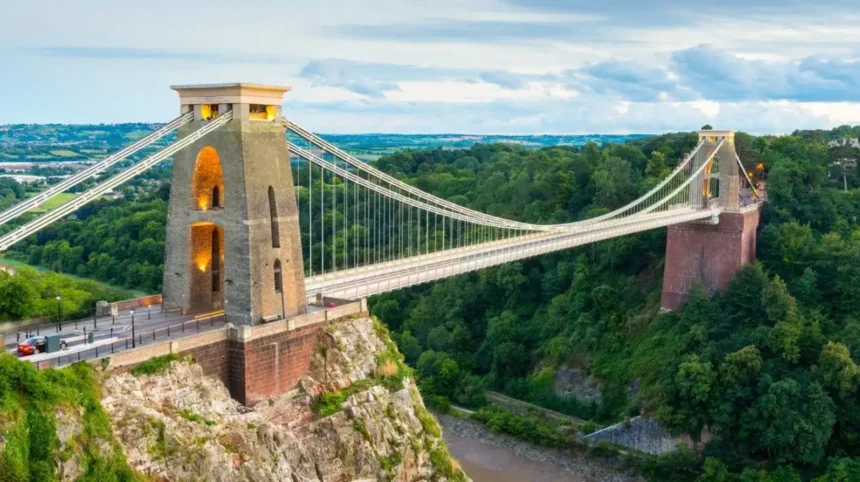
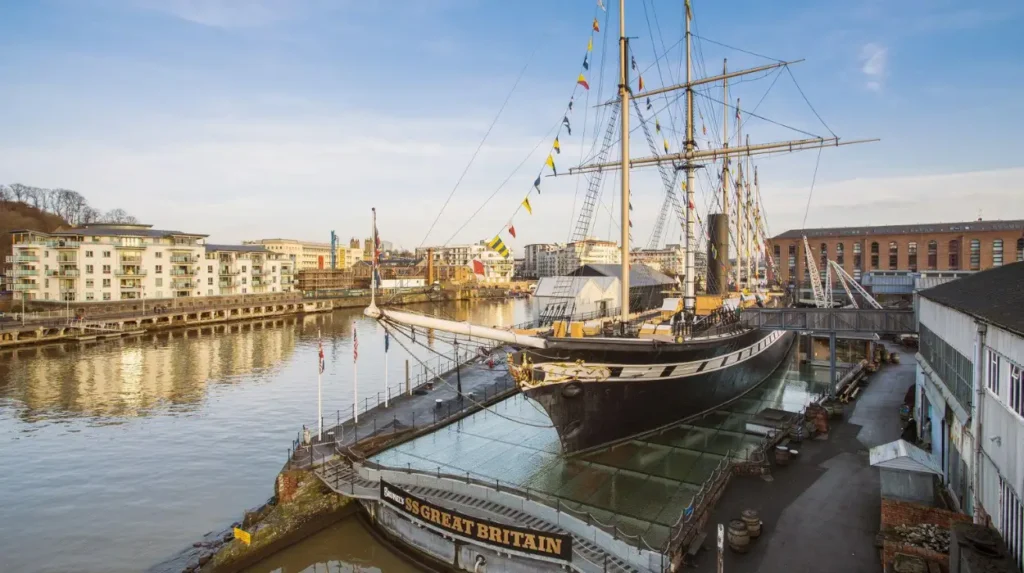
Bristol has several nationally recognised landmarks. The Clifton Suspension Bridge spans the Avon Gorge and is strongly associated with Victorian engineer Isambard Kingdom Brunel. Brunel’s SS Great Britain is preserved at Bristol Harbourside in the dry dock where it was built between 1839 and 1843.
The city also has an established connection with contemporary street art. Bristol is closely associated with Banksy, whose work contributed to the city’s international reputation for urban art.
Bristol’s cultural infrastructure includes Bristol Museum & Art Gallery, Bristol Cathedral, Bristol Old Vic, Arnolfini, Watershed, M Shed and other museums, galleries and performance spaces. Bristol Old Vic is one of the world’s longest-running theatres, while the Royal West of England Academy has operated as an important art institution since 1844.
The city is also known for its green credentials. Visit Bristol states that Bristol has more than 400 parks and green spaces, giving newcomers substantial access to outdoor areas within the urban area.
Education is another defining feature. The University of Bristol was founded as University College, Bristol, in 1876. For the 2024/25 academic year, it recorded 31,132 students, including 10,903 international students.
How did Bristol develop historically?
Bristol developed from an early settlement beside the River Avon into a medieval trading port, major maritime centre and industrial city. Its history includes Roman settlement, Norman development, Atlantic trade, Georgian expansion, Victorian engineering and modern waterfront regeneration.
The Roman period provides an early foundation for the area’s urban history. Abona, located at Sea Mills, developed as a significant Roman settlement. Visit Bristol records a civilian settlement there by the early second century.
The medieval city developed around the Avon and an important bridge crossing. The name Bristol derives from Brycgstow, an Old English name associated with a settlement at a bridge. Bristol was recorded in the Anglo-Saxon Chronicle in 1051 as a port trading with Ireland, Somerset and North Devon. Wool and leather were among the goods exported from the city.
Following the Norman Conquest, Bristol gained stronger fortifications. William the Conqueror built a wooden fort, which was replaced by a stone castle in the early 12th century. The historic Old City still contains architectural evidence from later periods of development.
Bristol expanded considerably during the Georgian period between 1714 and 1837. Clifton contains notable Georgian architecture, including Royal York Crescent. Other examples include Queen Square, Portland Square and the Corn Exchange at St Nicholas Market.
The city’s maritime infrastructure changed significantly in 1809 when the Bristol Floating Harbour opened. Around 80 acres of tidal river were impounded so ships could remain afloat regardless of the tide. The commercial port continued operating until 1975 before the waterfront underwent extensive regeneration.
Bristol’s history also includes Britain’s involvement in the transatlantic slave trade and plantation economy. A responsible introduction to the city therefore includes both its commercial achievements and the difficult histories connected to wealth generated through maritime trade.
Today, historical interpretation is available through museums, heritage buildings, walking routes and waterfront institutions. The city’s past is therefore directly visible in its streets, architecture, museums and public spaces.
Which areas of Bristol should newcomers understand first?
Newcomers should understand Bristol through its districts rather than treating the city centre as the whole city. Clifton, Redland, Bishopston, Southville, Bedminster, Easton, St George, Harbourside and central Bristol each provide different residential, cultural, shopping and visitor experiences.
Central Bristol contains many of the city’s major cultural and commercial destinations. Broad Street, Corn Street, St Nicholas Market, Queen Square and the area around College Green connect historic buildings with restaurants, shops and civic spaces.
Harbourside is one of Bristol’s most recognisable visitor areas. The regenerated waterfront contains museums, galleries, restaurants, cultural venues and attractions. M Shed focuses on Bristol’s social and industrial history, while Underfall Yard explains the engineering and operation of the Floating Harbour.
Clifton is known for Georgian architecture, green spaces, the Avon Gorge and the Clifton Suspension Bridge. It also contains the Royal York Crescent area and connections to Clifton Observatory and the surrounding viewpoints.
Redland sits north of Clifton and is known for residential streets, period architecture, independent businesses and proximity to the University of Bristol.
Bishopston and St Andrews provide established residential neighbourhoods north of the central area. Gloucester Road is an important commercial corridor with independent shops, cafés, restaurants and other businesses.
Southville lies south of the Floating Harbour and has strong connections to the cultural quarter around North Street and Tobacco Factory.
Bedminster is another major south Bristol district. It combines residential streets with shops, food businesses, community facilities and transport links.
Easton is known for cultural diversity, independent businesses and community life. St Mark’s Road is one of its important commercial streets.
St George provides a more suburban setting east of the central area, with access to parks and residential amenities.
These districts demonstrate why newcomers benefit from learning Bristol’s geography before planning accommodation, commuting or sightseeing.
How do newcomers get to Bristol?
Newcomers can reach Bristol by train, coach, road or air. Bristol Temple Meads is the principal central railway station, while Bristol Parkway serves the northern side of the urban area. Bristol Airport provides air connections and sits south of the city.
Bristol Temple Meads is the key railway gateway for central Bristol. It provides connections with London, Cardiff, Bath, the South West and other destinations.
Great Western Railway operates services to Bristol Temple Meads and Bristol Parkway. Current GWR information lists London Paddington to Bristol Temple Meads journeys from around 1 hour 33 minutes, while London Paddington to Bristol Parkway can take around 1 hour 13 minutes on selected services. Cardiff Central to Bristol Temple Meads can take around 47 minutes on selected services.
Bristol Parkway is particularly useful for people travelling to northern and eastern parts of the city. Its location differs from Temple Meads, so newcomers should check the final destination before selecting a station.
Bristol Airport serves the city and wider South West region. Airport travel requires a separate onward journey into Bristol, making the final destination important when planning arrival times.
Coach services provide another long-distance option. Bristol Bus & Coach Station is located close to the city centre and provides connections to other UK destinations.
Road access is supported by the M4 and M5 motorway network. The M4 connects Bristol with London and South Wales, while the M5 provides routes towards the Midlands and South West.
Newcomers travelling by car should understand Bristol’s parking arrangements and traffic restrictions before arriving. Visit Bristol provides information covering parking, public transport, cycling and walking.
How can newcomers travel around Bristol?
Newcomers can travel around Bristol using buses, trains, walking and cycling, with private cars providing another option. Central Bristol is suitable for walking between many major attractions, while public transport connects the centre with surrounding neighbourhoods and railway stations.
Walking is particularly practical around the central area. Attractions around College Green, Bristol Cathedral, Queen Square, the Old City, Harbourside and St Nicholas Market sit within a relatively connected urban area.
Cycling is also an important part of Bristol’s transport landscape. The city has established cycling routes and a significant cycling culture. Newcomers should check current route information because road layouts and traffic arrangements change over time.
Buses provide extensive coverage across Bristol’s urban area. They connect central Bristol with districts including Clifton, Redland, Bishopston, Bedminster, Southville, Easton and other neighbourhoods.
Rail travel is useful for longer journeys within and beyond Bristol. Temple Meads and Parkway serve different parts of the urban area, while suburban and regional rail services connect Bristol with neighbouring communities.
Car travel remains useful for journeys beyond the central area and for exploring destinations outside Bristol. Parking requires planning because central streets have restrictions and demand is higher around major destinations.
Visit Bristol provides dedicated information for public transport, cycling, walking and parking. Its official visitor resources also include downloadable city-centre, regional and walking maps.
For first-time visitors, combining walking with public transport creates a practical way to explore the central districts without relying on a car.
What should newcomers see and do in Bristol?
Newcomers should begin with Bristol’s major heritage landmarks, waterfront attractions, museums, green spaces and cultural venues. Key examples include Clifton Suspension Bridge, SS Great Britain, Bristol Cathedral, M Shed, Bristol Museum & Art Gallery, Cabot Tower and the Harbourside.
Clifton Suspension Bridge is one of the defining landmarks of Bristol. Designed by Isambard Kingdom Brunel and completed after his death, the bridge spans the Avon Gorge and connects Clifton with Leigh Woods.
SS Great Britain represents Bristol’s engineering and maritime heritage. Brunel designed the ship, which was built between 1839 and 1843. It is preserved in its original Bristol dry dock.
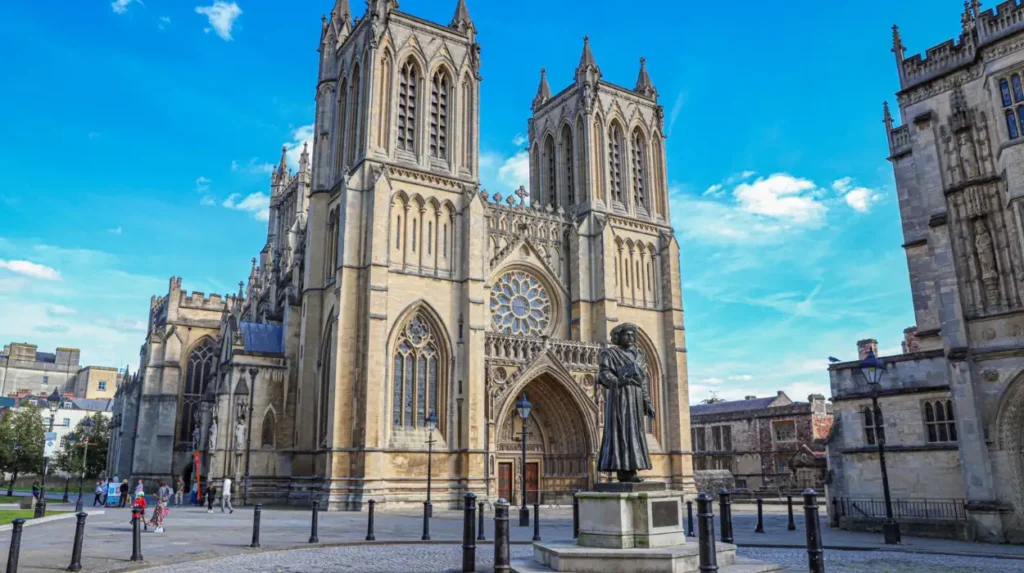
Bristol Cathedral dates from the 12th century and remains one of the city’s major historic buildings. St Mary Redcliffe is another major medieval church, with the present building opening in 1442.
Cabot Tower stands on Brandon Hill. The tower was built in the 1890s to commemorate the 400th anniversary of John Cabot’s Atlantic voyage.
M Shed explores Bristol’s history through collections and exhibitions based on the Harbourside. Bristol Museum & Art Gallery contains collections covering art, archaeology, natural history and other subjects.
Watershed is a major cultural venue focused on film, events and digital culture. Arnolfini combines contemporary art exhibitions with performances and other cultural programming.
Bristol also has more than 400 parks and green spaces, creating opportunities for walking, recreation and outdoor activities.
A newcomer does not need to restrict exploration to central Bristol. Neighbourhood markets, independent businesses, parks, cultural venues and local streets provide a broader understanding of the city.
Where should newcomers eat, shop and experience Bristol’s culture?
Newcomers can experience Bristol’s food and shopping culture through central markets, independent neighbourhood streets, Harbourside venues and established commercial areas. St Nicholas Market, Gloucester Road, North Street and other districts provide different combinations of food, retail, culture and local businesses.
St Nicholas Market is an important historic market destination in central Bristol. Its location within the Old City makes it easy to combine food, shopping and heritage exploration.
Gloucester Road is a major independent commercial corridor north of the city centre. It connects with Bishopston and surrounding neighbourhoods and contains restaurants, cafés, shops and other businesses.
North Street in Southville provides another strong independent-business environment. Its location near the Tobacco Factory makes it useful for combining food, culture and neighbourhood exploration.
The Harbourside provides restaurants, cafés, bars and cultural venues alongside the waterfront. Visitors can combine food with museums, galleries and maritime attractions without travelling far between destinations.
Bristol’s food identity extends beyond traditional British cuisine. The city’s large student population, international population and diverse neighbourhoods contribute to a broad range of restaurants and food businesses.
Shopping also varies by district. Central Bristol provides major retail streets and shopping centres, while neighbourhoods provide independent shops and specialist businesses.
Culture forms an important part of the city’s visitor economy. Bristol’s creative identity includes visual art, theatre, film, music, street art and independent cultural organisations. Visit Bristol describes the city as a centre for culture, food, engineering, business and creative activity.
Newcomers should therefore explore beyond the largest tourist attractions. Local commercial streets provide useful insight into how Bristol functions as a living city rather than simply as a visitor destination.
What practical information should newcomers know before exploring Bristol?
Newcomers should plan around transport, accommodation, accessibility, maps, opening information, weather, walking distances and neighbourhood geography. The official Visit Bristol resources provide maps, travel information, accessibility guidance, accommodation information and an official visitor guide.
Accommodation ranges from city-centre hotels and apartments to options in surrounding neighbourhoods and nearby countryside. Location should be selected according to the purpose of the visit.
Visitors focused on museums, Harbourside attractions and central shopping benefit from staying close to the central area. Visitors prioritising Clifton, the university area or neighbourhood exploration have different location requirements.
Accessibility information should also be checked before visiting individual venues. Visit Bristol works with AccessAble to provide detailed access information for venues across the city.
Maps are useful because Bristol’s streets vary considerably between the historic centre, steep areas around Clifton, waterfront districts and suburban neighbourhoods. Visit Bristol provides city-centre, regional, parking and walking maps.
Weather planning is relevant throughout the year. Bristol’s outdoor attractions include parks, viewpoints, the Harbourside and walking routes, while museums, galleries, theatres and other indoor venues provide alternatives in poor weather.
Opening times and event schedules should always be checked before visiting individual attractions. The city’s cultural programme changes throughout the year.
The official Bristol Visitor Guide is available online and in physical locations including hotels, attractions, shopping centres, Bristol Airport, Temple Meads railway station and Bristol Bus & Coach Station.
Explore More Area Guide
First-Time Visitor Guide to Bristol | Top Attractions
Moving to Bristol From Cardiff: Complete Relocation Guide
How can newcomers plan their first Bristol itinerary?
A first Bristol itinerary should combine the historic centre, Harbourside, Clifton and one or more neighbourhood areas. A practical sequence connects nearby attractions geographically, reducing unnecessary travel while providing exposure to Bristol’s heritage, culture, architecture, food and green spaces.
A one-day introduction can begin around Bristol Cathedral and College Green before continuing towards the Old City and St Nicholas Market. The route can then move towards Harbourside attractions such as M Shed and SS Great Britain.
The afternoon can focus on Clifton and the Clifton Suspension Bridge. Brandon Hill and Cabot Tower provide another central green-space experience.
A two-day visit allows greater attention to Bristol’s museums, galleries and neighbourhoods. The first day can focus on central Bristol and Harbourside. The second can include Clifton, Redland, Gloucester Road, Southville or another district selected according to personal interests.
A longer stay provides time for attractions beyond the central area. Bristol Zoo Project, Aerospace Bristol and other destinations add different perspectives on wildlife, aerospace and family activities. Visit Bristol identifies Aerospace Bristol as the home of the last Concorde supersonic airliner to fly.
Newcomers interested in history should prioritise Bristol Cathedral, St Mary Redcliffe, the Old City, Bristol Museum & Art Gallery, M Shed and the maritime heritage around the Floating Harbour.
Newcomers interested in engineering should prioritise Clifton Suspension Bridge, SS Great Britain and Aerospace Bristol.
Newcomers interested in contemporary culture should explore street art, Arnolfini, Watershed, Bristol Old Vic and independent cultural spaces.
Newcomers interested in outdoor experiences should explore Brandon Hill, the Avon Gorge and Bristol’s wider network of parks and green spaces.
The most effective approach is to organise the visit by geographic areas and interests rather than attempting to cover the entire city in one route.
Why is Bristol important for newcomers today?
Bristol remains important because its historic port, engineering heritage, universities, creative industries, cultural institutions, transport connections and expanding neighbourhoods continue to shape its role in South West England. Its historic infrastructure and modern economy create a diverse urban environment.
The University of Bristol and other educational institutions contribute significantly to the city’s student and research communities. The University of Bristol recorded more than 31,000 students in 2024/25, demonstrating the scale of higher education within the city.
Bristol’s engineering heritage remains visible through Brunel’s surviving works and its aerospace legacy. The city’s maritime history continues to influence Harbourside regeneration, museums and tourism.
The city also has a strong creative identity. Film, visual art, music, theatre, street art and independent cultural organisations contribute to Bristol’s contemporary reputation. Visit Bristol identifies Bristol as a UNESCO City of Film and highlights its connections with culture, engineering, business and food.
Population change is another important part of understanding modern Bristol. The 2021 Census provides official information covering population, migration, country of birth, ethnicity, language, economic activity, housing, qualifications, travel to work and car availability.
For newcomers, these characteristics create a city with multiple overlapping identities. Bristol functions as a historic port, university city, creative centre, regional employment hub, tourism destination and residential city.
Understanding that structure makes the city easier to navigate. The centre provides the principal concentration of landmarks and cultural institutions. Surrounding neighbourhoods provide residential communities, local businesses and additional attractions. The wider region adds countryside, heritage sites and coastal destinations.
Bristol is therefore best approached as a connected network of places rather than a single tourist centre. Its history explains its architecture. Its geography explains its neighbourhoods. Its transport network explains its connections. Its universities, businesses and cultural institutions explain its modern identity.
For a newcomer, the essential starting points are Bristol’s history, neighbourhoods, transport, landmarks, Harbourside, green spaces, cultural venues and local commercial areas. The city’s official visitor resources provide current maps, travel guidance, accessibility information and attraction information for detailed planning.
What is Bristol best known for?
Bristol is best known for its maritime heritage, Clifton Suspension Bridge, Brunel engineering, street art, cultural venues, universities, green spaces and distinctive neighbourhoods.