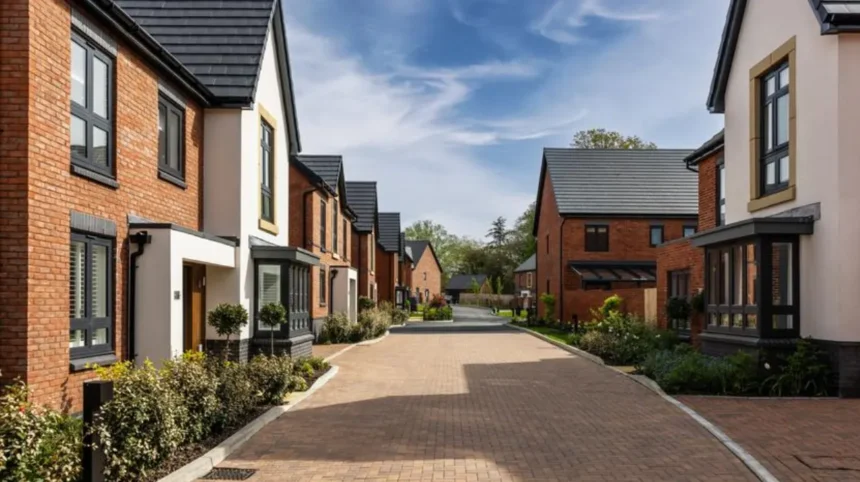
New build homes in Bristol offer buyers modern housing, energy-efficient features, contemporary layouts and access to established neighbourhoods and regeneration areas. Understanding property types, locations, prices, buying procedures, warranties and ongoing costs helps buyers make informed decisions in Bristol’s residential property market.
- What Are New Build Homes in Bristol?
- Why Is Bristol an Important Market for New Build Housing?
- Which Areas of Bristol Have New Build Homes?
- Bristol City Centre and Harbourside
- Filwood and Hengrove
- Lockleaze and North Bristol
- Southmead and Surrounding Neighbourhoods
- Areas Outside Bristol’s Administrative Boundary
- What Types of New Build Properties Are Available in Bristol?
- How Much Do New Build Homes in Bristol Cost?
- Are New Build Homes in Bristol Energy Efficient?
- How Does the New Build Buying Process Work in Bristol?
- Step 1: Establish Your Budget
- Step 2: Compare Developments and Properties
- Step 3: Appoint an Independent Conveyancer
- Step 4: Reserve the Property and Review the Contract
- Step 5: Arrange the Mortgage and Complete Legal Checks
- Step 6: Inspect the Home and Complete
- What Warranties and Legal Protections Apply to New Build Homes?
- Can First-Time Buyers Afford New Build Homes in Bristol?
- What Should Buyers Check Before Choosing a Bristol New Build Development?
- What Is the Developer’s Track Record?
- Is the Development Properly Approved?
- Are Transport and Local Services Convenient?
- Are There Estate Management Fees?
- How Do New Build Homes Compare With Older Bristol Properties?
- What Is the Future of New Build Housing in Bristol?
- How Can Buyers Find New Build Homes in Bristol?
- Are New Build Homes in Bristol Worth Considering?
What Are New Build Homes in Bristol?
New build homes in Bristol are newly constructed residential properties sold for the first time, including houses, flats and apartments. They range from private developments to affordable housing schemes and larger regeneration projects. Buyers typically benefit from modern building standards, new fixtures and developer warranties.
A new build property is a home that has recently been constructed and has not previously been occupied as a residential property. In Bristol, new build housing includes detached houses, semi-detached homes, terraced properties, purpose-built flats and apartments within larger residential developments.
Bristol is a major city in South West England. Its housing market serves first-time buyers, families, professionals, students, investors and people relocating from other parts of the United Kingdom. The city’s employment base, universities, transport links and cultural attractions contribute to demand for different types of housing.
New build homes differ from older properties because developers construct them under current building regulations and design them around modern living requirements. Features include contemporary kitchens, insulated walls, double-glazed windows, modern heating systems and layouts that accommodate remote working.
However, not every new home offers the same specifications. Construction quality, room sizes, energy performance, parking provision, service charges and the surrounding infrastructure vary between developments. Buyers need to evaluate the individual property rather than relying exclusively on the term “new build”.
Why Is Bristol an Important Market for New Build Housing?
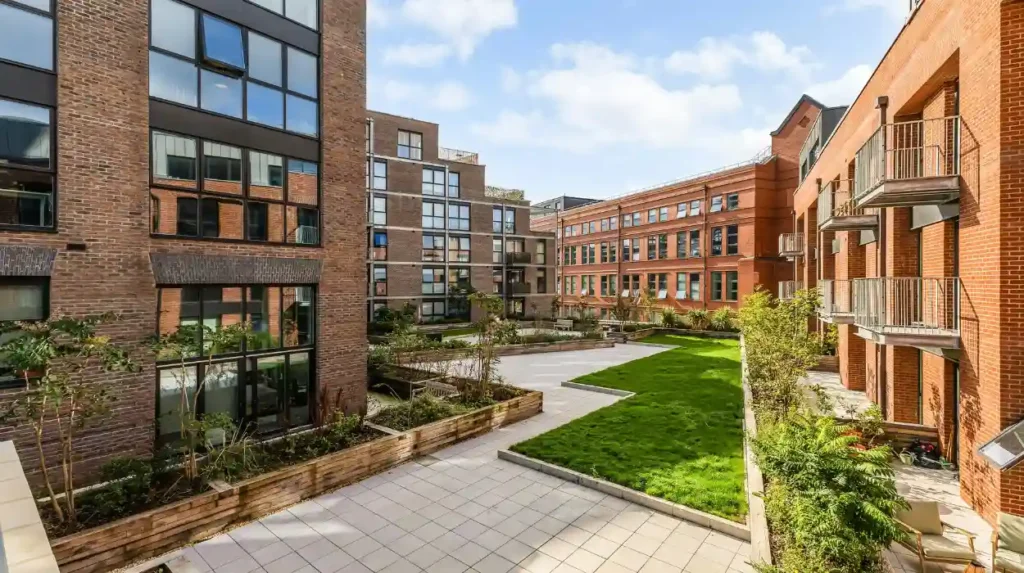
Bristol is an important new build housing market because it combines employment opportunities, established universities, transport connections and ongoing urban development. Demand comes from households seeking homes near workplaces, education, public transport and local amenities, while housing delivery responds to planning policies and land availability.
Bristol forms part of the wider West of England economic area. Its economy includes professional services, creative industries, technology, engineering, advanced manufacturing, education and healthcare. These sectors support demand from people seeking accommodation within reasonable commuting distance of employment.
The presence of the University of Bristol and the University of the West of England also contributes to the city’s housing requirements. Students, academic staff, graduates and university employees create different accommodation needs, from studio apartments to family homes.
Bristol’s historic neighbourhoods contain Victorian terraces, Georgian buildings, post-war housing and converted industrial properties. New build developments add contemporary housing to this established urban landscape, particularly where former commercial or industrial sites undergo redevelopment.
Land availability influences the types of homes developers construct. Central locations frequently accommodate apartments and higher-density housing, while suburban areas provide opportunities for houses, gardens and family-oriented developments.
Housing affordability remains an important consideration. New build prices reflect construction costs, location, property size, specification and demand. Buyers comparing new homes with existing properties need to consider the full purchase cost, including potential incentives, maintenance, service charges and energy expenditure.
The city’s housing market also connects with neighbouring areas such as South Gloucestershire and North Somerset. Buyers working in Bristol frequently compare properties across these locations according to commuting times, transport options and household budgets.
Which Areas of Bristol Have New Build Homes?
New build homes are found across Bristol’s central districts, established suburbs and regeneration areas, including parts of Filwood, Hengrove, Lockleaze, Southmead and the city centre. Availability depends on planning approvals, construction schedules, completed developments and the specific property type buyers require.
Bristol does not have a single new build housing district. Development takes place across different neighbourhoods, with each location offering a distinct combination of transport, employment, schools, green spaces and local services.
Bristol City Centre and Harbourside
Central Bristol contains apartments and residential developments close to offices, shopping areas, restaurants, cultural venues and public transport. City-centre housing attracts professionals and buyers who prioritise access to employment and amenities.
Apartments in central locations often have less private outdoor space than suburban houses. Some developments also charge annual service fees for shared entrances, lifts, communal areas and building management.
Filwood and Hengrove
Filwood and Hengrove, in south Bristol, have established residential communities and areas associated with housing renewal and development. Buyers researching these neighbourhoods should compare the precise development location, local bus connections, road access, schools and nearby retail facilities.
Lockleaze and North Bristol
Lockleaze is a residential neighbourhood in north Bristol. Its housing environment includes established homes and areas of development or redevelopment. Buyers should assess access to employment areas, local services and transport routes before committing to a property.
Southmead and Surrounding Neighbourhoods
Southmead is a residential area in north Bristol with access to healthcare employment, including Southmead Hospital. The wider area contains established housing and development opportunities, although availability differs by street and project.
Areas Outside Bristol’s Administrative Boundary
Buyers searching for new build homes in Bristol also encounter developments in neighbouring South Gloucestershire, including areas around Bradley Stoke, Filton and Stoke Gifford. These locations are not all within Bristol City Council’s administrative boundary.
The distinction matters because planning authorities, council tax arrangements, local services and transport connections differ by location. A property marketed as being near Bristol does not automatically sit within the city itself.
Before choosing a neighbourhood, buyers should check the exact address, the responsible local authority, public transport services and the status of the development.
What Types of New Build Properties Are Available in Bristol?
New build properties in Bristol include detached houses, semi-detached homes, terraced houses, flats, apartments and affordable housing options. The property type determines the purchase price, available space, maintenance responsibilities, outdoor areas and suitability for different household sizes and budgets.
Detached and Semi-Detached Houses
Detached houses stand separately from neighbouring properties, while semi-detached houses share one wall with another home. These properties commonly suit families seeking additional bedrooms, private gardens and residential streets.
Suburban developments provide more opportunities for houses than some densely developed central locations. Buyers should examine the garden size, parking arrangements, storage space and distance to schools, shops and public transport.
Terraced Houses
Terraced homes form part of a continuous row of properties. New build terraces use land efficiently and provide an alternative to detached housing for buyers who need several bedrooms within a more compact footprint.
The internal layout, sound insulation, private outdoor space and parking provision are important comparison points when assessing individual homes.
Flats and Apartments
Flats and apartments provide accommodation within a shared residential building. They commonly feature open-plan kitchens and living areas, secure entrances and shared facilities.
Buyers need to investigate lease terms, service charges, ground rent provisions where applicable, building insurance arrangements and responsibility for communal repairs. Apartment buyers should also review building safety documentation and any applicable fire safety requirements.
Affordable New Build Homes
Affordable new build housing includes social rent, affordable rent and shared ownership, depending on the scheme. Bristol City Council publishes information about its housing programme, affordable housing developments and routes to home ownership.
For example, the council lists a development at Branwhite Close in Lockleaze comprising 47 homes: 37 for social rent and 10 for shared ownership. It also lists 30 homes at the Filwood Cinema site, including 24 for social rent and six for shared ownership. These are examples of council housing delivery rather than a complete list of available properties.
Eligibility, application procedures and availability differ between affordable housing schemes. Applicants should check the relevant council, housing association or developer requirements before applying.
How Much Do New Build Homes in Bristol Cost?
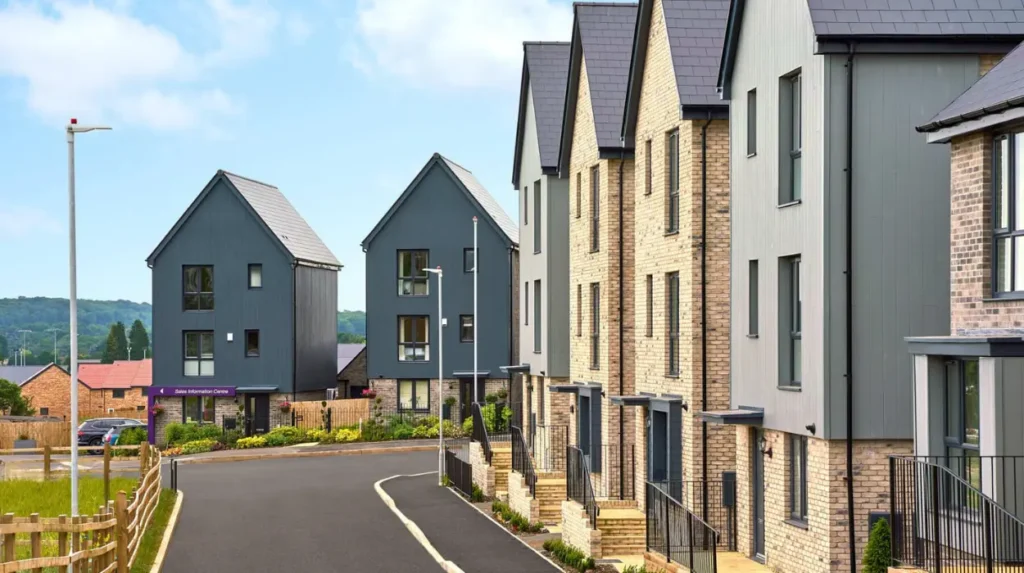
The cost of a new build home in Bristol depends on its location, property type, size, specification and stage of construction. Buyers should compare current asking prices with similar local properties and calculate the full cost of ownership rather than relying on advertised starting prices alone.
There is no single purchase price for all new build homes in Bristol. A central apartment, a two-bedroom terraced house and a larger suburban family home serve different markets and carry different costs.
Developers sometimes advertise selected plots at a starting price. That price does not necessarily represent every available property within the development. Larger homes, corner plots, upgraded kitchens and properties with gardens or parking can carry higher prices.
Which Factors Influence Purchase Prices?
Location is a major factor in property pricing. Homes close to employment centres, railway stations, shopping areas and established amenities attract different demand from properties in less central locations.
Property size also matters. Bedroom count provides a basic comparison, but floor area, storage, room proportions and outdoor space determine how much usable accommodation a buyer receives.
Specification affects the final price. Upgraded flooring, kitchen finishes, appliances, landscaping and additional parking sometimes cost extra. Buyers should obtain a written schedule showing exactly what the advertised price includes.
The purchase date also matters. A completed property is available for inspection, while a home purchased during construction carries a completion timetable that depends on the building programme and contract terms.
What Additional Costs Should Buyers Budget For?
The purchase price is only one part of the financial commitment. Buyers should budget for:
- Mortgage arrangement and valuation fees, where applicable.
- Solicitor or conveyancer fees and searches.
- Stamp Duty Land Tax, where payable.
- Moving expenses and furniture.
- Service charges and estate management fees, where applicable.
- Buildings insurance, council tax and utility bills.
- Optional upgrades, appliances and garden improvements.
Stamp Duty Land Tax rules depend on the property price, the buyer’s circumstances and the rules in force on the completion date. First-time buyers and people purchasing an additional property can face different tax treatment. Check the current rules on GOV.UK before finalising a budget.
Are New Build Homes in Bristol Energy Efficient?
New build homes in Bristol are constructed under the building regulations applicable to their development, including requirements relating to energy performance and conservation. Insulation, glazing, heating systems and ventilation influence energy use, but actual running costs depend on the property’s specification and household behaviour.
Modern building standards address factors such as insulation, heating efficiency, ventilation and energy consumption. The exact requirements depend on the regulations applicable when the development was approved and constructed.
A well-insulated home can reduce heat loss through roofs, walls, floors and windows. Efficient heating systems can also reduce the amount of energy needed to maintain comfortable indoor temperatures.
However, buyers should not assume every new build has identical energy performance. Homes differ in their construction, orientation, glazing, heating equipment and renewable energy installations.
What Energy Features Should Buyers Check?
Buyers should review the property’s Energy Performance Certificate (EPC), which records its energy-efficiency rating and provides information about energy use and potential improvements.
Ask the developer about the following features:
- Wall, roof and floor insulation.
- Double or triple glazing, where specified.
- Heating system type and controls.
- Solar photovoltaic panels, if installed.
- Mechanical ventilation systems, where fitted.
- Electric vehicle charging provision, where available.
The existence of a particular feature does not guarantee lower bills. Household size, thermostat settings, occupancy hours and energy tariffs affect actual expenditure.
Request the EPC for the specific property and confirm whether the rating reflects the completed home or an earlier assessment. This is especially relevant when purchasing a property before construction finishes.
How Does the New Build Buying Process Work in Bristol?
Buying a new build home in Bristol involves selecting a property, arranging finance, appointing a conveyancer, reviewing legal documents, exchanging contracts and completing the purchase. Buyers purchasing off-plan must also understand construction milestones, contractual deadlines and the procedure for handling delays.
An off-plan property is purchased before construction is complete. The buyer relies on the developer’s plans, specifications and contractual commitments until the home is ready for inspection.
Step 1: Establish Your Budget
Calculate the available deposit, likely mortgage borrowing and additional purchase costs. Obtain a mortgage agreement in principle where appropriate, while remembering that it is not a final mortgage offer.
Step 2: Compare Developments and Properties
Inspect the development location and compare plot prices, floor plans, included fixtures, parking and estimated completion dates. Visit the surrounding streets to assess traffic, noise, amenities and transport links.
Step 3: Appoint an Independent Conveyancer
A conveyancer handles the legal transfer of ownership. The buyer should choose an independent professional experienced in new build transactions rather than assuming the developer’s recommended legal representative is the only option.
The conveyancer reviews the title, contract, planning documents, property boundaries, management arrangements and relevant restrictions.
Step 4: Reserve the Property and Review the Contract
Developers commonly require a reservation fee. Buyers should obtain written details of the reservation period, refund conditions, incentives and circumstances in which the reservation ends.
Before exchanging contracts, the buyer’s conveyancer should examine the contract carefully. Particular attention is required for completion deadlines, long-stop dates, specification changes, deposit protection and provisions covering construction delays.
Step 5: Arrange the Mortgage and Complete Legal Checks
The buyer submits the full mortgage application and provides the lender with requested documents. The lender assesses affordability and the property as security for the loan.
The conveyancer conducts searches and checks that the legal documentation supports the transaction. Buyers should confirm that any developer incentives have been disclosed to the lender.
Step 6: Inspect the Home and Complete
When the property is ready, arrange a detailed inspection and record defects or incomplete work. The developer should explain the process for correcting outstanding issues.
Completion takes place when the purchase funds are transferred and the legal transaction finishes. The buyer receives the keys according to the completion arrangements.
What Warranties and Legal Protections Apply to New Build Homes?
New build homes commonly come with a builder warranty or structural warranty, but the cover depends on the provider, policy wording and property. Buyers should verify the warranty provider, start date, exclusions, claim limits and procedures before exchanging contracts or completing the purchase.
One recognised provider is the National House Building Council (NHBC). Its Buildmark product provides warranty and insurance cover for eligible new homes, with different protections applying during different periods.
Under NHBC Buildmark, the cover structure includes protection before completion, a builder warranty during the first two years after completion and insurance cover for certain defects during the following eight years. Exact coverage and exclusions depend on the applicable policy.
Not every new home uses NHBC. Other warranty providers operate in the market, and some properties have different arrangements. Buyers should establish which policy applies to the particular plot.
A warranty is not a substitute for inspecting the property. It does not automatically cover every cosmetic issue, maintenance problem or building defect.
What Should a New Build Inspection Include?
Inspect walls, ceilings, floors, windows, doors, plumbing, heating controls, electrical fittings and ventilation. Check that appliances and fixtures listed in the contract are installed.
Record visible defects with photographs and written descriptions. Give the developer a copy of the snagging list and retain evidence of reported issues.
A snagging inspection identifies incomplete work and visible defects. An independent professional can carry out this inspection before or after completion, depending on access and the contractual arrangements.
Buyers should also ask for operating manuals, appliance warranties, heating instructions, emergency contacts and details of the developer’s aftercare procedure.
Can First-Time Buyers Afford New Build Homes in Bristol?
First-time buyers can explore market-price homes, shared ownership and eligible discounted housing schemes when purchasing a new build in Bristol. Affordability depends on deposit savings, mortgage eligibility, household income, property price and the ongoing costs associated with ownership.
A first-time buyer is generally someone purchasing their first home, although eligibility definitions differ between mortgage products, tax rules and government schemes.
How Does Shared Ownership Work?
Shared ownership allows eligible buyers to purchase a share of a property and pay rent on the remaining share. Buyers usually pay a deposit and mortgage based on the share they purchase, while rent and other housing costs remain payable under the scheme’s terms.
For example, a buyer purchasing a 25% share of a £240,000 property purchases a share worth £60,000. The deposit and mortgage requirements apply according to the purchase arrangements, and rent is payable on the remaining share.
This example illustrates the calculation only. Actual shares, eligibility criteria, rent levels and lease terms vary between schemes.
Bristol City Council provides information about shared ownership homes and directs prospective buyers to participating housing providers.
Buyers should investigate rent increases, service charges, staircasing provisions and the costs of selling the property before proceeding.
What Is the First Homes Scheme?
The First Homes scheme offers eligible first-time buyers qualifying properties at a discount to market value. The scheme is subject to eligibility conditions and local authority requirements.
Government guidance explains that buyers apply through the developer or estate agent and must satisfy the relevant criteria. A participating development must actually offer First Homes properties for the scheme to be available.
Availability in Bristol changes as developments progress. Buyers should check the current Bristol City Council information rather than assuming a particular new build development participates.
Can Buyers Use a Lifetime ISA?
A Lifetime ISA is a savings account designed to help eligible people save towards a first home or retirement. Qualifying first-home purchases must satisfy the scheme’s conditions, including applicable property price limits and account rules.
Buyers should confirm current withdrawal conditions and eligibility with the account provider before relying on these funds for a property transaction.
What Should Buyers Check Before Choosing a Bristol New Build Development?
Buyers should evaluate the building quality, legal documentation, transport access, local amenities, future construction, management fees and developer reputation before committing to a new build home. These checks help establish whether the property meets their practical needs and whether its long-term ownership costs are manageable.
A new home is part of a wider development and neighbourhood. The quality of the surrounding environment affects daily life as well as the property’s long-term appeal.
What Is the Developer’s Track Record?
Research previous developments by the same builder. Look for evidence of completed projects, aftercare arrangements and how reported defects were addressed.
Visit an occupied development if possible. Existing residents can provide useful information about maintenance, parking, communal areas and the developer’s response to problems.
Is the Development Properly Approved?
Bristol City Council provides online access to planning applications, decisions and associated documents. Buyers can use these records to investigate the planning history of a site and relevant approved proposals.
Planning documents help buyers understand the approved development layout, access arrangements and proposed uses of nearby land. They also help identify planned construction that could affect the property’s surroundings.
Check whether the home is covered by the relevant permissions and building control procedures. The conveyancer should investigate legal matters associated with the development.
Are Transport and Local Services Convenient?
Check the actual journey from the property to work, schools, healthcare facilities, shops and public transport. A development advertised as well connected still requires assessment against the buyer’s own destinations and travel schedule.
Test the commute at realistic times. Review bus frequencies, railway access, road congestion, walking routes and cycle infrastructure.
Families should investigate school admission arrangements directly with the relevant authority. Proximity to a school does not guarantee a place.
Are There Estate Management Fees?
Some new build developments contain privately managed roads, landscaped areas, shared facilities or other communal spaces. Residents can be required to contribute towards the maintenance of these areas.
Ask for the current service charge or estate management budget, the method used to calculate each property’s contribution and the contractual arrangements for future increases.
For leasehold apartments, review the lease and the responsibilities of the freeholder and managing agent. For freehold homes, investigate any estate rentcharge or other applicable maintenance arrangements.
How Do New Build Homes Compare With Older Bristol Properties?
New build homes generally offer modern layouts and recently installed fixtures, while older Bristol properties often provide established neighbourhood settings and a wider range of architectural styles. The better fit depends on the property’s condition, total cost, space, energy performance and the buyer’s maintenance preferences.
Older properties in Bristol include Victorian terraces, Georgian houses, post-war homes and converted industrial buildings. Their layouts, construction methods and maintenance requirements differ substantially.
New build homes are constructed under the regulations applicable to their development. This provides a modern regulatory framework, but it does not eliminate the need to check workmanship and documentation.
Existing homes allow buyers to inspect the actual building and surrounding environment before purchase. A completed new build offers a similar advantage, while an off-plan purchase relies more heavily on plans and contractual specifications.
Maintenance costs also differ. An older property can require repairs to roofs, windows, wiring, plumbing or insulation. A new home has new components but still requires routine maintenance, and defects can occur.
Energy performance should be compared using the individual properties’ EPCs rather than age alone. A renovated older home can perform differently from an older property that has not received energy-efficiency improvements.
Buyers should compare purchase prices, anticipated repairs, service charges, energy expenditure and insurance requirements before deciding between a new build and an existing property.
What Is the Future of New Build Housing in Bristol?
The future of new build housing in Bristol depends on housing demand, planning policy, land availability, construction costs, infrastructure and affordable housing delivery. Development priorities include making efficient use of urban land, supporting varied housing needs and coordinating new homes with transport, services and environmental objectives.
Bristol City Council’s published Local Plan document sets out an ambition to enable delivery of at least 1,925 new homes annually up to 2040. This is a planning objective in the publication version of the plan, not a guarantee that the stated number of homes will be completed every year.
The plan identifies urban regeneration, brownfield land, housing diversity and neighbourhood connectivity as important considerations. Brownfield land refers to previously developed land that is being considered for redevelopment.
Regeneration can create opportunities to build housing alongside workplaces, public spaces and local facilities. However, the timing and outcome of each project depend on planning decisions, funding, land ownership, infrastructure and construction progress.
Affordable housing remains another important part of the city’s housing programme. Bristol City Council’s Homes for Bristol: Interim Affordable Housing Delivery Plan 2025–27 sets out the council’s approach and priorities for affordable housing delivery during that period.
For prospective buyers, these plans provide context for the direction of housing development. They do not establish that a specific site is available, that a particular home will be affordable or that future property prices will rise.
The most useful approach is to assess actual developments, current asking prices, planning status and transport provision. Buyers should distinguish between homes under construction, completed properties and projects that remain at the proposal stage.
Explore More Area Guide
Student Property Investment in Bristol: Yields, Areas and Costs
Best Buy-to-Let Areas in Bristol for Property Investors
How Can Buyers Find New Build Homes in Bristol?
Buyers can find new build homes in Bristol through property portals, developer sales offices, housing associations and Bristol City Council’s affordable housing information. Checking multiple sources helps distinguish completed homes from future developments and identifies the eligibility rules attached to particular properties.
Start by defining the preferred location, budget, property size and purchase timetable. Decide whether the search includes only private-sale properties or also affordable housing and shared ownership.
Use property listings to identify current advertised homes, then confirm availability and specifications directly with the developer or selling agent. Advertised prices and completion dates should be checked because they change as plots are sold and construction progresses.
For affordable housing, consult Bristol City Council’s new build affordable homes information. The council provides information about housing programmes, development locations and affordable ownership options.
Before paying a reservation fee, request the property’s floor plan, specification, tenure details, estimated completion date, warranty information and full schedule of additional charges. Obtain independent legal advice before exchanging contracts.
Are New Build Homes in Bristol Worth Considering?
New build homes in Bristol provide a range of housing options for first-time buyers, families, professionals and households seeking modern accommodation. Available properties include apartments, terraced houses, family homes and affordable housing delivered through different providers.
The right purchase depends on more than a property’s appearance or advertised price. Location, construction quality, energy performance, warranty protection, legal terms and ongoing costs all affect the value of a home to its owner.
Bristol’s housing plans and regeneration activity provide context for future development, but individual projects differ in status, price and delivery timetable. Buyers should verify the current position of each property before making a financial commitment.
A careful comparison of developments, independent legal checks and a realistic household budget provides a sound basis for purchasing a new build home in Bristol.
What are new build homes in Bristol?
New build homes in Bristol are newly constructed residential properties sold for the first time. They include detached houses, terraced homes, semi-detached houses, flats and apartments built within new housing developments.