Key Points
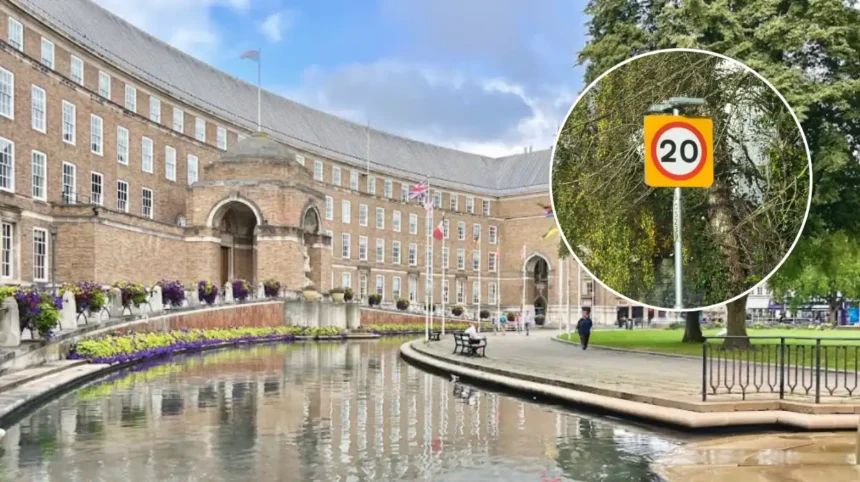
- Proposal Outline: The proposal is for the introduction of 20 mph speed limits on about 90 roads within the city, accounting for 56 miles (5 percent) of the local roads.
- Specific High Risk Roads: Some of the high risk roads that will be included in the proposals are Bond Street, A4 Bath Road, Church Road, Two Mile Hill Road, Winterstoke Road, Coronation Road, Westbury Road, Temple Gate, Anchor Road, Hotwell Road, and parts of Wells Road.
- Casualty Figures: Despite making up only 5 per cent of the total number of roads, the selected roads account for 25 per cent of all serious and fatal road accidents in Bristol while contributing to 20 per cent of all total accidents.
- Exclusions after Consultation: Some of the road routes that were originally part of the speed reduction plans such as Filton Avenue and Airport Road have been dropped from the plan altogether.
- Decision Timetable: The transport policy committee in the council will make its decision regarding the new proposals on Thursday 22 October 2026. If passed, the speed limits will be implemented next year during the summer.
- Public Divide: Consultation indicated that there was great public support from both pedestrians and cyclists while the motorists and motorcyclists showed their opposition because of increased travel time. Also, concerns about enforcement were raised since the speed enforcement will be the responsibility of the police and not the council.
Bristol, (Bristol Express News) October 16, 2026 – Bristol City Council is set to vote on proposals to introduce 20mph speed limits across approximately 90 main roads to tackle severe traffic collisions. The measure targets high-risk routes accounting for a quarter of the city’s fatal and serious casualties. If approved by the transport policy committee on 22 October, the limits will take effect by next summer.
- Key Points
- Why Is Bristol City Council Proposing 20mph Speed Limits on Major Roads?
- Which Roads Have Been Removed From the Proposed 20mph Expansion?
- What Were the Results of the Public Consultation and Concerns over Enforcement?
- What Is the Historical Context of Speed Limit Regulations in Bristol?
- How Will the Proposed Speed Limits Affect Road Users, Residents, and Local Services?
Why Is Bristol City Council Proposing 20mph Speed Limits on Major Roads?
As reported by Alex Seabrook, Local Democracy Reporter for Bristol Live, Bristol City Council has put forward proposals to lower the speed limit to 20mph on approximately 90 roads across the city. The initiative forms part of a wider push by the local authority to reduce the frequency and severity of motor vehicle collisions on major routes.
The proposed speed reductions would cover 56 miles of highway, representing roughly five per cent of Bristol’s total road network. Despite accounting for a small proportion of the total network, technical data indicates that a quarter of Bristol’s fatal and serious casualties, as well as a fifth of all road casualties, occur on these specific stretches. Official data indicates that lowering speed limits on major roads in other regions has successfully reduced casualty rates.
The key thoroughfares included in the proposal are Bond Street, the A4 Bath Road, Church Road, Two Mile Hill Road, Winterstoke Road, Coronation Road, Westbury Road, Temple Gate, Anchor Road, Hotwell Road, and parts of Wells Road.
Which Roads Have Been Removed From the Proposed 20mph Expansion?
Following a public consultation exercise conducted earlier this year, several routes initially considered for speed reductions have been excluded from the final recommendations.
As reported by Alex Seabrook of Bristol Live, roads such as Filton Avenue and Airport Road have been withdrawn from the proposal and will maintain their current 30mph speed limits.
Commenting on the revisions, Green Councillor Ed Plowden, chair of the transport policy committee, stated:
“Thank you to everyone who responded to the 20mph consultation. We have listened carefully and changed the recommendations where the technical safety case was more limited and local feedback supported retaining 30mph.”
“On other roads, the technical evidence continues to show the need to improve safety. Our responsibility is to consider consultation feedback alongside collision and wider safety data, how roads are used and the needs of everyone travelling on them, particularly those most at risk.”
“I am pleased that, as a result, a significant number of roads with poor safety records are now proposed to be made safer for everyone. This would bring benefits for individual and public health, as well as the NHS.”
What Were the Results of the Public Consultation and Concerns over Enforcement?
The public consultation highlighted a clear divide among road users regarding the lower speed limits. Pedestrians and cyclists voiced strong support for the measures, citing improvements to perceived safety when walking and wheeling. Conversely, motorists and motorcyclists opposed the majority of the proposed reductions, pointing to increased journey times for motor traffic.
Feedback from respondents also highlighted existing issues regarding speed limit compliance and enforcement. Under current legal frameworks, the enforcement of road speed limits remains the responsibility of the police rather than local authorities. Furthermore, revenue generated from speeding fines is transferred directly to central government rather than retained by local councils.
Explore more Bristol Council News:
Why Did Pero’s Bridge Fail? Inspection Report Reveals Corrosion, Bristol 2026
Bristol Council Plans Extended Library Hours and Fine Abolition Bristol 2026
What Is the Historical Context of Speed Limit Regulations in Bristol?
In England, the default speed limit on street-lit urban roads has been set at 30mph since 1934, following a sharp increase in motor vehicle casualties during the early 20th century. Over recent years, local highways authorities across the United Kingdom have progressively adopted 20mph limits on residential and urban corridors to bolster road safety.
Bristol City Council was an early adopter of widespread lower speed limits, introducing 20mph zones across residential areas in two major phases in 2010 and 2014. As a result of those prior rollouts, approximately 86 per cent of Bristol’s road network is already subject to a 20mph restriction. The current proposal represents a further extension of this policy onto major arterial and connector roads that were previously retained at 30mph.
The transport policy committee is scheduled to formally vote on the recommendations on Thursday, 22 October 2026. If passed, the local authority plans to implement the new restrictions by the summer of next year.
How Will the Proposed Speed Limits Affect Road Users, Residents, and Local Services?
If the transport policy committee approves the measure on 22 October, the introduction of 20mph limits across these key corridors will directly impact several distinct groups within Bristol:
- Motorists and Commercial Drivers: Drivers navigating main routes such as Bond Street and the A4 Bath Road can expect slightly longer travel times during off-peak and peak periods. Commercial logistics operators and local delivery services may need to adjust schedule allocations to account for lower average speeds on key connector routes.
- Pedestrians and Cyclists: Vulnerable road users are likely to experience improved safety and reduced severity of accidents along high-traffic corridors. The lower vehicle speeds may encourage greater uptake of active travel choices, such as walking and cycling, across central Bristol.
- Local Emergency and Health Services: Reductions in serious and fatal collisions on these targeted stretches—which currently account for 25 per cent of severe casualties—could relieve operational pressure on emergency response services and lower trauma admissions within NHS hospitals.
- Law Enforcement: With public feedback pointing to variable compliance on existing 20mph routes, Avon and Somerset Police may face heightened demand for traffic monitoring and speed enforcement across an additional 56 miles of main roads.