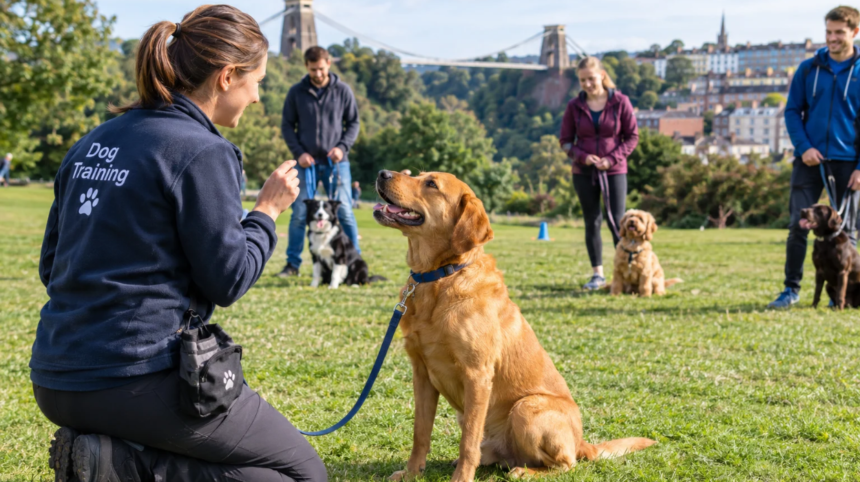
Dog training classes in Bristol help owners teach essential obedience, improve canine behaviour and build reliable communication with their pets. These classes support puppies, adolescent dogs and adult dogs through structured learning, reward-based methods and supervised practice. Bristol dog owners can choose group classes, private training, puppy socialisation sessions and specialist behavioural support according to their dogs’ ages, needs and experience.
- What are dog training classes in Bristol?
- What types of dog training classes are available in Bristol?
- Puppy training classes
- Beginner obedience classes
- Adolescent dog training
- Recall and loose-lead walking classes
- Specialist training and enrichment
- At what age should a dog start training classes in Bristol?
- What should dogs learn in a Bristol training class?
- Which basic obedience skills matter most?
- How does lead training improve daily walks?
- Why is settling important?
- Where can owners find dog training classes in Bristol?
- How should owners choose a qualified dog trainer in Bristol?
- Are reward-based dog training classes better for dogs?
- How much do dog training classes cost in Bristol?
- How should owners prepare for their first dog training class?
- How can owners practise dog training between classes?
- Can dog training classes help with barking, pulling or aggression?
- When is individual behaviour support necessary?
- How can owners manage lead pulling?
- What should owners do about aggression?
- Where can Bristol dogs practise their training safely?
- What do research and animal welfare guidance say about dog training?
- How can dog training classes support responsible ownership in Bristol?
- What is the future of dog training classes in Bristol?
- Which dog training class should Bristol owners choose?
Choosing the right dog training class involves understanding the trainer’s qualifications, training methods, class size, location and learning objectives. Owners also need to consider vaccination requirements, lead control, socialisation opportunities and the practical skills their dogs need for everyday life in Bristol.
What are dog training classes in Bristol?
Dog training classes in Bristol are structured sessions where owners teach dogs obedience, communication, appropriate social behaviour and everyday life skills. Trainers guide owners through practical exercises using reward-based techniques, helping puppies and adult dogs develop reliable responses at home and in public.
Dog training is the process of teaching a dog to respond to cues, develop desired habits and behave safely around people, animals and environmental distractions. In Bristol, training takes place through independent trainers, specialist canine training businesses, community-based programmes and dog training organisations.
Classes typically combine demonstrations, guided exercises and practice between sessions. Owners learn how to communicate consistently, reward appropriate behaviour and manage situations that distract or excite their dogs.
Training also supports responsible dog ownership. A dog that responds to recall, walks without pulling and settles calmly around other people is easier to manage on pavements, in parks and near busy roads.
Bristol’s urban environment creates specific training requirements. Dogs encounter cyclists, buses, pedestrians, other dogs, wildlife and crowded public spaces. Training helps owners prepare their dogs for these everyday conditions without exposing them to situations they are not ready to manage.
How has modern dog training developed?
Dog training has evolved from traditional obedience methods focused on physical control towards approaches that increasingly use learning theory and positive reinforcement. Positive reinforcement means adding a reward after a desired behaviour to increase the likelihood that the behaviour will happen again.
Rewards include food, toys, play and access to activities the dog enjoys. Modern reward-based training focuses on teaching the behaviour an owner wants rather than relying on intimidation or punishment.
The Animal Welfare Act 2006 establishes a duty of care for people responsible for animals in England and Wales. It requires appropriate provision for an animal’s welfare, including its need to exhibit normal behaviour patterns. Humane, carefully managed training supports responsible care.
Owners should select trainers who explain their methods clearly, recognise signs of canine stress and adjust exercises to the individual dog.
What types of dog training classes are available in Bristol?
Dog training classes in Bristol include puppy training, beginner obedience, adolescent dog training, recall practice, loose-lead walking, socialisation and specialist behaviour support. Each programme targets different skills, allowing owners to select training according to their dog’s age, temperament, learning history and everyday challenges.
The main training options differ in their objectives and teaching formats.
Puppy training classes
Puppy training classes establish foundational skills during early development. Lessons typically cover responding to a name, sitting, settling, toilet-training routines, handling, recall foundations and appropriate interactions with people.
Puppy socialisation means introducing a young dog to suitable people, environments, sounds, surfaces and experiences in a safe, controlled manner. It does not mean forcing puppies to greet every dog they encounter.
Owners should check the trainer’s vaccination policy and veterinary guidance before attending a group class. A suitable programme introduces new experiences gradually and provides enough space for puppies to learn without becoming overwhelmed.
Beginner obedience classes
Beginner obedience classes teach practical cues that support everyday control. Common exercises include sit, down, stay, wait, leave it and returning when called.
These lessons benefit newly adopted dogs and adult dogs that have not received structured training. Instructors demonstrate how to deliver cues consistently, reward successful responses and increase difficulty gradually.
Adolescent dog training
Adolescent dog classes support dogs that struggle to maintain attention around distractions. Training focuses on impulse control, calm greetings, lead manners and responding to familiar cues in more stimulating environments.
Adolescent dogs often need repeated practice because a skill learned at home does not automatically transfer to a busy street or public park. Structured lessons help owners develop consistent routines while maintaining realistic expectations.
Recall and loose-lead walking classes
Recall training teaches a dog to return to its handler when called. Loose-lead walking teaches the dog to move alongside its handler without maintaining constant tension on the lead.
Both skills improve safety in Bristol’s public spaces. Owners should practise recall in secure, controlled environments before relying on it around roads, wildlife or unfamiliar dogs. Loose-lead walking begins in quiet locations and progresses towards busier routes as the dog improves.
Specialist training and enrichment
Specialist classes include scent work, agility foundations, trick training and activities that develop concentration. Scent work teaches dogs to locate particular odours, while agility introduces controlled movement through obstacles.
These activities provide mental stimulation and structured engagement. Owners should choose activities that suit their dogs’ physical abilities and consult a vet when an existing health condition affects exercise.
At what age should a dog start training classes in Bristol?
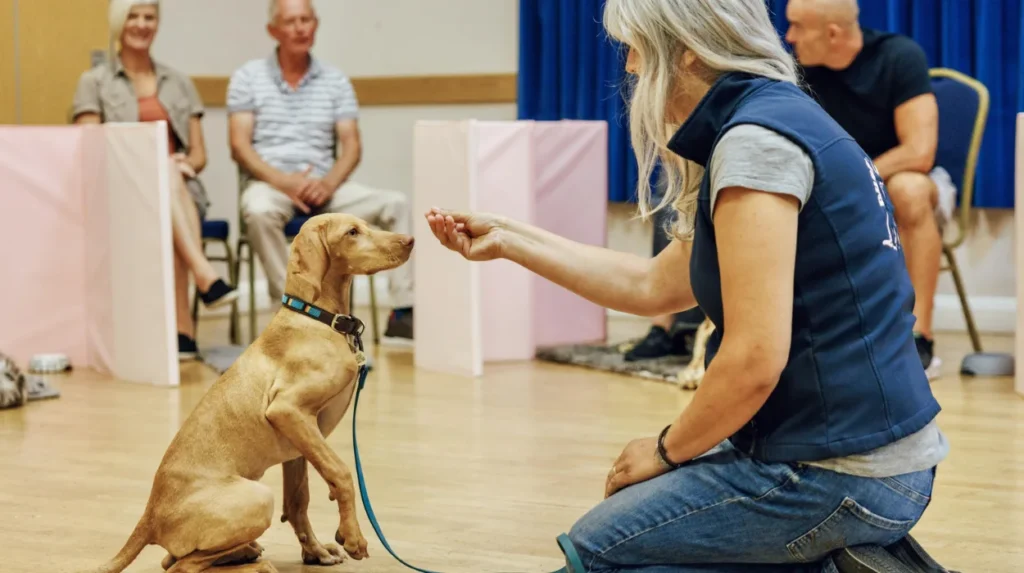
Dogs benefit from training as early as practical, including during puppyhood. Puppy classes often accept dogs from approximately eight weeks onward, subject to the provider’s age limits and veterinary guidance. Older puppies, adolescent dogs and adult dogs also benefit from structured, reward-based learning.
Training does not depend on a dog reaching a particular age. Early education helps owners establish useful routines before unwanted habits become well established.
Puppies learn through repeated experiences and associations. Owners can begin teaching their puppy to respond to its name, settle on a bed and accept gentle handling at home. Short sessions with suitable rewards help maintain attention.
The early socialisation period is especially important. Research on puppy development examines how positive experiences during early life influence later behaviour. The practical goal is to provide safe, varied experiences without overwhelming the puppy.
Vaccination status should not be the only factor in a socialisation decision. Owners should ask their vet about local infectious-disease risks and suitable ways to introduce puppies to people, sounds and environments before completing their vaccination course.
Adult dogs also learn new skills. A rescue dog, for example, can learn recall foundations, calmer greetings and relaxed lead walking through gradual practice. The trainer should adapt the programme to the dog’s history, confidence and behaviour.
What should dogs learn in a Bristol training class?
A useful dog training course teaches practical skills that owners can apply at home and in public. Core learning objectives include name response, sit, stay, recall, loose-lead walking, calm greetings, settling and safe handling, with exercises adjusted to each dog’s ability.
Training should connect classroom exercises with everyday situations. A dog that sits in a quiet room needs further practice before responding reliably outside when bicycles, children or other dogs pass nearby.
Which basic obedience skills matter most?
Name response helps a dog orient towards its handler. Sit and down teach simple position cues, while wait supports controlled movement through doorways and gates.
Recall is particularly important when a dog is in a safe, permitted off-lead environment. The owner calls the dog and rewards it for returning. Initially, practice takes place at short distances with minimal distractions.
Leave it teaches a dog to disengage from an item or situation. This skill supports safer management around discarded food and objects on the ground, although owners must still supervise their dogs carefully.
How does lead training improve daily walks?
Loose-lead walking reduces pulling and makes everyday outings easier to manage. Trainers typically reward the dog for walking near the handler, checking in voluntarily and responding to changes in direction.
Owners should avoid turning every walk into a prolonged obedience drill. Short periods of structured practice, combined with opportunities to sniff and explore safely, help make training more manageable.
Why is settling important?
Settling teaches a dog to relax on a mat or in a designated resting area. This skill supports calm behaviour at home, during visits and in suitable dog-friendly settings.
Trainers often begin by rewarding brief moments of calmness. They gradually increase the duration while keeping the dog comfortable. If a dog repeatedly gets up, barks or appears distressed, the exercise needs to become easier.
Where can owners find dog training classes in Bristol?
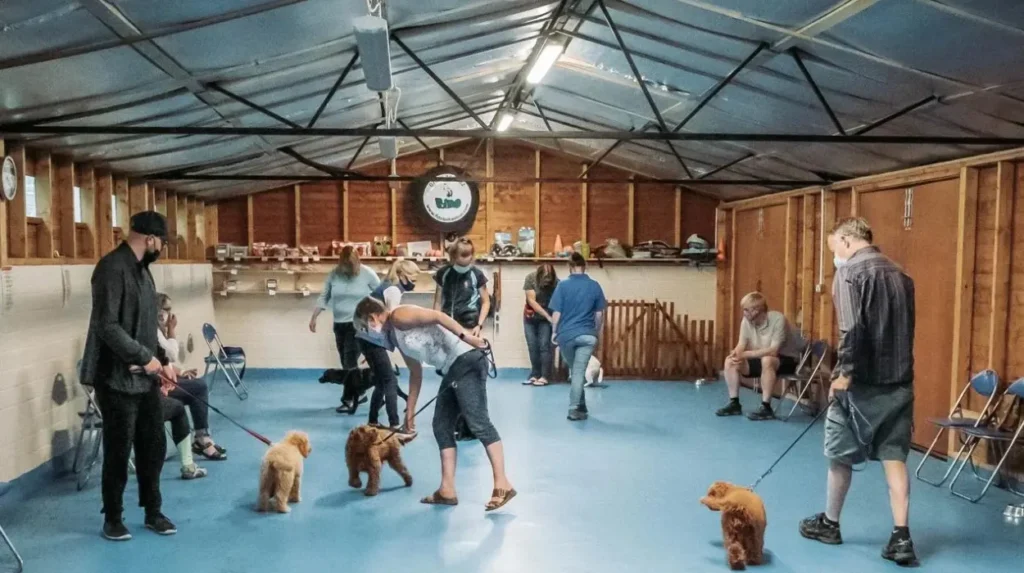
Bristol dog owners can compare local providers offering puppy classes, group obedience lessons, one-to-one coaching and behaviour support. Options include HoundPlus, Mutleys Dog Training, Bristol Dog School and Pawtastic Dog Services. Owners should confirm current venues, course availability, fees and suitability directly with each provider.
Bristol includes training providers serving different neighbourhoods and surrounding areas. The best choice depends on travel distance, class format, the dog’s needs and the instructor’s approach.
HoundPlus
Offers group training and behaviour support for puppies, adolescent dogs and adults. Ask about current class levels, available venues and the training goals covered.
Mutleys Dog Training
Provides puppy classes and continuation training. Ask about age limits, class size, reward-based methods and progression after the introductory course.
Offers puppy and dog training, with group classes and individual support. Ask about age-appropriate foundations, adolescent training and enrichment activities.
Stapleton, East Bristol
Provides training and behaviour support for puppies, adolescent dogs and adults. Ask about foundation obedience, engagement and classes designed for specific behaviour goals.
2 Princess Gardens, Stapleton, Bristol BS16 1EY
These providers are starting points for research, not endorsements or guarantees of availability. Class timetables, venues and prices change, so confirm details before travelling or paying for a course.
Owners dealing with serious fear, aggression or intense reactivity should ask whether the provider offers individual assessment. A standard group class is not suitable for every dog.
How should owners choose a qualified dog trainer in Bristol?
Owners should select a dog trainer who uses reward-based methods, explains learning techniques clearly, demonstrates relevant qualifications and adapts lessons to each dog. Check professional accreditation, experience, class size, welfare standards, insurance and the support provided between sessions before booking.
Dog training is not a uniformly regulated profession in the UK. A trainer’s job title alone does not establish professional competence. Owners therefore need to check experience, qualifications and working practices rather than relying solely on promotional claims.
The Animal Behaviour and Training Council (ABTC) maintains standards and registers for recognised animal training and behaviour professionals. Its register provides a useful starting point when checking whether a trainer or behaviourist meets an appropriate professional standard.
Owners should ask prospective trainers the following questions:
- What training qualifications and professional memberships do you hold?
- Do you use reward-based methods throughout the course?
- How do you manage dogs that become anxious or overexcited?
- What is the maximum number of dogs in each class?
- Are owners given homework and written guidance?
- What happens if a dog struggles in a group environment?
- Do you hold appropriate public liability insurance?
A good instructor explains why an exercise works, demonstrates it clearly and gives owners time to practise. The instructor also recognises when a dog needs additional space, a quieter environment or an individual training plan.
Are reward-based dog training classes better for dogs?
Reward-based dog training uses food, toys, praise or other valued rewards to encourage desirable behaviour. Animal welfare organisations recommend this approach because it supports learning without relying on fear or pain. Bristol owners should choose classes that prioritise positive reinforcement and humane handling.
Positive reinforcement is a learning process in which a desirable consequence follows a behaviour, increasing the likelihood of that behaviour occurring again.
For example, when a dog walks beside its owner without pulling, the owner rewards the dog with a small treat. Repeated practice helps the dog associate loose-lead walking with a positive outcome.
The guidance recommends identifying rewards that motivate each individual dog and delivering them at the right time.
A suitable class teaches owners to:
- Reward desired behaviour promptly.
- Use clear, consistent cues.
- Start exercises in manageable environments.
- Increase distractions gradually.
- Recognise signs of stress or discomfort.
- Avoid intimidation, painful corrections and coercive equipment.
Training methods affect more than immediate obedience. Research published in PLOS ONE in 2020 examined the relationship between training methods and companion dog welfare. The findings identified welfare concerns associated with aversive-based training compared with reward-based approaches.
Owners should not confuse reward-based training with allowing a dog to do anything it wants. Positive training still uses boundaries, management and consistent expectations. It teaches the dog which behaviours work while reducing opportunities to practise unwanted ones.
How much do dog training classes cost in Bristol?
Dog training prices in Bristol depend on the trainer, course length, class size, location and level of support. Group puppy courses generally cost less per session than individual coaching. Owners should compare complete course fees, session numbers and included support before choosing.
There is no single standard price for dog training classes across Bristol. Some providers charge for a fixed course, while others offer individual sessions or specialist programmes.
The total cost depends on what the owner receives. A course with several practical sessions, written guidance and feedback between classes offers a different service from a single introductory lesson.
Before paying, ask the trainer to confirm:
- The full course fee and number of sessions.
- Whether missed lessons can be rearranged.
- Whether training equipment or treats are included.
- Whether the course includes homework or follow-up support.
- Whether additional behaviour consultations cost extra.
- The cancellation and refund policy.
Owners should compare the cost per session as well as the overall fee. Travel expenses and the time required to attend weekly classes also affect the practical cost.
The cheapest class is not automatically the best value. A suitable programme gives owners enough instruction to practise effectively at home and provides a clear route to further help when needed.
Prices change over time. Check current fees directly with Bristol training providers instead of relying on older directory listings.
How should owners prepare for their first dog training class?
Owners should prepare by confirming the booking, checking vaccination requirements, packing suitable rewards and bringing the equipment requested by the trainer. Arriving early, allowing time for settling and informing the instructor about behavioural concerns help create a safer, more productive first session.
Preparation reduces unnecessary stress for both dog and owner. Read the joining instructions carefully because some classes use indoor halls, while others take place outdoors.
Bring a well-fitted harness or collar, a suitable lead, small dog-safe treats, water and any required vaccination records. Avoid retractable leads in crowded group settings unless the instructor specifically approves their use.
Arrive with enough time to follow the trainer’s instructions. Keep dogs at a comfortable distance from unfamiliar animals while waiting. Do not allow dogs to greet each other automatically simply because they are attending the same class.
Tell the trainer about barking, fear, handling sensitivity, previous incidents or difficulty remaining near other dogs. This information helps the instructor adjust distances and exercises.
Owners should also check the class policy for puppies that have not completed their vaccination schedule. A vet can advise on infection risks and appropriate socialisation before full vaccination.
During the first lesson, focus on understanding the exercises rather than expecting immediate results. Ask the instructor to demonstrate any technique that feels unclear or difficult to reproduce.
How can owners practise dog training between classes?
Owners reinforce classroom learning through short, regular practice sessions at home and in suitable outdoor environments. Repeating one skill at a time, rewarding successful responses and gradually introducing distractions helps dogs transfer learned behaviours into everyday situations.
A weekly class introduces skills, but consistent practice builds reliability. Dogs need opportunities to repeat exercises with the people who handle them every day.
The RSPCA recommends short, regular training sessions and reducing distractions when teaching new behaviours. Owners can begin in a quiet room before practising in the garden or another suitable environment.
For example, a recall exercise can start with the dog a short distance away indoors. The owner calls the dog once, rewards the response and repeats the exercise while the dog remains engaged. Later sessions introduce greater distance and mild distractions.
A simple practice routine can include:
- Name response and attention indoors.
- Sit, down and wait during quiet periods.
- Loose-lead walking in a low-distraction area.
- Recall games in a secure space.
- Calm settling on a mat.
Keep sessions short enough to maintain interest. Stop or simplify an exercise if the dog becomes frustrated, distracted or tired.
Everyone in the household should use consistent cues and reward the same behaviours. Mixed instructions make learning less predictable.
Owners should also record progress. Notes about the environment, distractions and successful responses help identify when to increase difficulty or return to an easier step.
Can dog training classes help with barking, pulling or aggression?
Dog training classes can help with common behaviour challenges such as lead pulling, jumping up and poor recall. Persistent fear, severe reactivity or aggression requires an individual assessment and a tailored behaviour plan rather than relying on a standard obedience class alone.
Behaviour problems often have different causes. A dog that pulls towards other dogs might be excited, frustrated or worried. A dog that barks when approached might be fearful rather than deliberately disobedient.
Training should address the reason behind the behaviour. Simply stopping a visible response does not necessarily resolve the underlying emotion.
When is individual behaviour support necessary?
Individual coaching is appropriate when a dog cannot settle in a group, reacts intensely to unfamiliar dogs or people, or struggles to learn while other dogs are nearby.
A qualified clinical animal behaviourist or appropriately accredited behaviour professional can assess the dog’s history, environment and triggers. A vet should assess sudden behavioural changes because pain and other medical conditions can affect behaviour.
How can owners manage lead pulling?
Lead pulling improves through consistent reinforcement and carefully managed walks. Owners reward the dog for walking near them, reduce distractions when necessary and avoid allowing constant pulling to become the most effective way to reach something interesting.
If a dog lunges or barks at other dogs, owners should increase distance and prevent uncontrolled greetings. Repeatedly exposing a distressed dog to close encounters without an appropriate plan can worsen the problem.
What should owners do about aggression?
Aggression requires careful management and professional advice. Owners should avoid punishment, forced interactions and situations that increase the risk of injury.
Use secure equipment, maintain distance from triggers and follow professional guidance. If a dog has bitten someone or presents an immediate safety risk, contact a vet and an appropriately qualified behaviour professional promptly.
Where can Bristol dogs practise their training safely?
Bristol dogs can practise learned skills in quiet residential areas, suitable enclosed spaces and permitted public locations. Owners should select environments appropriate to the dog’s current ability, follow local rules, maintain control near roads and wildlife, and increase distractions gradually.
Training outside a class helps dogs respond to familiar cues in real-world situations. However, public spaces introduce distractions that are difficult to reproduce in a training hall.
Start with quiet routes and short exercises. Practise attention, waiting and loose-lead walking before attempting more difficult environments.
Bristol offers a range of parks and green spaces, but each location has its own conditions and restrictions. Before practising, check whether dogs must remain on leads, whether specific areas are designated for off-lead exercise and whether seasonal restrictions apply.
Suitable practice environments include quiet pavements, secure private gardens and enclosed training areas. Busy shopping streets, crowded events and wildlife-sensitive locations are unsuitable for introducing difficult new exercises to an inexperienced dog.
Owners should never rely on an untested recall beside roads. A long training line attached to suitable equipment provides additional control in appropriate open spaces when used safely.
Responsible practice also means cleaning up dog waste, respecting other park users and preventing unwanted approaches to people or animals.
What do research and animal welfare guidance say about dog training?
Animal welfare organisations support reward-based dog training because it encourages desired behaviour while reducing reliance on fear, pain and intimidation. Research on canine welfare also highlights risks associated with aversive methods, supporting the use of humane training and individualised behaviour management.
Training recommendations draw on animal learning research, veterinary advice and professional welfare guidance.
The 2020 study Does Training Method Matter? Evidence for the Negative Impact of Aversive-Based Methods on Companion Dog Welfare, published in PLOS ONE, compared dogs trained using different methods. Its findings linked aversive-based training with poorer welfare indicators than reward-based training.
The study provides evidence relevant to training choices, although no single study establishes every possible outcome for every dog.
The American Veterinary Society of Animal Behavior also recommends reward-based training for dogs, including when addressing behaviour problems. Its guidance emphasises avoiding methods that rely on fear, pain or intimidation.
In practical terms, these recommendations support classes that teach owners to reward appropriate choices, use manageable training steps and recognise stress signals. They also reinforce the importance of adjusting training plans to individual needs.
The UK’s Animal Welfare Act 2006 establishes a duty of care for people responsible for animals. The legislation requires owners and keepers to meet animals’ welfare needs, including protection from pain, suffering, injury and disease.
For Bristol dog owners, these principles make welfare an essential consideration when choosing an instructor. A class should teach useful behaviour while protecting the dog’s physical and emotional wellbeing.
How can dog training classes support responsible ownership in Bristol?
Dog training supports responsible ownership by improving communication, helping owners manage dogs in public and teaching practical skills for everyday situations. Reliable recall, lead manners, calm greetings and appropriate settling help reduce avoidable conflicts and make shared neighbourhood spaces safer.
Bristol’s streets, residential areas and public green spaces bring dogs into contact with people, cyclists, children and other animals. Owners remain responsible for managing these interactions, even when their dogs have completed a training course.
Training contributes to responsible ownership in several ways. Recall helps owners regain control in appropriate environments. Lead training improves handling near traffic. Calm greetings reduce the risk of dogs jumping on people. Settling exercises help dogs remain manageable during everyday activities.
Training also benefits the dog. Structured learning provides mental stimulation, develops communication with the owner and creates opportunities to practise useful behaviours.
However, attending a class does not guarantee that a dog will respond reliably in every situation. Owners need to maintain practice, supervise interactions and use leads where appropriate.
The Animal Welfare Act 2006 and local public-space rules provide an important framework for responsible dog care. Owners should check current council guidance for relevant park restrictions and dog-control requirements.
Explore More Area Guide
Pet Shops in Bristol: Supplies, Food and Pet Care
Dog Groomers in Bristol: Services, Prices and How to Choose
What is the future of dog training classes in Bristol?
Dog training in Bristol continues to serve owners seeking practical obedience, puppy education and behaviour support. Reward-based methods, individualised instruction and real-world skills remain important foundations, while flexible coaching and specialist activities provide additional options for different dogs and households.
Dog owners increasingly need training that fits different living environments and behaviour challenges. A puppy living in a busy flat has different learning priorities from a working breed living in a rural setting outside Bristol.
Training programmes that combine group lessons with individual feedback help owners practise skills in more than one environment. Specialist options such as scent work and controlled agility also provide structured activities for dogs that benefit from additional mental and physical engagement.
Digital resources support this process through instructional videos, written homework and remote follow-up. These tools supplement practical instruction but do not replace an individual assessment when a dog has serious behavioural difficulties.
The central requirement remains consistent: training should be humane, practical and appropriate to the individual dog. Owners who choose a suitable class, practise regularly and seek additional help when necessary give their dogs a stronger foundation for everyday life.
Which dog training class should Bristol owners choose?
Dog training classes in Bristol provide a structured way to develop obedience, social skills and reliable everyday behaviour. Puppy classes establish early foundations, adult classes strengthen practical skills, and individual behaviour support addresses challenges that require a tailored approach.
Owners should prioritise reward-based methods, qualified instruction, suitable class sizes and clear guidance for home practice. They should also verify current prices, venues, age limits and vaccination requirements before enrolling.
The most suitable course is one that matches the dog’s needs and helps the owner apply training consistently beyond the classroom. With regular practice and responsible handling, dogs can develop the skills needed to navigate Bristol’s streets, parks and shared public spaces safely.
Where can I find dog training classes in Bristol?
Dog owners can explore local providers such as HoundPlus, Mutleys Dog Training, Bristol Dog School and Pawtastic Dog Services. Check their current locations, class schedules, prices and training methods before booking.