Fishing near Bristol offers access to freshwater lakes, rivers, reservoirs and coastal waters across Bristol, Somerset, Gloucestershire and the Severn Estuary. Anglers find opportunities for carp, pike, perch, roach, bream, trout and sea fish, depending on the location, season and fishing method. The best venue depends on the target species, fishing experience, access arrangements and the availability of a valid fishing licence or day ticket.
- Where are the best fishing spots near Bristol?
- Which River Avon fishing locations are worth visiting?
- Where should beginners fish along the River Avon?
- What fish can anglers catch in the River Avon?
- What permissions are required?
- Is Chew Valley Lake a good fishing destination near Bristol?
- What fish can anglers target at Chew Valley Lake?
- Can beginners fish at Chew Valley Lake?
- How much does fishing at Chew Valley Lake cost?
- Why is Blagdon Lake popular with trout anglers?
- Which fishing methods work at Blagdon Lake?
- Where can anglers access Blagdon Lake?
- When should anglers visit Blagdon Lake?
- Where can anglers fish in Bristol Harbour?
- What fish can anglers expect in Bristol Harbour?
- Is Bristol Harbour suitable for a short fishing trip?
- Can you fish in Bristol’s parks and urban lakes?
- What are the fishing rules at Eastville Park?
- Are Bristol’s park fisheries suitable for beginners?
- Can you fish in every Bristol park?
- Is the Kennet and Avon Canal near Bath a good fishing spot?
- Where can anglers try coastal fishing near Bristol?
- Which fish are targeted by Bristol Channel sea anglers?
- How should anglers plan a coastal fishing session?
- What is the best time of year to fish near Bristol?
- What fishing licence and permits do you need near Bristol?
- What equipment should you bring to fishing spots near Bristol?
- How can anglers fish responsibly near Bristol?
This guide covers established fishing destinations near Bristol, the species anglers target, fishing permissions, seasonal considerations, equipment and essential safety rules. It distinguishes freshwater fishing from sea angling and explains how to plan a legal, productive fishing trip.
Where are the best fishing spots near Bristol?
The best fishing spots near Bristol include the River Avon, Chew Valley Lake, Blagdon Lake, the Kennet and Avon Canal near Bath, and accessible coastal locations around Portishead and Clevedon. Each destination offers different fishing conditions, target species, access requirements and facilities, so anglers should check local rules before travelling.
Bristol sits close to several major freshwater and coastal fishing environments. The River Avon flows through the city towards the Severn Estuary, while Somerset’s lakes and reservoirs provide stillwater fishing. Canals around Bath and the surrounding countryside support coarse fishing in managed sections.
The main destinations fall into three categories:
- Rivers, such as the River Avon, where flow, water levels and local fish populations influence fishing conditions.
- Lakes and reservoirs, such as Chew Valley Lake and Blagdon Lake, where access is often controlled by fishery operators.
- Canals and coastal waters, such as the Kennet and Avon Canal and the Severn Estuary, where anglers must account for local restrictions, tides and water safety.
A location’s reputation does not guarantee public fishing access. Some waters require advance booking, club membership or a day ticket, while certain reservoirs operate under specialist fishing permits.
Which River Avon fishing locations are worth visiting?
The River Avon is one of Bristol’s principal freshwater fishing resources, running through the city and connecting with the wider Bristol Channel system. Its different stretches support coarse fishing and other angling opportunities, but access rights, permitted methods and fish populations vary by location.
The River Avon is a major river in south-west England. Its Bristol section forms part of the wider river system connecting inland waterways with the Severn Estuary. The river has played a significant role in the region’s transport, trade and industrial development.
Today, selected stretches attract anglers targeting coarse fish, including chub, roach, perch and bream. The exact species available depend on the stretch, habitat, water quality and season. Not every section provides the same fishing opportunities.
Where should beginners fish along the River Avon?
Beginners should identify an established, permitted fishing stretch with safe bank access, a clear route to the water and enough room to cast without obstructing other users. A managed fishery or recognised angling club provides clearer information about permitted methods and local restrictions.
Urban riverbanks require particular care. Sloping concrete, deep water, submerged obstructions and changing currents create hazards even when the surface appears calm. Anglers should avoid fishing from unsafe walls or entering the river to retrieve tackle.
What fish can anglers catch in the River Avon?
Common coarse-fishing targets include roach, perch, chub and bream, depending on the stretch. Chub often feed around features such as overhanging vegetation and current breaks, while perch hunt smaller fish and aquatic invertebrates.
A simple float-fishing setup suits suitable slower sections, while feeder fishing provides another method for presenting bait in deeper or flowing water. Anglers should select tackle according to current strength, depth, fish size and the venue’s rules.
What permissions are required?
River access and fishing rights are separate matters. A public footpath beside the River Avon does not automatically grant permission to fish from the bank. Anglers need to verify the fishery boundary, ownership arrangements and ticket requirements before setting up.
In England, anglers fishing for freshwater coarse fish or eels with a rod and line generally require the appropriate Environment Agency rod fishing licence. Fishery permits and local rules apply separately.
Is Chew Valley Lake a good fishing destination near Bristol?
Chew Valley Lake is a major stillwater trout fishery near Bristol, known for fly fishing and specialist fishing opportunities. The reservoir is managed by Bristol Water Fisheries, and anglers need the correct permit, must follow fishery regulations and should check current availability before visiting.
Located south of Bristol near Chew Stoke, Chew Valley Lake is an important destination for trout anglers. Its open water, shoreline features and managed boat-fishing facilities make it suitable for anglers who plan dedicated fishing trips.
The lake also has ecological importance. Avon Wildlife Trust identifies the surrounding area as a place to observe wildfowl and other wildlife, making it relevant to visitors interested in nature as well as fishing. Public recreational access does not automatically include permission to fish.
What fish can anglers target at Chew Valley Lake?
Rainbow trout are a principal target at the managed fishery. Chew Valley Lake also offers specialist pike fly fishing under the fishery’s rules. Anglers should check the current regulations because the permitted methods differ by species and location.
Fly fishing involves casting an artificial fly using a line designed to carry it. Trout anglers select flies based on insect activity, water conditions and fish behaviour. Common approaches include fishing nymph imitations below the surface and dry flies on the surface when feeding fish respond to them.
Can beginners fish at Chew Valley Lake?
Beginners can investigate bank permits and guided instruction before booking. Bank fishing avoids the additional skills and costs associated with operating from a boat. The fishery’s staff can provide current information about permits, access arrangements and the techniques that suit prevailing conditions.
Boat fishing requires additional preparation. Bristol Water Fisheries requires boat anglers to wear life jackets, and boat permits are subject to its booking conditions. Check the latest rules and availability before travelling.
How much does fishing at Chew Valley Lake cost?
The cost depends on the permit, fishing method, age category and fish allowance. Bristol Water Fisheries lists 2026 bank permits from £18 for a junior half-day ticket to £36 for a full adult ticket covering its specified waters. Prices and conditions are subject to change, so check the official tariff before booking.
Why is Blagdon Lake popular with trout anglers?
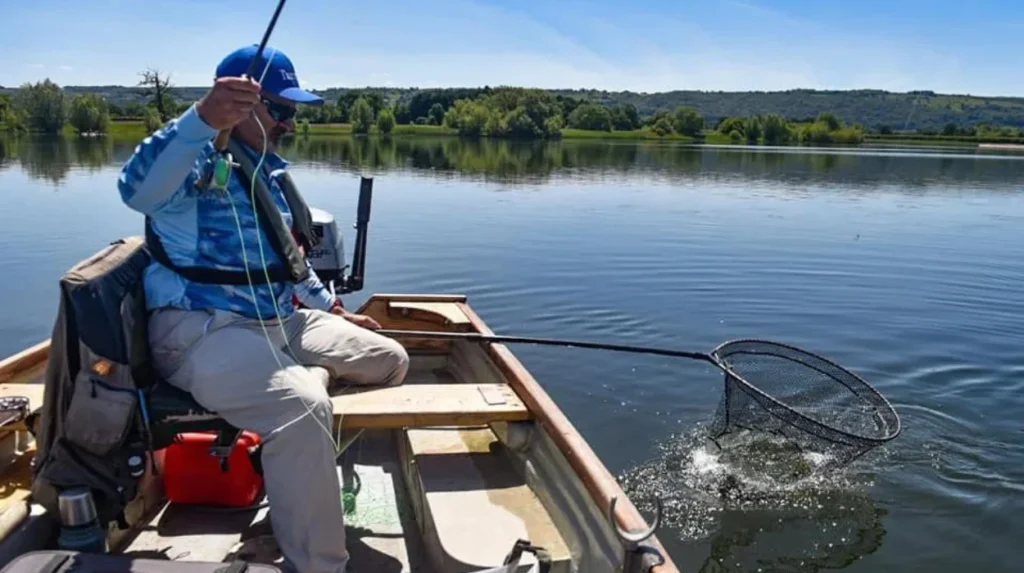
Blagdon Lake is a recognised stillwater trout fishery in Somerset, near Bristol, with a long history of fly fishing. The lake covers approximately 440 acres and offers bank and boat fishing under Bristol Water Fisheries permits, with designated areas and specific rules governing access.
Blagdon Lake lies at the foot of the Mendip Hills. Bristol Water describes it as a longstanding destination for stillwater trout fly fishing, with catch records dating back to the early twentieth century. The lake’s varied shoreline includes sheltered bays, deeper basins and points that anglers use to reach different water depths. bristolwaterfisheries.com
Which fishing methods work at Blagdon Lake?
Fly fishing is the defining method at Blagdon. Anglers use artificial flies that imitate aquatic insects and other natural food sources. Nymph patterns are fished beneath the surface, while dry flies imitate insects floating on the water.
Lures and sinking lines also feature in the fishery’s recommended approaches, depending on conditions and the season. Anglers must follow Bristol Water’s traditional fly-fishing rules, including restrictions on bait, spinning and other methods.
Where can anglers access Blagdon Lake?
The lake has designated fishing areas and boat facilities, but not every shoreline is open for fishing. Bristol Water states that the general public can use the footpath beside Butcombe Bay in the north-west corner, while the remainder of the lake is restricted to permit holders.
Anglers can check bank and boat permits through Bristol Water Fisheries. Boat hire requires advance booking, and anglers must follow the operator’s safety and navigation rules. Fishing from the dam and in specified streams is prohibited.
When should anglers visit Blagdon Lake?
The best time depends on the official fishing season, weather, water temperature and trout activity. Bristol Water publishes opening dates and booking information for each season. For 2026, its published opening schedule lists bank fishing at Chew Valley and Blagdon lakes from 5 March, with boat fishing opening on separate dates. These dates are seasonal rather than permanent, so check the current calendar before arranging a trip.
Where can anglers fish in Bristol Harbour?
Bristol Harbour provides designated urban fishing locations within the historic floating harbour. Bristol City Council identifies permitted areas near Baltic Wharf, Bristol Bridge, Bathurst Basin and the Feeder Canal. Anglers must avoid ferry points and landing stages, return fish unharmed and follow local rules.
Bristol Harbour is part of the city’s historic waterway network. Its quays, bridges and waterfront paths place fishing within walking distance of central Bristol attractions.
Unlike a rural trout lake, the harbour is an urban environment with boats, pedestrians and commercial activity. Anglers must choose an approved spot that does not interfere with navigation or public access.
Bristol City Council lists the following permitted locations:
- The quayside at Baltic Wharf, between Cottage Inn and Bristol Marina.
- The section between Bristol Bridge and the Glassboat restaurant.
- The quayside at Bathurst Basin.
- Designated areas of the Feeder Canal.
Fishing is prohibited where boats land, including ferry points and landing stages. The council also requires all fish caught at these locations to be returned to the water unharmed. Bristol City Council
What fish can anglers expect in Bristol Harbour?
The exact catch depends on water conditions, season and the harbour’s fish population. Urban waterways can support coarse fish such as roach and perch, but anglers should not assume that every species occurs at every permitted harbour location.
Float fishing and other suitable coarse-fishing methods depend on local conditions and applicable rules. Anglers should use tackle that is appropriate for the water depth and avoid casting across pedestrian routes, boat movements or other anglers’ lines.
Is Bristol Harbour suitable for a short fishing trip?
The harbour is practical for anglers who want to fish close to the city centre without travelling to a rural reservoir. Its central location also makes it possible to combine a fishing session with a walk along the waterfront.
However, the availability of a quayside does not mean every section is suitable for fishing. Check the council’s designated fishing map, avoid busy landing points and keep hooks, lines and equipment clear of public walkways.
Can you fish in Bristol’s parks and urban lakes?
Bristol City Council permits fishing in certain lakes and rivers in parks and green spaces, subject to local restrictions. Eastville Park has designated fishing areas and a defined season, while St George Park is excluded from the council’s general park-fishing permission. Anglers must check the rules for each location.
Park fishing offers a convenient option for residents who want a short session without travelling outside Bristol. The council’s fishing guidance covers lakes and rivers in parks and green spaces, but its rules are not identical at every site.
What are the fishing rules at Eastville Park?
Eastville Park has specific requirements that anglers must follow. Bristol City Council states that fishing is permitted only during daylight and within the open season, which runs from 16 June to 14 March each year. Anglers must use marked fishing areas and cannot use more than two rods or poles per person.
The council also prohibits tents and shelters and instructs anglers to dispose of rubbish responsibly. Floating bait is not permitted because it attracts birds that can become caught in hooks and fishing lines. Check the council’s current guidance before fishing, as local rules take priority over assumptions based on other parks.
Are Bristol’s park fisheries suitable for beginners?
Designated park fisheries can suit beginners who want to practise basic casting and fish handling. A simple rod, appropriate line and permitted bait are sufficient for many basic coarse-fishing setups, depending on the water and local rules.
Beginners should choose a clear bank position away from other park users. They should also keep hooks covered while walking, supervise children closely and remove every piece of line, packaging and other tackle after the session.
Can you fish in every Bristol park?
No. Bristol City Council specifically excludes St George Park from its general permission to fish in lakes and rivers within parks and green spaces. Other locations can have their own restrictions, so anglers should check the official rules rather than assume that every pond or lake is open to fishing. Bristol City Council
Is the Kennet and Avon Canal near Bath a good fishing spot?
The Kennet and Avon Canal offers freshwater fishing opportunities near Bath, east of Bristol, where permitted sections support coarse angling. Access depends on the controlling fishing rights, local club arrangements and Canal and River Trust permits. Anglers must verify the exact stretch before fishing.
The Kennet and Avon Canal forms part of an inland waterway connecting the River Kennet at Reading with the River Avon at Bath. The canal is a historic navigation route that now supports boating, walking, wildlife observation and fishing.
Canals often provide relatively sheltered water compared with flowing rivers. Their towpaths offer access along many sections, but walking access does not automatically include fishing rights. The Canal and River Trust explains that anglers need an Environment Agency rod licence and permission from the relevant fishery owner or controlling angling club. Some stretches require a Waterway Wanderers permit.
Which fish can anglers catch in canals near Bath?
Canal coarse fishing commonly targets species such as roach, perch, bream and carp, although availability varies by section. Roach often respond to small baits and light tackle, while perch are predatory fish that feed on smaller fish and aquatic invertebrates.
A float setup works in suitable conditions, while a feeder setup helps present bait on the bottom. Anglers should adjust their equipment to the depth, water clarity, vegetation and fishery regulations.
How can anglers check canal fishing rights?
Use the Canal and River Trust’s official fishery information to identify the club or permit scheme controlling the chosen stretch. Check the nearest bridge, lock or postcode against the fishery information before paying for a ticket.
Do not fish immediately beside locks, weirs or other structures without confirming that fishing is allowed there. Water movement, boat traffic and restricted access create hazards around these features.
Where can anglers try coastal fishing near Bristol?
Coastal fishing near Bristol is possible around parts of Portishead, Clevedon and the Severn Estuary, subject to local access and safety restrictions. These locations provide access to tidal environments rather than conventional freshwater fisheries, so tide times, currents and shoreline conditions determine when fishing is appropriate.
The Bristol Channel is a tidal inlet connecting the Severn Estuary with the Celtic Sea. Its extensive tidal range, exposed shorelines and changing currents create conditions that differ significantly from lakes, canals and inland rivers.
Portishead and Clevedon provide coastal access within reach of Bristol. However, a public promenade or beach does not automatically permit fishing from every point. Check local signage, access restrictions and any rules affecting particular structures or protected areas.
Which fish are targeted by Bristol Channel sea anglers?
Sea anglers target species according to season, bait, tide and location. Potential targets in the wider Bristol Channel include bass, flatfish and mullet, although catches vary and no particular species is guaranteed at an individual mark.
Beach casting and suitable light shore fishing setups are common approaches in coastal angling. The correct equipment depends on the target species, seabed, current and distance from shore. Anglers must also check applicable minimum sizes, catch restrictions and conservation rules.
How should anglers plan a coastal fishing session?
Check tide times before leaving home and assess the route back to safety. The Severn Estuary’s strong tidal movements can rapidly change access to mudflats, rocks and exposed shoreline. Rising water can cut off routes that appear safe at low tide.
Avoid unstable cliffs, slippery sea walls and isolated sandbanks. Never assume that calm weather means safe water. Coastal fishing requires a clear exit route, appropriate footwear and awareness of changing weather and sea conditions.
What is the best time of year to fish near Bristol?
The best fishing season near Bristol depends on the species and venue. Trout fisheries operate under published seasonal calendars, park fisheries can have defined open seasons, and canal or coastal fishing follows different rules. Anglers should check current venue regulations before selecting a date.
Spring and summer offer longer daylight hours and generally more comfortable bank access. Warmer conditions influence fish feeding behaviour, although high water temperatures and low oxygen levels can affect fish welfare.
Autumn brings changing water temperatures and shorter days. Some anglers adjust bait and presentation as fish behaviour changes, while winter fishing requires greater attention to weather, bank conditions and daylight.
There is no single season that guarantees the best results at every Bristol fishing spot. Chew Valley Lake and Blagdon Lake publish their own opening schedules, while Eastville Park has a specified fishing season. Coastal anglers must also account for tides rather than relying on the calendar alone.
What fishing licence and permits do you need near Bristol?
Most freshwater rod fishing in England requires an Environment Agency rod fishing licence, along with permission from the fishery owner or controlling club. Local rules can restrict dates, methods, catch limits and access. A licence alone does not provide permission to fish every river, lake, canal or reservoir.
The UK government’s official fishing licence guidance explains that the requirement applies to fishing for salmon, trout, freshwater fish, smelt or eel with a rod and line in England. The rules also apply to private fisheries. Children under 13 do not need a licence, while junior licensing rules apply to older children. GOV.UK+1
Before fishing, anglers should confirm three separate requirements:
- Rod fishing licence: the relevant Environment Agency licence for the species and method.
- Fishery permission: a day ticket, club membership or specialist permit for the water.
- Local regulations: any restrictions on methods, seasons, rods, fish retention or designated access points.
For example, Bristol Water Fisheries requires permits for its managed lakes, while Canal and River Trust waters have their own permit arrangements. Bristol Harbour and city parks also have local rules, including designated fishing areas and catch-and-release requirements.
Explore More Area Guide
Best Outdoor Swimming Spots Near Bristol: Lakes, Beaches and Lidos
Best Places for Birdwatching Near Bristol: Top Wildlife Sites
What equipment should you bring to fishing spots near Bristol?
Fishing equipment should match the target species, water type and venue rules. A basic freshwater setup includes a suitable rod, reel, line, hooks and permitted bait. Trout fly fishing requires specialist tackle, while coastal fishing needs equipment suited to saltwater conditions, tides and the target species.
For a beginner’s coarse-fishing session, practical equipment includes a rod and reel, a suitable line, hooks, weights or floats, and a landing net where permitted. A disgorger or forceps helps remove hooks safely, while a suitable unhooking mat protects fish when required by fishery rules.
Trout anglers visiting Chew Valley Lake or Blagdon Lake need traditional fly-fishing equipment because Bristol Water restricts fishing methods. Coastal anglers should use tackle appropriate for the expected catch and avoid leaving hooks or line where wildlife and other visitors encounter them. bristolwaterfisheries.com+1
A valid licence and permit should be arranged before fishing. Bring weather-appropriate clothing, drinking water, a charged mobile phone and a small first-aid kit. For boat fishing, follow the operator’s safety requirements and wear the required life jacket.
How can anglers fish responsibly near Bristol?
Responsible fishing protects fish populations, wildlife and public access. Anglers should follow licence conditions, observe local seasons, use permitted tackle, handle fish carefully and remove discarded line and bait packaging. At designated Bristol Harbour and park locations, anglers must return catches unharmed as required by council rules.
Fishing venues around Bristol include wildlife-sensitive habitats, such as the reservoirs and wetland areas managed for both recreation and conservation. Anglers should avoid disturbing nesting birds, trampling vegetation or leaving bait and litter behind.
Good practice includes using barbless hooks when required or appropriate, keeping fish out of the water for the shortest practical time and wetting hands before handling fish. Follow the fishery’s rules on retaining catches, as catch-and-release requirements differ between venues.
Never transfer live fish between waters. Moving fish or water can spread invasive species and aquatic diseases. Clean and dry fishing equipment between venues, particularly after fishing in waters with known invasive-species risks.
Safety is equally important. Keep away from unstable banks, fast-flowing water, deep edges and restricted structures. On tidal shorelines, monitor the tide and leave enough time to return safely.
What are the best fishing spots near Bristol?
Chew Valley Lake, Blagdon Lake, the River Avon, Bristol Harbour and the Kennet and Avon Canal near Bath are popular fishing destinations near Bristol. Each location has different fishing methods, species and permit requirements.