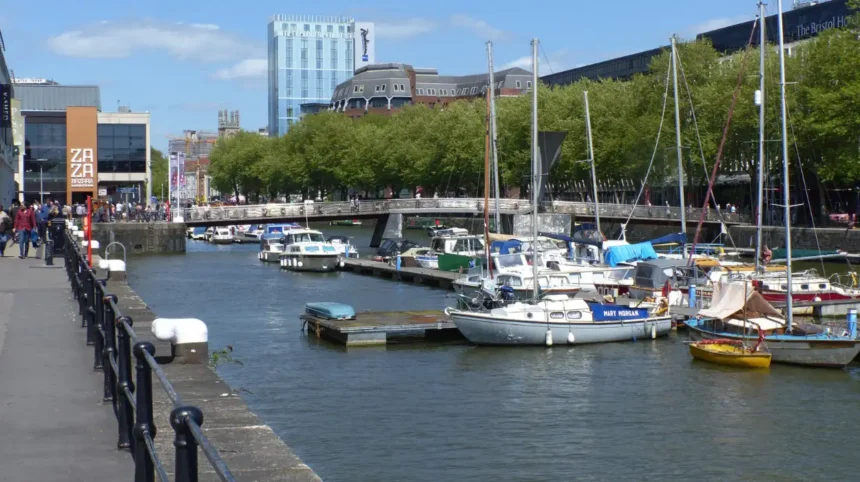
Bristol is one of England’s most distinctive waterfront cities. Its historic harbour combines maritime heritage, industrial architecture, cultural attractions, independent businesses and public walking spaces. Harbour walks in Bristol provide an opportunity to explore these features on foot while discovering the city’s history and contemporary waterfront lifestyle.
- What Is Bristol Harbour and Why Is It Important?
- How Did Bristol’s Floating Harbour Develop Historically?
- Where Can Visitors Start a Harbour Walk in Bristol?
- Which Are the Best Harbour Walking Routes in Bristol?
- 1. Central Harbourside Walk
- 2. Wapping Wharf and Spike Island Walk
- 3. SS Great Britain and Underfall Yard Walk
- 4. Cumberland Basin Walk
- 5. Temple Quay Harbour Walk
- What Historic Landmarks Can Visitors See Along Bristol Harbour?
- Which Cultural Attractions Are Worth Visiting During a Bristol Harbour Walk?
- What Wildlife Can Visitors Discover Around Bristol Harbour?
- When Is the Best Time to Enjoy Harbour Walks in Bristol?
- Are Bristol Harbour Walks Suitable for Families and Children?
- Are Harbour Walks in Bristol Accessible for Wheelchair Users?
- How Can Visitors Reach Bristol Harbour Using Public Transport?
- What Should Visitors Know About Safety Around Bristol Harbour?
- Where Can Visitors Eat and Relax During a Bristol Harbour Walk?
- How Can Visitors Protect Bristol Harbour’s Environment During a Walk?
- Why Are Harbour Walks Important to Bristol’s Future?
- How Can Visitors Plan a Complete Bristol Harbour Walking Experience?
- Exploring Bristol Through Its Historic Harbour Walks
Bristol Harbour, also known as the Floating Harbour, forms the centrepiece of the city’s waterfront. It stretches through the city from the eastern docks towards Hotwells and Cumberland Basin. Its surrounding pathways connect historic quays, museums, bridges, restaurants, public squares and residential neighbourhoods.
The harbour offers walking opportunities for visitors, local residents, families, photographers and people interested in maritime history. Routes range from short sightseeing strolls around the central Harbourside to longer walks towards Underfall Yard, Spike Island and Cumberland Basin.
Unlike traditional riverside routes, Bristol’s harbour walkways follow a largely enclosed waterway with a distinctive engineering history. The waterfront also provides access to important cultural landmarks, including Brunel’s SS Great Britain, M Shed and the Arnolfini.
Understanding the harbour’s history, walking routes, attractions and accessibility helps visitors plan a more rewarding experience.
What Is Bristol Harbour and Why Is It Important?
Bristol Harbour is a historic waterfront and transport network centred on the Floating Harbour in Bristol, England. It combines maritime heritage, public walking routes, cultural attractions and leisure facilities, connecting important locations such as Hotwells, the city centre, Wapping Wharf and Temple Quay.
Bristol Harbour occupies a significant position in the city’s geographical and economic development. Historically, it supported international shipping, shipbuilding, commercial trade and industrial activity. Today, it serves as a major leisure and cultural destination.
The Floating Harbour is an enclosed waterway designed to maintain a relatively consistent water level regardless of the River Avon tides. This engineering arrangement allowed ships to remain afloat instead of becoming stranded when the tide fell.
The harbour extends through several recognisable waterfront areas:
- Harbourside: The central visitor district containing museums, restaurants, galleries and public spaces.
- Wapping Wharf: A modern waterfront neighbourhood featuring independent shops and food businesses.
- Spike Island: A historic dockside area with creative studios, residential buildings and cultural facilities.
- Hotwells: A western harbour neighbourhood associated with maritime engineering and Underfall Yard.
- Temple Quay: An eastern waterfront district connecting the harbour with Bristol Temple Meads.
These areas create a connected walking environment with different architectural and historical characteristics.
The harbour also supports recreational activities, including rowing, sailing, paddleboarding and boat trips. Walking remains one of the simplest ways to explore its surroundings without requiring specialist equipment or advance bookings.

How Did Bristol’s Floating Harbour Develop Historically?
Bristol’s Floating Harbour opened on 1 May 1809 following construction work that began in 1804. Engineer William Jessop developed the principal engineering scheme, creating a system that maintained water levels and improved the movement of commercial vessels through Bristol’s historic docks.
Bristol’s maritime history extends back several centuries. The city developed as an important trading port because of its position near the River Avon and the Bristol Channel.
However, the river’s substantial tidal range created serious problems for commercial shipping. Water levels changed considerably between high and low tides, making navigation difficult and leaving vessels stranded in muddy channels.
During the eighteenth century, increasing shipping activity placed additional pressure on the existing port infrastructure.
Engineer William Jessop developed a solution involving the construction of an enclosed harbour and a diversion of the tidal river.
Construction started in 1804, and the Floating Harbour officially opened on 1 May 1809.
The engineering project included:
- The creation of a controlled harbour waterway.
- The construction of locks and dams.
- The development of Cumberland Basin.
- The diversion of tidal water through the New Cut.
- Improvements to the movement and storage of commercial vessels.
The New Cut provided a separate channel for the tidal River Avon, allowing the enclosed harbour to maintain a more consistent water level.
The harbour subsequently supported Bristol’s commercial expansion. Warehouses, shipyards, cranes and industrial buildings developed around its waterfront.
However, Bristol’s maritime history also includes its involvement in the transatlantic slave trade. During the eighteenth century, merchants and shipping interests in the city participated in the forced transportation and exploitation of enslaved African people.
This history remains an important part of understanding the harbour’s commercial development. Visitors can explore these subjects through the exhibitions at M Shed.
Commercial shipping eventually moved away from the central docks as larger vessels required more modern facilities.
The city docks ceased commercial operations in 1975. Subsequent regeneration transformed the waterfront into a public destination containing cultural institutions, residential developments and leisure facilities.
Today, historic dock structures remain visible along many walking routes.
Where Can Visitors Start a Harbour Walk in Bristol?
Millennium Square, Narrow Quay and the area surrounding M Shed provide convenient starting points for harbour walks in Bristol. These central locations offer access to pedestrian waterfront pathways, historic buildings, museums, restaurants and bridges connecting different sections of the Floating Harbour.
The best starting point depends on the intended walking route and the attractions visitors want to explore.
Millennium Square provides a practical starting location for first-time visitors. It sits within the central Harbourside and offers convenient access to Bristol Aquarium, We The Curious and nearby waterfront pathways.
Narrow Quay provides another useful starting point. Its location connects the central harbour with the Arnolfini, waterfront restaurants and nearby pedestrian bridges.
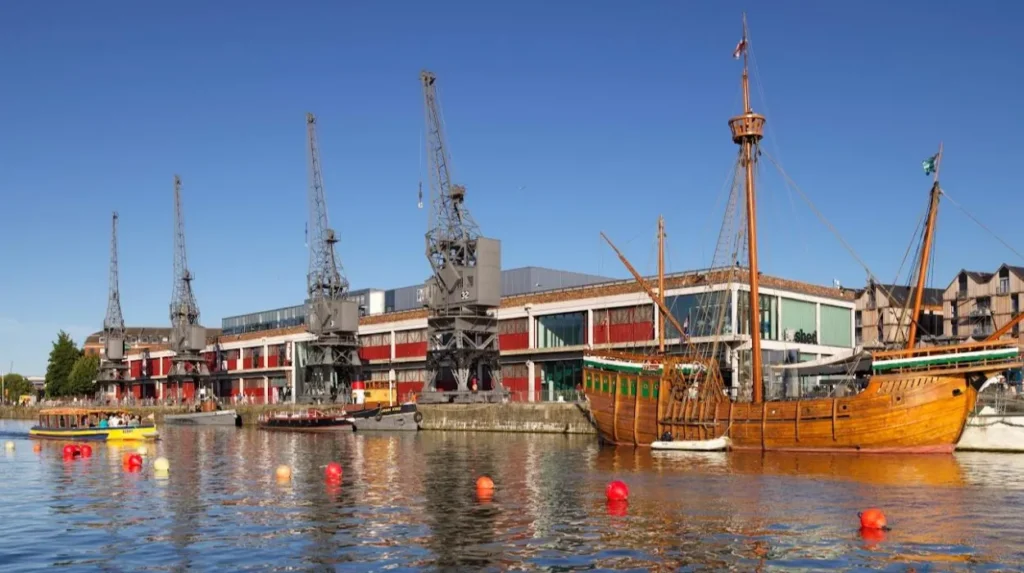
M Shed is particularly suitable for visitors interested in maritime and industrial history. Its location beside Princes Wharf provides access to historic cargo cranes and the waterfront paths around the museum.
Other starting locations include:
Wapping Wharf
Wapping Wharf provides access to independent food businesses, shops and the historic dockside environment. It works well for visitors planning a walk that combines sightseeing with refreshments.
SS Great Britain
The area surrounding Brunel’s SS Great Britain provides a starting point for exploring Bristol’s maritime engineering history and the western harbour.
Temple Quay
Temple Quay offers access to the eastern section of the waterfront and provides a convenient connection with Bristol Temple Meads railway station.
Visitors should consider public transport connections, walking distance and the attractions they intend to visit before selecting a starting point.
Which Are the Best Harbour Walking Routes in Bristol?
Bristol offers several connected harbour walking routes, including central Harbourside, Wapping Wharf, Spike Island, Underfall Yard and Cumberland Basin. These routes combine waterfront views, historic dock buildings, public bridges and cultural attractions within different sections of the Floating Harbour.
The harbour’s interconnected pathways allow visitors to create walks according to their available time and interests.
1. Central Harbourside Walk
The central Harbourside route is suitable for first-time visitors.
Start around Millennium Square and follow the waterfront towards Narrow Quay. Continue towards Pero’s Bridge and the area surrounding M Shed.
The route provides views of historic warehouses, modern waterfront buildings, boats and public spaces.
Important landmarks include:
- Millennium Square.
- Bristol Aquarium.
- We The Curious.
- Arnolfini.
- Pero’s Bridge.
- M Shed.
This route provides access to several major attractions without requiring visitors to travel far from the city centre.
2. Wapping Wharf and Spike Island Walk
Wapping Wharf and Spike Island offer a different perspective on Bristol’s waterfront.
Start near M Shed and follow the pathways towards Wapping Wharf. Continue towards the residential and creative areas of Spike Island.
The route combines historic dock infrastructure with contemporary buildings and independent businesses.
Wapping Wharf is particularly useful for food stops and refreshments.
Spike Island also has a strong connection with Bristol’s creative community. Its gallery and studios contribute to the area’s cultural identity.
3. SS Great Britain and Underfall Yard Walk
The western harbour provides opportunities to explore Bristol’s maritime engineering history.
Start near Brunel’s SS Great Britain and follow the waterfront towards Underfall Yard.
Underfall Yard is a historic dock maintenance facility associated with the engineering systems that helped manage the Floating Harbour.
Visitors can explore its historic machinery, industrial buildings and visitor facilities.
The surrounding area also provides views of boats, dock infrastructure and the wider harbour.
4. Cumberland Basin Walk
Cumberland Basin offers a route towards the western entrance of the Floating Harbour.
The area contains important maritime infrastructure, bridges and lock systems.
Visitors interested in engineering and industrial architecture can explore the relationship between the Floating Harbour and the tidal River Avon.
This route also provides a connection towards Hotwells and the surrounding waterfront environment.
5. Temple Quay Harbour Walk
Temple Quay provides an eastern starting point for exploring Bristol’s waterfront.
The area connects modern commercial development with the historic harbour environment.
Walking westwards from Temple Quay leads towards the central Harbourside, allowing visitors to explore the changing character of the waterfront.
This route is particularly useful for people arriving by train at Bristol Temple Meads.
What Historic Landmarks Can Visitors See Along Bristol Harbour?
Bristol Harbour contains important historic landmarks, including Brunel’s SS Great Britain, M Shed, Underfall Yard, historic cargo cranes and Pero’s Bridge. These locations reveal the development of maritime engineering, commercial shipping, industrial infrastructure and waterfront regeneration.
The harbour’s landmarks provide historical context throughout a walking route.
Brunel’s SS Great Britain
The SS Great Britain is one of Bristol’s most significant maritime attractions.
Designed by engineer Isambard Kingdom Brunel, the ship was launched in 1843. It introduced important developments in iron ship construction and steam-powered ocean travel.
The vessel is preserved in the Great Western Dockyard.
Visitors can explore the ship and learn about nineteenth-century maritime engineering, passenger travel and the history of international shipping.
Its position beside the harbour makes it an important landmark on western waterfront walks.
M Shed
M Shed is Bristol’s social history museum, located on Princes Wharf.
The museum explores the city’s history through exhibitions covering trade, industry, transport, migration, culture and social change.
Its outdoor area contains historic cargo cranes that remain important features of the waterfront landscape.
The cranes were constructed in the 1950s and provide a visible connection with Bristol’s commercial dock operations.
Underfall Yard
Underfall Yard is a historic engineering site at the western end of the Floating Harbour.
Its facilities were developed to manage harbour water levels and remove accumulated silt.
The site is particularly associated with Isambard Kingdom Brunel’s nineteenth-century engineering work.
The historic hydraulic machinery and industrial buildings help explain how Bristol maintained its working harbour.
Pero’s Bridge
Pero’s Bridge is a pedestrian and cyclist bridge connecting sections of the central Harbourside.
Opened in 1999, it is recognisable by its distinctive horn-shaped counterweights.
The bridge improves pedestrian connections between important waterfront attractions.
Historic Cargo Cranes
The cargo cranes outside M Shed represent Bristol’s industrial maritime past.
They once formed part of a much larger network of loading equipment around the commercial docks.
Today, they provide an important visual reminder of the harbour’s former role in international trade.
Which Cultural Attractions Are Worth Visiting During a Bristol Harbour Walk?
Bristol Harbour connects several major cultural attractions, including M Shed, Arnolfini, We The Curious, Bristol Aquarium and Brunel’s SS Great Britain. Visitors can combine outdoor walking with museums, contemporary art, science exhibitions and maritime heritage experiences.
The waterfront provides access to cultural destinations that appeal to different age groups and interests.
Arnolfini
Arnolfini is a contemporary arts centre located beside the harbour.
It hosts exhibitions, performances, film events and cultural programmes. Its waterfront position makes it a convenient stop during a central harbour walk.
We The Curious
We The Curious is an interactive science centre located at Millennium Square.
It provides educational experiences covering science, technology and the natural world. Families and visitors interested in interactive learning can include it in a Harbourside itinerary.
Bristol Aquarium
Bristol Aquarium introduces visitors to aquatic environments and marine life.
Its location near Millennium Square makes it convenient for people exploring the central waterfront.
M Shed
M Shed provides a deeper understanding of Bristol’s social, industrial and maritime history.
Its exhibitions explain how the harbour shaped the city’s economy, population and cultural identity.
Brunel’s SS Great Britain
The preserved ship offers a detailed experience of nineteenth-century engineering and maritime innovation.
Combining these attractions with a harbour walk creates an itinerary that includes outdoor recreation and educational activities.
What Wildlife Can Visitors Discover Around Bristol Harbour?
Bristol Harbour supports urban wildlife through its waterway, floating ecosystems and surrounding green spaces. Visitors can encounter mute swans, mallard ducks, gulls, cormorants, kestrels, house martins and other species while walking along the waterfront.
Although the harbour occupies a developed urban environment, it supports a range of wildlife.
The waterway provides habitat for fish and aquatic organisms. Its surrounding structures and planted areas also support birds and other animals.
Bristol City Council identifies several species associated with the harbour, including:
- Mute swans.
- Mallard ducks.
- Herring gulls.
- Lesser black-backed gulls.
- Cormorants.
- Kestrels.
- House martins.
- Otters.
Fish recorded in the harbour include pike, bream, roach and eels.
Floating Ecosystems
Bristol Harbour includes floating ecosystems designed to support biodiversity.
These structures contain native aquatic plants and trees. They provide shelter and feeding areas for wildlife, including fish, birds and otters.
Locations include Capricorn Quay, Cascade Steps and Redcliffe Quay.
The floating habitats also provide nursery areas for young birds and contribute to improvements in the local aquatic environment.
Responsible Wildlife Watching
Visitors should observe wildlife without disturbing animals or their habitats.
Feeding birds with inappropriate food, throwing rubbish into the water and approaching nesting areas can create environmental problems.
Walking quietly and keeping a respectful distance provides better opportunities to observe wildlife.
When Is the Best Time to Enjoy Harbour Walks in Bristol?
Spring, summer and early autumn provide favourable conditions for exploring Bristol Harbour on foot. Longer daylight hours, outdoor seating, seasonal events and opportunities for wildlife observation make these periods suitable for waterfront walks and sightseeing.
Bristol Harbour remains accessible throughout the year, but the experience changes with the seasons.
Spring
Spring brings increasing daylight and fresh vegetation around the waterfront.
Visitors can enjoy comfortable daytime walks and observe seasonal bird activity.
The quieter atmosphere outside peak summer periods also provides opportunities to explore museums and galleries.
Summer
Summer is one of the busiest periods around the harbour.
Outdoor restaurants, waterfront seating, boat activities and public events attract residents and tourists.
The Bristol Harbour Festival is a major annual event featuring maritime activities, performances, music and community celebrations.
Visitors should expect busier pedestrian areas during festival periods.
Autumn
Autumn offers cooler walking conditions and changing colours around nearby green spaces.
The waterfront remains suitable for sightseeing, photography and cultural visits.
Shorter daylight hours make it important to plan longer routes carefully.
Winter
Winter walks provide opportunities to explore the harbour with fewer seasonal visitors.
Museums, galleries and indoor attractions provide useful stops during colder weather.
Visitors should check weather forecasts and prepare for rain, wind and slippery surfaces.
Are Bristol Harbour Walks Suitable for Families and Children?
Bristol Harbour walks are suitable for families because the central waterfront provides relatively level pedestrian routes, public spaces, educational attractions and refreshment facilities. Families can combine short walks with visits to Bristol Aquarium, We The Curious and M Shed.
The central harbour offers several features that support family visits.
Millennium Square provides an open public space where children can enjoy the waterfront environment.
We The Curious provides interactive science experiences, while Bristol Aquarium introduces aquatic wildlife.
M Shed offers opportunities to learn about Bristol’s transport, industry and social history.
Families can also explore Wapping Wharf for food and refreshments.
However, the harbour is an active waterfront environment. Parents and carers should supervise children near the water’s edge, bridges and mooring areas.
Pushchair users should also check individual attraction entrances and access arrangements.
Short walking sections with regular breaks are practical for families with younger children.
Are Harbour Walks in Bristol Accessible for Wheelchair Users?
Many central Bristol Harbour pathways provide relatively level walking conditions, although accessibility varies between individual routes, bridges, entrances and waterfront facilities. Visitors should check surface conditions, crossing points and attraction access before planning longer journeys.
Bristol Harbour includes several accessible public locations and facilities.
The central Harbourside has pedestrian areas that connect major attractions.
However, accessibility depends on the specific route. Historic dockside infrastructure includes different surfaces, ramps, bridges and access points.
Bristol City Council identifies accessible harbour landing stages at locations including:
- Castle Park.
- Baltic Wharf.
- Harbour Inlet.
- SS Great Britain.
- St Augustine’s Reach.
- Temple Quay.
- The Buttery.
- The Mardyke.
The cross-harbour ferry, Mary Brunel, also provides an accessible connection between the SS Great Britain pontoon and Harbour Inlet.
Visitors should check current ferry operating times and fares before travelling.
Wheelchair users should consult current accessibility information for individual attractions and businesses. Checking the complete route is important because accessible facilities at one location do not guarantee that every connecting path or bridge offers step-free access.
How Can Visitors Reach Bristol Harbour Using Public Transport?
Bristol Harbour is accessible from Bristol Temple Meads railway station and the city centre through walking routes and local public transport. Visitors can also use local bus services and harbour ferries to connect with different waterfront locations.
Bristol Temple Meads is the city’s principal railway station.
From the station, visitors can reach Temple Quay and continue towards the central Harbourside.
Local bus services connect the city centre with surrounding neighbourhoods. Visitors should check current service routes and timetables before travelling.
Walking is a practical option for reaching the central harbour from many city-centre locations.
Bristol also operates harbour ferry services connecting selected waterfront destinations.
These services provide an alternative way to travel between parts of the harbour while experiencing the waterway.
Visitors arriving by car should investigate available city-centre parking before setting out. Parking availability and charges vary by location.
What Should Visitors Know About Safety Around Bristol Harbour?
Harbour walking routes are generally straightforward to explore, but visitors must take care around open water, moving vessels, bridges and operational dock facilities. Checking weather conditions, following public access signs and keeping children supervised supports a safer waterfront experience.
Bristol Harbour is both a public leisure destination and an operational waterway.
Boats, ferries and other vessels continue to use the harbour. Some areas also contain working marine facilities and restricted operational spaces.
Visitors should follow several basic precautions.
Stay away from unprotected water edges. The harbour contains deep water, and not every section has protective barriers.
Use designated pedestrian routes. Avoid entering private moorings, working yards or restricted dock areas.
Take care on bridges. Pedestrian bridges can become busy, particularly during weekends and major events.
Check the weather. Rain creates slippery surfaces, while strong winds affect exposed waterfront locations.
Keep children supervised. Families should maintain close supervision around the water.
Respect harbour activities. Give boats, cyclists and other waterfront users sufficient space.
These precautions help visitors enjoy the waterfront responsibly.
Where Can Visitors Eat and Relax During a Bristol Harbour Walk?
Bristol’s Harbourside contains restaurants, independent cafés, pubs and food businesses that provide convenient places to rest during a waterfront walk. Wapping Wharf, Millennium Square and the central waterfront offer particularly useful locations for refreshments and meals.
Food and refreshments form an important part of the harbour experience.
Wapping Wharf is particularly recognised for its independent food businesses and restaurants.
Its collection of converted shipping containers creates a distinctive retail and dining environment.
Millennium Square provides access to nearby cafés and restaurants, while Narrow Quay offers additional waterfront dining options.
Visitors can also explore the surrounding King Street area for traditional pubs and independent hospitality businesses.
Food choices include cafés, casual dining, international cuisine and traditional British pub meals.
Opening times, menus and seating availability vary between businesses.
Visitors planning a longer walk should identify suitable refreshment stops before setting out, particularly during quieter periods when some businesses operate reduced hours.
How Can Visitors Protect Bristol Harbour’s Environment During a Walk?
Visitors can protect Bristol Harbour by avoiding littering, respecting wildlife, following public access rules and keeping pollution out of the water. Responsible behaviour supports the harbour’s floating ecosystems, aquatic habitats and long-term environmental improvement.
The harbour is an important urban environmental resource.
Although surrounded by buildings and transport infrastructure, it supports aquatic life and provides habitats for several bird species.
Bristol City Council monitors harbour water quality and identifies environmental conservation as an important part of harbour management.
The council also reports that the harbour’s brown appearance is associated with suspended mud rather than automatically indicating pollution.
Visitors should follow responsible walking practices.
Dispose of rubbish in designated bins rather than leaving it on the waterfront.
Avoid throwing food, plastics and other materials into the water.
Keep dogs under control and follow local restrictions.
Do not disturb floating ecosystems or damage planted areas.
Respect wildlife by observing animals from a suitable distance.
These actions help protect the harbour as a shared public and ecological environment.
Why Are Harbour Walks Important to Bristol’s Future?
Harbour walks support Bristol’s tourism, local businesses, public recreation and cultural identity. The continued development of accessible waterfront spaces, environmental improvements and heritage conservation helps maintain the harbour as an important destination for residents and visitors.
Bristol Harbour demonstrates how historic industrial infrastructure can support modern urban life.
The former commercial docks now accommodate museums, restaurants, galleries, residential developments and public walking spaces.
This regeneration contributes to the city’s visitor economy while preserving important elements of its maritime identity.
Walking routes also encourage people to explore the waterfront without relying entirely on private transport.
Environmental projects, including floating ecosystems, support biodiversity within the urban harbour.
Future waterfront development remains closely connected with several priorities:
- Maintaining public access to the waterfront.
- Protecting historic dock buildings and industrial structures.
- Improving pedestrian and cycling connections.
- Supporting local businesses and cultural attractions.
- Protecting aquatic wildlife and habitats.
- Improving accessibility across public spaces.
The harbour’s continuing transformation demonstrates the importance of balancing commercial development, environmental protection and public recreation.
Explore More Area Guide
Riverside Walks in Bristol: Best River Avon and Harbour Routes
Circular Walks Near Bristol: Best Countryside and Woodland Routes
How Can Visitors Plan a Complete Bristol Harbour Walking Experience?
A complete Bristol Harbour walking experience combines central waterfront landmarks, maritime heritage, cultural attractions and suitable refreshment stops. Visitors should select a starting point, identify important stops, check accessibility and allow sufficient time for sightseeing.
A practical itinerary begins around Millennium Square or Narrow Quay.
From there, visitors can explore the central waterfront and continue towards M Shed.
The route provides access to historic cranes, museums, bridges and waterfront restaurants.
Visitors interested in maritime history can extend their walk towards Brunel’s SS Great Britain.
Continuing towards Underfall Yard provides additional insight into the engineering systems behind the Floating Harbour.
Those with more time can explore Wapping Wharf, Spike Island and Cumberland Basin.
A suggested full-day itinerary follows this sequence:
Morning: Start at Millennium Square and explore the central Harbourside, including Bristol Aquarium and We The Curious.
Late morning: Walk towards Narrow Quay and visit Arnolfini.
Afternoon: Continue towards M Shed and explore Bristol’s maritime and industrial history.
Later afternoon: Visit Brunel’s SS Great Britain and continue towards Underfall Yard.
Evening: Return towards Wapping Wharf or the central waterfront for food and refreshments.
Visitors who prefer a shorter experience can concentrate on Millennium Square, Narrow Quay, Pero’s Bridge and M Shed.
Checking attraction opening hours, temporary closures and transport arrangements before departure helps avoid unnecessary delays.
Exploring Bristol Through Its Historic Harbour Walks
Harbour walks in Bristol provide an accessible way to understand the city’s maritime history, industrial development and modern cultural identity. The Floating Harbour connects important landmarks, public spaces, museums, independent businesses and waterfront neighbourhoods.
From Millennium Square and M Shed to Wapping Wharf, SS Great Britain and Underfall Yard, each section reveals a different part of Bristol’s waterfront character.
The harbour also supports wildlife, recreational activities and public access to historic urban spaces.
Whether visitors want a short sightseeing stroll or a longer exploration of the western docks, Bristol Harbour offers a variety of walking opportunities throughout the year.
Its combination of history, architecture, culture and waterfront recreation makes it an important destination for anyone exploring Bristol on foot.
What are the best harbour walks in Bristol?
The best harbour walks in Bristol include the central Harbourside route, Wapping Wharf, Spike Island, Underfall Yard and Cumberland Basin. These routes offer waterfront views, historic landmarks and cultural attractions.