Bristol has one of the most recognisable art scenes in the United Kingdom. The city is internationally associated with street art, contemporary painting, independent galleries, public murals and experimental creative projects. Its artistic identity combines historical painting traditions with modern urban culture and independent artistic communities.
- What Makes Bristol an Important City for Artists?
- How Did Bristol Develop Its Artistic History?
- The Bristol School of Painting
- The Development of Public Art Institutions
- Contemporary Artistic Development
- Who Are the Most Famous Artists Associated With Bristol?
- Where Can You See Bristol Street Artists and Their Work?
- Which Art Galleries in Bristol Support Local and International Artists?
- What Types of Art Are Popular Among Bristol Artists?
- Street Art and Graffiti
- Contemporary Painting
- Illustration and Graphic Art
- Photography
- Sculpture and Installation Art
- What Is Upfest and Why Is It Important to Bristol Artists?
- How Can Emerging Artists Develop Their Careers in Bristol?
- Finding Studio Space
- Participating in Exhibitions
- Joining Creative Networks
- Developing Public Art Projects
- How Can Visitors Explore Bristol’s Art Scene?
- Start at Bristol Museum and Art Gallery
- Explore the RWA and Park Street
- Visit Stokes Croft
- Continue to Arnolfini
- Finish in Bedminster
- How Does Bristol’s Artistic Community Contribute to the Local Economy and Culture?
- Cultural Tourism
- Opportunities for Creative Businesses
- Community Participation
- Protecting Bristol’s Artistic Identity
- What Is the Future of Bristol’s Art Scene?
The Bristol artists guide explores the people, movements, galleries, studios and neighbourhoods that define the city’s creative identity. It introduces visitors and residents to established artists, emerging talent, historical figures and the places where Bristol’s artistic culture continues to develop.
What Makes Bristol an Important City for Artists?
Bristol is an important centre for artists because of its established street art culture, independent creative spaces, historical painting traditions and contemporary arts organisations. Its creative identity connects local artists, international exhibitions, public murals, community projects and experimental visual culture.
Bristol’s artistic reputation extends beyond its association with graffiti. The city supports painters, illustrators, sculptors, photographers, printmakers, installation artists and digital creatives. These disciplines contribute to a cultural environment that connects traditional fine art with contemporary visual communication.
The University of Bristol identifies art and creativity as important parts of the city’s cultural identity. Its creative environment includes independent studios, cultural organisations, public installations and networks that connect artists with researchers and local communities.
The city’s creative identity is particularly visible in neighbourhoods such as Stokes Croft, Bedminster, Southville and the Harbourside. Each area contributes a different artistic environment, from large-scale murals to exhibition spaces and independent creative businesses.
Bristol also attracts international attention through Banksy’s connection with the city. However, its wider artistic community includes many other practitioners whose work contributes to local culture and the national arts landscape.
How Did Bristol Develop Its Artistic History?
Bristol’s artistic history developed through nineteenth-century painting traditions, independent cultural institutions, public exhibitions and modern creative movements. The Bristol School established an important local painting identity, while twentieth-century cultural organisations helped introduce contemporary and experimental art.
The city’s artistic history reflects its development as a major port, commercial centre and cultural destination. Its economic connections brought people, objects, artistic influences and international ideas into Bristol.
The Bristol School of Painting
The Bristol School was a group of nineteenth-century artists associated with landscape painting and artistic activity in the city.
Important figures included:
- Francis Danby: An Irish-born painter associated with the Bristol artistic community, known for dramatic landscape and historical compositions.
- Edward Bird: A painter recognised for genre scenes and narrative subjects.
- Edward Villiers Rippingille: An artist associated with Bristol’s nineteenth-century painting tradition.
- Rolinda Sharples: A British painter known for detailed depictions of contemporary social life.
- Samuel Colman: An artist associated with landscape painting and the wider Bristol School tradition.
These artists helped establish Bristol’s historical contribution to British painting.
Bristol Museums’ fine art collection documents the Bristol School through works by Edward Bird, Edward Villiers Rippingille, Rolinda Sharples and Samuel Colman.
The Development of Public Art Institutions
The establishment of public museums and galleries expanded access to visual art.
Bristol Museum and Art Gallery opened in 1905. Its collections include British painting, European art, sculpture, works on paper and contemporary international artworks.
The institution preserves historical works while providing a setting for exhibitions and public engagement with visual culture.
Contemporary Artistic Development
Bristol’s contemporary art identity developed through independent galleries, artist-led organisations and experimental cultural programmes.
Arnolfini, established in 1961, became an important centre for contemporary arts. Its programme includes visual art, performance, dance, film and music.
This development strengthened Bristol’s position as a city where traditional fine art and contemporary creative practice exist alongside each other.
Who Are the Most Famous Artists Associated With Bristol?
Bristol is associated with internationally recognised street artists, muralists, painters and illustrators. Banksy, Inkie, Jody, Cheo, Andy Council and Lucas Antics represent different aspects of the city’s artistic identity, combining graffiti, public murals, illustration and contemporary urban creativity.
Bristol’s artistic reputation comes from a combination of established names and independent practitioners. Their work appears in public spaces, exhibitions, commissioned projects and community-led creative initiatives.
Banksy
Banksy is the most internationally recognised artist associated with Bristol. The anonymous street artist became known for stencil-based imagery, political commentary, satire and public interventions. Early work and graffiti culture in Bristol helped shape the artist’s development.
Recognisable Bristol works include:
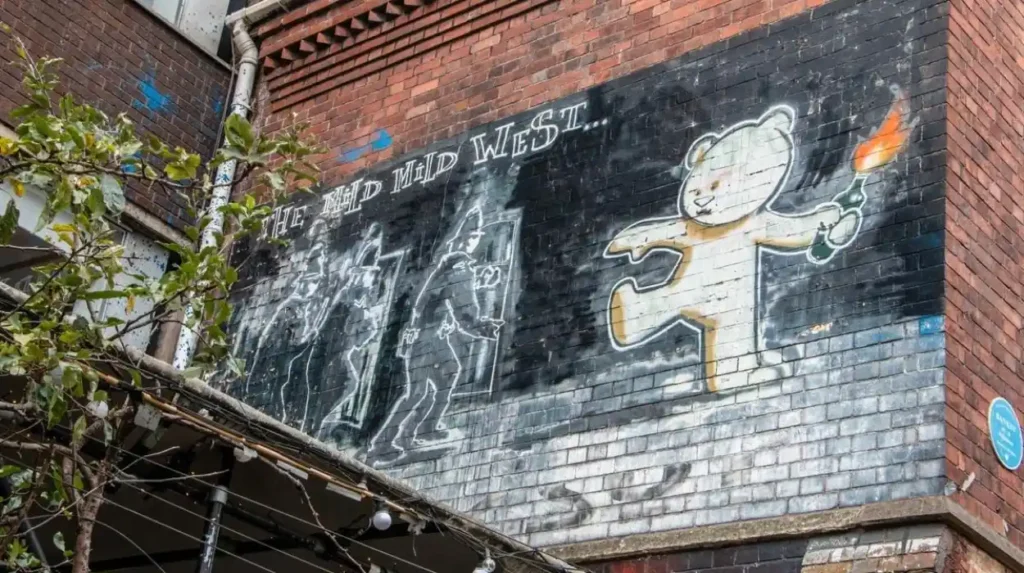
- Mild Mild West: A mural on Stokes Croft depicting a teddy bear throwing a Molotov cocktail towards riot police.
- Well Hung Lover: A stencil artwork on the wall overlooking Frogmore Street, visible from Park Street.
- The Girl with the Pierced Eardrum: A mural near Hanover Place on the Harbourside.
- Paint Pot Angel: An artwork displayed inside Bristol Museum and Art Gallery.
Banksy’s 2009 exhibition, Banksy versus Bristol Museum, brought international attention to Bristol’s artistic community. The exhibition transformed the museum’s galleries through installations, paintings and sculptural works.
Inkie
Inkie is a prominent figure in Bristol’s graffiti movement. His artistic approach combines lettering, decorative patterns and influences from Art Nouveau. His work has contributed to Bristol’s reputation as an important centre for urban art.
Inkie has a long association with Bristol’s street art community. His murals feature across the city, including Bedminster and North Street.
His contribution extends beyond individual artworks. He has participated in Upfest projects and helped connect Bristol’s historic graffiti culture with newer generations of mural artists. Upfest+1
Jody
Jody is a Bristol street artist recognised for detailed, realistic mural work. His artwork contributes to the city’s public visual environment, including the mural known as The Florist near Park Street.
Jody’s work demonstrates how contemporary mural painting incorporates realistic representation alongside more traditional graffiti techniques.
Cheo
Cheo is associated with Bristol’s graffiti community and contemporary street art. His work forms part of the city’s wider visual culture, which includes character-based imagery, lettering and large-scale outdoor paintings.
Andy Council
Andy Council is a Bristol-based illustrator and mural artist known for imaginative illustrations that combine animals, architecture and recognisable urban details. His Bristol dinosaur artwork incorporates local landmarks into a distinctive creature design.
His work connects illustration with the built environment. A notable example is his Bristol dinosaur mural, which combines architectural elements into the shape of a dinosaur. Upfest also documented a large installation celebrating the twentieth anniversary of this artwork in 2024.
Lucas Antics
Lucas Antics is a Bristol artist whose public artwork includes murals celebrating local landmarks, wildlife and community identity. His work at Bedminster railway station forms part of the area’s public art programme.
These artists demonstrate the range of Bristol’s creative output. Their work covers stencil art, decorative lettering, figurative murals, illustration and large-scale public painting.
Where Can You See Bristol Street Artists and Their Work?
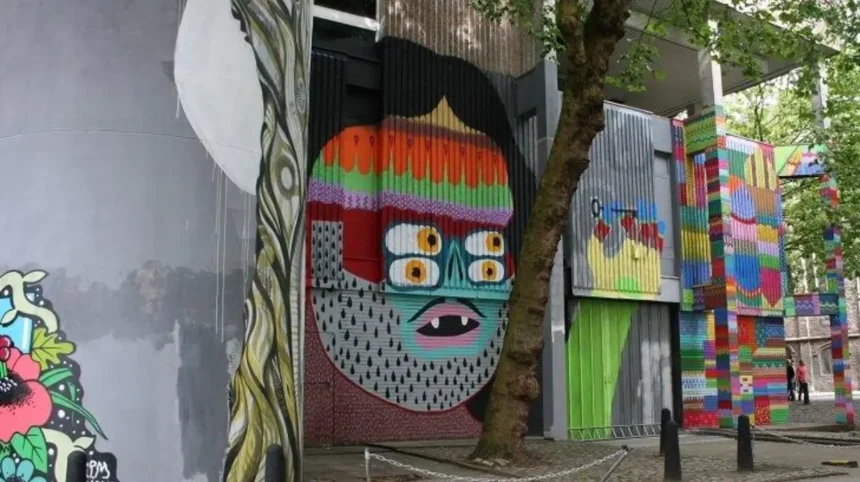
Bristol’s street art is concentrated in Stokes Croft, Bedminster, Southville, Nelson Street and the Harbourside. These neighbourhoods contain murals, stencil paintings, commissioned public artworks and independent creative projects that visitors can explore on foot.
Street art is an important part of Bristol’s public identity. It transforms walls, buildings, railway infrastructure and commercial spaces into locations for artistic expression.
Stokes Croft
Stokes Croft is one of Bristol’s best-known street art districts. The neighbourhood connects independent businesses, creative organisations, music venues and public artworks.
Banksy’s Mild Mild West is one of its most recognisable attractions. The surrounding streets contain additional graffiti, commissioned murals and changing artistic interventions.
Stokes Croft also provides an opportunity to discover the relationship between independent businesses and local artists. Some businesses commission artwork for their exterior walls, creating a connection between commercial spaces and neighbourhood identity.
Bedminster and Southville
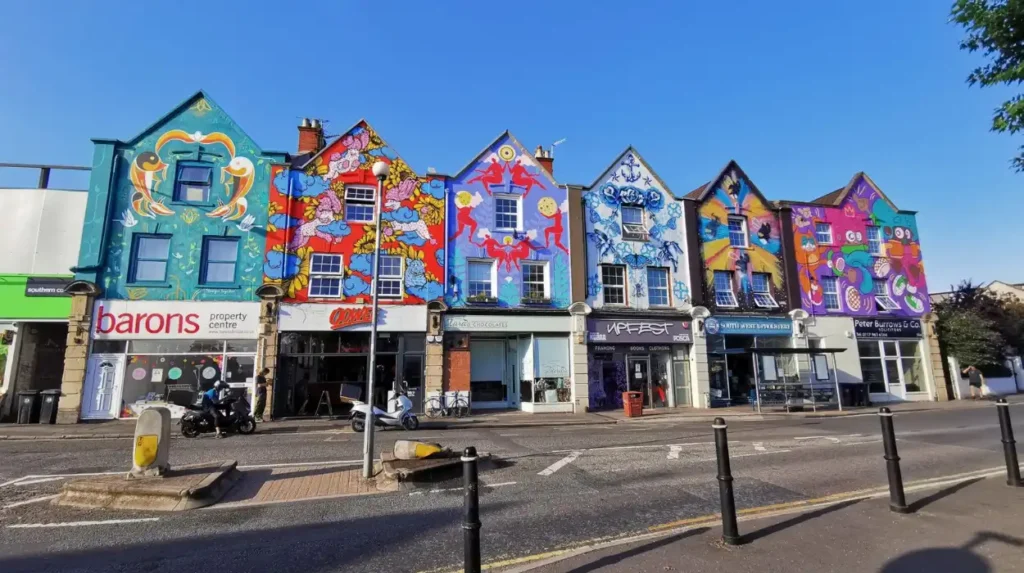
Bedminster and Southville are important destinations for visitors interested in large-scale murals.
North Street is particularly well known for its street art. The area contains work by local and international artists, with murals appearing on commercial buildings, walls and other public-facing surfaces.
Upfest has helped establish Bedminster as an important destination for urban art. Its projects have brought together artists from Bristol and other countries to create accessible outdoor artworks.
Nelson Street
Nelson Street became internationally recognised through the See No Evil street art project in 2012.
The project transformed building surfaces in central Bristol into large-scale artworks. It established an important example of organised public mural production within a busy urban environment.
Visitors can also explore nearby Leonard Lane, where smaller graffiti works, stencils and painted details create a different experience from the large murals.
The Harbourside
The Harbourside combines historic architecture, waterfront attractions and contemporary cultural spaces.
Banksy’s The Girl with the Pierced Eardrum is a recognised artwork in this area. Visitors can also explore the nearby cultural institutions and public spaces that connect Bristol’s maritime heritage with its contemporary artistic identity.
The locations are useful starting points for discovering the city. However, street art changes over time because of weather, redevelopment, repainting and new commissions.
Which Art Galleries in Bristol Support Local and International Artists?
Bristol’s main art institutions include the Royal West of England Academy, Arnolfini, Spike Island and Bristol Museum and Art Gallery. They support artists through exhibitions, collections, studio facilities, educational activities and opportunities to engage with contemporary visual culture.
Art galleries provide a different experience from outdoor street art. They offer curated exhibitions, historical collections, specialist programmes and opportunities to understand artistic techniques.
Royal West of England Academy
The Royal West of England Academy (RWA) is one of Bristol’s most established art institutions.
Its origins date to 1844, when the Bristol Academy for the Promotion of Fine Arts was established largely through the initiative of artist Ellen Sharples.
The academy’s purpose-built gallery opened to the public in 1858. It later received its royal title in 1913.
The RWA provides exhibition opportunities for established and emerging artists. Its Annual Open Exhibition is a particularly important event because it accepts submissions from artists across the United Kingdom and beyond.
The academy reports that its Annual Open attracts more than 10,000 visitors annually and presents hundreds of contemporary artworks. Its programme includes painting, drawing, printmaking, photography, film, sculpture and architecture.
Arnolfini
Arnolfini is Bristol’s international centre for contemporary arts. Established in 1961, it presents visual art, performance, dance, film and music.
The organisation has exhibited work by internationally recognised artists, including Paula Rego, Grayson Perry, Rachel Whiteread, Peter Doig and Sonia Boyce.
Arnolfini also supports artists from Bristol and the surrounding region. Its interdisciplinary approach creates opportunities for audiences to explore art beyond traditional painting and sculpture.
Its Harbourside location makes it an accessible cultural destination for residents and visitors.
Spike Island
Spike Island is a contemporary art centre and creative workspace in Bristol. It connects exhibition programmes with artists’ studios, professional development and creative collaboration.
Its facilities provide working environments for artists across different disciplines. Studio provision supports the development of independent artistic practices, while exhibitions introduce audiences to contemporary work.
Spike Island is particularly relevant to people interested in how artists develop projects outside conventional commercial galleries.
Bristol Museum and Art Gallery
Bristol Museum and Art Gallery preserves historical and contemporary artworks alongside archaeological, geological and cultural collections.
Its fine art collection includes 1,293 paintings, 193 sculptures, approximately 20,000 works on paper and 15 videos.
The collection covers Renaissance painting, British portraiture, landscape art, Victorian painting and contemporary international practice.
Artists represented include Giovanni Bellini, Lucas Cranach the Elder, Thomas Gainsborough, Francis Danby and Rolinda Sharples. The collection also includes contemporary international artists such as Ai Weiwei, Emily Jacir, Shilpa Gupta and Yto Barrada.
These institutions provide different routes into Bristol’s artistic community. The RWA emphasises exhibition opportunities, Arnolfini presents interdisciplinary contemporary art, Spike Island connects artists with working spaces, and Bristol Museum preserves a broad historical collection.
What Types of Art Are Popular Among Bristol Artists?
Bristol artists work across several creative disciplines, including street art, mural painting, illustration, fine art, photography, sculpture and digital design. These practices contribute to the city’s distinctive visual identity through exhibitions, public installations, independent projects and community participation.
The city’s artistic environment supports traditional and contemporary techniques. Artists select different mediums according to their subject, audience and working environment.
Street Art and Graffiti
Street art is one of Bristol’s most recognisable creative disciplines. It includes stencil painting, spray-painted lettering, character illustrations and large-scale murals.
Banksy helped bring international recognition to Bristol’s street art culture. Artists such as Inkie, Cheo and Jody contribute to the wider community through different visual approaches.
Street art also creates opportunities for public engagement because audiences encounter artworks in everyday environments rather than exclusively inside galleries.
Contemporary Painting
Contemporary painting remains an important part of Bristol’s artistic community. Artists use traditional materials and modern techniques to explore subjects such as identity, landscapes, architecture and everyday life.
The RWA supports this discipline through exhibitions, artist networks and its Annual Open Exhibition.
Illustration and Graphic Art
Illustration connects Bristol’s artistic community with publishing, advertising, independent businesses and commercial design.
Artists such as Andy Council demonstrate how illustration can incorporate architecture, wildlife and local cultural references.
Graphic artists also contribute to posters, merchandise, editorial projects and visual branding.
Photography
Photography documents Bristol’s architecture, communities, public art and changing urban environment.
Photographers work across documentary photography, portraiture, commercial commissions and experimental image-making. Bristol’s street art and historic waterfront provide subjects for both professional and independent photographers.
Sculpture and Installation Art
Sculpture and installation art extend Bristol’s creative identity beyond two-dimensional images.
These disciplines use materials such as metal, wood, stone, textiles and recycled objects. Contemporary installations also incorporate lighting, sound and digital technologies.
Arnolfini and Bristol Museum and Art Gallery provide opportunities to explore these artistic approaches through exhibitions and collections.
What Is Upfest and Why Is It Important to Bristol Artists?
Upfest is Bristol’s internationally recognised street art festival, established in 2008. It brings local and international artists together through mural painting, exhibitions, workshops and public activities, particularly across Bedminster and Southville.
Upfest has helped develop Bristol’s reputation as an important destination for contemporary street art.
Its programme connects professional artists, emerging practitioners, independent businesses and local communities.
Upfest’s Contribution to the City
Upfest has supported the creation of permanent murals across South Bristol. Its projects transform ordinary buildings and public infrastructure into accessible artistic spaces.
The festival also provides opportunities for artists to demonstrate techniques and collaborate with other creative practitioners.
The 2026 edition ran from 15 to 31 May. According to the festival organisers, it involved more than 300 artists and produced over 100 new artworks across Bristol.
Artists Featured at Upfest
The festival’s 2026 programme included artists such as:
- Melo: Bristol-based mural artist and the 2026 festival artist.
- Inkie: An established figure in Bristol’s graffiti movement.
- Lucas Antics: A Bristol artist working across public murals.
- HazardOne: A recognised mural artist.
- Cheba: An artist associated with Bristol’s street art community.
- Audrey Kawasaki: An internationally recognised contemporary artist.
- Artez: An international mural artist.
The festival’s artist programme demonstrates how Bristol’s local creative community connects with international artistic networks.
Public Art Beyond the Festival
Upfest’s influence extends beyond individual festival dates.
Its projects include murals at Bedminster railway station, where Lucas Antics and Paul Monsters created artwork celebrating local landmarks, wildlife and community identity.
In 2026, Quakers Art Lane also became an important public art destination through a project featuring Inkie, Melo, Insane51, My Dog Sighs and HazardOne.
How Can Emerging Artists Develop Their Careers in Bristol?
Emerging artists in Bristol develop their careers through studio access, exhibitions, professional networks, public commissions, creative education and collaborative projects. Organisations such as Spike Island, the RWA and Upfest provide opportunities to develop artistic skills and reach audiences.
Bristol’s creative infrastructure supports artists at different career stages. Artists can develop independent practices, participate in exhibitions and build professional relationships through established cultural organisations.
Finding Studio Space
Artists require suitable working environments for producing and storing artwork.
Spike Island provides professional studio facilities and opportunities for creative collaboration. Its studio community supports practitioners working across different artistic disciplines.
Independent studios and shared creative workspaces also help artists establish professional routines.
Participating in Exhibitions
Exhibitions provide opportunities to introduce artwork to the public and establish professional recognition.
The RWA Annual Open Exhibition accepts submissions across multiple disciplines, including painting, photography, sculpture, printmaking and architecture.
Its exhibition programme also provides opportunities for artists to sell original work and prints.
Joining Creative Networks
Creative networks connect artists with potential collaborators, exhibition organisers and professional opportunities.
The University of Bristol identifies Bristol Creatives as one of the city’s creative networks. Such communities help practitioners exchange knowledge and connect with wider cultural activity. University of Bristol+1
Developing Public Art Projects
Public art projects provide experience in producing work for specific locations and audiences.
Artists can explore opportunities through festivals, community organisations, independent businesses and cultural institutions.
Upfest’s artist registration programme illustrates how practitioners can apply to participate in organised mural projects. Upfest
How Can Visitors Explore Bristol’s Art Scene?
Visitors can explore Bristol’s art scene through museum collections, contemporary galleries, independent creative neighbourhoods and outdoor mural trails. A practical route connects Bristol Museum, the RWA, Park Street, Stokes Croft, Arnolfini and Bedminster.
Exploring the city through its artistic locations provides an introduction to historical painting, contemporary exhibitions and public art.
Start at Bristol Museum and Art Gallery
Begin with the historical collections at Bristol Museum and Art Gallery.
The fine art galleries introduce visitors to British painting, European art and international contemporary artists.
Explore the RWA and Park Street
Continue towards the RWA on Queens Road.
The gallery provides access to contemporary exhibitions and historical works. Park Street also contains Banksy’s Well Hung Lover, one of Bristol’s best-known outdoor artworks.
Visit Stokes Croft
Stokes Croft provides a direct introduction to Bristol’s graffiti culture.
Explore the streets surrounding the Mild Mild West mural and discover additional works by independent artists.
Continue to Arnolfini
The Harbourside offers access to Arnolfini and other cultural attractions.
Visitors can explore contemporary exhibitions and enjoy the connection between Bristol’s waterfront architecture and its creative community.
Finish in Bedminster
Bedminster and Southville provide opportunities to explore large-scale murals and Upfest projects.
North Street is particularly useful for discovering different artistic styles within a relatively concentrated neighbourhood.
Visitors should check exhibition opening times and current artwork locations before travelling. Outdoor murals change through new commissions, building works and maintenance.
Explore More Area Guide
Bristol’s Creative Industries: Film, Animation, Design and Digital Innovation
Bristol’s Cultural Scene: Art, Music, History and Festivals
How Does Bristol’s Artistic Community Contribute to the Local Economy and Culture?
Bristol’s artistic community contributes to the local economy through exhibitions, cultural tourism, creative businesses, public commissions, education and independent studios. Its work also strengthens neighbourhood identity, supports community participation and increases access to cultural experiences.
The city’s art sector connects with tourism, hospitality, retail, education and the wider creative industries.
Cultural Tourism
Street art attracts visitors interested in discovering Bristol’s neighbourhoods and cultural history.
Guided walking tours, self-guided mural trails and gallery visits support local tourism businesses. Visitors also use nearby cafés, independent shops and restaurants.
Opportunities for Creative Businesses
Artists contribute to local businesses through commissioned illustrations, murals, photography, graphic design and interior artwork.
These projects create professional relationships between creative practitioners and commercial organisations.
Community Participation
Community art projects provide opportunities for residents to engage with creative activities.
Workshops, public painting projects and educational programmes connect artists with schools, families and neighbourhood organisations.
Protecting Bristol’s Artistic Identity
Preserving historical collections and maintaining public artworks supports the city’s long-term cultural identity.
Museums preserve important historical paintings, while contemporary arts organisations provide spaces for new creative work.
This relationship between preservation and innovation keeps Bristol’s artistic culture connected to its historical development.
What Is the Future of Bristol’s Art Scene?
Bristol’s artistic future is supported by independent creative organisations, public art programmes, contemporary galleries, international festivals and emerging practitioners. Continued collaboration between artists, cultural institutions and communities strengthens the city’s position within the UK’s creative sector.
Several developments influence the direction of Bristol’s art scene.
Growth of Public Art
Public art continues to expand through commissioned murals, neighbourhood projects and cultural festivals.
Upfest’s projects demonstrate how artistic activity extends beyond traditional exhibition buildings into streets, commercial areas and public infrastructure.
Greater Creative Collaboration
Artists increasingly work with businesses, educational institutions and community organisations.
These partnerships provide opportunities to create work for different audiences and environments.
Digital and Experimental Art
Digital illustration, animation, interactive installations and multimedia production contribute to contemporary artistic practice.
Organisations such as Arnolfini provide an environment for interdisciplinary work involving visual art, performance, film and technology.
Supporting Emerging Talent
Artist networks, open exhibitions, workshops and studio programmes remain important for developing new creative careers.
The RWA’s Annual Open Exhibition and artist development opportunities demonstrate the continuing importance of accessible exhibition platforms.
Bristol’s future artistic identity therefore depends on maintaining a connection between historical collections, independent creative communities and contemporary cultural organisations.
Bristol’s artistic identity extends across historical painting, contemporary galleries, public murals, independent studios and international street art festivals. Its creative reputation is associated with Banksy, Inkie, Jody, Cheo, Andy Council and many other artists who contribute to the city’s cultural landscape.
The Bristol School of Painting provides an important historical foundation, while institutions such as the RWA, Arnolfini, Spike Island and Bristol Museum and Art Gallery support contemporary artistic development.
For visitors, Stokes Croft, Bedminster, Southville, Nelson Street and the Harbourside provide opportunities to discover Bristol’s public art. For emerging practitioners, the city’s studios, exhibitions, creative networks and public projects provide routes into professional artistic activity.
Bristol remains an important destination for understanding how local artistic traditions, independent creativity and international cultural influences contribute to a city’s identity.
Who are the most famous artists associated with Bristol?
Banksy is the most internationally recognised artist associated with Bristol. Other notable artists include Inkie, Jody, Cheo, Andy Council and Lucas Antics, who contribute to the city’s street art, illustration and mural culture.