Bristol’s creative industries form an important part of the city’s economy, cultural identity and employment landscape. The sector includes film and television production, animation, digital technology, advertising, graphic design, architecture, publishing, music, photography, performing arts and creative entrepreneurship. Bristol has established a national reputation for creative production through organisations such as Aardman Animations, the BBC Natural History Unit, The Bottle Yard Studios and its independent creative businesses.
- What Are Bristol’s Creative Industries?
- How Did Bristol Become a Major Creative Industries Centre?
- Which Creative Industries Are Most Established in Bristol?
- Film and television production
- Animation and visual effects
- Digital design and software development
- Advertising and marketing
- Music and performing arts
- Architecture and product design
- How Important Are Film and Television to Bristol’s Creative Economy?
- What Role Does Animation Play in Bristol’s Creative Industries?
- Where Are Bristol’s Main Creative Hubs and Workspaces?
- How Do Bristol’s Universities Support Creative Businesses?
- How Much Do Bristol’s Creative Industries Contribute to the Economy?
- What Do the Latest UK Creative Industries Statistics Show?
- How Many High-Growth Creative Businesses Are in Bristol?
- How Do Creative Businesses Operate in Bristol?
- What Employment Opportunities Are Available in Bristol’s Creative Industries?
- What Challenges Do Bristol’s Creative Industries Face?
- How Are Technology and Innovation Changing Bristol’s Creative Industries?
- What Is the Role of Artificial Intelligence?
- How Are Immersive Technologies Creating New Opportunities?
- How Does Bristol’s Creative Economy Benefit the Wider City?
- What Is the Future of Bristol’s Creative Industries?
- Why Is Sustainable Creative Production Becoming Important?
- How Can Bristol Attract More Creative Investment?
- Why Will Creative Skills Remain Important?
- How Can Businesses and Creative Professionals Connect with Bristol’s Creative Industries?
- Bristol Creative Industries
- Bristol City of Film
- Bristol Film Office
- The Bottle Yard Studios
- Creative and Cultural Organisations
- Why Are Bristol’s Creative Industries Important?
The city’s creative economy connects established production companies with freelancers, independent studios, universities, cultural organisations and emerging technology businesses. This combination supports employment, attracts investment and creates opportunities for collaboration across the South West of England.
Bristol also holds international recognition as a UNESCO City of Film. Its film and television production history, animation expertise, independent cultural venues and growing creative technology community make it an important centre for the UK’s creative economy.
What Are Bristol’s Creative Industries?
Bristol’s creative industries are businesses and organisations that generate economic value through creativity, artistic skills, cultural production and intellectual property. They include film, animation, television, design, advertising, music, publishing, architecture and digital media.
The term creative industries describes economic activities that depend on individual creativity, technical expertise and original ideas. These activities produce commercial products, cultural experiences, digital services and intellectual property.
In Bristol, the sector operates across established companies, independent businesses, freelance professionals and publicly supported cultural organisations. A television production company, animation studio, graphic design agency and independent music label all form part of this wider economy.
The Department for Culture, Media and Sport (DCMS) provides the national framework for measuring the creative industries. Its classification covers nine broad subsectors, including advertising and marketing, architecture, crafts, design and designer fashion, film and television, IT and software, publishing, museums and galleries, and music and performing arts.
Bristol’s creative economy also includes businesses working across several subsectors. For example, a digital production studio combines software development, visual design and media production. An animation company connects illustration, storytelling, sound production and digital technology.
How Do Creative Industries Differ from the Wider Cultural Sector?
The creative industries include commercial activities that generate intellectual property and economic value, while the cultural sector focuses more directly on cultural production, heritage and participation.
The two sectors overlap. Theatre production, broadcasting, music and film contribute to both classifications. Museums, heritage organisations and performing arts institutions also contribute to Bristol’s cultural economy.
This distinction matters when interpreting employment and economic statistics. Creative industry figures do not represent every cultural activity in Bristol, and cultural sector figures should not be added to creative industry totals without accounting for overlapping activities.
How Did Bristol Become a Major Creative Industries Centre?
Bristol developed its creative industries through post-war cultural investment, broadcasting, independent artistic communities and specialist production companies. Organisations established between the 1950s and 1980s created foundations for its modern film, animation, design and digital media economy.
Bristol’s creative development accelerated during the second half of the twentieth century. The city’s economic transition away from traditional manufacturing, engineering and dock-related industries created opportunities for new cultural and knowledge-based activities.
Several organisations became important foundations for this transformation.
The BBC Natural History Unit was established in Bristol in 1957. Its specialist wildlife programming helped establish the city as an international centre for natural history filmmaking.
Arnolfini opened in 1961 as a contemporary arts organisation. It developed a programme covering visual art, exhibitions, performance and independent cultural activity.
Aardman Animations was founded in 1972. Its development helped establish Bristol’s international reputation for stop-motion animation and character-based filmmaking.
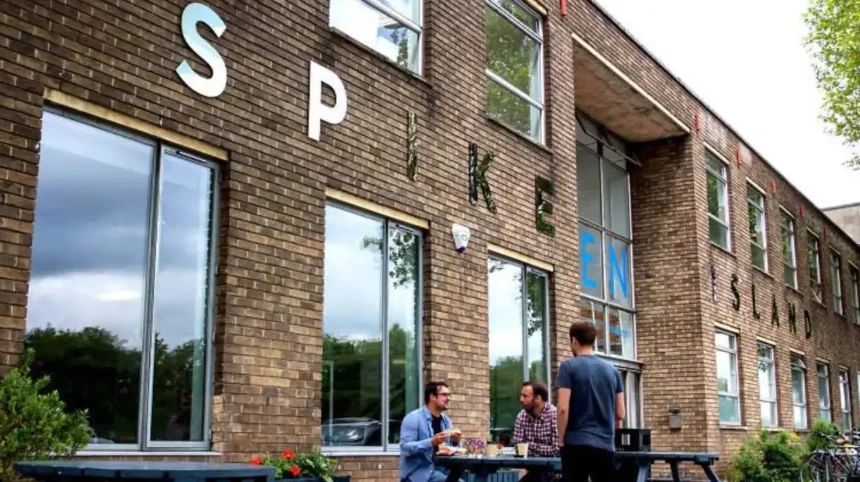
Spike Island developed from Artspace Bristol, an artist-led initiative founded during the 1970s. The organisation eventually established itself in a former industrial warehouse in 1992, providing studios and exhibition facilities for contemporary artists.
These organisations established different but connected creative traditions. Broadcasting supported specialist production skills, animation encouraged technical innovation, and independent arts organisations provided space for experimentation.
The arrival of Watershed in the 1980s strengthened Bristol’s independent film and digital media environment. Its development connected cinema, creative technology, public engagement and professional collaboration.
Research published through the Watershed Studio in 2026 identifies the BBC Natural History Unit, Arnolfini, Aardman and Inmos as important post-war institutions in Bristol’s cultural and technology development.
Which Creative Industries Are Most Established in Bristol?
Bristol has established creative industries in film and television, animation, digital technology, advertising, graphic design, architecture, music, publishing and visual arts. These activities operate through production companies, independent studios, specialist agencies and freelance professionals.
The city’s creative economy covers several interconnected industries. Each contributes different skills, services and commercial opportunities.
Film and television production
Film and television production represent an established part of Bristol’s creative economy. Production companies develop documentaries, television dramas, factual programmes, commercials and independent films.
The city has approximately 190 independent film and television production companies, generating aggregate turnover exceeding £288 million according to Bristol City of Film.
The BBC Bristol headquarters produces factual television, radio, drama and wildlife programming. Channel 4 also established a creative hub in Bristol in 2019 as part of its relocation outside London.
Post-production companies provide additional services, including editing, sound design, visual effects and colour grading.
Animation and visual effects
Animation is another internationally recognised part of Bristol’s creative identity.
Aardman Animations established its reputation through stop-motion filmmaking, character development and distinctive storytelling. Stop-motion animation involves photographing physical models frame by frame to create the appearance of movement.
The company’s success helped establish Bristol as an important location for animation professionals, model makers, illustrators, directors and production specialists.
Digital animation and visual effects have expanded the technical opportunities available to creative businesses. These activities connect traditional artistic skills with computer-generated imagery, digital compositing and specialist software.
Digital design and software development
Bristol’s digital creative economy includes web design, user experience design, software development, interactive media and digital content production.
User experience design focuses on making digital products straightforward and accessible to use. User interface design concentrates on the visual and interactive elements of websites, applications and software.
Businesses combine these disciplines with branding, marketing and technical development to deliver digital services for commercial clients.
Advertising and marketing
Advertising agencies and marketing consultancies support businesses with brand development, campaign planning, content creation and audience research.
Creative services include graphic design, copywriting, video advertising, social media content and digital campaign management.
Bristol’s independent business community provides a client base for agencies serving hospitality, retail, technology, education and professional services.
Music and performing arts
Music production, live performance, theatre, dance and independent entertainment also contribute to Bristol’s creative economy.
The city has an established music identity associated with trip-hop, electronic music, independent labels and live performance.
Creative professionals work across recording, sound engineering, event production, artist management, performance and music promotion.
Architecture and product design
Architectural practices and product designers combine technical knowledge with creative problem-solving.
Architecture covers building design, urban development, conservation and sustainable construction. Product design involves developing physical products through research, prototyping, materials selection and manufacturing collaboration.
These industries connect Bristol’s creative economy with its wider engineering, technology and construction sectors.
How Important Are Film and Television to Bristol’s Creative Economy?
Film and television provide substantial employment, business activity and international recognition for Bristol. The city has approximately 190 independent production companies, more than 5,000 industry workers and a production economy with reported turnover exceeding £288 million.
Bristol’s screen production industry includes production companies, studios, broadcasters, post-production specialists, location services and independent filmmakers.
The city’s UNESCO City of Film designation recognises its international contribution to filmmaking and moving-image culture.
What Is Bristol’s UNESCO City of Film Status?
Bristol became a UNESCO City of Film in 2017. The designation forms part of the UNESCO Creative Cities Network, which connects cities using cultural and creative activity to support sustainable development.
The recognition reflects Bristol’s established production infrastructure, broadcasting expertise, animation history and film festival programme.
UNESCO’s Bristol profile identifies more than 190 film and television production and post-production companies. It also reports that the industry contributes approximately £288 million to the local economy and employs around 5,300 people.
The city hosts international film events, including Encounters Film Festival, Wildscreen Festival and Cinema Rediscovered at Watershed.
Why Is The Bottle Yard Studios Important?
The Bottle Yard Studios is the largest film and television studio facility in the South West of England. Bristol City Council opened it in 2010 on a former industrial site in Hengrove.
The studio complex expanded in 2022 with the opening of TBY2, a £12 million redevelopment.
Its current facilities include:
- 11 BAFTA albert-accredited production stages.
- More than 35,000 square feet of furnished production offices.
- A 5,000-square-foot green screen studio.
- Specialist production and ancillary workspaces.
- A creative hub containing more than 20 specialist businesses.
The facilities accommodate television dramas, films, children’s programmes and other screen productions.
TBY2 also incorporates a community-owned rooftop solar installation with more than 2,300 photovoltaic panels and a capacity of approximately 1MWp.
The studio supports employment beyond filming itself. Production activity creates demand for construction, set design, lighting, camera operations, transport, catering, costume services and technical support.
What Role Does Animation Play in Bristol’s Creative Industries?
Animation gives Bristol an internationally recognised specialism through established studios, skilled artists and technical production expertise. Aardman Animations is the city’s best-known animation company, with a legacy connecting stop-motion filmmaking, character design and digital production.
Bristol’s animation industry developed through independent production, artistic experimentation and investment in specialist creative skills.
Aardman Animations, founded in 1972, became an internationally recognised production company. Its work helped establish the city’s reputation for model animation and distinctive character development.
Stop-motion animation requires detailed coordination between model making, lighting, camera operation, movement and editing. Animators photograph small changes in a character’s position to create continuous movement when the images are played sequentially.
Modern animation production also incorporates computer-generated imagery, digital compositing, sound design and visual effects.
The industry supports specialist occupations such as:
- Character designers, including artists developing the appearance of animated figures.
- Model makers, who construct physical characters and sets.
- Animators, who create movement and performance.
- Storyboard artists, who translate scripts into visual sequences.
- Production coordinators, who organise schedules, budgets and creative teams.
Bristol’s wider production environment provides opportunities for these professionals to work across advertising, television, cinema, games and digital media.
The city’s animation reputation also supports education and skills development through creative courses, industry networks and specialist training.
Where Are Bristol’s Main Creative Hubs and Workspaces?
Bristol’s creative activity is distributed across several neighbourhoods, including the city centre, Harbourside, Stokes Croft, South Bristol, Spike Island and areas around Temple Meads. Each location supports different creative businesses and cultural activities.
The city’s creative economy operates through offices, production studios, independent galleries, artist workspaces and collaborative environments.
Harbourside
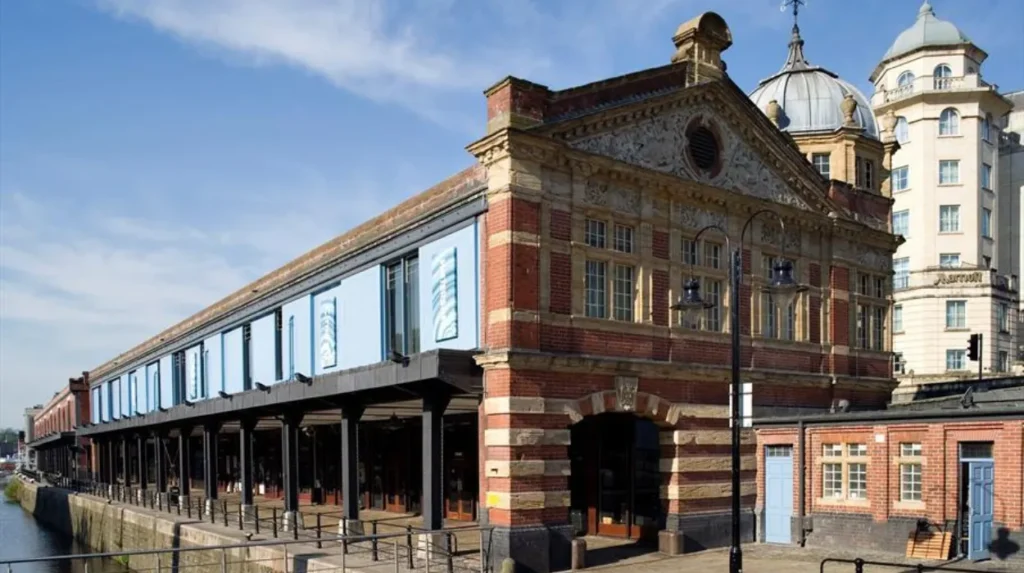
Bristol Harbourside supports cultural organisations, creative events and digital media activity.
Watershed is an important part of this environment. It operates as an independent cinema and cultural venue with programmes covering film, digital culture, creative technology and public participation.
Arnolfini also occupies a prominent Harbourside location. Its contemporary arts programme includes exhibitions, performance, film and interdisciplinary projects.
Stokes Croft
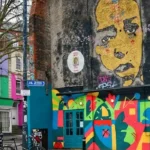
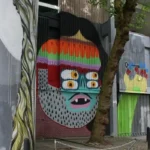
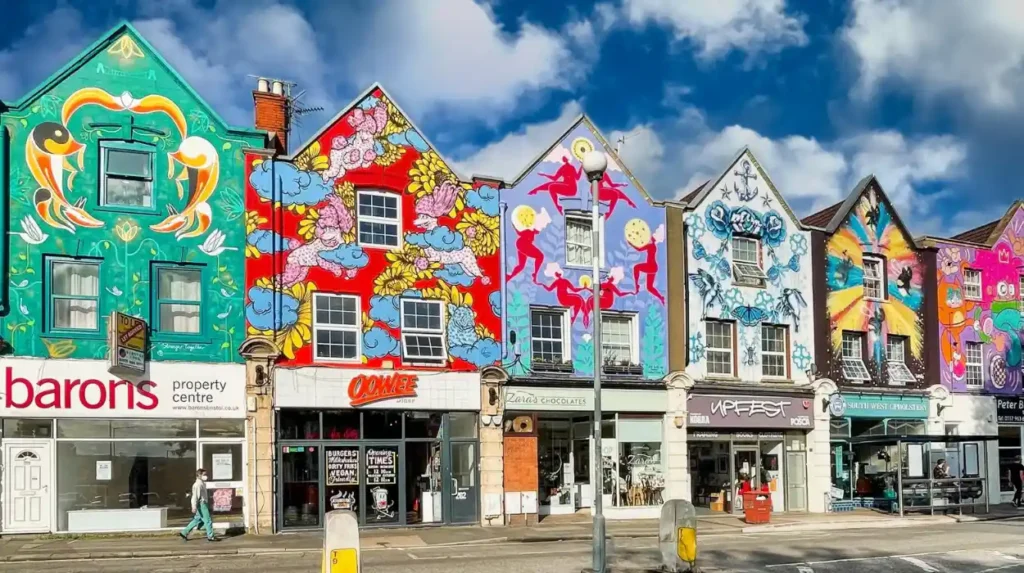
Stokes Croft has an established association with independent culture, street art, creative businesses and alternative retail.
The area supports independent artists, designers, musicians and small creative enterprises.
Its public artwork and street-level cultural activity contribute to Bristol’s wider reputation for urban creativity.
Spike Island
Spike Island provides contemporary art studios, exhibition spaces and opportunities for artistic collaboration.
Its origins date to Artspace Bristol in the 1970s. The organisation moved into a former Brooke Bond tea-packing warehouse in 1992 and adopted the name Spike Island in 1998.
Its facilities support visual artists, exhibitions, research and public engagement. Spike Island
South Bristol
South Bristol has an important role in screen production through The Bottle Yard Studios in Hengrove.
The studio attracts production companies and specialist suppliers. Its presence also creates demand for local employment, transport, hospitality and technical services.
Temple Quarter and the City Centre
The areas around Temple Meads and Bristol city centre provide office space, transport connections and commercial premises for digital businesses, marketing agencies and professional creative services.
The concentration of businesses around these locations supports collaboration between creative companies and other sectors of the economy.
How Do Bristol’s Universities Support Creative Businesses?
Bristol’s universities support the creative industries through education, research, professional development and industry collaboration. The University of Bristol and UWE Bristol connect students and researchers with creative technology, film, design, media and digital production.
Higher education institutions provide an important foundation for the city’s creative workforce.
UWE Bristol has established specialist facilities and educational programmes covering animation, filmmaking, photography, journalism, graphic design and other creative disciplines.
Its Bower Ashton campus forms part of its creative industries education environment. The university introduced a new purpose-built creative industries building there in 2017.
The University of Bristol also contributes through research, digital innovation and collaboration with technology and cultural organisations.
What Is the Role of Bristol + Bath Creative R&D?
Bristol + Bath Creative R&D connects creative businesses, universities and technology partners through research and development.
Creative research and development involves testing new methods, technologies and production approaches for creative applications.
Its work connects areas such as immersive experiences, digital storytelling, interactive media and creative technology.
These collaborations help businesses investigate new products and services while connecting academic research with commercial opportunities.
How Does Creative Education Lead to Employment?
Creative education develops both artistic and technical capabilities.
Students studying film, animation, design and digital media develop skills in production software, visual communication, research, project management and collaboration.
Professional experience also comes through placements, industry projects, internships and practical production work.
The availability of specialist production facilities in Bristol creates opportunities for graduates to connect educational experience with employment.
How Much Do Bristol’s Creative Industries Contribute to the Economy?
Bristol’s creative industries contribute through business turnover, employment, investment, intellectual property and specialist services. Local economic estimates identify approximately 6,000 creative businesses and 25,000–30,000 people working across the city’s wider creative economy.
These estimates demonstrate the scale of Bristol’s creative business community. They cover activities ranging from film and television to digital content, publishing, design, animation, festivals and the arts.
The figures are published by Original by Bristol, a Bristol City Council initiative promoting the city’s economic sectors. They represent an indicative picture of the wider culture and creative economy rather than a single official DCMS employment measurement.
What Do the Latest UK Creative Industries Statistics Show?
National statistics provide useful context for understanding Bristol’s position within the wider industry.
According to the Department for Culture, Media and Sport’s 2024 provisional economic estimates, published on 5 February 2026:
- UK creative industries generated £145.8 billion in gross value added (GVA) in 2024.
- Creative industries accounted for 5.5% of UK GVA.
- Real-term GVA increased by 4.6% between 2023 and 2024.
- The sector was 19.7% larger than in 2019 in real terms.
- IT, software and computer services contributed £62.4 billion.
Gross value added measures the value generated by an industry after subtracting the cost of intermediate goods and services used in production.
The figures demonstrate the economic importance of creative businesses nationally. They are UK-wide figures and should not be presented as Bristol-only economic contributions.
How Many High-Growth Creative Businesses Are in Bristol?
Research published in February 2026 by the Creative Industries Policy and Evidence Centre (Creative PEC) and Beauhurst identified almost 6,000 high-growth-potential creative firms across the UK.
The research identified 362 such businesses in the South West, with Bristol ranked ninth among UK local authorities, accounting for 129 firms.
These businesses represent companies with identified high-growth potential rather than the entire population of creative enterprises.
The findings demonstrate Bristol’s position as an important location for investment, business development and creative entrepreneurship.
How Do Creative Businesses Operate in Bristol?
Creative businesses in Bristol operate through project-based production, client commissions, intellectual property development, commercial partnerships and independent services. Their activities connect creative professionals with businesses, broadcasters, public organisations and international markets.
The operating structure depends on the type of creative business.
A film production company develops projects, secures funding, employs production teams and delivers content to broadcasters or distributors. A graphic design agency works with clients to develop visual identities, marketing materials and digital assets.
An animation studio combines artistic production with technical workflows. A software company develops digital products and commercial services.
How Does a Creative Project Move from an Idea to Production?
Creative production generally follows a sequence of development, planning, creation, delivery and commercial use.
1. Research and concept development
A business identifies a market requirement, audience or creative opportunity. Research establishes the purpose, intended audience and production requirements.
2. Budgeting and funding
The organisation estimates production costs and identifies suitable funding sources. These include client contracts, commercial investment, grants, sponsorship and commissioning agreements.
3. Team development
The business identifies the specialist skills required. Film projects recruit directors, producers, camera operators, editors and other production professionals.
4. Production
The creative team develops the project through filming, animation, design, recording, programming or other production activities.
5. Delivery and distribution
The completed work reaches its intended audience through broadcasters, websites, cinemas, galleries, streaming services or commercial clients.
6. Commercial development
The business generates revenue through licensing, distribution agreements, subscriptions, commissions, advertising or sales.
Intellectual property is central to many creative business models. It refers to legally protected creations such as films, music, designs, illustrations, software and written works.
Copyright protects original creative works, while trademarks protect identifying signs used to distinguish goods and services. These protections support commercial ownership and licensing arrangements.
What Employment Opportunities Are Available in Bristol’s Creative Industries?
Bristol’s creative industries offer employment across artistic production, digital technology, administration, marketing and technical services. Opportunities include animation, filmmaking, graphic design, software development, photography, sound engineering, production management and creative entrepreneurship.
The sector employs people with different educational backgrounds and professional experience.
Some occupations require specialist degrees or technical qualifications. Others depend on practical experience, professional portfolios and industry-specific training.
Which Creative Careers Are Available?
Important employment areas include:
- Film and television: producers, directors, camera operators, editors and production assistants.
- Animation: character designers, animators, model makers and storyboard artists.
- Graphic design: brand designers, illustrators and visual communication specialists.
- Digital technology: software developers, UX designers and digital product specialists.
- Marketing: copywriters, content creators, campaign managers and advertising professionals.
- Music: recording engineers, performers, producers and event organisers.
- Photography: commercial photographers, editors and visual content producers.
- Architecture: architectural designers, technicians and planning specialists.
Creative work also generates demand for supporting occupations. These include accountants, legal advisers, transport providers, catering companies, recruitment specialists and equipment suppliers.
Why Are Freelancers Important?
Freelancers provide specialist services to creative businesses without working as permanent employees.
They include independent photographers, illustrators, editors, designers, writers and production technicians.
Freelance working arrangements allow companies to recruit expertise for individual projects. They also provide independent professionals with opportunities to work with different clients.
However, freelancers are responsible for managing their own contracts, tax arrangements, insurance, equipment and business development.
The national employment picture highlights the importance of self-employment. DCMS figures for 2024 recorded 696,000 self-employed jobs across UK creative industries, compared with 675,000 in 2023. These figures demonstrate the scale of freelance participation nationally, not a Bristol-specific total. Bristol Creative
What Challenges Do Bristol’s Creative Industries Face?
Bristol’s creative businesses face challenges involving operating costs, workspace availability, freelance income stability, competition, investment and access to skilled employees. These pressures affect independent practitioners as well as established production companies and creative agencies.
The city’s creative economy depends on businesses having access to affordable premises, reliable funding and commercial opportunities.
What Are the Main Business Challenges?
Workspace costs: Creative businesses need offices, studios, workshops and production facilities. High commercial property costs place pressure on smaller organisations.
Freelance income: Independent professionals experience changes in project availability and payment schedules. Maintaining consistent income requires business planning and a diversified client base.
Access to investment: Developing films, software, games and other creative products often requires significant upfront investment. Smaller businesses face difficulties financing long development periods.
Competition: Bristol businesses compete with creative companies in London, Manchester, Cardiff and international markets.
Skills shortages: Specialist industries require experienced employees in areas such as digital production, software development, visual effects and technical operations.
Changing technology: Artificial intelligence, automation and new production software are changing creative workflows. Businesses need to understand the technical, legal and commercial implications.
Why Is Affordable Creative Workspace Important?
Affordable workspace supports independent businesses and emerging creative professionals.
Artist studios, rehearsal rooms, shared offices and production facilities provide the physical infrastructure required for creative activity.
Organisations such as Spike Island support access to artistic workspace and exhibition opportunities. The Bottle Yard Studios provides specialist production infrastructure for larger film and television projects.
Maintaining a range of workspace types supports businesses at different stages of development.
How Are Technology and Innovation Changing Bristol’s Creative Industries?
Technology is changing Bristol’s creative industries through digital production, artificial intelligence, immersive experiences, advanced animation and interactive media. These developments connect traditional artistic expertise with software engineering, data, research and commercial innovation.
Creative technology, sometimes called createch, describes the use of technology to develop or improve creative products, services and experiences.
Bristol’s existing strengths in animation, broadcasting, software and digital media provide a foundation for this development.
What Is the Role of Artificial Intelligence?
Artificial intelligence is increasingly used in creative production and business operations.
Its applications include image processing, editing assistance, transcription, data analysis, digital asset management and production planning.
AI tools also create questions about copyright, ownership, consent and the use of training material. Creative businesses need clear agreements covering intellectual property and the permitted use of generated content.
Human creative direction, editorial judgement and specialist technical knowledge remain important throughout professional production.
How Are Immersive Technologies Creating New Opportunities?
Immersive technologies include virtual reality, augmented reality and mixed reality.
Virtual reality places users inside a computer-generated environment. Augmented reality adds digital information to a view of the physical world. Mixed reality combines physical and digital elements in interactive experiences.
These technologies support applications in education, entertainment, architecture, tourism and cultural exhibitions.
Creative businesses also use interactive media to develop digital installations and audience experiences.
Bristol’s connections between universities, research organisations and creative companies support experimentation in these fields.
How Does Bristol’s Creative Economy Benefit the Wider City?
Bristol’s creative economy supports the wider city through employment, tourism, business investment, education, cultural participation and international recognition. Production activity also generates demand for local suppliers, hospitality businesses, transport providers and professional services.
Creative industries contribute to economic activity beyond the businesses directly involved in production.
A television production requires accommodation, catering, transport, equipment, construction and other specialist services. A cultural festival supports venues, hospitality businesses, independent retailers and event suppliers.
Film and television production also creates opportunities to showcase Bristol’s locations to national and international audiences.
How Do Creative Industries Support Tourism?
Bristol’s film and cultural identity attracts visitors interested in animation, independent cinema, contemporary art and creative events.
The city’s UNESCO City of Film status provides international recognition. Its film festivals and cultural venues contribute to its visitor offer.
Watershed, Arnolfini and Spike Island provide opportunities for visitors to experience exhibitions, film screenings and contemporary creative activity.
Street art and independent cultural spaces also form part of Bristol’s visitor identity.
How Do Creative Businesses Support Other Industries?
Creative businesses provide services to companies outside the creative sector.
A technology company requires branding, interface design and marketing. A construction business needs architectural visualisation and communication materials. A tourism operator requires photography, video and digital content.
These commercial relationships connect creative professionals with Bristol’s wider economy.
Creative industries also support entrepreneurship through the development of original products, independent brands and commercially valuable intellectual property.
What Is the Future of Bristol’s Creative Industries?
Bristol’s creative industries are positioned for further development through digital innovation, sustainable production, specialist skills and international collaboration. Investment in creative technology, film facilities and business development will influence the sector’s future economic contribution.
The future of Bristol’s creative economy depends on its ability to maintain established industries while developing new commercial opportunities.
Film and television production remain important because of the city’s specialist infrastructure and experienced workforce. Animation continues to provide an internationally recognised area of expertise.
Digital production, software development and immersive technologies create additional opportunities for businesses working across creative and technical disciplines.
Why Is Sustainable Creative Production Becoming Important?
Environmental sustainability is increasingly relevant to film production, events, design and digital infrastructure.
Production companies assess energy consumption, transport requirements, material use and waste management when organising projects.
The Bottle Yard Studios provides an example of sustainable production infrastructure through its TBY2 solar installation, which incorporates more than 2,300 photovoltaic panels.
Creative businesses also have opportunities to develop sustainable packaging, environmentally responsible product designs and digital alternatives to resource-intensive processes.
How Can Bristol Attract More Creative Investment?
Investment depends on business confidence, access to skilled employees, suitable premises and connections with commercial markets.
Bristol’s established production companies, universities and cultural organisations provide foundations for collaboration.
The city’s participation in national creative industry networks also helps businesses connect with potential partners, funders and clients.
Research and development partnerships provide another route for commercial growth, particularly in creative technology and digital production.
Why Will Creative Skills Remain Important?
The creative economy requires a combination of artistic, technical and commercial expertise.
Professionals need to understand production software, intellectual property, digital communication and project management alongside their specialist creative disciplines.
Training institutions and industry partnerships help maintain this skills base.
Work experience, apprenticeships, professional development and industry-led education remain important routes into creative employment.
Bristol’s ability to connect education with commercial production will influence its long-term competitiveness.
Explore More Area Guide
Bristol’s Cultural Scene: Art, Music, History and Festivals
Bristol Music History: Trip-Hop, Reggae and Legendary Music Venues
How Can Businesses and Creative Professionals Connect with Bristol’s Creative Industries?
Businesses and creative professionals can connect with Bristol’s creative industries through specialist networks, cultural organisations, universities, production facilities and industry events. These connections provide opportunities for collaboration, recruitment, training and commercial development.
Bristol has several organisations that support different parts of the creative economy.
Bristol Creative Industries
Bristol Creative Industries is a membership network established in 2005. It supports businesses and professionals across advertising, marketing, design, digital, film, television, photography, software and publishing.
Its activities include professional networking, training, events and business development. Bristol Creative Industries
Bristol City of Film
Bristol City of Film supports the city’s screen production identity and international UNESCO designation.
Its work connects production companies, filmmakers, cultural organisations and film industry partners.
Bristol Film Office
Bristol Film Office supports productions filming in Bristol. Its services connect production teams with filming locations and relevant local arrangements.
The Bottle Yard Studios
The Bottle Yard Studios provides professional production facilities and connections with specialist businesses operating within the film and television industry.
Creative and Cultural Organisations
Arnolfini, Watershed and Spike Island contribute to Bristol’s independent creative environment through exhibitions, film programmes, artist facilities and public engagement.
These organisations provide different routes into the city’s creative economy, from professional networking to artistic development and commercial production.
Why Are Bristol’s Creative Industries Important?
Bristol’s creative industries represent an established part of the city’s economy and cultural identity. Its strengths in film, television, animation, digital technology, design, music and independent arts create opportunities for businesses and professionals across the South West.
Organisations such as Aardman Animations, the BBC Natural History Unit, Watershed and The Bottle Yard Studios demonstrate the city’s long-standing creative expertise.
The presence of approximately 6,000 creative businesses and an estimated 25,000–30,000 workers across the wider creative economy highlights the sector’s importance to Bristol.
Universities, industry networks and cultural organisations strengthen the connections between education, research and commercial production.
Continued investment in specialist facilities, affordable workspaces, digital innovation and professional skills will remain important to the development of Bristol’s creative industries.
What are Bristol’s creative industries?
Bristol’s creative industries include businesses and organisations involved in film, television, animation, graphic design, advertising, music, publishing, architecture, photography and digital technology. These industries generate employment, commercial opportunities and cultural activity across the city.