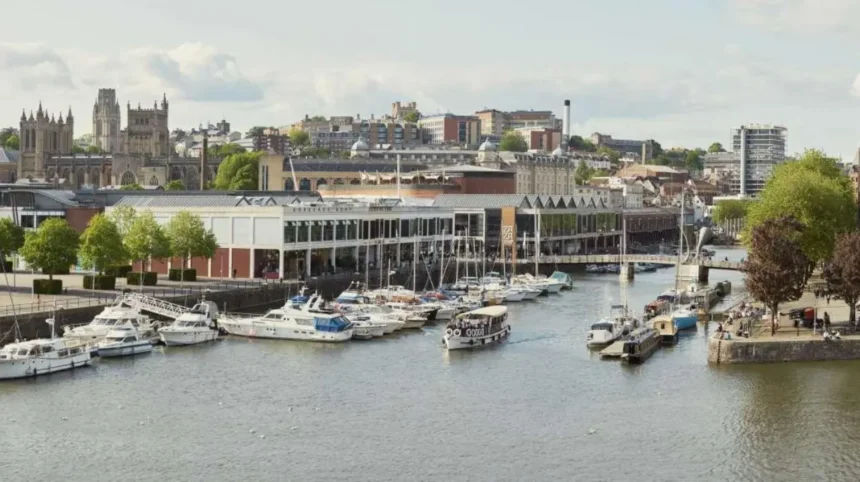
Bristol is a major city in South West England and the largest city in the South West. It combines a large employment base, two major universities, established residential neighbourhoods, extensive cultural infrastructure and strong regional transport connections. Bristol’s estimated mid-2025 population was 495,300, with population growth of 9.6% between 2015 and 2025.
- Why are people relocating to Bristol?
- What is Bristol like as a place to live?
- Which areas of Bristol are best for newcomers?
- Which Bristol areas suit young professionals?
- Which Bristol areas suit families?
- Which Bristol areas suit students?
- How much does housing matter when moving to Bristol?
- What should renters check before moving to Bristol?
- What is Bristol’s transport system like for new residents?
- How easy is it to commute from Bristol?
- What employment opportunities does Bristol offer?
- What is education like in Bristol?
- What healthcare services should newcomers know about?
- What council services do new Bristol residents need?
- What is Bristol’s history and heritage?
- How diverse is Bristol?
- What should families consider before relocating to Bristol?
- Is Bristol suitable for students and young professionals?
- What should newcomers do during their first month in Bristol?
- What are the main challenges of relocating to Bristol?
- What does Bristol’s future mean for people relocating now?
- What is the best way to plan a relocation to Bristol?
The city also has a diverse population. Bristol City Council records more than 287 ethnic groups, residents born in more than 185 countries, at least 45 religions and more than 90 languages spoken across the city. This diversity shapes the city’s neighbourhoods, food scene, education, employment and community life.
Relocating to Bristol requires more than choosing a property. New residents need to understand neighbourhoods, housing, transport, employment, education, council services and everyday costs. The following guide explains the main factors to consider before and after moving.
Why are people relocating to Bristol?
People relocate to Bristol for its expanding population, employment opportunities, universities, cultural life, transport connections and varied neighbourhoods. The city supports professionals, students, families, entrepreneurs and people seeking access to the wider South West region.
Bristol has become one of England’s major regional cities. Its economy includes aerospace, advanced engineering, financial and professional services, digital industries, creative industries, education, healthcare and environmental businesses.
Population growth demonstrates Bristol’s continuing attractiveness. The city’s population increased by an estimated 43,500 people between 2015 and 2025. Bristol City Council projects the population to reach 526,600 by 2032.
The city also has a substantial student population. In the 2024/25 academic year, 68,800 students were registered at Bristol’s two main universities.
Bristol provides access to employment and education without the physical scale of London. Its urban area contains distinct communities, commercial centres and residential districts. This gives relocating households a wide choice of living environments.
The city also functions as a regional centre for nearby communities. Residents in South Gloucestershire, North Somerset and surrounding areas use Bristol for employment, education, healthcare, shopping and cultural activities.
What is Bristol like as a place to live?
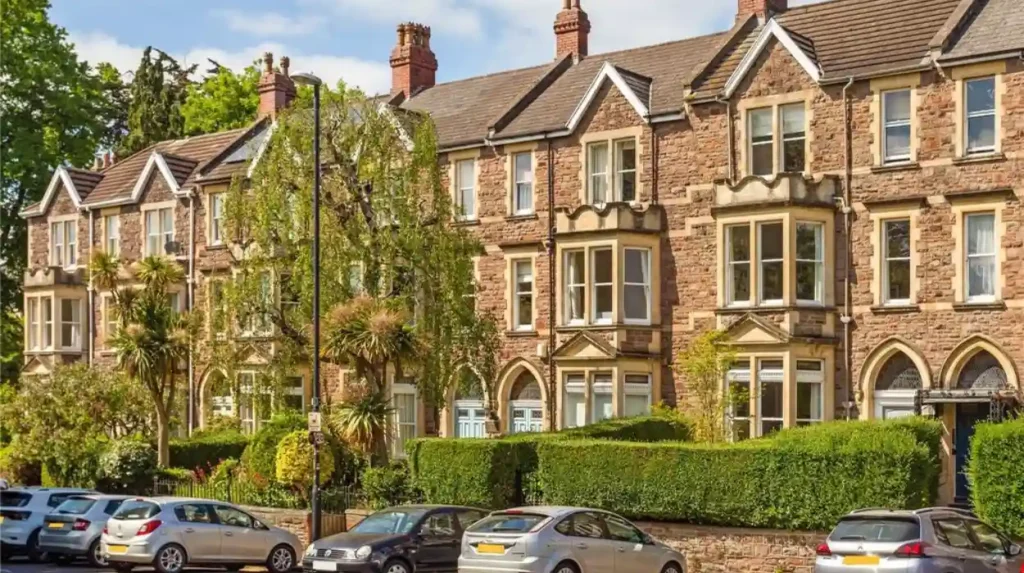
Bristol is a diverse South West English city with urban neighbourhoods, historic districts, suburban communities, green spaces, universities, employment centres and cultural venues. Its character varies substantially between areas such as Clifton, Bedminster, Redland, Easton and Southville.
Bristol sits around the River Avon and has a strong maritime and industrial heritage. The historic harbour remains an important part of the city’s identity and visitor economy.
Different parts of Bristol have distinct built environments. Clifton is known for Georgian and Victorian architecture, while areas such as Bedminster and Southville combine older terraces with newer residential development.
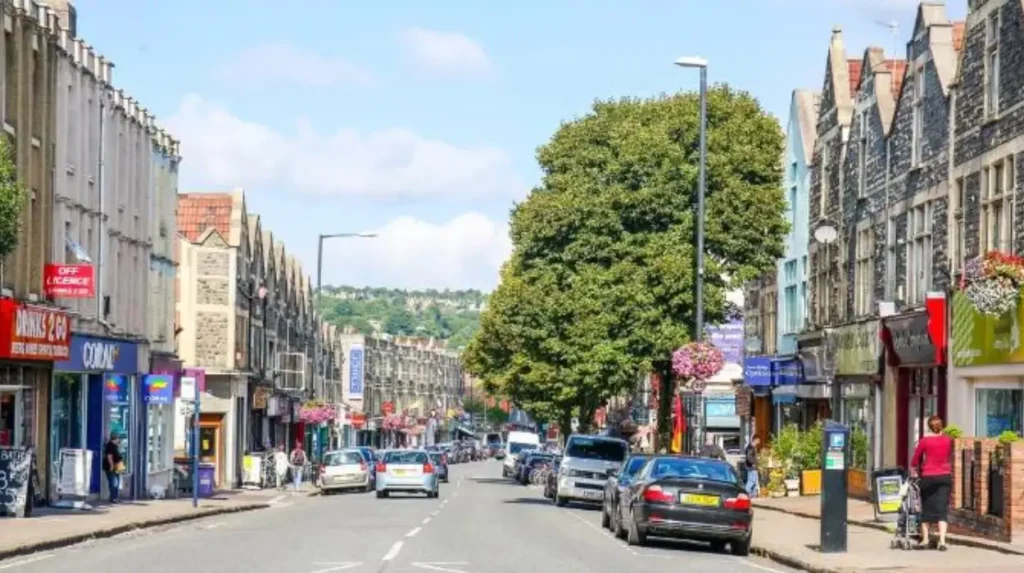
Easton has a highly diverse population and a strong independent retail and food presence. Redland and Bishopston contain substantial Victorian and Edwardian housing alongside local shops and services.
South Bristol contains established communities including Bedminster, Southville, Totterdown and Knowle. North Bristol includes areas such as Horfield, Filton-adjacent communities and Stoke Bishop.
The city also has significant green infrastructure. Parks, common land, recreational spaces and walking routes provide opportunities for residents to exercise and spend time outdoors.
Which areas of Bristol are best for newcomers?
The best Bristol area depends on employment location, housing budget, transport requirements, household type and lifestyle needs. Clifton, Redland, Bishopston, Southville, Bedminster, Horfield and Easton each provide different combinations of housing, services and transport.
Which Bristol areas suit young professionals?
Clifton, Redland, Bishopston, Southville, Bedminster and parts of the city centre provide strong access to employment, restaurants, cafés, cultural venues and public transport.
Clifton sits west of the city centre and has substantial historic housing. It also provides convenient access to the University of Bristol and central employment districts.
Redland sits between Clifton and Bishopston. The area contains residential streets, independent businesses and relatively direct access to central Bristol.
Southville and Bedminster sit south of the River Avon. Their location provides access to the city centre while retaining strong neighbourhood identities.
Which Bristol areas suit families?
Families often assess schools, housing space, parks, transport and local services when choosing a neighbourhood.
Areas including Westbury-on-Trym, Henleaze, Stoke Bishop, Horfield, Bishopston and parts of South Bristol provide different combinations of family housing and community facilities.
Households should assess individual streets rather than judging an entire district from its general reputation. Property type, school catchment boundaries, transport routes and local amenities vary within each neighbourhood.
Which Bristol areas suit students?
Bristol has two major universities and a large student population. The University of Bristol recorded 31,132 students in 2024/25, including 10,903 international students.
Student demand is particularly visible around Clifton, Redland, Cotham, Kingsdown, St Andrews and parts of Bishopston.
The University of the West of England has its main Frenchay campus north-east of central Bristol. Areas with access to bus routes and cycling connections are relevant for students attending UWE.
How much does housing matter when moving to Bristol?
Housing is one of the most important relocation decisions in Bristol because property prices, rents, dwelling types and neighbourhood characteristics vary significantly. Newcomers should compare total monthly housing costs rather than rent or mortgage payments alone.
Housing costs depend on property type, location, condition, size and proximity to employment and transport.
Central and historically prestigious neighbourhoods generally contain higher-value housing. Outer neighbourhoods provide different property choices and access to larger homes.
Rental households should calculate rent alongside council tax, energy, water, broadband, insurance and transport. Buyers should include mortgage payments, deposits, legal costs, surveys, maintenance and other ownership expenses.
Bristol’s population growth creates continuing demand for accommodation. The council’s population data also records migration between Bristol and surrounding areas, making the relationship between Bristol and neighbouring communities important when considering housing choices.
Newcomers should inspect properties during different times of day. Noise, parking, traffic, public transport frequency and local activity can vary between daytime and evening.
What should renters check before moving to Bristol?
Renters should verify the property condition, tenancy terms, deposit arrangements, energy costs, council tax responsibility, transport access and landlord or agent details before signing. The chosen neighbourhood should also match work, education and household requirements.
A tenancy agreement establishes the contractual relationship between landlord and tenant. Renters should read the full agreement before signing.
Important practical checks include heating systems, windows, damp, appliances, broadband availability, water pressure and storage.
Tenants should establish who pays council tax and utilities. Bristol City Council requires people moving into Bristol to register for council tax at their new address.
Renters should document the property’s condition when moving in. Photographs and written records provide useful evidence of the property’s original condition.
Households considering a House in Multiple Occupation should check the specific tenancy arrangements and applicable licensing requirements. Bristol City Council provides dedicated information for people moving into HMOs.
What is Bristol’s transport system like for new residents?
Bristol’s transport network includes buses, rail services, walking routes, cycling infrastructure, Metrobus and road connections. Transport planning is increasingly focused on integrating public transport with walking and cycling across Bristol and the wider West of England.
Buses are central to everyday travel. The West of England Combined Authority coordinates regional transport planning and works with local authorities and operators to improve public transport.
Metrobus is a modern bus rapid-transit-style system serving the greater Bristol area. It uses limited stops on key routes and supports faster boarding through pre-purchase and other ticketing arrangements.
Rail services operate from Bristol Temple Meads and other stations. Temple Meads is the city’s principal railway station and provides connections across the South West and wider UK rail network.
Bristol also has suburban rail connections. MetroWest investment has increased service frequency on routes including the Severn Beach, Westbury and Gloucester lines.
Walking and cycling are important parts of regional transport planning. The West of England’s transport strategy identifies walking, cycling and public transport as key components of future travel.
Road users should consider congestion when selecting a home. A property with a short distance from work is not automatically a short journey during peak periods.
How easy is it to commute from Bristol?
Commuting from Bristol is supported by regional rail, bus, road and active-travel networks. The city provides access to Bath, South Gloucestershire, North Somerset, South Wales and other South West destinations through established transport corridors.
Bristol is positioned close to several major employment areas. Bath lies east of the city, while South Gloucestershire contains employment centres around areas such as Filton and Bradley Stoke.
North Somerset provides access to communities west and south-west of Bristol. South Wales is accessible through the M4 and rail connections across the Severn corridor.
Bristol’s transport planning increasingly focuses on regional connectivity. The West of England Combined Authority’s long-term plans include more frequent rail services, improved bus networks, active-travel infrastructure and mass-transit development.
Future rail development is also relevant to relocation decisions. The Bristol and Portishead railway project received final funding approval in 2025, with reopening planned for 2028 and new stations at Portishead and Pill.
New residents should select transport based on their actual journey rather than distance alone. A short geographical distance can involve a long journey when roads are congested or public transport requires multiple changes.
What employment opportunities does Bristol offer?
Bristol has a diversified economy covering aerospace, engineering, finance, professional services, technology, creative industries, education, healthcare and environmental research. This economic diversity provides employment options across professional, technical, public and service-sector occupations.
Aerospace and advanced engineering have deep roots in the Bristol area. The wider region contains major engineering and manufacturing employers and supply chains.
Professional and financial services form another important part of the economy. Central Bristol contains offices for legal, financial, consultancy and business-service organisations.
The creative economy is also significant. Film, television, animation, advertising, design and digital businesses contribute to Bristol’s employment base.
Education and healthcare provide major employment sectors. The city has universities, hospitals, research organisations and public-sector services.
The West of England Combined Authority identifies jobs, skills, business growth and green industries among its regional priorities.
People relocating for employment should research the precise workplace location. Bristol’s neighbourhood geography means that a central job, a north Bristol job and a South Bristol job create different housing and commuting requirements.
What is education like in Bristol?
Bristol provides education across primary and secondary schools, further education institutions and universities. School choices depend on individual admissions arrangements, while university provision includes the University of Bristol and the University of the West of England.
Families should research school admissions before selecting a property. School places are governed by specific admission arrangements and catchment or priority criteria.
The University of Bristol is a research-intensive university founded in 1876 as University College, Bristol. It has more than 31,000 students and more than 9,000 staff based on its 2024/25 figures.
The University of the West of England provides a separate higher-education presence with its major Frenchay campus north-east of the city.
The scale of higher education affects the city’s rental market, transport demand, hospitality sector and cultural life.
International students are also an important part of Bristol’s university population. The University of Bristol recorded 10,903 international students in 2024/25.
What healthcare services should newcomers know about?
New residents should register with local healthcare providers after moving, including a GP where appropriate, and identify nearby pharmacies, dental services, hospitals and urgent-care facilities. Healthcare access depends on eligibility, registration requirements and individual service arrangements.
The NHS provides the main publicly funded healthcare system in Bristol.
New residents should identify their nearest GP practices and understand registration requirements. GP availability differs between practices and neighbourhoods.
Dental care operates separately from general practice. NHS dental availability varies, so newcomers should check local providers before requiring treatment.
Hospitals provide specialist and emergency care. Southmead Hospital is a major hospital serving Bristol and the surrounding region.
Healthcare planning is particularly important for families, older residents and people managing ongoing care needs.
Relocating households should keep essential medical documents, prescriptions and contact information accessible during the move.
What council services do new Bristol residents need?
Bristol City Council provides essential local services including council tax administration, waste services, planning, housing services, local information and other municipal functions. New residents should update their address and understand their local responsibilities after moving.
Council tax applies to most residential properties, with responsibility depending on the household and property circumstances.
People moving into Bristol need to register their new address for council tax. People moving between Bristol addresses or leaving the city also need to update their council tax records.
Waste and recycling services form another important part of everyday life. Collection arrangements depend on the property’s location and council service.
Residents should also understand parking restrictions where they live. Controlled parking zones operate in parts of Bristol, with rules varying by location.
Planning information is relevant to homeowners considering extensions, conversions or structural changes. Planning permission and building regulations are separate processes.
What is Bristol’s history and heritage?
Bristol developed as an important port and trading centre and later became a major industrial, commercial and cultural city. Its historic harbour, churches, Georgian architecture and surviving industrial buildings reflect centuries of urban development.
Bristol’s history is closely connected with maritime trade and the River Avon. The harbour supported commercial activity and helped establish the city’s regional importance.
The city’s historic environment includes medieval structures, Georgian streets, Victorian buildings and industrial sites.
Clifton Suspension Bridge is one of Bristol’s best-known engineering landmarks. Designed by Isambard Kingdom Brunel and completed in 1864, it crosses the Avon Gorge.
The city also has strong industrial and engineering heritage. Bristol became associated with aircraft manufacturing and advanced engineering, industries that continue to influence the wider regional economy.
Historical heritage remains visible throughout neighbourhoods. Residents encounter listed buildings, historic streets, churches, warehouses and former industrial sites alongside modern developments.
How diverse is Bristol?
Bristol is one of England’s culturally diverse cities, with residents representing more than 287 ethnic groups, over 185 countries of birth, at least 45 religions and more than 90 spoken languages according to Bristol City Council.
Cultural diversity is visible across Bristol’s neighbourhoods, businesses, food markets, community organisations and festivals.
Easton is particularly associated with multicultural communities and independent businesses. St Pauls also has a strong history of cultural diversity and community activity.
International communities are present throughout the city rather than being confined to one district.
The city’s universities add further international diversity. The University of Bristol recorded students from many countries as part of its international student population.
For newcomers, this diversity creates access to international food, cultural organisations, religious institutions and community networks.
What should families consider before relocating to Bristol?
Families should compare housing space, school arrangements, childcare, healthcare, transport, parks, local services and household budgets before choosing a Bristol neighbourhood. The most suitable location depends on each family’s employment, education and daily travel requirements.
School location often influences family housing decisions. Parents should research admissions criteria and school availability before committing to a property.
Childcare is another practical consideration. Costs, opening hours and availability vary between providers.
Green space supports everyday family recreation. Bristol contains numerous parks, playing fields and open spaces distributed across its neighbourhoods.
Transport also affects family routines. A home close to a reliable bus route or railway station can reduce dependence on private cars.
Families should calculate the combined cost of housing, childcare, transport, food, utilities and council tax rather than assessing property costs separately.
Is Bristol suitable for students and young professionals?
Bristol is well suited to students and young professionals because it has two major universities, a diversified employment base, established cultural districts, independent businesses and substantial public transport demand across central and inner residential neighbourhoods.
Students benefit from Bristol’s higher-education infrastructure and large student population.
Young professionals have access to employment across technology, engineering, finance, professional services, healthcare, education and creative industries.
Neighbourhood selection should reflect workplace and university location. Living close to the main daily destination reduces commuting time and transport costs.
Rental demand is particularly relevant for students and early-career workers. Shared housing can provide an alternative to renting an entire property independently.
The city also provides a large network of cafés, restaurants, cultural venues, sports facilities and community spaces that support social and professional life.
What should newcomers do during their first month in Bristol?
New residents should complete council registrations, confirm utilities, establish healthcare arrangements, learn local transport options, identify essential shops and services, and understand neighbourhood parking and waste arrangements during their first month in Bristol.
The first priority is administrative. Residents should confirm council tax registration and update their address with relevant organisations.
The second priority is household infrastructure. Electricity, gas, water, broadband and insurance arrangements should be checked.
The third priority is transport. Newcomers should test their actual commute during normal working hours before finalising long-term travel arrangements.
Healthcare registration should follow soon after arrival. Residents should identify local pharmacies and healthcare facilities.
Finally, newcomers should learn the immediate neighbourhood. Supermarkets, GP practices, pharmacies, schools, parks, bus stops, railway stations and community facilities are more important for daily life than tourist attractions.
What are the main challenges of relocating to Bristol?
The main relocation challenges include housing costs, competitive rental demand, commuting conditions, neighbourhood differences and the practical administration of moving. Careful research reduces these problems by matching housing and location decisions to actual daily requirements.
Housing represents a major financial commitment. A lower monthly rent can become less attractive if it creates expensive or lengthy commuting.
Transport conditions also differ between neighbourhoods. Bristol’s geography includes hills, waterways, major roads and constrained corridors that influence travel.
The city’s population growth increases pressure on housing and infrastructure. Bristol City Council estimates that the population reached 495,300 in mid-2025 and projects continued growth through 2032.
Another challenge is choosing between neighbourhood character and practical convenience. A desirable area does not automatically provide the best location for a particular household.
The solution is structured comparison. Newcomers should assess housing, commute, schools, healthcare, services and total household costs together.
Explore More Area Guide
Newcomer’s Guide to Bristol: Attractions, History and Travel
First-Time Visitor Guide to Bristol | Top Attractions
What does Bristol’s future mean for people relocating now?
Bristol’s future development focuses on population growth, housing, transport investment, employment, sustainable travel and regional connectivity. These priorities will influence commuting, infrastructure and neighbourhood development for people relocating to the city.
Bristol’s projected population growth creates continuing demand for housing and services. The council projects 526,600 residents by 2032.
Transport investment is a major regional priority. The West of England’s transport vision includes better buses, more trains, mass transit, walking and cycling improvements and upgraded streets.
Rail investment is also progressing. MetroWest projects include new stations and improved services, while the Portishead line is scheduled for reopening in 2028.
The West of England Combined Authority also identifies business growth, skills, green jobs and affordable homes among its regional priorities.
For someone relocating to Bristol, these developments make transport access, housing location and proximity to employment increasingly important. A well-researched relocation decision should consider both current services and planned infrastructure.
What is the best way to plan a relocation to Bristol?
The best relocation approach is to choose the employment or education destination first, compare suitable neighbourhoods second, calculate total housing and transport costs third, and complete council, healthcare and household registrations immediately after moving.
Start with the reason for relocation. Employment, university, family circumstances and lifestyle requirements create different priorities.
Next, identify suitable neighbourhoods based on journey times rather than reputation alone.
Then compare properties using total monthly expenditure. Include rent or mortgage, council tax, utilities, transport, insurance and maintenance.
Visit shortlisted areas at different times. Observe traffic, parking, noise, public transport and local amenities.
After choosing a property, organise the move systematically. Confirm tenancy or purchase documents, utilities, council tax and healthcare arrangements.
Bristol’s size, population diversity, economic base and transport investment make it a significant relocation destination in South West England. Its neighbourhoods offer different housing and lifestyle environments, so successful relocation depends on matching the right area to the household’s practical needs.
Is Bristol a good place to relocate to?
Yes. Bristol offers a diverse economy, major universities, established residential neighbourhoods, extensive cultural facilities, green spaces and strong regional transport connections. It suits students, families, professionals, entrepreneurs and other newcomers.