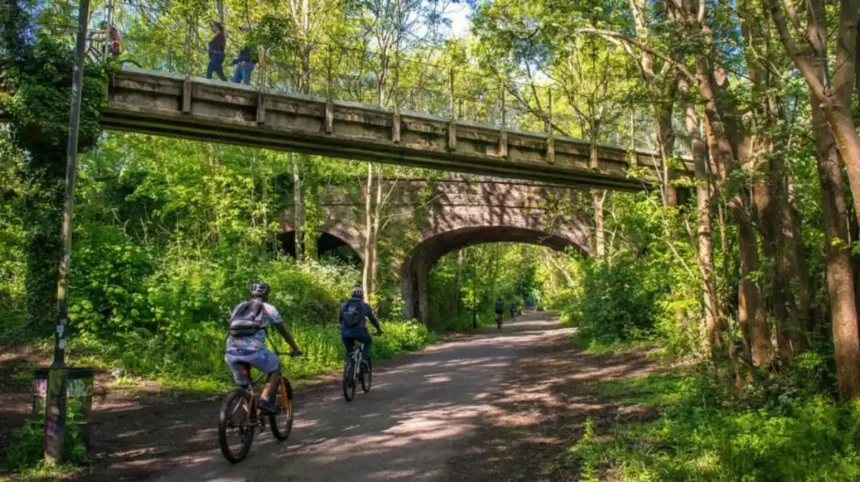
Bristol is one of the UK’s best-known cycling cities, with dedicated cycle paths, riverside trails, former railway routes and green spaces that support beginner-friendly cycling. New cyclists can explore the city through relatively flat, traffic-free routes before progressing to longer journeys and shared-road cycling.
- What Makes Bristol a Good City for Beginner Cyclists?
- Which Bristol Cycling Routes Are Best for Beginners?
- 1. Bristol and Bath Railway Path
- 2. Bristol Docks Loop
- 3. Festival Way
- 4. River Avon Trail
- 5. Whitchurch Way
- 6. Ashton Court Estate Cycling Routes
- How Long Should Beginners Cycle Around Bristol?
- What Should Beginners Know About Bristol’s Cycling Terrain?
- What Equipment Do Beginners Need for Cycling in Bristol?
- Which Bicycle Is Best for Beginners?
- What Safety Equipment Is Essential?
- What Should Beginners Check Before Every Ride?
- How Can Beginners Cycle Safely on Bristol’s Shared Paths?
- What Rules Apply to Shared Cycling Paths?
- How Should Beginners Handle Road Crossings?
- Is Cycling at Night Safe for Beginners?
- Where Can Beginners Get Cycling Training and Support in Bristol?
- When Is the Best Time to Cycle in Bristol?
- What Are the Benefits of Beginner Cycling Routes in Bristol?
- How Does Cycling Support Physical Health?
- How Does Cycling Improve Local Mobility?
- How Does Cycling Support Sustainable Transport?
- How Can Beginners Plan Their First Cycling Trip in Bristol?
- Step 1: Choose a Short Route
- Step 2: Check the Route Conditions
- Step 3: Prepare the Bicycle
- Step 4: Carry Essential Supplies
- Step 5: Increase Distance Gradually
- What Is the Future of Beginner Cycling in Bristol?
- Exploring Bristol Through Beginner-Friendly Cycling Routes
The best cycling routes for beginners in Bristol include the Bristol and Bath Railway Path, Bristol Docks Loop, Festival Way, River Avon Trail and Whitchurch Way. These routes offer different distances, surfaces and levels of traffic exposure. Some provide fully or largely traffic-free cycling, while others combine dedicated paths with road crossings and shared-use sections.
Bristol’s cycling network connects residential neighbourhoods, parks, historic attractions and neighbouring towns. Beginners can choose short recreational rides, practise everyday cycling skills or gradually build the confidence needed for longer journeys.
What Makes Bristol a Good City for Beginner Cyclists?
Bristol offers beginner cyclists access to dedicated cycle paths, traffic-free railway trails, riverside routes and public green spaces. Its cycling network connects residential areas with the city centre, making it suitable for recreational rides, short commutes and gradual cycling progression.
Bristol has a well-established cycling culture supported by local authorities, transport organisations and active travel charities. The city contains different cycling environments, from separated paths to shared pedestrian routes and ordinary roads.
The most suitable starting points are generally outside busy traffic corridors. Beginners benefit from routes with smooth surfaces, clear directions, limited gradients and convenient places to stop.
Bristol’s geography also creates different cycling conditions. The River Avon runs through the city, while elevated neighbourhoods such as Clifton, Totterdown and parts of Redland introduce challenging climbs. Routes following former railway lines and riverside corridors generally provide gentler gradients.
How Does Bristol Support Everyday Cycling?
Bristol City Council provides cycling information, route-planning resources and infrastructure improvements. Its official cycling guidance directs residents towards maps showing shorter and safer cycling routes.
The council also supports cycle parking through facilities such as cycle hangars. These secure storage facilities help residents keep bicycles close to their homes.
The wider West of England active travel network connects Bristol with surrounding communities. National Cycle Network routes provide longer-distance connections for recreational cyclists and commuters.
The National Cycle Network is a UK-wide network of signed routes developed to support walking, wheeling and cycling. Walk Wheel Cycle Trust, formerly known as Sustrans, manages and promotes many of these routes.
Why Should Beginners Start on Traffic-Free Paths?
Traffic-free paths remove direct interaction with motor vehicles for most of a journey. They allow beginners to concentrate on balance, braking, steering, road awareness around other path users and maintaining a comfortable speed.
However, traffic-free does not mean completely risk-free. Shared paths contain pedestrians, runners, children, wheelchair users and other cyclists. Beginners must maintain control and give other users sufficient space.
Which Bristol Cycling Routes Are Best for Beginners?
The Bristol and Bath Railway Path, Bristol Docks Loop, Festival Way and selected sections of the River Avon Trail are useful beginner options. They provide relatively accessible cycling experiences, with different distances, surfaces and levels of interaction with traffic.
Choosing a suitable route depends on cycling experience, fitness, bicycle type and confidence around other path users. Beginners should start with shorter journeys and extend their distance as their handling skills improve.
The following routes provide practical starting points for exploring Bristol by bicycle.
1. Bristol and Bath Railway Path
The Bristol and Bath Railway Path is one of the most established cycling routes in the Bristol area. It follows a former railway corridor between Bristol and Bath.
The route is approximately 13.9 miles (23.3 kilometres) long according to Walk Wheel Cycle Trust. Its published route information records approximately 97.6% of the path as traffic-free and 99.7% as asphalt.
The route begins in eastern Bristol and passes through areas including:
- Lawrence Hill.
- Easton.
- Fishponds.
- Staple Hill.
- Mangotsfield.
- Warmley.
- Bitton.
- Saltford.
The route’s relatively flat profile and smooth surface make it particularly suitable for new cyclists.
Beginners do not need to complete the entire Bristol-to-Bath journey. A short out-and-back ride provides an opportunity to practise cycling without committing to a long-distance trip.
Warmley and Bitton provide useful stopping points. Bitton Station also offers historical interest through its connection with the former railway network.
Beginner recommendation: Start with approximately two to four miles in total. Increase the distance after becoming comfortable with braking, turning and sharing the path.
One important consideration is that the route becomes more complex near Bath, where it includes an industrial estate and residential roads. Cyclists should also check current Bristol-side improvement works before travelling.
2. Bristol Docks Loop
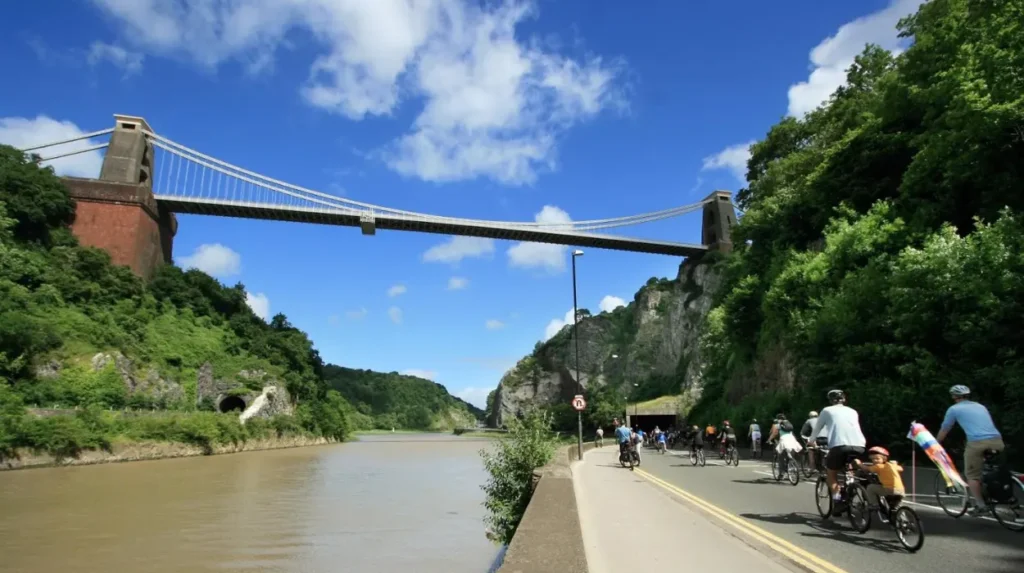
The Bristol Docks Loop offers a shorter cycling experience around the historic harbour area.
The published route covers approximately three miles (4.8 kilometres). Walk Wheel Cycle Trust records approximately 87.9% of the route as traffic-free, with an asphalt surface throughout.
The route explores central Bristol and provides views of:
- Bristol Floating Harbour.
- Cumberland Basin.
- Clifton Suspension Bridge.
- Avon Gorge.
- Ashton Court.
The route is useful for cyclists who want to explore Bristol’s waterfront without committing to a long countryside ride.
However, the Bristol Docks Loop is a shared-use route rather than an entirely segregated cycling facility. Pedestrian activity is high around popular waterfront destinations, particularly during weekends and busy visitor periods.
Beginners should cycle slowly, maintain a safe following distance and give pedestrians priority where required.
The route also contains short on-road sections. New cyclists should review the route map before setting off and dismount where necessary if a section feels uncomfortable.
Beginner recommendation: Explore a shorter section around the Floating Harbour before attempting the complete loop.
3. Festival Way
Festival Way connects central Bristol with Ashton Court Estate and the wider North Somerset area.
The published route is approximately 9.7 miles (15.6 kilometres) long. It starts at Queen Square and continues towards Nailsea.
The route passes through or near several recognisable locations:
- Queen Square.
- Bristol Harbourside.
- Ashton Court Estate.
- Long Ashton.
- Flax Bourton.
- Nailsea.
Festival Way is approximately 67.8% traffic-free according to Walk Wheel Cycle Trust. Its remaining sections require cyclists to use roads or negotiate road crossings.
The route offers an attractive combination of urban scenery, green space and countryside. Ashton Court provides an opportunity to take a break before continuing further west.
However, the complete route is not the best first ride for someone with limited cycling experience. The B3128 crossing south of Ashton Court requires particular attention.
Beginners should initially explore the more accessible sections around Queen Square and Ashton Court, rather than treating the full route as a traffic-free beginner trail.
Beginner recommendation: Ride a short section towards Ashton Court, assess your confidence and return using the same route.
4. River Avon Trail
The River Avon Trail follows the River Avon through Bristol and the surrounding countryside.
The trail provides opportunities to explore riverside landscapes, green corridors and historic waterways. Certain sections connect with Bristol’s wider cycling network, including routes around the city centre and eastern neighbourhoods.
The Riverside Greenway is particularly relevant to beginners travelling between eastern Bristol and central destinations. It provides quieter cycling connections away from some major roads.
The route also connects with areas around:
- Temple Meads.
- Netham Park.
- St Anne’s.
- Brislington.
- Bristol city centre.
Not every part of the River Avon Trail provides a dedicated cycling surface. Some sections involve shared paths, uneven ground or road connections.
Beginners should select a clearly mapped cycling section rather than assuming the complete walking trail is suitable for bicycles.
Beginner recommendation: Explore an accessible riverside section around Temple Meads and the eastern Bristol greenway. Check the surface and route directions before extending the ride.
Bristol City Council identifies the River Avon Trail as one of the cycling routes available around East Bristol.
5. Whitchurch Way
Whitchurch Way provides a cycling connection between Bristol city centre and the southern parts of the city.
The route uses sections of the Riverside Greenway and connects with the National Cycle Network. It provides access to green spaces and local destinations away from some heavily trafficked roads.
Places associated with this cycling corridor include:
- Bristol Temple Meads.
- Spark Evans Park.
- Arnos Vale Cemetery.
- Stockwood Open Space.
- Whitchurch.
Whitchurch Way is not entirely traffic-free. Its route combines quieter roads with shared-use paths and dedicated cycling infrastructure.
New cyclists should examine the route map carefully to identify where cycling facilities change. Practising on the separated sections first provides a more manageable introduction.
Beginner recommendation: Start with a short section around the Riverside Greenway and gradually explore the southern connections when comfortable with road positioning.
6. Ashton Court Estate Cycling Routes
Ashton Court Estate provides a large green space west of Bristol city centre. It is known for woodland, open parkland, historic buildings and recreational activities.
National Cycle Network Route 33 passes through the estate and connects with Festival Way.
The estate offers a different cycling environment from the city’s main cycle corridors. Its landscape includes open spaces, woodland paths and routes with varying gradients.
Beginners should distinguish between ordinary park cycling routes and mountain bike trails. Technical mountain bike tracks contain features that require more advanced handling skills.
The estate is also an important destination for people who want to combine cycling with walking or a countryside visit.
Cyclists travelling to Ashton Court should check access arrangements and the route surface before setting out. Bristol City Council recommends appropriate bicycle lighting and reflectors for people travelling by bicycle.
Beginner recommendation: Choose a suitable surfaced route through the estate and avoid technical trails until you have developed better bicycle control.
How Long Should Beginners Cycle Around Bristol?
Beginner cyclists should initially choose rides lasting approximately 20 to 40 minutes, depending on fitness, confidence and route conditions. Short journeys on flat, traffic-free paths provide opportunities to develop control before attempting longer rides.
Cycling distance depends on average speed, gradients, surface conditions, stops and the number of other path users.
A beginner travelling at a comfortable speed of 8 to 12 kilometres per hour covers approximately 2.5 to 4 kilometres in 20 minutes.
This is a practical starting range rather than a fixed performance target.
What Is a Suitable Beginner Cycling Distance?
A sensible progression begins with short rides and increases gradually.
These distances represent suggested recreational targets, not official route classifications.
A beginner should be able to stop, turn and restart comfortably before increasing distance.
How Often Should New Cyclists Ride?
Consistency is more important than attempting a demanding journey immediately.
Two or three manageable rides each week provide regular opportunities to practise basic cycling skills. Beginners can gradually increase journey length as their fitness and confidence improve.
The UK Chief Medical Officers’ physical activity guidelines recommend that adults undertake at least 150 minutes of moderate-intensity activity each week, or 75 minutes of vigorous activity.
Cycling counts towards this target when the effort reaches moderate intensity.
Short recreational rides contribute towards the recommended activity level while helping beginners develop a sustainable cycling routine.
What Should Beginners Know About Bristol’s Cycling Terrain?
Bristol has a varied landscape that includes flat riverside corridors, former railway paths, gentle gradients and steep residential hills. Beginners should prioritise flatter routes around the harbour and railway path before progressing to more demanding climbs.
Bristol’s topography affects cycling difficulty. The River Avon runs through a landscape with higher ground on both sides, creating noticeable differences between riverside routes and elevated neighbourhoods.
The city centre contains relatively accessible cycling corridors. However, travelling towards Clifton, Totterdown and parts of Redland introduces more demanding gradients.
Which Areas of Bristol Have Flatter Cycling Routes?
The following areas provide useful starting points for cyclists looking for relatively gentle terrain:
- Bristol and Bath Railway Path: Follows a former railway corridor with a generally flat gradient.
- Floating Harbour: Offers largely level waterfront cycling sections.
- Riverside Greenway: Provides relatively gentle riverside connections.
- Ashton Court: Contains a mixture of flatter parkland and more challenging sections.
Beginners should check individual route profiles rather than assuming every section of a named route has the same difficulty.
Which Bristol Areas Are More Challenging?
Clifton is known for elevated streets and steep approaches. Totterdown also contains significant gradients because of its position above the city centre.
Other uphill journeys occur around Redland and parts of Cotham.
These areas are not unsuitable for beginner cyclists, but they require better fitness, gear selection and braking control.
An appropriate progression involves practising on flat routes before attempting sustained climbs.
What Equipment Do Beginners Need for Cycling in Bristol?
Beginner cyclists need a correctly fitted bicycle, working brakes, suitable tyres, front and rear lights, reflectors and a properly fitted helmet. A repair kit, water bottle and comfortable clothing also help make recreational rides more practical.
Cycling equipment does not need to be complicated. A reliable bicycle that fits the rider is more important than expensive accessories.
The bicycle should be checked before every journey, particularly when it has been stored for an extended period.
Which Bicycle Is Best for Beginners?
Different bicycle types suit different routes and riding preferences.
Hybrid bicycles combine characteristics of road and mountain bikes. They provide an upright riding position and are suitable for many urban cycle paths.
City bicycles are designed for everyday journeys. They generally have comfortable seating positions and practical features for short trips.
Road bicycles have narrow tyres and drop handlebars. They are suitable for paved routes but require confidence with a more forward riding position.
Mountain bicycles have wider tyres and stronger frames for rougher terrain. They are useful for suitable off-road trails but are not necessary for ordinary beginner cycling routes.
For Bristol’s smoother railway paths and harbour routes, a hybrid or city bicycle is a practical starting choice.
What Safety Equipment Is Essential?
A basic cycling setup includes:
- Front white light and rear red light.
- Working front and rear brakes.
- Reflectors.
- A correctly fitted helmet.
- A bicycle bell.
- A puncture repair kit.
- A suitable lock.
UK road regulations require bicycles used on public roads at night to have appropriate front and rear lights and reflectors. The Road Vehicles Lighting Regulations 1989 establish the relevant lighting requirements.
A cycle helmet is strongly recommended, although wearing one is not generally a legal requirement for adult cyclists in the UK.
What Should Beginners Check Before Every Ride?
The bicycle should receive a basic safety inspection.
Check tyre pressure, tyre condition, brake response, chain movement and handlebar stability. Confirm that lights work before travelling in poor visibility or darkness.
The rider should also adjust the saddle to a suitable height. A comfortable position improves balance and reduces unnecessary strain.
How Can Beginners Cycle Safely on Bristol’s Shared Paths?
Safe cycling on Bristol’s shared paths requires controlled speeds, awareness of pedestrians, clear communication and appropriate positioning. Beginners should slow down near junctions, give pedestrians priority, use a bell when appropriate and follow signs throughout the journey.
Shared-use paths are important parts of Bristol’s cycling network. They allow different users to travel along the same route without relying entirely on ordinary roads.
However, cyclists remain responsible for controlling their bicycles and avoiding collisions.
What Rules Apply to Shared Cycling Paths?
The Highway Code provides guidance for cyclists using roads, cycle tracks and shared pedestrian facilities.
Important practices include:
- Give pedestrians priority on shared-use paths.
- Keep a safe distance when passing other cyclists.
- Slow down around children and dogs.
- Avoid sudden changes in direction.
- Use a bell or verbal warning when appropriate.
- Follow signs and traffic signals at road crossings.
The Highway Code also recommends allowing sufficient space when overtaking pedestrians and other cyclists.
Beginners should avoid cycling too quickly around blind corners, narrow bridges and crowded waterfront areas.
How Should Beginners Handle Road Crossings?
Some Bristol cycling routes include junctions and road crossings. Festival Way, for example, includes crossings where cyclists must take particular care.
Before crossing, stop where necessary, observe traffic in both directions and follow the signals.
Never assume that approaching motorists have seen you. Make your intentions clear and wait for a safe opportunity to continue.
Is Cycling at Night Safe for Beginners?
Night cycling requires additional preparation.
A white front light and red rear light improve visibility. Reflective clothing and functioning reflectors provide additional visibility to other road users.
Beginners should initially avoid unfamiliar routes after dark. Poor lighting makes it harder to identify potholes, pedestrians, surface changes and road hazards.
Where Can Beginners Get Cycling Training and Support in Bristol?
Bristol provides cycling information and active travel support through Bristol City Council, Better by Bike and local cycling organisations. Available support includes route planning, cycle training, accompanied rides and access to loan bicycles in participating areas.
Cycling instruction helps beginners develop practical skills before travelling on unfamiliar routes.
People who have never ridden a bicycle benefit from learning balance, braking, steering and controlled stopping in a quiet environment.
What Is Better by Bike?
Better by Bike provides information about cycling opportunities across the West of England.
Its resources help residents discover cycling routes, training opportunities and bicycle-related support.
Bristol residents can also use the official council cycling pages to find route-planning information and local cycling facilities.
Can Beginners Borrow a Bicycle?
Some local active travel programmes offer bicycle loans.
Bristol City Council’s East Bristol active travel support information describes a scheme offering residents a bicycle or electric bicycle loan for up to four weeks.
The programme also describes up to three cycle training sessions and opportunities to join accompanied rides.
Availability and eligibility depend on the programme and location. Beginners should check current arrangements before relying on a loan bicycle.
Where Can Beginners Find Cycling Maps?
Several resources help cyclists identify suitable routes.
Bristol City Council’s cycling webpage provides official route-planning information. Walk Wheel Cycle Trust publishes National Cycle Network route descriptions and maps.
Visit Bristol also highlights cycling routes around the city, including the Bristol and Bath Railway Path, Festival Way and other regional connections.
These resources help beginners check distances, surfaces, connections and route conditions before travelling.
When Is the Best Time to Cycle in Bristol?
Spring and summer provide longer daylight hours and generally more opportunities for recreational cycling in Bristol. Early mornings and quieter weekday periods help beginners avoid heavy pedestrian activity on popular routes and waterfront paths.
Bristol supports year-round cycling, but weather and daylight influence route conditions.
Spring offers improving daylight and generally suitable conditions for outdoor activities. Summer provides longer evenings, although popular paths become busier during holidays and weekends.
Autumn introduces falling leaves and wet surfaces. These conditions increase the importance of careful braking and tyre grip.
Winter cycling requires additional visibility measures, suitable clothing and more frequent bicycle checks.
Are Weekdays or Weekends Better for Beginner Cycling?
Weekday mornings often provide quieter conditions on recreational routes. Weekends attract families, runners, walkers and visitors, especially around the Floating Harbour and Bristol and Bath Railway Path.
Beginners who feel uncomfortable sharing busy paths should consider quieter periods.
The most suitable time also depends on the purpose of the ride. Recreational cyclists often prefer daylight and favourable weather, while commuters prioritise journey convenience.
How Does Bristol Weather Affect Cycling?
Rain affects braking distance, visibility and surface grip. Wet leaves and muddy sections create additional hazards.
Strong winds also influence bicycle stability, especially on exposed riverside sections and open parkland.
Before setting out, check the weather forecast and select a route that matches the conditions.
What Are the Benefits of Beginner Cycling Routes in Bristol?
Beginner cycling routes support physical activity, everyday mobility and access to Bristol’s green spaces. They also provide affordable opportunities to explore local attractions, connect neighbourhoods and reduce reliance on private motor vehicles for suitable short journeys.
Cycling offers benefits beyond recreational exercise. It supports independent travel and gives residents another option for reaching local destinations.
How Does Cycling Support Physical Health?
Cycling is an aerobic physical activity. It increases heart rate and uses major muscle groups, particularly in the legs.
Regular moderate-intensity cycling contributes towards national physical activity recommendations.
It also allows people to control exercise intensity by adjusting speed, distance and route difficulty.
Beginners should build activity gradually and take breaks when needed.
How Does Cycling Improve Local Mobility?
Dedicated cycle paths connect residential neighbourhoods with employment areas, educational facilities, railway stations and recreational destinations.
For example, the Bristol and Bath Railway Path provides a connection between eastern Bristol, surrounding communities and Bath.
Festival Way connects the city centre with Ashton Court and destinations towards Nailsea.
These connections make cycling useful for both leisure and selected everyday journeys.
How Does Cycling Support Sustainable Transport?
Cycling produces no direct exhaust emissions during operation. Replacing suitable short car journeys with bicycle journeys reduces local motor traffic and associated emissions.
The benefits depend on journey distance, travel behaviour and the transport mode being replaced.
Bristol’s cycle network supports wider sustainable transport objectives by providing alternatives to private cars.
How Can Beginners Plan Their First Cycling Trip in Bristol?
Planning a first cycling trip involves selecting a suitable route, checking bicycle condition, reviewing weather conditions and estimating journey distance. Beginners should choose familiar traffic-free paths, carry basic repair equipment and allow sufficient time for rest stops.
A straightforward plan reduces uncertainty and makes the first cycling experience more manageable.
Step 1: Choose a Short Route
Start with a short section of the Bristol and Bath Railway Path or Bristol Harbourside.
Avoid attempting the complete Bristol-to-Bath journey during the first outing.
Step 2: Check the Route Conditions
Review the route map and identify road crossings, shared-use sections, gradients and potential stopping points.
Check whether construction works or temporary diversions affect the route.
Step 3: Prepare the Bicycle
Inspect the tyres, brakes, lights and chain. Adjust the saddle and handlebars to a comfortable position.
Step 4: Carry Essential Supplies
Take drinking water, a mobile phone, a puncture repair kit and a suitable bicycle lock.
Carry an additional layer of clothing when weather conditions are uncertain.
Step 5: Increase Distance Gradually
Repeat shorter journeys until cycling feels comfortable. Increase the distance gradually and introduce more challenging routes when basic handling skills improve.
Explore More Area Guide
Bristol and Bath Railway Path: Route, History and Visitor Guide
Bristol Cycling Guide: Routes, Bike Hire and Safety
What Is the Future of Beginner Cycling in Bristol?
Bristol’s future cycling opportunities depend on continued investment in safer infrastructure, accessible route connections, cycle training and secure bicycle parking. Improvements to existing paths and active travel programmes support cycling as an everyday transport option.
Bristol’s existing railway paths, riverside connections and National Cycle Network routes provide a foundation for further cycling development.
Future improvements to cycle infrastructure can help connect residential neighbourhoods with employment centres, schools, railway stations and recreational destinations.
Why Is Cycling Infrastructure Important?
Dedicated cycle infrastructure reduces direct interaction with motor traffic. Better connections also make it easier for inexperienced cyclists to travel between neighbourhoods.
Secure bicycle parking supports people who combine cycling with public transport or use bicycles for everyday journeys.
How Can More People Start Cycling?
Access to training, loan bicycles and suitable beginner routes helps remove common barriers to cycling.
Local authorities, transport organisations and community groups all contribute to cycling participation.
Continued maintenance is equally important. Smooth surfaces, clear signs, suitable lighting and well-managed shared paths improve the experience for different users.
Exploring Bristol Through Beginner-Friendly Cycling Routes
Bristol offers a variety of cycling routes for people who are new to cycling or returning after a long break. The Bristol and Bath Railway Path provides an excellent starting point because of its relatively flat profile, smooth surface and high proportion of traffic-free infrastructure.
Bristol Docks Loop offers a shorter waterfront experience, while Festival Way connects central Bristol with Ashton Court and North Somerset. The River Avon Trail and Whitchurch Way provide additional opportunities to explore riverside environments and southern neighbourhoods.
Beginners should prioritise shorter journeys, understand shared-path etiquette and choose routes that match their confidence and fitness. With appropriate equipment, route planning and gradual progression, cycling becomes a practical way to discover Bristol’s historic waterfront, green spaces and surrounding countryside.
What are the best cycling routes for beginners in Bristol?
The Bristol and Bath Railway Path, Bristol Docks Loop, Festival Way and selected sections of the River Avon Trail are suitable options. They offer accessible cycling experiences with different distances, scenery and traffic conditions.