Bristol offers families a range of free activities, including public parks, historic harbourside walks, nature reserves, playgrounds, museums with free admission, and outdoor spaces for children. Families can explore the city without paying entrance fees by choosing accessible attractions, planning outdoor visits, and checking free events at local cultural venues.
- What are the best free family activities in Bristol?
- Which free parks in Bristol are suitable for family outings?
- Where can families enjoy free nature activities in Bristol?
- Which free museums in Bristol can families visit with children?
- What free activities can families enjoy around Bristol Harbourside?
- Walk beside the floating harbour
- Discover the history of Bristol’s docks
- Explore public art and waterfront landmarks
- Where can children enjoy free playgrounds and outdoor games in Bristol?
- Which free historic landmarks can families explore in Bristol?
- What free activities are available for babies, toddlers, and preschool children in Bristol?
- Where can families find free festivals and events in Bristol?
- Check the city events calendar
- Look for free museum family activities
- Explore neighbourhood arts and community events
- How can families plan a completely free day out in Bristol?
- Which free family activities in Bristol are suitable for rainy days?
- How can families make free activities in Bristol accessible to different ages and abilities?
- Why are free family activities important for Bristol residents and visitors?
- Where should families check official information before visiting Bristol attractions?
What are the best free family activities in Bristol?
The best free family activities in Bristol include exploring Brandon Hill, walking around Bristol Harbourside, visiting the free galleries at Bristol Museum & Art Gallery, and enjoying nature at Leigh Woods. These activities suit different ages and interests without requiring paid attraction tickets.
Bristol is a city in southwest England known for its maritime history, green spaces, museums, street art, and family-friendly public areas. Many activities cost nothing because they take place in public parks, on pedestrian routes, or inside institutions offering free general admission.
Families can choose activities according to children’s ages, weather conditions, transport options, and available time. A toddler benefits from a short park visit, while school-age children enjoy nature trails, harbour discoveries, and museum collections.
Three practical starting points are:
- Brandon Hill: A central green space with walking paths, open areas, and Cabot Tower.
- Bristol Harbourside: A waterfront area for walking, watching boats, and exploring the city’s maritime setting.
- Bristol Museum & Art Gallery: A museum with free general admission to its permanent collections, although some exhibitions or events require payment.
Free does not always mean every activity inside a venue is free. Families should check admission conditions, opening hours, accessibility information, and any special-event charges before travelling.
Which free parks in Bristol are suitable for family outings?
Bristol has public parks where families can enjoy walking, picnics, open-air games, and nature observation without paying admission. Brandon Hill, Castle Park, and The Downs provide different settings, from central green spaces to large areas for outdoor recreation.
Public parks are among the easiest options for free family days out in Bristol. They allow children to move around, explore natural surroundings, and take breaks without a fixed schedule.
Brandon Hill and Cabot Tower
Brandon Hill is a historic park near Bristol city centre. Its sloping paths, lawns, trees, and views make it suitable for a short family walk or picnic.
Cabot Tower stands within the park and commemorates John Cabot’s 1497 voyage from Bristol across the Atlantic. The tower provides a historical landmark for children learning about exploration and Bristol’s maritime connections. Access to the tower itself is subject to its opening arrangements, so families should not assume the interior is always available.
The park’s uneven slopes require extra care with pushchairs and mobility needs. Families with younger children can concentrate on the more manageable paths and open areas.
Castle Park
Castle Park occupies a central riverside location close to Bristol’s shopping district. It combines open lawns, pathways, and historic remains associated with the former Bristol Castle and the medieval city.
Families can use the park for a picnic, a short walk, or a break between other free city-centre activities. Its central location also makes it convenient for visitors travelling by bus or train.
Parents can introduce children to local history by explaining that Bristol Castle was once a major defensive structure and that the modern park preserves parts of the city’s historic landscape.
The Downs
The Downs, comprising Clifton Down and Durdham Down, provide extensive open space in northwest Bristol. Families use the area for walking, informal ball games, picnics, and outdoor exercise.
The open landscape is especially useful for children who need room to run. Families should bring suitable clothing because the exposed grassland can feel windy, and the terrain is not uniformly level.
The Downs also connect with the wider Clifton area, allowing families to combine a free outdoor visit with a walk towards the Clifton Suspension Bridge viewpoints.
Where can families enjoy free nature activities in Bristol?
Families can explore Bristol’s natural environment through woodland walks, wildlife observation, riverside paths, and nature reserves. Leigh Woods, Snuff Mills, and the city’s green corridors offer opportunities to learn about trees, birds, habitats, and seasonal changes without paying an entrance fee.
Nature-based activities help children understand the environment through direct observation. Families can turn a walk into a simple educational activity by identifying leaves, counting birds, looking for insects, and comparing habitats.
Leigh Woods
Leigh Woods is a woodland area across the Avon Gorge from parts of Bristol. Managed by the National Trust, it contains woodland trails and habitats that support a range of plants and wildlife.
Families can explore established paths, observe trees, and discuss how woodland habitats differ from urban parks. The area also provides opportunities to learn about the geology and landscape of the Avon Gorge.
Entry to Leigh Woods is generally free for walkers, although parking arrangements and specific facilities can involve charges. Check current access information before visiting. Some paths are uneven, so sturdy footwear is appropriate.
Snuff Mills and the River Frome
Snuff Mills is a riverside green space in the Frenchay area, associated with the River Frome and the remains of historic industrial activity. The paths, water, and woodland surroundings create opportunities for a family nature walk.
Children can observe flowing water, fallen leaves, trees, and birdlife. Adults can explain how rivers once powered industrial processes and shaped local settlements.
Keep children away from steep banks and fast-flowing water. River conditions change with rainfall, and not every section is suitable for unrestricted play.
Wildlife spotting in local green spaces
Wildlife observation does not require specialist equipment. Families can use a notebook or a free identification guide to record common birds, insects, and plants.
Simple activities include counting bird species, comparing leaf shapes, and noting seasonal changes in trees. Children can also look for signs of wildlife, such as feathers, tracks, and seed cases, without disturbing animals or removing natural materials.
These activities work in neighbourhood parks as well as larger nature reserves, making them practical for families who want to avoid transport costs.
Which free museums in Bristol can families visit with children?
Bristol Museum & Art Gallery and M Shed are free-entry museums that help families explore art, natural history, archaeology, maritime heritage, and local life. Bristol City Council also lists other free museums, including Blaise Museum and the Georgian House Museum.
Museums provide a useful alternative when the weather is wet or cold. They also give children opportunities to learn about science, history, art, and the development of Bristol through real objects and displays.
Bristol Museum & Art Gallery
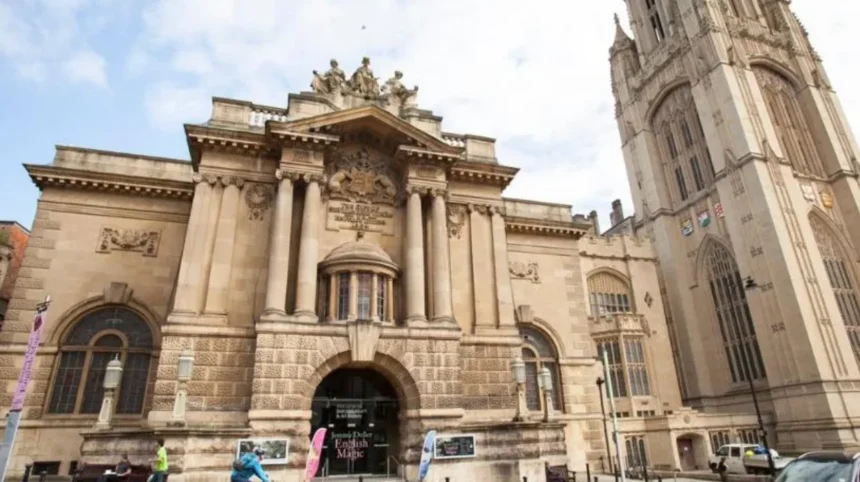
Bristol Museum & Art Gallery stands on Queens Road in Clifton. Its collections cover art, archaeology, geology, and natural history. Children can examine exhibits, ask questions about historical objects, and discover how scientific and artistic collections are organised.
General admission is free, and advance booking is not normally required for individual visitors. The museum’s usual opening hours are Tuesday to Sunday, 10am to 5pm, although families should check the official visitor information before travelling. The British and World Wildlife Galleries are scheduled to remain closed until summer 2027, according to the museum’s current visitor information.
A simple museum activity involves asking each child to choose one object and explain what it reveals about the past or natural world. This gives the visit a learning objective without requiring a paid tour.
M Shed
M Shed is a museum on Bristol’s Harbourside that explores the people, places, and events that shaped the city. Its collections help families understand Bristol’s industrial development, transport history, working communities, and changing waterfront.
The museum is especially useful for children studying local history at school. Families can connect the exhibits with the historic docks and buildings visible outside.
General museum admission is free, although special exhibitions and certain activities have separate conditions. Check the official Bristol Museums website for opening hours and family events.
Blaise Museum and its grounds
Blaise Museum is located within the Blaise Castle Estate in northwest Bristol. The museum explores domestic life, toys, clothing, and everyday objects from earlier periods. The surrounding estate provides additional outdoor space for family walks.
Families can combine a museum visit with time outside, making the estate useful for a longer day out. Check museum opening arrangements because the historic house and surrounding grounds do not necessarily follow identical schedules.
The Georgian House Museum
The Georgian House Museum introduces visitors to domestic life in an eighteenth-century Bristol townhouse. It also provides an opportunity to examine the city’s trading history and the connections between wealth, slavery, and the sugar trade.
Parents can explain historical events in age-appropriate language while encouraging children to consider whose experiences appear in historical records. The museum is free to enter during its opening periods, but seasonal closures apply. Verify current arrangements before visiting.

What free activities can families enjoy around Bristol Harbourside?
Bristol Harbourside offers a free waterfront outing with boat watching, public walking routes, historic dockside views, and opportunities to explore the city’s maritime heritage. Families can visit M Shed, walk beside the floating harbour, and observe historic waterfront features without booking a paid boat trip.
Bristol’s harbour developed through centuries of trade, shipbuilding, and transport. The modern waterfront combines historic infrastructure with public spaces, cultural venues, and pedestrian routes.
Walk beside the floating harbour
The floating harbour is a sheltered stretch of water running through central Bristol. Families can follow accessible sections of the waterfront and watch boats move through the docks.
Children can look for different vessel types, identify cranes, and observe how the waterfront is used today. Adults can explain the difference between a harbour designed for ships and an ordinary riverbank.
Walking costs nothing, but cafés, boat trips, and ticketed attractions around the harbour charge separately. Families who want to maintain a completely free day should bring water and snacks.
Discover the history of Bristol’s docks
Bristol’s docks played an important role in the city’s commercial history. The waterfront provides visible evidence of how maritime trade influenced buildings, employment, transport, and urban development.
Families can pair an outdoor walk with a free visit to M Shed. This creates a connection between the museum’s historical displays and the actual waterfront landscape.
Explore public art and waterfront landmarks
Harbourside walking routes also offer opportunities to notice public art, bridges, historic buildings, and changing views across the water.
Children can complete a free observation challenge by finding a bridge, a historic structure, a public artwork, and a vessel. This activity encourages careful observation without requiring an organised tour.
Parents should keep younger children close to the water’s edge and follow signs around working docks and restricted areas.
Where can children enjoy free playgrounds and outdoor games in Bristol?
Children can enjoy free outdoor play at Bristol parks with playgrounds, open lawns, and recreation facilities. St George Park is one documented option, with a playground, lake, and wheeled-sports area, while other neighbourhood parks provide different facilities.
Playgrounds provide opportunities for physical activity, imaginative play, and social interaction. They also allow families to plan shorter outings close to home rather than travelling across the city.
St George Park
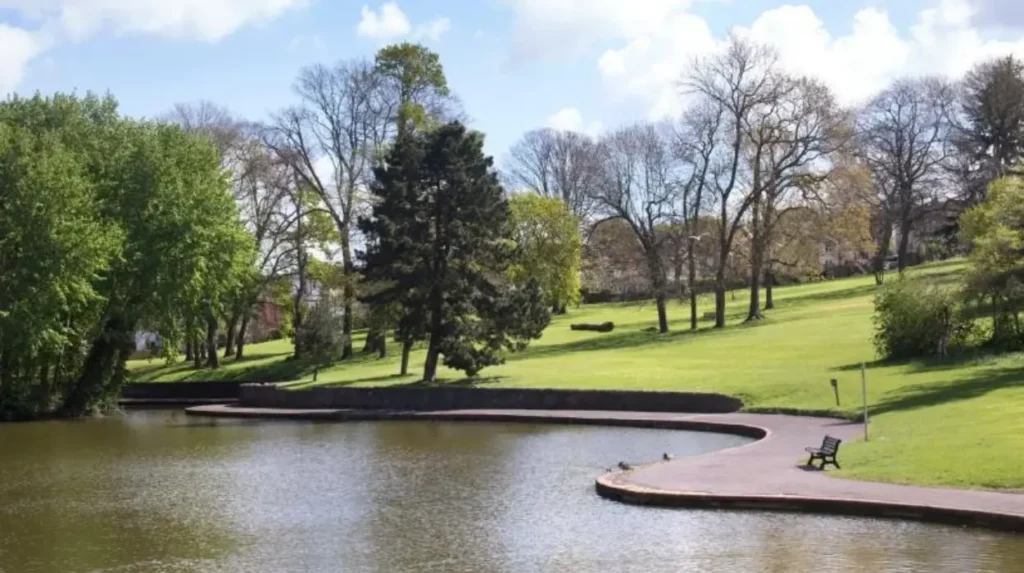
St George Park is in east Bristol, on Church Road. Bristol City Council confirms that admission is free and that the park includes a dog-free playground, a lake with ducks and swans, tennis courts, and a wheeled-sports area for activities such as skateboarding and scootering.
Families can combine playground time with a walk around the lake or an outdoor snack. Older children can use appropriate wheeled equipment where permitted, while younger children enjoy the playground.
Check current notices before travelling because facilities and parking arrangements change during maintenance works. The council’s park page provides updated visitor information.
Free games for parks and open spaces
Families do not need specialist equipment to enjoy an outdoor play session. Simple games include:
- Nature bingo, such as finding a leaf, a feather, or a pine cone.
- Follow-the-leader along a safe path.
- A colour hunt, such as finding five different shades of green.
- Ball games in designated open areas where play is permitted.
- A family walking challenge, such as counting benches or identifying trees.
These activities work particularly well for mixed-age families because adults can adjust the difficulty to suit each child.
Choosing a suitable playground
Parents should check whether a playground has age-appropriate equipment, accessible entrances, nearby toilets, seating, and enough space for supervision. A free park does not guarantee that every facility is available throughout the year.
Children should use equipment according to posted age and safety guidance. Wet surfaces, damaged equipment, and busy play areas require additional care.
Which free historic landmarks can families explore in Bristol?
Bristol’s free historic landmarks include Cabot Tower’s park setting, the public grounds around Clifton Suspension Bridge, and historic church exteriors and public spaces. These places introduce children to exploration, engineering, architecture, and Bristol’s development without requiring paid attraction admission.
Historic landmarks turn an ordinary walk into an introduction to the city’s past. Families can discuss why structures were built, how people travelled, and how Bristol’s geography influenced its development.
Clifton Suspension Bridge viewpoints
Clifton Suspension Bridge crosses the Avon Gorge and is one of Bristol’s best-known engineering landmarks. Families can view the bridge from public viewpoints and discuss how suspension bridges carry loads across wide gaps.
The bridge’s public surroundings provide opportunities for photographs and a short walk. The visitor centre and bridge access arrangements have their own opening information, so check current details before making specific plans.
A free visit can focus on the public viewpoints rather than paid experiences or guided activities.
Cabot Tower
Cabot Tower, on Brandon Hill, commemorates John Cabot’s voyage from Bristol in 1497. Families can explore the surrounding park and learn about the city’s role in maritime exploration.
The park visit is free. Access to the tower interior is separate and depends on opening arrangements, so confirm access before promising children a climb to the top.
Historic churches and architecture
Bristol’s historic churches, including Bristol Cathedral and St Mary Redcliffe Church, provide opportunities to examine architecture, stained glass, stonework, and religious history. Visitor access and worship schedules differ, so families should check the relevant official website before visiting the interiors.
Parents can ask children to notice architectural details such as arches, towers, carvings, and large windows. This turns a short city-centre walk into a free observation activity.
What free activities are available for babies, toddlers, and preschool children in Bristol?
Families with babies and preschool children can look for free library storytimes, baby bounce-and-rhyme sessions, children’s centre activities, and local play spaces. Bristol City Council identifies these as options for families with young children, with activities varying by venue and schedule.
Free indoor sessions are especially useful for families who need structured activities in a warm, supervised setting. They also give young children opportunities to hear stories, listen to music, move, and interact with others.
Library storytimes
Many Bristol libraries hold free activities for babies and young children. These include storytime sessions for children under five and baby bounce-and-rhyme activities designed for babies from birth to 18 months.
Storytime introduces children to books, spoken language, rhythm, and group listening. Parents can check the relevant library’s schedule because not every branch runs the same sessions every week.
Children’s centres
Children’s centres provide services and activities for families with young children. Depending on the centre and timetable, these can include early-years sessions and opportunities for parents and children to participate in organised activities.
Check eligibility, booking requirements, and session times directly with the relevant centre. A free session can still require advance registration or have limited places.
Low-cost planning without paid attractions
A toddler’s day does not need a large itinerary. Families can combine a library session, a nearby playground, and a walk through a local park.
For babies, plan around feeding, rest, changing facilities, and weather protection. For toddlers, shorter outings with regular breaks often make transport and supervision easier.
Where can families find free festivals and events in Bristol?
Families can find free events through Visit Bristol, Bristol Museums, and Bristol City Council. The city’s calendar includes community festivals, outdoor activities, museum family sessions, and neighbourhood events, although dates, availability, and admission conditions vary by programme.
Free events add variety to family days out because they offer activities that are not always available during ordinary opening hours. Some take place outdoors, while others use museums, libraries, and community venues.
Check the city events calendar
Visit Bristol maintains a dedicated page for free events. Families can use it to find events by date and identify activities that fit a particular weekend or school holiday.
The calendar has included events such as Bristol Walk Fest, Festival of Nature, Bristol Harbour Festival, and Bristol International Balloon Fiesta. These events are associated with different times of year, and individual activities can have separate charges or capacity restrictions.
Always check the current year’s programme rather than relying on a previous year’s dates.
Look for free museum family activities
Bristol Museums publishes a family-events calendar covering its museums and archives. The programme includes family activities, talks, workshops, and seasonal events.
Some events are free, while others require booking or payment. Read the individual event listing to confirm the cost, age range, time, and whether accompanying adults need tickets.
Explore neighbourhood arts and community events
Local arts trails and community festivals give families a chance to discover public art, local performers, and neighbourhood history. These activities also spread family outings beyond the main tourist areas.
A free event is particularly useful when families plan around a specific date. However, event transport, food, and optional attractions can still create costs, so check the full itinerary in advance.
How can families plan a completely free day out in Bristol?
Families can plan a free Bristol day out by combining public parks, walking routes, free museums, and packed meals. Choosing attractions in the same neighbourhood reduces transport costs, while checking opening times and accessibility details helps avoid unexpected expenses.
A successful free outing depends on selecting activities that fit the family’s available time, children’s ages, and travel arrangements. Bristol’s parks, museums, and waterfront spaces support several combinations.
A free half-day itinerary
Start with a walk through Castle Park, where children can see historic remains and enjoy the open space. Continue towards Bristol Harbourside and explore the waterfront before visiting M Shed, subject to opening hours.
This route combines outdoor recreation, local history, and a free museum visit. Families can finish with a packed lunch beside the harbour or in a suitable public green space.
A free full-day itinerary
Begin the morning at Brandon Hill and explore the park’s paths. Continue to Bristol Museum & Art Gallery during its opening hours for a free indoor activity.
After lunch, travel to the Harbourside for a waterfront walk and a visit to M Shed if time permits. Families should check museum closing times and travel distances before attempting both museums in one day.
For a nature-focused alternative, spend the morning at Leigh Woods and take an afternoon walk around Clifton’s public viewpoints. Check trail conditions and parking charges before travelling.
How can families avoid unexpected costs?
Families can keep the outing free by preparing a few essentials before leaving home:
- Pack food, snacks, and refillable water bottles.
- Use walking routes or check public transport fares in advance.
- Confirm whether an event, exhibition, or special activity requires payment.
- Check parking charges and any restrictions.
- Carry weather-appropriate clothing and essential supplies for young children.
These steps help distinguish genuinely free activities from outings that include optional paid services.
Which free family activities in Bristol are suitable for rainy days?
Free rainy-day activities in Bristol include visiting museums with free general admission, attending selected library sessions, and exploring indoor community activities. Bristol Museum & Art Gallery and M Shed offer indoor alternatives, while libraries provide scheduled activities for younger children.
Bristol’s changeable weather makes indoor alternatives useful when outdoor plans become impractical. Families should confirm opening hours and event availability before setting off.
Visit a free museum
Bristol Museum & Art Gallery offers indoor collections covering art, archaeology, geology, and natural history. M Shed focuses on the history of Bristol and its people.
Both museums have free general admission, although special exhibitions and some events require payment.
Attend a library activity
Library storytimes and baby bounce-and-rhyme sessions offer structured indoor activities for young children. Because sessions operate according to individual library timetables, check the local branch’s programme before travelling.
Combine indoor and outdoor activities
Light rain does not always prevent a short park walk. Families can visit a museum first and take a brief outdoor walk if conditions improve.
During heavy rain, strong winds, or severe weather warnings, choose indoor venues and check local travel information. Outdoor routes near rivers, wooded slopes, and exposed viewpoints require particular care.
How can families make free activities in Bristol accessible to different ages and abilities?
Families can select accessible activities by checking path surfaces, gradients, seating, toilets, transport connections, and venue facilities before travelling. Bristol’s parks and museums differ in accessibility, so checking individual visitor information helps families choose routes suited to their needs.
Accessibility affects how comfortably families can complete an outing. A park with steep paths presents different challenges from a level waterfront walk, while a museum offers shelter and places to rest.
For wheelchair users and pushchair users, check the terrain and entrances at each destination. Castle Park, for example, has steps in some areas, according to Bristol City Council.
Families visiting Leigh Woods should also review the available routes and facilities. The woodland contains a mix of surfaced and grassy paths, and access conditions differ by trail.
For children with sensory needs, quieter visiting times, predictable itineraries, and short breaks can make the experience more manageable. Museums and busy festivals have different sound levels and visitor volumes, so families should review venue information before arriving.
The most suitable free activity is one that matches the family’s actual requirements, rather than simply the number of attractions included in a day.
Explore More Area Guide
Outdoor Activities for Kids in Bristol: Best Parks and Adventures
Indoor Play Areas in Bristol: Soft Play and Kids’ Activities
Why are free family activities important for Bristol residents and visitors?
Free family activities give Bristol residents and visitors access to recreation, learning, nature, and cultural heritage without paying attraction admission. Parks, libraries, museums, and public walking routes support family participation across different budgets and help make city experiences more accessible.
Free public spaces provide opportunities for physical activity and outdoor play. Museums and historic landmarks support informal learning, while libraries encourage early literacy and shared reading.
These activities also give families alternatives during school holidays, weekends, and periods of rising household expenses. A local park visit does not require advance ticket purchases, and a free museum can provide an educational activity without an admission fee.
However, free admission does not eliminate every expense. Transport, parking, refreshments, and optional events can still cost money. Planning around nearby attractions and using public facilities helps families control the total cost.
For visitors, Bristol’s combination of parks, historic sites, waterfront paths, and free museums creates opportunities to understand the city without purchasing a ticket for every stop. For residents, these same spaces support regular outings throughout the year.
Where should families check official information before visiting Bristol attractions?
Families should check Bristol City Council for parks and museum information, Bristol Museums for opening hours and family events, and Visit Bristol for free attractions and event listings. Official pages provide current access details, booking conditions, and information about temporary closures.
Families should confirm details close to their visit because opening arrangements, maintenance work, event schedules, and access conditions change.
Bristol offers free family activities throughout the city, from parks and nature walks to museums, historic landmarks, and library sessions. By combining nearby attractions, packing refreshments, and checking official visitor information, families can plan enjoyable days out without paying attraction admission.
What are the best free family activities in Bristol?
The best free family activities in Bristol include exploring Brandon Hill, walking around Bristol Harbourside, visiting Bristol Museum & Art Gallery, discovering Castle Park, and enjoying nature at Leigh Woods.