Bristol is a major city in South West England and the largest city in the South West region. It combines a large employment base, two major universities, extensive green space, strong cultural institutions, historic neighbourhoods and direct connections across southern England. Its population was estimated at 495,300 in mid-2025, after growing by 9.6% between 2015 and 2025.
- Why do people choose to live in Bristol?
- What are the main advantages of living in Bristol?
- 1. Bristol has a diversified economy
- 2. The city has major universities
- 3. Bristol has extensive green space
- 4. Bristol has a strong cultural sector
- 5. Bristol offers neighbourhood variety
- 6. The city has a major harbourside
- Is Bristol a good place for jobs and careers?
- Is Bristol expensive to live in?
- Which housing options are available in Bristol?
- Is Bristol a good city for students?
- Is Bristol good for families?
- Is public transport good in Bristol?
- What are the disadvantages of driving in Bristol?
- Does Bristol have enough green space and outdoor facilities?
- What is Bristol’s cultural and social life like?
- Is Bristol a good place for professionals and young adults?
- Is Bristol suitable for people who do not own a car?
- What are the biggest disadvantages of living in Bristol?
- Who is Bristol best suited to?
- Is Bristol likely to remain a popular place to live?
- What should you consider before moving to Bristol?
Living in Bristol offers access to employment in aerospace, engineering, finance, technology, media, education and professional services. The city also has a strong student population. In 2024/25, 68,800 students were registered at Bristol’s two main universities.
The main disadvantages relate to housing costs, traffic congestion, public transport satisfaction, parking and pressure on infrastructure. Bristol’s average private rent reached £1,883 per month in August 2026, while the average house price was £352,000 in July 2026.
Understanding these advantages and disadvantages helps renters, buyers, students, families and professionals assess whether Bristol suits their circumstances.
Why do people choose to live in Bristol?
People choose Bristol for its diverse economy, universities, cultural institutions, green spaces, transport connections and neighbourhood variety. The city also offers access to employment, education and leisure within a large regional urban centre. Its population growth reflects continued demand for homes, jobs and services.
Bristol has developed into one of the UK’s major regional cities. It has a population of almost half a million within the local authority area.
The city has a varied economic base. Bristol City Council identifies aerospace and advanced engineering, finance and insurance, information and communication, and professional, scientific and technical activities as important sectors. Employment in professional, scientific and technical activities is 1.5 times more concentrated in Bristol than the national average.
Bristol also has a substantial higher education sector. The University of Bristol recorded 31,132 students and 9,055 staff in 2024/25. The university was founded in 1876 as University College, Bristol.
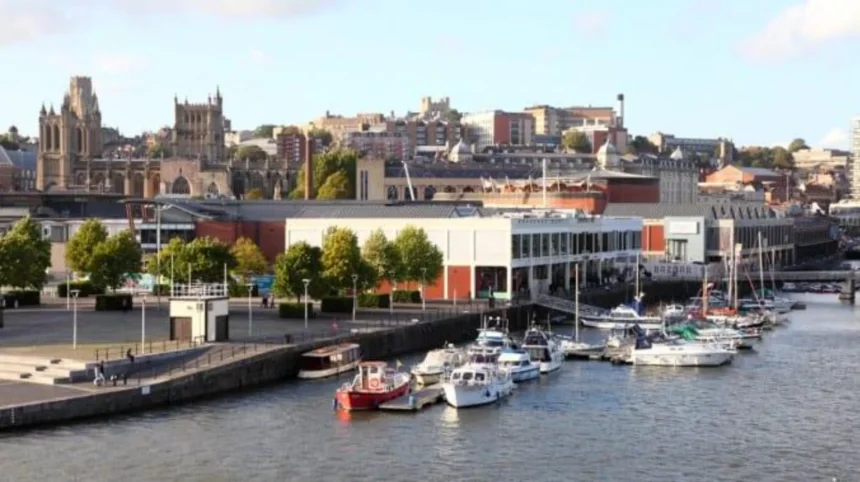
The city’s cultural infrastructure is another attraction. Bristol’s Harbourside contains museums, galleries, restaurants, performance spaces and historic maritime sites. These include M Shed, Arnolfini, Watershed, Bristol Aquarium and Brunel’s SS Great Britain.
Bristol also has more than 400 parks and gardens. This provides residents with access to urban green space across many neighbourhoods.
What are the main advantages of living in Bristol?
The main advantages of living in Bristol are its diversified employment base, strong universities, extensive green spaces, cultural attractions, neighbourhood choice and regional connections. These strengths support different lifestyles for students, professionals, families, entrepreneurs, homeowners and people seeking an active urban environment.
1. Bristol has a diversified economy
Bristol’s economy extends beyond a single industry. Aerospace and advanced engineering remain important because of the city’s long industrial and aviation history.
The economy also includes finance, insurance, information technology, communications, scientific services and creative industries. Information and communication output increased by 191% between 2011 and 2021, according to Bristol City Council’s economic strategy.
This diversity gives residents access to different employment sectors rather than relying on one dominant industry.
2. The city has major universities
Bristol has two main universities and a large student population. The University of Bristol and the University of the West of England contribute students, researchers, graduates and skilled workers to the local economy.
The University of Bristol alone had more than 31,000 students in 2024/25.
This creates demand for accommodation, hospitality, retail, professional services, education and technology.
3. Bristol has extensive green space
Green space is distributed across the city. Residents have access to parks, gardens, walking routes, nature areas and recreational spaces.
Bristol has more than 400 parks and gardens, according to Visit Bristol.
Neighbourhoods such as Clifton, Redland, Stoke Bishop, Bishopston, Henleaze, Southville and St George provide different combinations of residential streets and access to outdoor space.
4. Bristol has a strong cultural sector
Bristol is recognised internationally for film and television production. It is one of the world’s UNESCO Cities of Film.
The city has major creative organisations, including Aardman Animations and the BBC Natural History Unit. Bristol City Council states that film and television productions made in Bristol or at The Bottle Yard Studios generated an estimated £30 million for the local economy in 2023/24.
Residents therefore have access to cinemas, theatres, festivals, galleries, music venues, museums and creative events.
5. Bristol offers neighbourhood variety
Bristol does not have one uniform residential character.
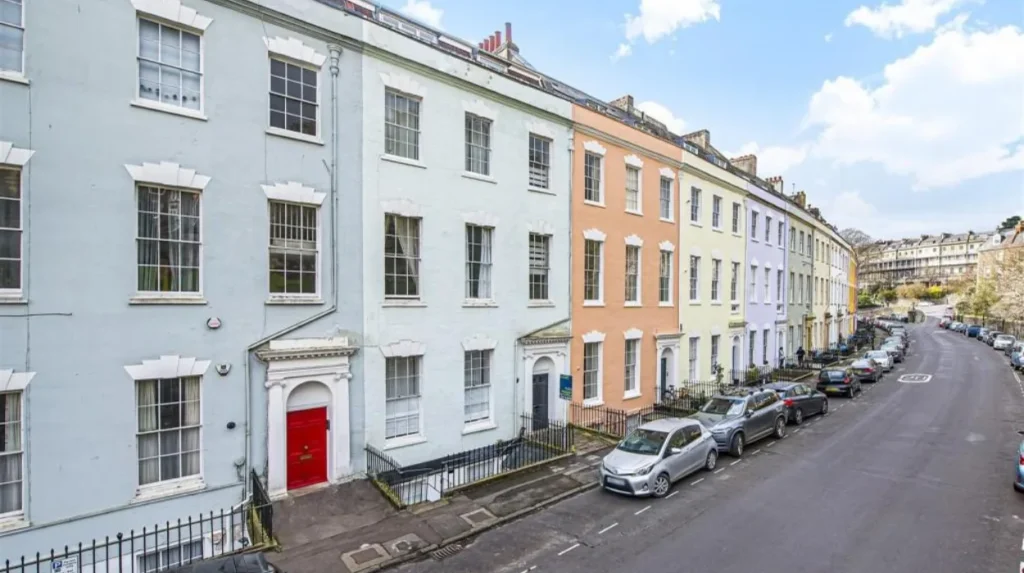
Clifton and Redland contain established residential streets and substantial period housing. Bishopston and Horfield provide access to Gloucester Road and nearby amenities. Southville and Bedminster sit south of the city centre. Easton and St George provide further residential options.
This variety allows residents to prioritise location, housing type, transport access, schools, nightlife, green space or proximity to employment.
6. The city has a major harbourside
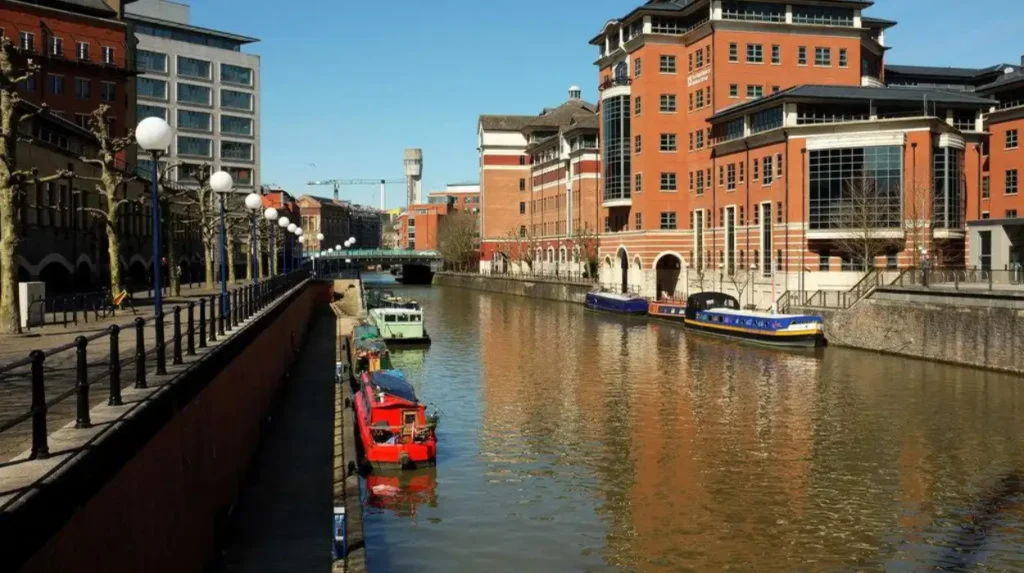
Bristol’s Harbourside is part of the city’s historic maritime landscape. The former dock area now contains restaurants, bars, museums, galleries, leisure facilities and public spaces.
The waterfront provides residents with walking routes and access to cultural attractions without travelling outside the city.
Is Bristol a good place for jobs and careers?
Bristol is a strong employment centre because its economy includes aerospace, advanced engineering, finance, insurance, information and communication, professional services, science and creative industries. Its sector diversity supports graduates, experienced professionals, entrepreneurs and specialist workers.
Bristol’s economic structure is one of its strongest advantages.
Aerospace and advanced engineering have long been associated with the city. Modern employment also extends into software, communications, financial services and professional occupations.
The information and communication sector is particularly significant. Bristol City Council recorded a 191% increase in economic output from this sector between 2011 and 2021.
Creative employment is also important. Bristol’s film and television sector includes production, animation, broadcasting and associated technical services.
The city also benefits from its universities. Higher education generates direct employment and supports research, innovation and graduate recruitment.
For professionals, Bristol therefore offers a broader employment base than many smaller South West towns.
The main employment disadvantage is competition. Population growth and a large graduate population increase demand for professional roles and housing.
Is Bristol expensive to live in?
Bristol is an expensive UK regional city, particularly for housing. In July 2026, the average house price was £352,000, while average private rent reached £1,883 per month in August 2026. Housing costs therefore represent one of the largest disadvantages for residents.
Housing costs vary considerably between neighbourhoods and property types.
The average Bristol house price was £352,000 in July 2026. Average prices included approximately £241,000 for flats and maisonettes, £384,000 for terraced homes, £447,000 for semi-detached homes and £689,000 for detached homes.
Private rental costs were also substantial. The average monthly rent was £1,883 in August 2026.
By bedroom count, average rents were:
- One bedroom: £1,225.
- Two bedrooms: £1,544.
- Three bedrooms: £1,759.
- Four or more bedrooms: £2,546.
Housing affordability is therefore a key consideration for anyone moving to Bristol.
The cost is particularly relevant for people relocating from smaller towns. Renters also need to account for deposits, utilities, council tax, transport and other household expenses.
Which housing options are available in Bristol?
Bristol offers flats, maisonettes, terraced houses, semi-detached homes, detached properties, converted buildings and purpose-built student accommodation. Housing type varies strongly between neighbourhoods, providing options for students, renters, first-time buyers, families and established homeowners.
The 2021 Census recorded 191,638 households in Bristol. Around 64.7% lived in houses or bungalows, while 35.2% lived in flats, including purpose-built flats, conversions and shared houses.
Central neighbourhoods contain a higher concentration of flats and converted properties.
Suburban areas contain more houses and family-oriented accommodation.
Student housing forms another important part of the market. Student accommodation is particularly concentrated around areas associated with the universities.
The housing structure means residents need to compare neighbourhoods rather than relying on a city-wide average.
Location affects rent, property size, transport access, parking availability and proximity to schools or workplaces.
Is Bristol a good city for students?
Bristol is a major student city with two principal universities, extensive student accommodation, strong cultural activity and established neighbourhoods around higher education campuses. Its large student population supports restaurants, cafés, entertainment, transport services and other facilities used by students.
Bristol’s two main universities registered 68,800 students collectively in 2024/25.
The University of Bristol is based around Clifton and central Bristol, while UWE Bristol has major facilities around Frenchay and other locations.
Student concentrations affect local housing demand.
The 2021 Census showed particularly high concentrations of students in Central, Stoke Bishop, Lawrence Hill and Clifton.
Students benefit from extensive hospitality, cultural and leisure infrastructure.
The disadvantage is housing competition. High demand for student accommodation also affects rental markets in popular areas.
Is Bristol good for families?
Bristol provides families with established residential neighbourhoods, parks, schools, community facilities, healthcare services and access to employment. Family suitability varies between areas because housing size, school access, parking, traffic levels and transport connections differ significantly across the city.
Family-oriented neighbourhood choices include areas such as Henleaze, Westbury-on-Trym, Stoke Bishop, Bishopston, Horfield, Redland, Brislington and parts of South Bristol.
Larger homes are generally more common away from the most central areas.
Green space is another advantage. Bristol’s network of more than 400 parks and gardens provides recreational options for families.
The main challenges include housing prices, commuting conditions and school catchment considerations.
Families therefore need to evaluate individual neighbourhoods rather than treating Bristol as one housing market.
Is public transport good in Bristol?
Bristol has an extensive bus network and growing active-travel infrastructure, but public transport remains a significant concern for residents. In 2024/25, 42% of residents were satisfied with local bus services, while 83% identified traffic congestion as a local problem.
Buses form the main public transport network within Bristol.
There were 39.7 million bus passenger journeys in 2024/25, compared with 37.2 million in 2023/24.
Bristol also has rail connections to destinations including Bath, Cardiff, London and other regional centres.
Active travel is increasingly important. Bristol recorded 3.2 million e-scooter and e-bike rental trips in 2024, according to the city’s 2025 Key Facts publication.
However, transport remains one of the city’s main disadvantages.
Average speed on Bristol’s local A roads was 15.7 mph in 2024, compared with an England average of 23.0 mph.
The city’s transport strategy includes further investment in rail, mass transit and active travel. The West of England has secured £800 million for new transport infrastructure and related improvements.
What are the disadvantages of driving in Bristol?
Driving in Bristol can be difficult because of congestion, limited parking, slow road speeds and the Clean Air Zone. Non-compliant vehicles entering the zone face daily charges. These conditions increase the importance of vehicle emissions, journey timing and neighbourhood transport access.
Bristol’s Clean Air Zone, known as a CAZ, began on 28 November 2022.
A Clean Air Zone is an area where vehicles that fail specified emissions standards face charges.
Bristol’s CAZ covers a relatively small central area. Non-compliant private cars generally face a £9 daily charge, while heavy goods vehicles and buses face higher charges.
Compliant Euro 4, Euro 5 and Euro 6 petrol vehicles, approximately vehicles manufactured from 2006 onwards, are not charged under the relevant standards. Euro 6 diesel vehicles, approximately vehicles from 2015 onwards, are also generally compliant.
Congestion presents a wider problem.
Bristol’s 2025 Key Facts report states that 83% of residents considered traffic congestion a problem in their area.
This makes journey planning important for commuters who depend on cars.
Does Bristol have enough green space and outdoor facilities?
Bristol has extensive green infrastructure, with more than 400 parks and gardens alongside walking routes, waterways, recreational areas and urban nature sites. Green space is distributed across the city, giving residents opportunities for exercise, leisure and outdoor activities close to residential areas.
The city’s green spaces range from large parks to smaller neighbourhood gardens.
Residents can access outdoor recreation in many parts of Bristol. Walking routes also connect central areas with the wider urban landscape.
The Harbourside provides traffic-free walking opportunities around parts of the waterfront. Bristol’s heritage walking routes also connect the Old City and historic areas.
The combination of parks and waterfront areas is particularly relevant for people who want an active lifestyle.
Green space also varies by neighbourhood. Some central areas have less private outdoor space, while suburban districts generally provide greater access to gardens and larger parks.
What is Bristol’s cultural and social life like?
Bristol has a large cultural sector supported by museums, galleries, cinemas, music venues, festivals, restaurants, historic sites and creative industries. The Harbourside, Old City, Clifton and other central districts provide concentrated cultural facilities alongside neighbourhood-based social venues.
The Harbourside is one of Bristol’s major cultural areas.
M Shed documents Bristol’s social and industrial history. Arnolfini hosts contemporary arts programming. Watershed combines cinema, events and cultural activities. Bristol Aquarium and SS Great Britain provide additional attractions.
The city also has an established film and television identity.
Bristol is one of 26 UNESCO Cities of Film worldwide. The designation recognises its film production, broadcasting, creative industries and moving-image culture.
This creates a substantial cultural ecosystem for residents rather than only visitors.
Is Bristol a good place for professionals and young adults?
Bristol suits many professionals because it combines a diverse employment base, universities, cultural facilities, restaurants, neighbourhood choice and regional transport links. The principal disadvantages for younger professionals are housing affordability, rental competition, commuting congestion and the cost of central living.
Young professionals often prioritise access to employment, social venues and public transport.
Neighbourhoods such as Clifton, Redland, Bishopston, Southville, Bedminster, Stokes Croft, Montpelier and parts of central Bristol provide different combinations of these features.
The city’s technology, professional services, creative and engineering sectors support a large skilled workforce.
Housing remains the major financial issue.
A monthly private rent of £1,883 across the city in August 2026 represents a substantial recurring cost.
Professionals therefore often balance commute time against rent.
Living farther from the centre can reduce housing costs while increasing travel requirements. Living centrally can reduce some journeys while increasing accommodation costs.
Is Bristol suitable for people who do not own a car?
Bristol is increasingly suitable for people without cars because buses, walking, cycling, rail services and shared micromobility provide alternatives. However, transport quality varies by neighbourhood, and congestion affects bus journeys. Car-free living is therefore easiest where homes are close to frequent public transport and local amenities.
Bristol has a substantial car-free population.
The city’s 2025 Key Facts report states that 26% of Bristol households had no car or van available, compared with 23% across England and Wales.
The proportion varies substantially between neighbourhoods.
Central areas generally have lower car ownership because residents have greater access to services and public transport.
Walking and cycling also form an important part of the city’s transport system. In 2024/25, 36% of residents travelled to work using active travel, including walking and cycling.
The strongest car-free locations are therefore those with reliable bus routes, nearby shops, workplaces, schools and other daily services.
What are the biggest disadvantages of living in Bristol?
The biggest disadvantages of living in Bristol are high housing costs, traffic congestion, public transport concerns, competition for accommodation, parking pressure and uneven access to services between neighbourhoods. These disadvantages are most significant for households with tight budgets or long daily commutes.
Housing is the clearest financial disadvantage.
The average Bristol house price was £352,000 in July 2026. Average private rent reached £1,883 in August 2026.
Transport is the second major issue.
Average A-road speeds were 15.7 mph in 2024. A large majority of residents identified congestion as a problem.
Public transport satisfaction also remains limited. Only 42% of residents were satisfied with local bus services in the 2024/25 quality-of-life survey.
Parking is another consideration, particularly in central and densely developed neighbourhoods.
The Clean Air Zone creates an additional consideration for owners of older, non-compliant vehicles.
These disadvantages do not apply equally across the city. Neighbourhood selection has a major effect on housing costs, transport requirements, parking and access to facilities.
Who is Bristol best suited to?
Bristol is particularly suited to professionals, students, graduates, families, entrepreneurs and people seeking a large regional city with strong employment and cultural infrastructure. Its suitability depends on housing budget, workplace location, transport needs and preferred neighbourhood environment.
Students benefit from major universities and extensive student infrastructure.
Professionals benefit from employment across technology, engineering, finance, professional services and creative industries.
Families benefit from residential neighbourhoods, parks, schools and community facilities.
Entrepreneurs benefit from a large urban population, universities and a diversified economy.
People who prioritise low housing costs face greater challenges.
Likewise, people who need fast car journeys during peak periods face the city’s congestion problems.
Explore More Area Guide
Bristol Relocation Guide: Moving, Housing, Jobs & Transport
Newcomer’s Guide to Bristol: Attractions, History and Travel
Is Bristol likely to remain a popular place to live?
Bristol is likely to remain an important residential and economic centre because its population, employment base, universities, cultural sector and transport infrastructure continue to support demand. The city is projected to reach 526,600 residents by 2032, increasing pressure for housing and services.
Bristol’s population was estimated at 495,300 in mid-2025.
Between 2015 and 2025, the population increased by approximately 43,500 people, representing 9.6% growth. Bristol City Council projects a population of 526,600 by 2032.
This growth creates opportunities and pressures.
Additional residents support local businesses, employment and services. At the same time, population growth increases demand for housing, transport, healthcare, education and public infrastructure.
Transport investment is therefore an important part of Bristol’s future.
The West of England has secured £800 million for rail infrastructure, mass transit and active travel improvements.
Future development will determine how effectively the city manages population growth.
What should you consider before moving to Bristol?
Before moving to Bristol, compare housing costs, workplace location, transport options, parking requirements, neighbourhood characteristics, schools and access to green space. A detailed neighbourhood comparison provides a more accurate assessment than using city-wide averages for housing or lifestyle.
Start with the cost of accommodation.
Use current local housing data rather than historic rental figures. Bristol’s average rent and house prices have continued to change, making recent ONS data the most useful starting point.
Next, calculate the actual commute.
A property with lower rent can involve longer travel times. Bristol’s congestion statistics make commute planning particularly important.
Check vehicle requirements if you drive.
Non-compliant vehicles entering the Clean Air Zone incur charges.
Finally, compare neighbourhood-level conditions.
Bristol contains central, suburban, student-focused, family-oriented and mixed residential districts. The right choice depends on employment location, budget, household size and preferred transport options.
Overall, the pros and cons of living in Bristol reflect the characteristics of a growing major UK city. Strong employment, universities, green spaces and cultural infrastructure are balanced by expensive housing, congestion and transport pressures. Bristol’s population growth and continuing investment indicate that these factors will remain central to the city’s residential future.
Is Bristol a good place to live?
Yes. Bristol is a major South West England city with a diverse economy, two major universities, extensive green space, cultural attractions and varied residential neighbourhoods. Its main disadvantages are high housing costs, traffic congestion and pressure on public transport.