Key Points:
- Major Safety Improvement: Latest applications made to Bristol City Council have revealed an elaborate plan that includes changing or upgrading 81 doors at the Bristol Hippodrome.
- Main Objective: The renovation of these doors aims to ensure that the building complies with the current fire safety standards and enhances the escape routes in case of emergencies.
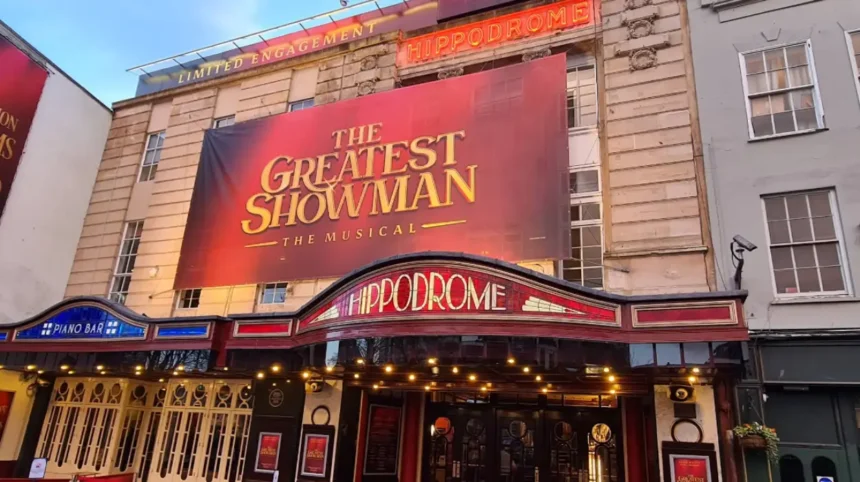
- Historical Background: This comes after other major plans made recently for this famous theatre situated at St Augustine’s Parade such as renovations of the auditorium and digital advertising around the building.
- Planning Situation: The application is still under consideration by either the planning officers or councillors in Bristol City Council.
Bristol (Bristol Express News) November 16, 2026 — As reported by Adam Postans of Bristol Live, a total of 81 doors at the Bristol Hippodrome will be changed or replaced to improve fire safety and exit routes, according to new plans recently submitted. The historic entertainment venue, situated in the heart of the city centre, has put forward the sweeping infrastructure changes to ensure compliance with strict building safety standards.
- Key Points:
- What Are the Specific Details Regarding the 81-Door Upgrade at Bristol Hippodrome?
- How Does This Infrastructure Project Fit Into Recent Developments at the Venue?
- What Process Will the Planning Application Follow Moving Forward?
- Background of the Particular Development
- How This Development Can Affect Theatregoers and Local Stakeholders
What Are the Specific Details Regarding the 81-Door Upgrade at Bristol Hippodrome?
As detailed by Adam Postans of Bristol Live, dozens of doors spanning the historic building will be either repaired or completely replaced. The initiative targets critical operational areas within the venue to upgrade fire safety compliance and streamline emergency evacuation pathways for large audiences attending packed West End touring productions and seasonal performances.
As noted in the planning documents lodged with the local authority, local planning authorities regularly process weekly batches of development submissions. However, this safety-critical application stands out due to the sheer scale of the building alterations required for a major public assembly venue.
How Does This Infrastructure Project Fit Into Recent Developments at the Venue?
The door replacement application comes on the heels of several other major proposals put forward for the St Augustine’s Parade theatre over recent months. As covered previously by Anna Davies and Adam Postans of the Local Democracy Reporting Service (LDRS) via Hits Radio Bristol, venue operators Ambassador Theatre Group (ATG) sparked intense heritage debates earlier in the year when they proposed replacing traditional printed advertising banners on the facade with modern digital display screens.
Furthermore, as outlined by Adam Postans of Bristol Live, separate planning proposals were submitted seeking listed building consent to give the Hippodrome’s auditorium, entrance stairway, and Piano Bar a major visual refresh. Those plans highlighted a transition from heavy traditional red colour schemes towards softer gold aesthetics while preserving the building’s historic unpainted finishes and marble structures.
What Process Will the Planning Application Follow Moving Forward?
As explained by Adam Postans of Bristol Live, the majority of routine planning applications submitted to Bristol City Council are determined by professional planning officers acting under delegated powers. Nevertheless, due to the high-profile nature and listed status of the Edwardian theatre, applications of this magnitude can occasionally be elevated for debate and final determination by elected councillors sitting on municipal planning committees.
As of reporting, no specific determination date has been formally published on the Bristol City Council online planning portal, leaving the timeline for the fire door overhaul subject to council review.
Explore More Local Bristol News
Michelin-Starred Kitchen Left Ankle-Deep in Water Following Bristol Flood
Student Flat Developers Urge Bristol City Council Planning Relief Bristol 2026
Background of the Particular Development
The Bristol Hippodrome, originally designed by renowned theatre architect Frank Matcham and opened in December 1912, has long stood as one of the UK’s premier touring venues outside London. Over more than a century of continuous operation, the Grade II listed building has undergone multiple structural updates, interior refurbishments, and backstage modernisations to keep pace with evolving entertainment standards and increasingly rigorous public safety legislation. Modern regulatory frameworks governing historic public assembly buildings demand rigorous adherence to fire safety codes, compartmentation standards, and rapid evacuation capacities. Consequently, venue operators routinely execute large-scale maintenance and remediation projects—such as upgrading dozens of fire doors simultaneously—to protect millions of visiting patrons, touring cast members, and theatre staff.
How This Development Can Affect Theatregoers and Local Stakeholders
The extensive door replacement project is anticipated to cause minimal disruption to patrons while delivering long-term resilience for Bristol’s cultural sector. Because major West End tours and seasonal festive pantomimes draw near-capacity crowds numbering in the thousands, enhancing exit route efficiency directly reinforces spectator safety during peak showtimes. While short-term access adjustments may occur during execution phases, the infrastructure investment ensures that the historic venue remains fully compliant, legally secure, and operationally capable of hosting major national productions for years to come.