Key Points
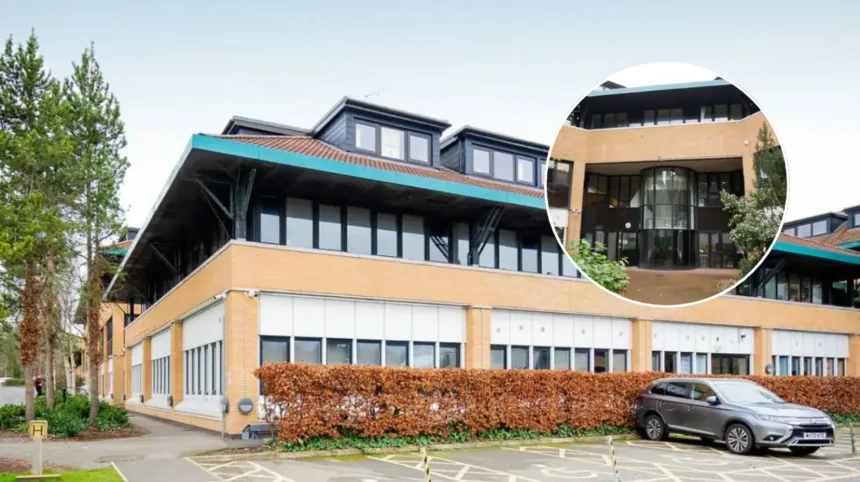
- According to Alex Seabrook of Bristol Live, the tiny flats in the Imperial Apartments office block in South Bristol will continue to accommodate homeless people for at least another five years.
- The tenants have complained about a lot of problems, such as cockroaches, drug dealing, burglary, noise, violence, and a dangerous pathway to the building.
- At the beginning of the year, the tenants were living with their baths, toilets, and sinks full of raw sewage, which caused the property management company Caridon to make an apology.
- The Labour Councillor Paul Goggin criticized the use of the office block for the purpose, saying that the council could not just keep renewing the contract.
- However, the council housing options managers argued that there was a housing emergency in the area and only these options existed for homeless people.
Bristol (Bristol Express News) November 9, 2026 — Tenants residing in tiny flats converted from an old South Bristol office block face prolonged stays amid severe living condition concerns, as a controversial housing deal has been extended for another five years. Despite widespread reports linking the property to anti-social behaviour, crime, and maintenance failures, local authorities maintain that limited emergency housing alternatives necessitate the continued placement of vulnerable residents at the site.
What Are the Main Issues Reported at Imperial Apartments in Bristol?
According to Alex Seabrook of Bristol Live, the notorious Imperial Apartments situated between Hartcliffe and Hengrove have drawn intense scrutiny over living standards. Tenants living within the compact converted spaces have encountered major problems involving cockroaches, drug-dealing, theft, persistent noise, and violence.
Further compounding tenant distress, structural and maintenance issues have repeatedly surfaced. As detailed by Alex Seabrook of Bristol Live, a ceiling leak in a tenant’s daughter’s room that began in June took six months to finally be resolved by Caridon, only to start leaking again in October. Additionally, earlier in the year, raw sewage backed up to fill baths, toilets, and sinks across several apartments, an incident for which Caridon issued an apology. Access to the building has also presented hazards, with a dark approach path described by local councillors as “treacherous” alongside associated reports of attempted thefts.
Explore More Local Bristol News
Bristol’s First Female Doctor Honoured by the University of Bristol
Bristol Zoo Clifton Site Remains in Limbo Amid Redevelopment Delays 2026
Why Is the Council Extending the Housing Deal Despite Complaints?
The initial five-year placement contract, which commenced in 2021, has now been cleared for a five-year extension, meaning people will continue living in the block for years to come. Local authorities defend the arrangement by pointing toward an acute housing crisis. Housing options managers meet on a monthly basis with Caridon’s regional manager to discuss ongoing complaints and operational issues.
However, the decision has met political pushback within local governance. As reported by Alex Seabrook of Bristol Live, Labour Councillor Paul Goggin stated:
“I would hope that we’re doing our best to find something better for our tenants and ourselves to use. We can’t just keep extending contracts on and on and on because ‘it’s there and we can’t find anything else’. We have to find something else.”
Addressing the rationale behind the controversial continuation, council representatives highlighted the broader systemic landscape. As noted via Alex Seabrook of Bristol Live, a council spokesperson explained:
“Within the context of a housing emergency, where we have very limited options for people to move on from homelessness, I do think it’s right that we continue to use this as an option for some people for whom it suits. And that’s by no means everyone.”
Background of the Particular Development
The Imperial Apartments development originated as a conversion project transforming an old South Bristol office block into residential units intended to tackle acute local housing shortages. Initiated with an initial five-year framework in 2021, the property was integrated into the local authority’s emergency housing pathways to accommodate individuals experiencing homelessness. Over the years, the high-density nature of the accommodation, coupled with private management under Caridon, drew persistent media and public attention regarding the suitability of office-to-residential conversions for long-term social housing, especially concerning space standards, infrastructure durability, and community safety management.
The extension of the Imperial Apartments contract for another five years is likely to maintain intense public and political pressure on Bristol City Council regarding urban regeneration standards and tenant rights. For the particular audience—comprising homeless individuals and low-income tenants relying on emergency council placements—this development ensures a continued, albeit controversial, safety net against immediate street homelessness while simultaneously exposing them to prolonged substandard living conditions, maintenance delays, and security risks. Over the medium term, this reliance may constrain political momentum for alternative, higher-quality social housing developments, keeping vulnerable communities concentrated in environments facing systemic infrastructural challenges.