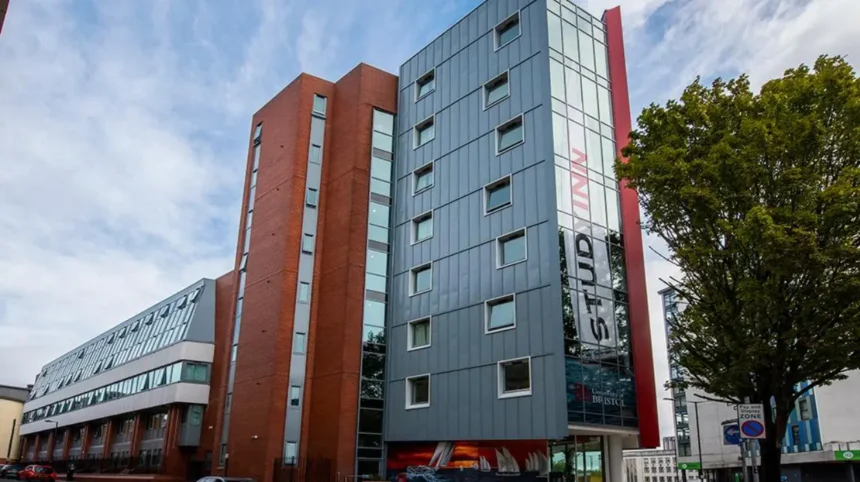
Bristol is one of the United Kingdom’s major university cities, with a large student population, two major universities, extensive private rental housing, university-managed residences and purpose-built student accommodation. Student accommodation in Bristol ranges from traditional halls and shared houses to en-suite rooms, studios and modern city-centre residences.
- What types of student accommodation are available in Bristol?
- Where are the main areas for student accommodation in Bristol?
- How much does student accommodation in Bristol cost?
- How do university halls and private student housing differ?
- What should students check before signing a Bristol accommodation contract?
- What are the HMO rules for student housing in Bristol?
- How does location affect student accommodation in Bristol?
- How can students find suitable accommodation in Bristol?
- What should a realistic Bristol student accommodation budget include?
- How is Bristol student accommodation changing in the future?
The city’s accommodation market is closely connected to the University of Bristol and the University of the West of England (UWE Bristol). The University of Bristol operates accommodation across areas including Clifton, Stoke Bishop, the city centre and the harbourside. UWE Bristol also provides accommodation and guidance for students moving into Bristol’s private rental sector.
Choosing student accommodation involves more than comparing weekly rent. Students need to consider location, tenancy length, transport, bills, room type, communal facilities, deposits, landlord responsibilities, licensing requirements and access to university campuses.
Bristol’s geography also affects accommodation decisions. The University of Bristol’s historic Clifton campus sits close to central Bristol, while its Temple Quarter Enterprise Campus provides a major academic base closer to the city centre. UWE Bristol has major facilities at Frenchay, making location particularly important for students attending different institutions.
The following guide explains how student accommodation in Bristol works, what accommodation types are available, which areas are commonly associated with student housing, how much university accommodation costs, and what legal and practical issues students need to understand.
What types of student accommodation are available in Bristol?
Student accommodation in Bristol includes university halls, purpose-built student accommodation, private shared houses, flats, studios and rooms in privately rented homes. Examples include Wills Hall, Unite House, private HMOs and en-suite city-centre residences.
University accommodation is housing owned or managed by a university for students. The University of Bristol provides a wide range of residences with different room types, locations, catering arrangements and tenancy lengths. Its current residence list includes Wills Hall, Clifton Hill House, Manor Hall, University Hall, Unite House, Orchard Heights, Print Hall and other properties.
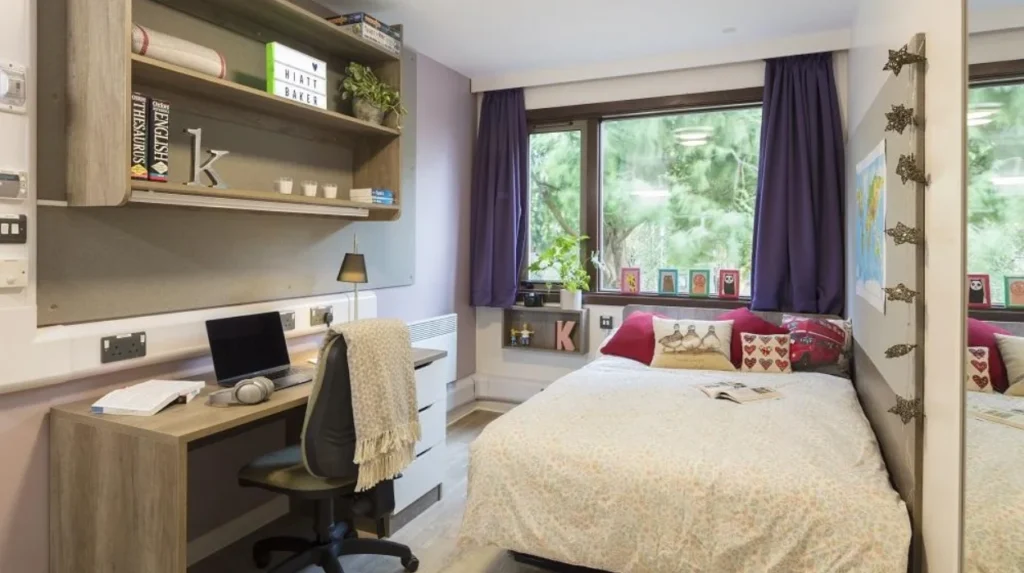
University halls traditionally provide individual bedrooms with shared facilities. Some residences have shared bathrooms and kitchens, while newer properties commonly provide en-suite bedrooms and shared kitchen-diners.
Purpose-built student accommodation, often abbreviated to PBSA, is accommodation specifically designed for students. PBSA developments typically provide private bedrooms, shared kitchens, study areas, social spaces, laundry facilities and internet access. Some properties provide studios with private kitchens.
Private rented accommodation is another major part of Bristol’s student housing market. Students commonly rent bedrooms in shared houses known as Houses in Multiple Occupation, or HMOs. Bristol City Council defines an HMO as a property where at least three tenants from more than one household live together and share facilities such as a kitchen, bathroom or toilet.
Shared houses can provide more independence than university halls. Students normally sign tenancy agreements with a private landlord or letting agent. The household shares communal spaces such as kitchens, living rooms and gardens.
Private flats provide another option. Students can rent an entire flat with friends or choose individual rooms in larger developments. Studios provide greater privacy because sleeping, living and cooking facilities are generally contained within one private unit.
The accommodation type therefore affects privacy, cost, social interaction, tenancy structure and the responsibilities of the student.
Where are the main areas for student accommodation in Bristol?
Major student accommodation areas include Clifton, Redland, Cotham, Stokes Croft, the city centre, Stoke Bishop, Redcliffe, Bedminster, Fishponds, Horfield and areas around UWE Bristol’s Frenchay campus.
Clifton is strongly associated with the University of Bristol because the university’s main historic campus is located there. The Clifton campus combines Victorian villas, historic university buildings and modern academic facilities. The Wills Memorial Building and Royal Fort Gardens are prominent parts of the campus environment.
Stoke Bishop is another important student residential area. University of Bristol residences in Stoke Bishop include Wills Hall, University Hall and Badock Hall. These residences provide direct university-managed accommodation outside the central campus area.
Redland and Cotham provide established residential environments between the University of Bristol campus and wider north Bristol neighbourhoods. Their proximity to Clifton makes them relevant to students who prefer private rented housing rather than university halls.
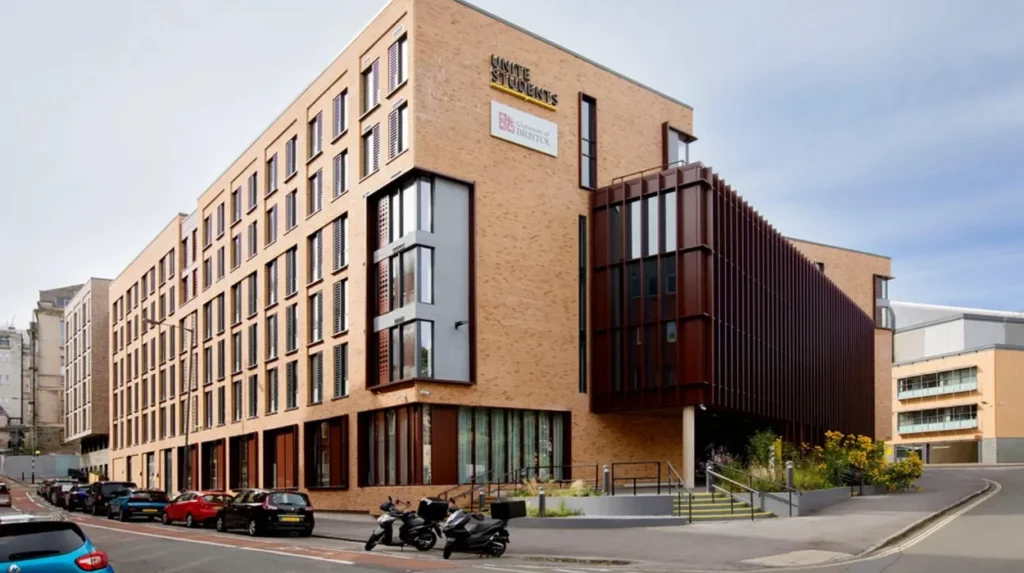
The city centre and harbourside provide newer accommodation options. University of Bristol residences including Unite House, Orchard Heights, Marketgate and The Courtrooms are located within the central Bristol and harbourside area. These residences offer comparatively direct access to central amenities and university facilities.
Stokes Croft and surrounding central districts are also close to city-centre facilities. Students choosing these locations need to assess noise, transport connections and walking distances alongside rent.
Bedminster provides accommodation south of the city centre. It is connected to central Bristol by public transport and road routes. The area is also covered by specific property licensing arrangements, which are relevant when evaluating private rented housing.
Horfield, Fishponds and other eastern and northern districts provide additional private housing options. The University of Bristol specifically advises students to consider areas beyond the immediate central neighbourhoods because private accommodation availability extends into Bristol’s suburbs.
Students attending UWE Bristol often consider locations connected to the Frenchay campus. UWE states that private accommodation is a popular alternative to university-managed housing and provides advice about finding and evaluating private rented properties.
Location should therefore be assessed according to the student’s campus rather than simply by proximity to Bristol city centre.
How much does student accommodation in Bristol cost?
Student accommodation costs vary by residence, room type, catering, tenancy length and location. University of Bristol 2026/27 prices range from about £136.50 weekly for some basic rooms to more than £330 weekly for some studios.
The University of Bristol publishes accommodation prices for the 2026/27 academic year. Its published rates demonstrate the substantial variation between room types and residences. Some basic rooms cost less than £150 per week, while modern en-suite rooms and studios can exceed £250 per week.
For example, Manor Hall lists some undergraduate single rooms from £148.26 per week, while some rooms in the same residence cost more than £230 per week depending on the building and specification. A studio at Manor Hall is listed at £285.46 per week for the 2026/27 academic year.
Clifton Hill House provides another example of price variation. Its 2026/27 accommodation includes a basic catered single room at £150.64 per week, while some standard and standard-plus rooms cost more than £200 per week.
Central accommodation can also command higher prices. Unite House lists 2026/27 undergraduate accommodation at £196 per week for a standard single room, £246.40 for an en-suite room and £316.68 for a studio.
Orchard Heights lists standard en-suite accommodation at £250.60 per week and postgraduate studios at £336 per week for the 2026/27 academic year.
Catering creates another cost category. The University of Bristol states that catered accommodation requires an additional £2,731.06 per year, equivalent to around £72 per week, for two meals each day during term time.
Students comparing accommodation therefore need to compare the total tenancy cost rather than only the weekly headline figure.
A £200 weekly room over a 38-week tenancy produces a basic accommodation cost of £7,600. A £250 weekly room over 42 weeks produces £10,500. These calculations demonstrate why tenancy length is important when comparing properties.
Private rented accommodation follows a different pricing structure. Rent is normally quoted per room or per property and can exclude utilities. Students need to establish whether gas, electricity, water, broadband and other services are included.
The total housing budget should therefore include rent, utilities, food, transport, insurance, deposits and other household expenses.
How do university halls and private student housing differ?
University halls provide institution-managed accommodation with established student support, while private housing provides greater choice across Bristol. Examples include university residences such as Wills Hall and private HMOs managed by landlords or letting agents.
University accommodation is normally integrated into the university’s student support system. The University of Bristol provides guidance on accommodation, tenancy management, repairs, residence-specific facilities and student support.
University residences also differ significantly from one another. Wills Hall in Stoke Bishop provides 346 places and offers catered and self-catered accommodation. Its 2026/27 basic twin room is listed at £140 per week for a 38-week undergraduate tenancy, excluding catering costs.
Some university accommodation provides shared bathrooms and kitchens. Other residences provide en-suite bedrooms. The number of students sharing facilities also differs between buildings.
Private rented accommodation gives students access to a wider geographic area. The University of Bristol provides dedicated guidance on finding private accommodation, renting costs, tenancy agreements, guarantors and deposit issues.
Private accommodation is especially important after the first year for students who want to live with selected housemates. UWE Bristol states that many students choose private rented accommodation as an alternative to university-managed housing.
Private renting also creates additional responsibilities. Students need to inspect the property, understand the tenancy agreement, check landlord or agent details, establish bill arrangements and verify applicable property licensing.
University accommodation generally offers a more standardised management structure. Private housing varies according to the landlord, agent, property condition and contract.
Neither model has identical costs or facilities. A private room with shared facilities can have a lower headline rent than a central en-suite room, but utility bills and transport costs can alter the overall budget.
Students should therefore compare accommodation on total annual cost, location, facilities, contract length and management arrangements.
What should students check before signing a Bristol accommodation contract?
Students should check rent, tenancy length, deposit, bills, cancellation rules, repair responsibilities, room condition, guarantor requirements and licensing before signing. The written agreement should clearly identify the accommodation, payment obligations and relevant tenancy terms.
The legal framework for student renting in England has changed significantly. The Renters’ Rights Act introduced important changes to private renting in 2026, including changes to assured tenancy arrangements and stronger enforcement powers for local councils. Bristol City Council specifically notes that student renting arrangements can differ according to the type of accommodation and who provides it.
Students should read the contract before paying money. The agreement should identify the landlord or provider, rent, tenancy period, responsibilities, notice requirements and other relevant conditions.
Deposits are also regulated. Current government guidance states that where annual rent is below £50,000, a tenancy deposit is generally capped at five weeks’ rent. Where annual rent is between £50,000 and £100,000, the maximum is six weeks’ rent. Deposits must be protected through a government-approved tenancy deposit protection scheme where the rules apply.
A holding deposit is different from a tenancy deposit. The maximum holding deposit is one week’s rent. Government guidance also specifies rules governing when a holding deposit must be returned or can be retained.
Students should establish whether rent includes utilities. A property advertised at a lower weekly rent can have higher total costs if electricity, gas, water and broadband are charged separately.
Guarantors are another important consideration. A guarantor is a person who agrees to meet specified financial obligations if the tenant fails to do so. Students without a UK-based guarantor should ask the accommodation provider about alternative arrangements before committing.
Room condition should be documented when moving in. Photographs and written records can provide evidence about existing damage or defects.
Students should also check fire safety, locks, windows, heating, hot water, kitchen appliances and communal areas.
The contract should also be checked for rules covering guests, smoking, pets, subletting, cleaning, noise, parking and communal facilities.
These checks reduce the risk of unexpected costs and disputes.
What are the HMO rules for student housing in Bristol?
Bristol regulates many shared student properties through House in Multiple Occupation licensing. Mandatory licensing generally applies to properties housing five or more people from two or more households who share facilities, with additional licensing covering smaller HMOs.
An HMO is a central concept in Bristol’s private student housing market. Bristol City Council defines an HMO as a property occupied by at least three tenants forming more than one household who share facilities such as bathrooms, toilets or kitchens.
Mandatory HMO licensing applies to properties meeting specific national criteria. Bristol City Council states that a mandatory licence is required where five or more people from two or more households occupy the property and share facilities.
Bristol also operates additional licensing schemes. A citywide additional HMO licensing scheme came into effect on 6 August 2024. It covers many HMOs that are not already subject to mandatory licensing or other additional licensing arrangements.
Students should therefore check whether a shared property requires a licence before signing a contract.
Bristol City Council maintains a public register of licensed properties. The register includes landlord and managing-agent information and the permitted number of occupiers for licensed HMOs.
Property standards cover important areas such as room sizes, amenities and fire safety. Bristol City Council publishes specific HMO standards and conditions for licensed properties.
Planning controls also affect student housing. Article 4 Directions remove certain permitted development rights in designated areas. Bristol has Article 4 controls affecting HMO changes of use in several parts of the city. Further directions covering areas including Brislington, Frome Vale, Purdown, Southmead and Horfield, St George and Westbury Park take effect from 1 January 2027.
Planning permission and HMO licensing are separate matters. A property can require planning permission and an HMO licence depending on its circumstances.
Students do not normally apply for HMO licences themselves. The responsibility generally sits with the landlord or property operator. However, students should verify licensing status when evaluating private accommodation.
The licensing framework is important because it connects student housing with minimum standards, permitted occupancy and local housing management.
How does location affect student accommodation in Bristol?
Location affects accommodation costs, commuting time, transport spending, access to university facilities and daily convenience. Students at Clifton and Temple Quarter have different housing priorities from students attending UWE Bristol’s Frenchay campus.
Bristol is geographically compact in some central areas but contains substantial suburban districts. Accommodation location therefore directly affects a student’s daily travel pattern.
University of Bristol students studying on the Clifton campus often prioritise Clifton, Redland, Cotham, central Bristol and nearby neighbourhoods. The university describes the Clifton campus as an integrated urban campus containing historic buildings, modern facilities and student spaces.
Students using the Temple Quarter campus have different location considerations. Central accommodation can provide convenient access to Temple Quarter and other city-centre facilities.
The University of Bristol publishes residence-specific travel information. For example, Unite House is listed as approximately 15 minutes on foot from Clifton Campus and 30 minutes from Temple Quarter Campus.
Accommodation at Thirty-Three on Colston Street is also listed as approximately 15 minutes from Clifton Campus and 30 minutes from Temple Quarter Campus on foot.
Stoke Bishop residences provide a different living environment. Wills Hall is listed as approximately 40 minutes on foot from Clifton Campus and 80 minutes from Temple Quarter Campus, demonstrating the importance of transport planning when choosing accommodation.
Students at UWE Bristol need to prioritise access to their specific teaching location. UWE identifies Frenchay as a major student accommodation and campus consideration and advises students to investigate private housing when university-managed accommodation is unsuitable.
Transport costs should be included in accommodation comparisons. A cheaper room farther from campus can produce higher bus, cycling or other travel costs.
Walking and cycling also influence the practical value of a location. Bristol has significant cycling infrastructure and many students use bicycles for university travel.
Location also affects access to supermarkets, libraries, healthcare services, restaurants, parks and social facilities.
The correct accommodation location is therefore the one that provides an appropriate balance between rent, travel time, transport cost and access to daily services.
How can students find suitable accommodation in Bristol?
Students can find accommodation through university housing services, private rental platforms, letting agents, recognised student accommodation providers and local housing resources. The search should begin early and include several Bristol neighbourhoods rather than one location.
The University of Bristol provides dedicated resources for finding university accommodation and private rented housing. Its private accommodation service covers available rooms, renting costs, tenancy terms and guarantor information.
UWE Bristol also provides private accommodation guidance. The university explains that many students use private rented housing and provides information about where to search and what to consider when selecting a property.
Students seeking university accommodation should follow their institution’s application process. Availability, eligibility, application deadlines and allocation procedures vary according to university policy and student status.
Private accommodation requires a more independent search. Students should compare room size, shared facilities, location, rent, tenancy length and bill arrangements.
Searching across several neighbourhoods increases the number of available options. The University of Bristol specifically advises students to consider areas in and around Bristol, including suburbs, when looking for private accommodation.
Students should also distinguish between individual-room listings and whole-property listings. A four-bedroom house advertised through an agency can be intended for a complete group rather than individual applicants. UWE highlights this distinction in its private accommodation guidance.
Viewing a property is important when practical. Students should inspect communal areas, bedrooms, bathrooms, kitchens, windows, heating and security.
For remote applicants, students should request detailed photographs, floor plans, contract information and confirmation of who manages the property.
The landlord or agent should provide clear information about rent and permitted payments. Current government rules regulate deposits, holding deposits and other tenant payments under the Tenant Fees Act framework.
Students should keep copies of contracts, receipts, inventory documents and correspondence.
A systematic search process reduces accommodation risks and helps students compare properties using consistent criteria.
Explore More Area Guide
New Build Developments in Bristol: Homes, Areas and Projects 2026
Luxury Areas in Bristol: Clifton, Redland & More 2026
What should a realistic Bristol student accommodation budget include?
A realistic student housing budget should include rent, utilities, food, transport, deposits, insurance, laundry, internet costs and household expenses. University accommodation prices often exclude some living costs, while private rentals frequently separate rent from household bills.
Rent is the largest accommodation expense for most students. University of Bristol 2026/27 residence prices show that weekly costs vary substantially by property, room type and tenancy length.
Utilities represent an important difference between accommodation contracts. Some purpose-built student accommodation packages include utilities, while private rented houses often require students to arrange gas, electricity, water and broadband separately.
Food costs also vary according to accommodation type. Catered university accommodation includes defined meal provision, while self-catered accommodation requires students to purchase and prepare food independently.
The University of Bristol’s catered accommodation charge for 2026/27 is £2,731.06 per year for two meals each day during term time.
Deposits create an initial cash requirement. Under current government rules, the maximum tenancy deposit is generally five weeks’ rent for properties with annual rent below £50,000.
Students should also budget for household items. These include bedding, kitchen equipment, cleaning products and basic storage.
Transport expenses depend on accommodation location. A student living within walking distance of campus has different transport costs from someone living in an outer Bristol neighbourhood.
Laundry costs should also be considered where accommodation provides paid laundry facilities. Several University of Bristol residences list laundry facilities as an accommodation feature, with additional charges applying in relevant residences.
Insurance requirements depend on the accommodation provider and the student’s circumstances. Students should check what is included in the accommodation contract and what personal belongings require separate cover.
The most useful comparison is therefore the total cost of living rather than rent alone.
How is Bristol student accommodation changing in the future?
Bristol student accommodation is being shaped by university expansion, city-centre development, private rental regulation, HMO licensing, new planning policies and demand for modern housing. Future accommodation will increasingly reflect location, affordability, sustainability and regulatory requirements.
Bristol continues to develop its higher education infrastructure. The University of Bristol’s Clifton campus combines historic university buildings with major modern facilities, while Temple Quarter represents an important expansion of the university’s urban academic presence.
Accommodation demand is therefore connected to academic development and the distribution of university facilities.
The private rental market is also affected by regulation. Bristol’s additional HMO licensing scheme has expanded regulatory coverage, while planning controls influence the creation and conversion of student housing in designated areas.
The city’s approach to housing management is therefore relevant to students as well as landlords.
The Renters’ Rights Act has introduced further changes to private renting in England during 2026. Bristol City Council notes that some student accommodation arrangements are treated differently depending on the accommodation type, tenancy structure and whether the property is occupied exclusively by full-time students.
New accommodation is also increasingly focused on en-suite bedrooms, shared study areas, social spaces, digital connectivity and modern communal facilities. University of Bristol residences such as Marketgate and The Courtrooms illustrate this trend through en-suite accommodation and dedicated study and social facilities.
Affordability remains central to accommodation decisions. University residence prices demonstrate a wide gap between basic rooms, en-suite accommodation and private studios.
Future student accommodation decisions will therefore depend on more than bedroom availability. Students will continue to compare total costs, campus access, tenancy structures, facilities and legal protections.
Bristol’s student housing market is consequently connected to the wider city’s planning, higher education and private rental systems.
Understanding those systems gives students a stronger basis for choosing accommodation that fits their academic location, financial resources and required level of independence.
What types of student accommodation are available in Bristol?
Bristol offers university halls, purpose-built student accommodation, private shared houses, HMOs, flats, en-suite rooms and private studios. University of Bristol and UWE Bristol both provide accommodation guidance for students.