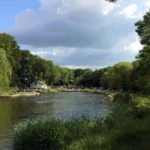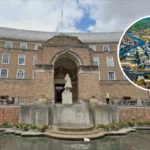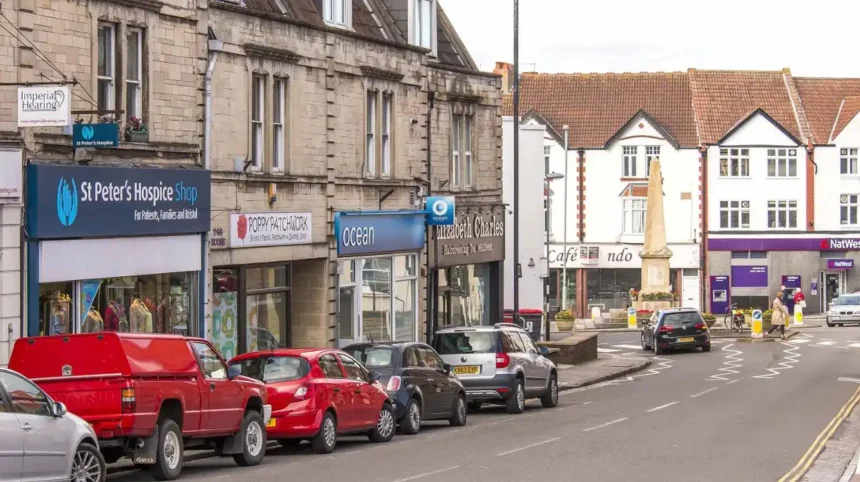
Westbury-on-Trym is a historic suburban village in north-west Bristol, centred on the River Trym and a medieval village core. The area combines historic buildings, local shops, residential streets, green spaces, schools and direct bus connections into central Bristol.
- What is Westbury-on-Trym known for?
- How old is Westbury-on-Trym?
- What historic buildings can you see in Westbury-on-Trym?
- Why does Westbury-on-Trym have a conservation area?
- What is the River Trym’s role in Westbury-on-Trym?
- What are the main green spaces near Westbury-on-Trym?
- What is housing like in Westbury-on-Trym?
- Is Westbury-on-Trym a good place for families?
- How well is Westbury-on-Trym connected to Bristol city centre?
- What shops and services are available in Westbury-on-Trym?
- What can visitors do in Westbury-on-Trym?
- How has Westbury-on-Trym developed into a modern Bristol suburb?
- What should you consider before moving to Westbury-on-Trym?
- What makes Westbury-on-Trym significant within Bristol?
- How is Westbury-on-Trym likely to remain relevant in the future?
The neighbourhood sits close to Henleaze, Stoke Bishop, Henbury, Brentry and the Blaise Castle Estate. Its historic centre retains a distinctive village form around High Street, Church Road, Westbury Hill and Trym Road. Bristol City Council designated Westbury-on-Trym as a conservation area and adopted its character appraisal in July 2015.
Westbury-on-Trym also forms part of the modern Westbury-on-Trym and Henleaze electoral ward. The 2021 Census recorded 20,426 residents in that combined ward, including 4,200 people aged 15 or under and 4,796 people aged 65 or over. These figures describe the wider ward rather than Westbury-on-Trym alone.
What is Westbury-on-Trym known for?
Westbury-on-Trym is known for its medieval village centre, historic Westbury College, Holy Trinity Church, River Trym setting, conservation area, local shopping streets and access to major green spaces such as Blaise Castle Estate.
The area’s identity is closely connected with its historic centre. Bristol City Council’s conservation appraisal states that the plan form of the central village remains largely unchanged from the medieval period.
The historic core includes Holy Trinity Church, Westbury College, College House and groups of older buildings along Church Road, Trym Road and the High Street. The combination of stone buildings, traditional boundaries, mature trees and established streets creates a distinctive townscape.
Westbury-on-Trym also functions as a residential neighbourhood. Housing ranges from older cottages and terraces to Victorian villas, Edwardian properties, interwar houses and later suburban development.
The River Trym provides the geographical link behind the area’s name. The Trym is a small Bristol watercourse that flows through the north-western part of the city before reaching the River Avon.
The neighbourhood has a village-centre shopping function. High Street and adjoining roads contain independent businesses and everyday services, while larger retail destinations are available elsewhere in north-west Bristol.
Its location also provides access to outdoor destinations. Canford Park is within Westbury-on-Trym, while Blaise Castle Estate is nearby in Henbury. Bristol City Council describes Blaise Castle Estate as a 650-acre Grade II* registered parkland containing woodland, grassland, historic buildings, a museum, children’s facilities and walking routes.
How old is Westbury-on-Trym?
Westbury-on-Trym originated in the early medieval period and probably developed around a Saxon minster. Its medieval village structure survived later expansion, while Westbury College and Holy Trinity Church became major historic landmarks within the settlement.
The settlement has medieval origins. Bristol City Council’s historical assessment identifies Westbury-on-Trym as an early medieval settlement and states that the village was probably the location of a Saxon minster.
The medieval layout remains important because later development largely followed established routes and field boundaries. The 1840s tithe map shows the approximate extent and structure of the historic village.
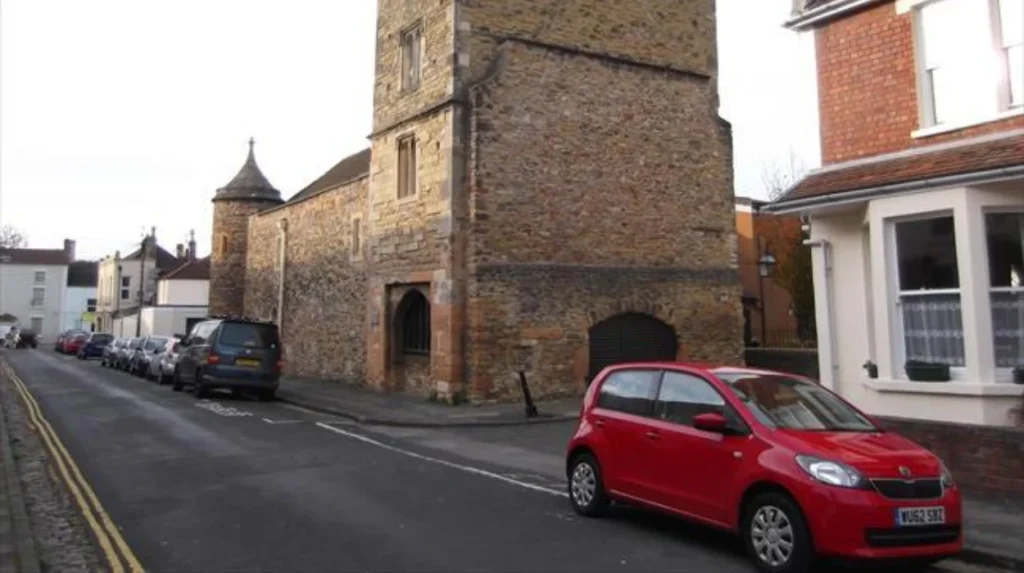
Westbury College became a major institution in the area’s history. Historic England records Westbury College and College House as a Grade I listed building complex. The surviving college buildings include a substantial medieval gate tower and associated architectural remains.
The college was associated with a collegiate church and housed canons connected with the religious foundation at Westbury. Historic England dates the existing college’s major construction to 1459–1469 and identifies John Carpenter, Bishop of Worcester and Westbury, as responsible for the rebuilding.
The college was dissolved in the 16th century. Later changes altered parts of the site, but the surviving medieval fabric remains an important element of the village’s architectural heritage.
The area then expanded beyond the medieval core. During the 18th and 19th centuries, larger houses, villas, terraces and institutional buildings appeared around the original settlement.
Bristol City Council records the construction of College Road and nearby terraced housing during the early Victorian period. Southfield Road also developed with semi-detached villas and larger terraces, while additional detached properties appeared around Henbury Road.
What historic buildings can you see in Westbury-on-Trym?
The main historic landmarks include Holy Trinity Church, Westbury College and College House, Westbury-on-Trym Methodist Church, Westbury Village Hall and historic cottages and terraces around Church Road, College Road and Trym Road.
Holy Trinity Church forms one of the principal landmarks in the village centre. Its relationship with Westbury College is central to understanding the medieval development of the settlement.
Westbury College and College House are particularly significant. Historic England lists the complex at Grade I, the highest category of listed-building protection in England. The surviving medieval gate tower contains Tudor-arched openings, stonework and other architectural features from the college’s historic fabric.
The area around College Road and Church Road contains several buildings and groups identified in the Bristol conservation appraisal as important to local character. The appraisal identifies 18th-century vernacular cottages, Victorian terraces, Westbury College and additional historic buildings within this area.
The architectural character includes rubble stone, limestone details, red brick, traditional boundary walls, mature trees and established garden planting. These elements create a strong relationship between buildings and streetscape.
Westbury-on-Trym Methodist Church is another recognised local landmark. Westbury Village Hall also appears among the landmarks identified by Bristol City Council’s conservation appraisal.
The historic buildings are not simply isolated monuments. They form part of a wider village structure in which roads, walls, gardens, plots and building lines retain historic relationships.
Why does Westbury-on-Trym have a conservation area?
Westbury-on-Trym has a conservation area because its historic village structure, buildings, landscape, streets, boundaries and architectural character form a distinctive historic environment that Bristol City Council seeks to preserve and enhance.
Bristol City Council identifies 33 conservation areas across the city. Conservation areas protect places with special architectural or historic interest and can include historic road patterns, building plots, materials, green spaces, trees, street furniture and important views.
The Westbury-on-Trym Conservation Area Character Appraisal was adopted in July 2015. The document explains how the area’s historic development created its present character and identifies buildings, spaces, views and landscape features that contribute to its significance.
The conservation area covers the historic village and associated streets where historic buildings and landscape features remain particularly evident.
Planning controls within conservation areas differ from those in ordinary areas. Certain alterations and developments require additional consideration because they can affect the character or appearance of the designated area.
For homeowners and developers, this means that building alterations, extensions, demolition, boundary changes and other works require careful checking against current planning requirements.
The conservation designation also provides a framework for managing future change. Bristol City Council uses character appraisals to inform planning decisions and help communities understand the qualities that define historic areas.
What is the River Trym’s role in Westbury-on-Trym?
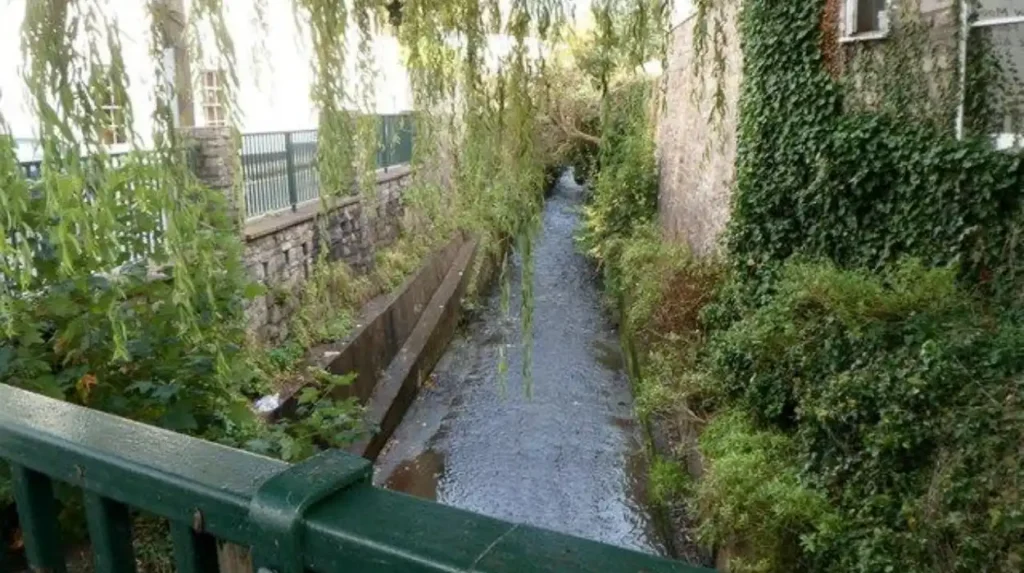
The River Trym provides the geographical feature behind Westbury-on-Trym’s name and contributes to the area’s landscape character, historic settlement pattern, drainage network and relationship with the surrounding Trym Valley.
The River Trym is a defining geographical feature of north-west Bristol. Westbury-on-Trym developed around the valley and watercourse, with the historic settlement occupying a location shaped by the local topography.
The Trym Valley remains important to the area’s landscape character. Bristol’s historic conservation documentation identifies the open Trym Valley and surrounding landscape as significant elements of the wider setting.
The valley provides a contrast with the built-up village centre. Residential streets and historic buildings transition into open spaces, gardens, trees and valley landscapes.
This relationship between settlement and landscape is important when understanding Westbury-on-Trym. The village did not develop as an isolated urban block. Its historic form reflects surrounding land, routes, watercourses and agricultural boundaries.
The River Trym also connects Westbury-on-Trym with neighbouring parts of north-west Bristol. The wider watercourse continues through areas including Southmead and Westbury-on-Trym before reaching the River Avon.
The valley landscape supports walking and informal outdoor activity. Local green spaces and nearby parks provide additional opportunities for recreation.
What are the main green spaces near Westbury-on-Trym?
Westbury-on-Trym has access to Canford Park, the Trym Valley landscape and nearby Blaise Castle Estate, providing residents and visitors with playgrounds, open grassland, woodland, walking routes, wildlife habitats and outdoor recreation.
Canford Park is one of the recognised green spaces within Westbury-on-Trym. Bristol City Council includes Canford Park in its citywide list of parks with children’s play equipment.
The Trym Valley provides another important landscape setting. Its open areas contribute to the visual separation between the historic village and surrounding residential development.
Blaise Castle Estate provides the largest nearby outdoor destination. The council describes the estate as 650 acres of Grade II* registered parkland. It contains woodland, grassland, streams, ponds, caves, gardens, historic buildings, play areas and walking routes.
The estate includes Blaise Museum and Blaise Castle. It also contains a children’s play area, café, picnic areas and toilets.
Several walking routes are available. Bristol City Council lists routes including the Castle Walk, Gorge Walk, Kings Weston Down Walk, Rhododendron Walk and the Royals and St Mary’s Church Walk. The routes range from approximately one mile to three miles.
Blaise also has ecological importance. The estate contains a 100-hectare Site of Nature Conservation Interest with woodland, grassland, streams, ponds and caves. The council records habitats supporting species including orchids, great crested newts, eels and trout.
These green spaces make outdoor recreation a significant part of the wider Westbury-on-Trym area.
What is housing like in Westbury-on-Trym?
Housing in Westbury-on-Trym includes historic cottages, Victorian terraces, Georgian and Regency villas, Edwardian properties, interwar semi-detached houses and later suburban homes, creating a varied residential environment around the historic village centre.
The housing stock reflects the area’s long development history.
Older properties are concentrated around the historic centre. Traditional cottages and older terraces appear around Church Road, Trym Road and the village streets.
The conservation appraisal identifies Georgian and Regency villas around Westbury Hill. Larger properties often occupy plots with gardens and mature vegetation.
Victorian expansion introduced terraces and semi-detached houses. College Road and Southfield Road contain examples of this period of development.
The early 20th century brought further suburban growth. Falcondale Road and surrounding areas developed with interwar housing, including 1930s semi-detached properties.
Later residential development expanded the neighbourhood beyond its historic core.
The result is a housing environment with different architectural periods rather than a single dominant building style. This diversity is one reason the conservation area appraisal distinguishes between several character areas.
Property decisions in the neighbourhood also require attention to planning status. Homes inside the conservation area can be subject to additional controls. Listed buildings have separate statutory protection.
Anyone considering buying, extending or renovating a property should check the property’s current planning history, listed status, conservation-area position and applicable development rules.
Is Westbury-on-Trym a good place for families?
Westbury-on-Trym provides family-oriented facilities through local schools, parks, playgrounds, residential streets, community facilities, everyday shops and access to larger green spaces such as Blaise Castle Estate and the Trym Valley.
The area contains primary education provision. Bristol City Council’s current admissions information lists Westbury-on-Trym Church of England Academy among Bristol primary schools. The council’s 2027 reception information records a planned admission number of 60 and 414 pupils on roll in January 2026.
School admissions depend on the individual school’s published arrangements, catchment rules, application timing and available places. School availability should therefore be checked directly through current Bristol City Council admissions information.
Outdoor facilities add another family-oriented feature. Canford Park has children’s play equipment, while Blaise Castle Estate has separate play facilities for younger and older children.
The residential environment also contains established gardens, mature trees and lower-density streets in several areas.
Families also have access to nearby educational and recreational facilities in Henleaze, Stoke Bishop, Henbury and other north-west Bristol neighbourhoods.
How well is Westbury-on-Trym connected to Bristol city centre?
Westbury-on-Trym has direct bus connections through central Bristol, with First Bus service 1 linking Westbury Village with Clifton Down, Bristol City Centre and Temple Meads, while surrounding roads connect the neighbourhood with north-west Bristol.
Bus travel is an important part of the area’s public transport network.
First Bus service 1 currently operates between Cribbs Causeway and Broomhill via Henbury, Westbury-on-Trym, Clifton Down and Bristol City Centre. The route also serves Bristol Temple Meads Station. The published timetable is valid from 19 September 2026 until further notice.
The service provides a direct public transport connection between Westbury Village and central Bristol. It also connects the neighbourhood with destinations further north and east.
The absence of a railway station within Westbury-on-Trym means buses are particularly important for everyday journeys. Nearby rail stations provide alternative connections for longer-distance travel, depending on the destination.
Road connections include Westbury Hill, Falcondale Road, Henbury Road and surrounding routes. These roads connect the neighbourhood with Henleaze, Henbury, Brentry, Stoke Bishop and other parts of Bristol.
Travel times vary according to traffic, service frequency and destination. Current journey planners and live timetables provide the most accurate information for individual trips.
What shops and services are available in Westbury-on-Trym?
Westbury-on-Trym has a traditional village shopping environment centred on High Street and adjoining roads, with local shops, cafés, food businesses, professional services and everyday amenities serving the surrounding residential community.
The High Street remains a key commercial feature of the neighbourhood.
Bristol’s historical assessment describes High Street as a traditional village shopping street containing buildings of townscape merit. The street continues toward Westbury Hill, where Victorian shops combine with older Georgian and Regency properties.
The commercial environment is suited to everyday neighbourhood activity rather than functioning as a major regional shopping centre.
Residents also have access to larger shopping destinations elsewhere in Bristol. Cribbs Causeway provides a major retail destination to the north-west, while central Bristol provides extensive shopping, cultural and commercial facilities.
The village centre’s compact form allows several services to be accessed within the same historic area.
Local businesses also contribute to the area’s community identity. The mixture of shops, cafés and services supports regular activity around the High Street.
What can visitors do in Westbury-on-Trym?
Visitors can explore the medieval village centre, view historic buildings, walk around the Trym Valley, use local parks, visit nearby Blaise Castle Estate and combine the area with neighbouring Henleaze, Stoke Bishop and Henbury.
A visit can begin around High Street and Church Road, where the historic character of the village is most visible.
Westbury College provides one of the area’s most significant heritage landmarks. The Grade I listed complex is an important surviving example of medieval collegiate architecture in Bristol.
Holy Trinity Church provides another major historic reference point. The church and college together illustrate the importance of Westbury as an ecclesiastical settlement during the medieval period.
Walking through the village also reveals Victorian terraces, older cottages, traditional walls and mature vegetation.
Outdoor visitors can continue toward Canford Park or the Trym Valley.
Blaise Castle Estate provides a larger excursion. The estate includes historic buildings, woodland walks, gardens, grassland, a museum, play facilities and picnic areas.
The estate also provides routes suitable for different levels of walking. Some paths include steep inclines and woodland terrain, so visitors should choose routes according to mobility and weather conditions.
Westbury-on-Trym therefore works as both a destination and a base for exploring north-west Bristol.
How has Westbury-on-Trym developed into a modern Bristol suburb?
Westbury-on-Trym developed from a medieval village into a suburban Bristol neighbourhood through Victorian expansion, early 20th-century housing growth and later residential development while retaining its historic centre, village streets, conservation area and relationship with surrounding green landscapes.
The settlement’s transformation occurred gradually.
Before the 19th century, Westbury-on-Trym retained a predominantly village character centred on its historic institutions, roads and surrounding agricultural land.
The 19th century introduced substantial residential and institutional growth. Georgian, Regency and Victorian buildings expanded the settlement beyond the medieval core.
The arrival of new roads and suburban development altered the area’s physical structure during the 19th and 20th centuries. Civic facilities, schools, religious buildings and local businesses also expanded.
The interwar period produced further suburban housing. Bristol City Council identifies 1930s semi-detached development around Falcondale Road as an important stage in the area’s expansion.
The modern neighbourhood retains these different layers.
This layered development explains why Westbury-on-Trym contains medieval buildings beside Victorian terraces and 20th-century suburban housing.
The conservation-area designation provides a mechanism for managing change around the most historically significant parts of the neighbourhood.
What should you consider before moving to Westbury-on-Trym?
People considering Westbury-on-Trym should examine property type, conservation-area restrictions, school admissions, transport routes, parking, access to green space, local services and the distance to employment or education destinations before making a housing decision.
Property location is important because the neighbourhood contains several distinct character areas.
Homes around the historic centre provide close access to village amenities and heritage buildings. Properties farther from the centre offer different street layouts, housing styles and access arrangements.
Transport should also be assessed according to individual travel patterns. Service 1 provides a direct bus connection through Bristol city centre and onward to Temple Meads.
Schooling is another consideration for households with children. Bristol City Council manages admissions information for participating schools, and individual schools can have different admission arrangements.
Green-space access is a significant feature. Canford Park and the Trym Valley provide local outdoor space, while Blaise Castle Estate offers a much larger recreational landscape nearby.
Planning status is particularly relevant for properties in the conservation area. Bristol City Council states that conservation areas have stricter planning controls than ordinary areas, and permission can be required for certain development work.
Buyers should therefore investigate the specific property rather than treating the entire neighbourhood as having identical planning or housing conditions.
Explore More Area Guide
Henleaze Area Guide: History, Homes, Shops and Transport
Brislington Area Guide: History, Parks, Transport & Local Life
What makes Westbury-on-Trym significant within Bristol?
Westbury-on-Trym is significant within Bristol because it combines an early medieval settlement pattern, nationally protected heritage buildings, a surviving village centre, a conservation area, residential neighbourhoods, local services and direct connections to the wider city.
Its significance is primarily the result of continuity.
The historic village core remains recognisable despite centuries of development. Bristol City Council’s appraisal identifies the medieval structure as a major component of the area’s character.
Westbury College adds national heritage importance through its Grade I listing. Historic England identifies the building as having special architectural and historic interest and records its medieval origins.
The conservation area protects a broader collection of buildings, streets, landscape features and historic relationships rather than protecting only individual structures.
The surrounding landscape strengthens this identity. The Trym Valley, Canford Park and nearby Blaise Castle Estate provide substantial green-space connections.
At the same time, Westbury-on-Trym operates as a modern residential district. Schools, shops, services, bus routes and community facilities integrate the historic village into contemporary Bristol.
How is Westbury-on-Trym likely to remain relevant in the future?
Westbury-on-Trym’s future relevance is linked to continued protection of its historic character, management of residential growth, access to green infrastructure, public transport connections, local services and sustainable planning within the wider Bristol urban area.
Historic neighbourhoods face the challenge of accommodating modern needs without losing defining characteristics.
Westbury-on-Trym already has a planning framework that recognises its historic significance. The conservation-area appraisal provides evidence for understanding the area’s buildings, landscape, routes and views when assessing future change.
Green infrastructure will remain important. The Trym Valley and nearby parks provide recreational space and contribute to the environmental character of the neighbourhood.
Blaise Castle Estate demonstrates the scale of green infrastructure available in north-west Bristol. Its 650 acres include habitats, walking routes, historic buildings and recreational facilities.
Transport will also influence future accessibility. The existing bus network provides a direct connection between Westbury-on-Trym, central Bristol and Temple Meads through service 1.
Future development therefore needs to balance housing, mobility, environmental quality, community facilities and heritage protection.
Westbury-on-Trym enters that future with a strong historic foundation, an established residential community and a strategic position within north-west Bristol.
What is Westbury-on-Trym known for?
Westbury-on-Trym is known for its historic medieval village centre, Westbury College, Holy Trinity Church, River Trym, conservation area, local shops and access to green spaces such as Canford Park and Blaise Castle Estate.