
Bristol is a major UK student city with 68,800 students registered at its two main universities in 2024/25. The University of Bristol and UWE Bristol provide different academic environments, while the city offers extensive student accommodation, transport, societies, cultural venues and employment opportunities.
- Why is Bristol considered a good student city?
- What universities can students choose in Bristol?
- How much does it cost to live in Bristol as a student?
- Is student accommodation easy to find in Bristol?
- Which Bristol neighbourhoods are popular with students?
- Is Bristol easy to get around without a car?
- What is student social life like in Bristol?
- Is Bristol suitable for international students?
- Can students find part-time work in Bristol?
- Are Bristol’s universities well connected to the city?
- Is Bristol affordable compared with other student cities?
- What are the main disadvantages of being a student in Bristol?
- Is Bristol a good place for students in 2026 and beyond?
Bristol is the largest city in South West England. The Bristol local authority area had an estimated population of 495,300 in mid-2025. The city combines higher education, aerospace, engineering, technology, creative industries, healthcare, financial services and cultural institutions.
Its student population has also expanded significantly. Bristol City Council recorded 68,070 students at the University of Bristol and UWE Bristol in 2023/24, representing a 44% increase over the previous decade. The latest council figures record 68,800 students across the two main universities in 2024/25.
This concentration gives Bristol a strong higher-education identity. Students live across neighbourhoods such as Clifton, Redland, Cotham, Bishopston, Horfield, Fishponds, Southville, Bedminster, St George and the city centre.
Why is Bristol considered a good student city?
Bristol is a strong student city because it combines two large universities, 68,800 registered students, extensive student societies, established cultural venues, varied neighbourhoods and access to employment across major industries. Its main disadvantages are housing costs, competition for accommodation and transport pressures.
The scale of higher education is one of Bristol’s defining characteristics. The University of Bristol recorded 31,132 students in 2024/25, including 10,903 international students. UWE Bristol recorded 37,742 students in the same academic year, including 9,474 international students.
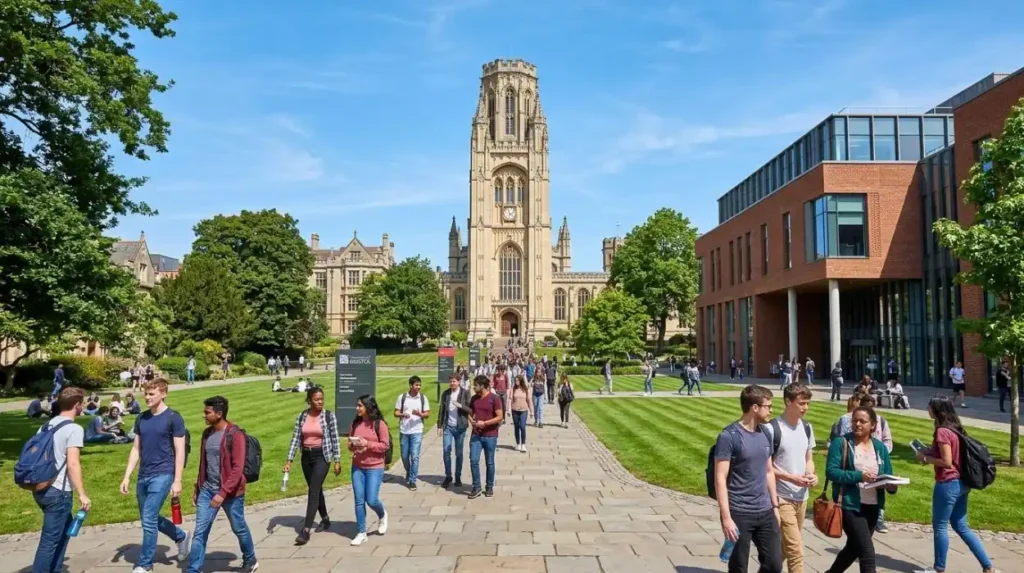
The University of Bristol is a research-intensive university with its main campus around Clifton. It was founded in 1876 as University College, Bristol. It became the University of Bristol in 1909 and has a long history of research and higher education in the city.
UWE Bristol is a large modern university with campuses including Frenchay, Glenside and City Campus. Its academic provision covers areas including engineering, computing, business, law, architecture, health professions, nursing, design, filmmaking, journalism and creative industries.
Bristol also provides a substantial social infrastructure for students. The University of Bristol Students’ Union supports hundreds of societies and more than 60 sports clubs. UWE Bristol provides more than 160 societies and sports clubs.
The result is a city where university life extends beyond individual campuses. Students interact with commercial, cultural, sporting and professional communities throughout Bristol.
What universities can students choose in Bristol?
Students in Bristol have two major university choices: the University of Bristol and UWE Bristol. The University of Bristol has a research-intensive academic profile, while UWE Bristol provides broad professional and applied programmes across multiple campuses and subject areas.
The University of Bristol offers undergraduate and postgraduate education across disciplines including medicine, engineering, science, social sciences, arts and humanities. Its Clifton-based setting places students close to central Bristol neighbourhoods and city amenities.
Its 2024/25 student population of 31,132 includes a substantial international community. International students accounted for 10,903 of the university’s students. This gives the institution a significant international dimension.
UWE Bristol has a larger registered student population. Its 2024/25 total was 37,742, comprising 24,900 undergraduates, 12,067 taught postgraduates and 775 postgraduate researchers.
Frenchay is UWE Bristol’s largest campus. It is approximately four miles north of Bristol city centre and is connected to the centre by Metrobus services. The campus includes academic buildings, accommodation, sports facilities, cafes, restaurants, shops and student services.
Glenside Campus is in Fishponds and focuses heavily on allied health, nursing and midwifery education. City Campus supports creative and cultural industries through locations including Bower Ashton, Spike Island, Arnolfini and Watershed.
The choice between the two universities therefore depends heavily on the subject, teaching environment, campus location and preferred student experience.
How much does it cost to live in Bristol as a student?
Bristol is a relatively expensive UK student city, particularly for accommodation. University of Bristol data puts average 2025/26 monthly living costs at £1,401 for undergraduates and £1,862 for postgraduates, including accommodation and everyday expenses.
Accommodation is the largest regular expense for many students. University of Bristol figures for 2025/26 show average undergraduate rent or mortgage expenditure of £775.78 per month. The corresponding postgraduate figure was £871.47.
Other monthly undergraduate averages included £173.85 for household shopping and food, £34.82 for public transport, £40.43 for takeaways and eating out, and £49.92 for nights out. These figures provide a useful budgeting benchmark rather than a fixed student budget.
Private accommodation close to Clifton Campus and Bristol city centre is particularly important to budget for. The University of Bristol states that a room in a shared property in these areas can cost between £600 and more than £900 per month, excluding bills.
Private studio accommodation costs more. The University of Bristol states that studios offered by private providers can cost more than £1,400 per month, with bills and internet often included.
University accommodation also varies substantially. For 2026/27, published University of Bristol residence prices include examples ranging from £227.50 per week for some 38-week en-suite accommodation to more than £267 per week for some two-person flats.
The financial picture therefore differs according to accommodation type, location, tenancy length, lifestyle and course level.
Is student accommodation easy to find in Bristol?
Student accommodation in Bristol is available through university residences, purpose-built student accommodation and private shared housing. Demand is strong, so students benefit from researching early, comparing contracts and checking total costs rather than comparing advertised rent alone.
University-managed residences provide structured accommodation for students. Facilities vary by residence but can include shared kitchens, en-suite bedrooms, internet access, laundry facilities, social areas and university support services.
Private student housing provides another major option. Shared houses are common in established student neighbourhoods, particularly around Clifton, Redland, Cotham, Bishopston and Horfield.
Purpose-built student accommodation provides another model. These developments commonly offer private bedrooms, shared social areas and bills-inclusive contracts.
The Bristol private rental market requires careful contract checking. The city council states that student renting arrangements can differ depending on the property type and landlord. University-managed halls and some purpose-built student accommodation can have different arrangements from private shared homes.
The legal position also matters. Bristol City Council states that most students renting from private landlords or letting agents are covered by the Renters’ Rights Act, with protections including assured periodic tenancies, protection from no-fault evictions and limits on rent increases. Some student accommodation types are treated differently.
Students should therefore check the tenancy type, deposit arrangements, bills, contract length, notice provisions and property condition before signing.
Which Bristol neighbourhoods are popular with students?
Popular student areas in Bristol include Clifton, Redland, Cotham, Bishopston, Horfield, Fishponds, Southville and Bedminster. Each area has different relationships with university campuses, housing costs, transport connections, shops, green spaces and city-centre amenities.
Clifton is closely associated with the University of Bristol. It places students near the university’s main academic buildings, independent businesses, green spaces and central Bristol.
Redland and Cotham sit close to Clifton and provide substantial private student housing. Their location supports walking and cycling journeys to university facilities and central neighbourhoods.
Bishopston and Horfield are further north. Gloucester Road provides a major commercial corridor with independent shops, cafes, restaurants and other services.
Fishponds has strong links with UWE Bristol’s Glenside Campus and provides access to local shops and transport routes.
Southville and Bedminster are particularly relevant to students connected with UWE’s City Campus and Bower Ashton. UWE identifies Bedminster, Hotwells, Southville and Clifton as popular residential areas close to Bower Ashton.
The city centre provides proximity to cultural venues, shopping, nightlife, employment and transport connections. However, central accommodation generally requires a larger housing budget.
Neighbourhood choice therefore works best when it starts with the location of the student’s teaching campus.
Is Bristol easy to get around without a car?
Bristol supports student travel through buses, walking, cycling and rail connections. Living near a university campus reduces transport costs and journey times. UWE’s Frenchay Campus is four miles from the centre and around 15 minutes by Metrobus, while city campuses sit closer to central Bristol.
A car is not essential for many students. Walking works particularly well around compact central neighbourhoods and university areas.
Cycling is another important option. Bristol’s geography creates some steep routes, but cycling connects residential neighbourhoods with university campuses and central employment areas.
Bus travel is important for longer journeys. UWE states that Frenchay Campus is approximately 15 minutes from the city centre by Metrobus under its current travel guidance.
Rail is useful for journeys beyond Bristol. Bristol Temple Meads provides major national rail connections, while Bristol Parkway serves areas around the north and northeast of the city and provides an important connection for UWE students travelling to Frenchay.
UWE identifies Bristol Parkway as the nearest railway station to Frenchay Campus and Bristol Temple Meads as a key station for City Campus access.
Transport costs should form part of a student’s accommodation decision. A cheaper room further from campus can become less financially attractive when regular transport costs and longer journey times are included.
What is student social life like in Bristol?
Bristol has a large and varied student social environment supported by university societies, sports clubs, cultural venues, music spaces, restaurants, cafes and nightlife. The two major universities provide structured activities, while the wider city supplies additional entertainment and community opportunities.
University of Bristol students can access more than 300 societies and 60 sports clubs through Bristol SU. Activities cover interests including music, dance, politics, cultural groups and recreational sport.
UWE Bristol provides more than 160 societies and sports clubs. Its activities include sports, music, cultural groups and recreational interests. Team UWE Bristol includes more than 40 sports clubs.
Student life extends beyond organised university activities. Bristol has music venues, theatres, galleries, independent cinemas, restaurants, cafes and festivals.
The city also has distinctive cultural areas. Harbourside, Stokes Croft, Gloucester Road, Clifton, Bedminster and the Old City each provide different commercial and cultural environments.
Students interested in creative subjects benefit from the city’s established creative economy. UWE’s City Campus itself incorporates locations including Arnolfini, Spike Island and Watershed, placing some students directly within Bristol’s cultural infrastructure.
This combination gives students opportunities to participate in university communities while also developing connections across the wider city.
Is Bristol suitable for international students?
Bristol is an international student city with substantial overseas enrolment at both major universities. The University of Bristol recorded 10,903 international students in 2024/25, while UWE Bristol recorded 9,474 overseas and EU students in the same academic year.
International students form an important part of Bristol’s university population.
The University of Bristol’s international student population represented more than one-third of its 2024/25 student total. UWE Bristol’s overseas and EU population also represents a substantial proportion of its student body.
Bristol itself is highly diverse. Bristol City Council records more than 287 ethnic groups, more than 185 countries of birth, at least 45 religions and more than 90 languages among residents.
This diversity supports an international student environment outside university campuses. Students can access international food, cultural organisations, community groups and multilingual services throughout the city.
International students also need to account for visa requirements and financial planning. UK Student visa applicants must demonstrate sufficient funds for tuition and living costs under the applicable immigration rules. University of Bristol guidance states that financial requirements change for applications made on or after 30 November 2026.
Can students find part-time work in Bristol?
Students in Bristol can access paid student roles, volunteering, placements and graduate opportunities across education, healthcare, technology, engineering, creative industries, hospitality, retail and professional services. Universities also provide careers services and structured opportunities for gaining employment experience.
The city’s economic diversity is important for students who want experience alongside study.
Bristol has established strengths in aerospace, engineering, technology, financial services, healthcare, media and creative industries. These sectors create connections between higher education and the local economy.
The University of Bristol provides paid student roles and volunteering opportunities. It also offers student leadership and representation routes that help students develop workplace skills.
UWE Bristol places strong emphasis on professional and applied education. Its subject portfolio includes computing, engineering, business, construction, law, journalism, marketing, health professions, design and creative industries.
Part-time work requires careful time management. Students should consider course workloads, visa restrictions where applicable, commuting time and employment conditions before accepting regular hours.
Work experience is also relevant after graduation. Bristol’s concentration of universities and employers creates a local environment where students can build professional networks before entering the graduate labour market.
Are Bristol’s universities well connected to the city?
Bristol’s universities are closely integrated with the city’s neighbourhoods, transport network and cultural infrastructure. University of Bristol facilities are concentrated around Clifton and central areas, while UWE operates Frenchay, Glenside and City Campus locations across northern, eastern and central Bristol.
This integration is one of Bristol’s defining characteristics as a student destination.
University of Bristol students can access central Bristol directly from the Clifton campus area. Academic buildings, accommodation, shops, cafes and public spaces are distributed across nearby neighbourhoods.
UWE has a more dispersed campus structure. Frenchay is the largest campus and sits approximately four miles north of the city centre. Glenside is around three miles northeast of the centre. City Campus includes several sites associated with Bristol’s creative and cultural districts.
The different campus models affect where students choose to live.
A student studying at Frenchay has different housing priorities from a student studying at Clifton or Bower Ashton. Commute time therefore deserves consideration before choosing accommodation.
The city’s mixed campus structure also spreads student activity across Bristol rather than concentrating all students in one central university district.
Is Bristol affordable compared with other student cities?
Bristol offers strong educational and cultural infrastructure, but accommodation costs are a significant financial consideration. University data shows substantial monthly spending on rent, food and transport, while private rooms near central campuses can exceed £900 per month before bills.
Affordability depends primarily on housing.
Students living in shared houses can reduce accommodation costs compared with private studios. University accommodation can provide predictable contracts and facilities, while private housing can offer more choice in location and property size.
Living further from the most expensive central neighbourhoods can reduce rent. However, students need to include transport costs and commuting time in the calculation.
Food spending also affects monthly budgets. University of Bristol’s 2025/26 undergraduate average for household shopping, including food, was £173.85 per month. Takeaways and eating out averaged £40.43 per month.
The university’s overall average undergraduate living cost was £1,401 per month in 2025/26. This included accommodation, bills, food, transport, entertainment and other expenses.
Students should therefore treat Bristol as a city requiring structured budgeting rather than assuming that student discounts alone will make living costs low.
Explore More Area Guide
Is Bristol a Good Place for Families? Schools, Parks & Living
Is Bristol a Good Place to Live? Cost, Jobs and Lifestyle
What are the main disadvantages of being a student in Bristol?
The main disadvantages for students in Bristol are high accommodation costs, competition for private housing, variable commuting times and the financial pressure associated with living in a major UK city. Housing location, contract terms and budgeting have a direct effect on student experience.
Accommodation affordability is the clearest challenge. Rooms near Clifton and central Bristol can cost £600 to more than £900 per month before bills, according to University of Bristol guidance.
Competition is another consideration. The university specifically advises students to consider the high level of demand for private rooms and to compare several properties before committing.
Transport can become a secondary cost when students live away from campus. Longer journeys also reduce time available for study, employment and social activities.
Bristol’s geography creates another practical factor. Some routes between neighbourhoods include hills, making walking and cycling more demanding in certain areas.
Private tenancy arrangements require attention. Students need to understand deposits, bills, contract lengths and tenancy rights before signing.
These challenges do not remove Bristol’s advantages. They make accommodation research and financial planning particularly important.
Is Bristol a good place for students in 2026 and beyond?
Bristol remains a major UK student destination in 2026 because its two main universities serve 68,800 registered students, while the city continues to expand its population, higher-education infrastructure, cultural economy and professional opportunities. Housing affordability remains the central challenge.
Bristol’s higher-education scale provides long-term relevance. The city’s two major universities have large student communities and extensive academic programmes.
The city itself is also growing. Bristol’s mid-2025 population was estimated at 495,300, with the council projecting continued population growth over the following years.
University investment continues alongside this growth. The University of Bristol reported £242.1 million of capital investment in its New Temple Quarter and Clifton campus developments for 2024/25.
UWE Bristol has also invested heavily in its campuses and facilities. The university states that it has invested £300 million in modern facilities over the previous five years.
These developments reinforce Bristol’s position as a higher-education and employment centre.
For prospective students, the strongest approach is to compare the university course first, then assess campus location, accommodation, transport, living costs and employment opportunities.
Is Bristol a good place for students?
Yes. Bristol is a major UK student city with two large universities, a diverse student population, active societies, cultural venues, employment opportunities and extensive student accommodation options.