Bristol industrial heritage reflects the city’s development as one of Britain’s most important maritime, manufacturing, engineering and trading centres. Its industrial history connects the growth of Bristol Harbour, the Industrial Revolution, tobacco production, sugar refining, glassmaking, brass manufacturing, railway engineering and modern technological industries.
- What Is Bristol Industrial Heritage?
- How Did Bristol Become an Important Industrial City?
- Which Industries Played the Biggest Role in Bristol’s Industrial History?
- 1. Tobacco Manufacturing
- 2. Sugar Refining
- 3. Chocolate and Cocoa Manufacturing
- 4. Glassmaking and Brass Manufacturing
- 5. Shipbuilding and Marine Engineering
- How Did Bristol Harbour Support Industrial Growth?
- The Creation of the Floating Harbour
- How Did Harbour Machinery Operate?
- What Was the Role of Underfall Yard?
- Why Did Bristol’s Main Port Activities Move Towards Avonmouth?
- Which Historic Industrial Sites Can Visitors Explore in Bristol?
- How Did Railways and Engineering Transform Bristol’s Industrial Economy?
- What Was Brunel’s Contribution to Bristol’s Engineering Heritage?
- How Did the Great Western Railway Support Manufacturing?
- How Did Bristol Develop into an Aerospace and Manufacturing Centre?
- What Was the Bristol Aeroplane Company?
- Why Is Concorde Important to Bristol’s Industrial History?
- Which Aerospace Companies Continue Bristol’s Engineering Legacy?
- What Can Historic Industrial Buildings Reveal About Bristol’s Working Communities?
- How Did Factories Influence Bristol’s Neighbourhoods?
- What Was the Social Impact of Industrialisation?
- How Is Bristol Preserving Its Industrial Heritage Today?
- What Role Do Museums Play in Industrial Preservation?
- Why Are Historic Industrial Buildings Reused?
- How Does Industrial Archaeology Support Conservation?
- What Is the Future of Bristol’s Industrial Heritage?
- How Does Industrial Heritage Support Tourism?
- Why Is Sustainable Industrial Development Important?
- How Can Future Generations Learn About Bristol’s Industrial Past?
- Why Does Bristol Industrial Heritage Matter?
Located in South West England, Bristol developed around the River Avon and River Frome. Its position created opportunities for maritime trade, shipbuilding, manufacturing and transportation. Over several centuries, these industries influenced the city’s economy, architecture, employment patterns and urban development.
Today, Bristol’s industrial heritage remains visible in its historic warehouses, converted factories, former docks, railway structures, engineering sites and museums. These locations provide evidence of the city’s transition from a major industrial port to a modern centre for aerospace, advanced engineering, creative industries and technology.
Understanding Bristol’s industrial heritage involves examining the industries that established its commercial importance, the infrastructure that supported manufacturing, the people who worked in industrial communities and the preservation of historic industrial buildings.
What Is Bristol Industrial Heritage?
Bristol industrial heritage refers to the historic buildings, machinery, transport networks, manufacturing traditions and working communities that shaped the city’s economic development. It includes maritime trade, shipbuilding, tobacco processing, chocolate production, engineering, glassmaking, railway construction and aerospace manufacturing.
Industrial heritage is the physical and cultural evidence of past industrial activity. It includes factories, workshops, warehouses, docks, power stations, railway infrastructure, machinery and industrial landscapes. It also records the knowledge, skills and working conditions associated with manufacturing and trade.
In Bristol, industrial heritage is closely connected to the city’s geographical position. The River Avon provided access to the Bristol Channel and international shipping routes. The River Frome supported early settlement, water-powered activities and commercial development.
Bristol’s industrial development involved several interconnected activities:
- Maritime commerce: Importing and exporting goods through Bristol Harbour.
- Manufacturing: Producing chocolate, tobacco products, glass, brass goods and machinery.
- Engineering: Building ships, railway infrastructure, industrial equipment and aircraft.
- Transportation: Connecting factories and warehouses through docks, railways, roads and canals.
- Energy and utilities: Supplying industrial premises through steam power, hydraulic systems, gas and electricity.
The Bristol Industrial Archaeological Society documents these industries through historic records, industrial buildings, maps and research. Its historical material identifies businesses such as Fry’s Cocoa Works, Castle Sugar Refinery, Wills’ Tobacco Factory and Bristol Wagon Works.
Industrial archaeology is the study of physical remains associated with industrial activity. In Bristol, this discipline helps researchers understand how production systems, transportation infrastructure and commercial districts developed over time.
How Did Bristol Become an Important Industrial City?
Bristol became an important industrial city because its harbour connected British manufacturers and merchants with international markets. Maritime commerce encouraged investment in warehouses, shipbuilding, processing industries and engineering, while railway development expanded transportation links and supported further industrial growth.
Bristol’s development as a trading centre began centuries before the Industrial Revolution. The settlement grew around the River Avon and River Frome, benefiting from access to inland markets and maritime routes.
By the medieval period, Bristol had established itself as an important port. Merchants traded goods including woollen cloth, wine, fish, grain and agricultural products. The port subsequently developed stronger commercial connections with Europe, North America, Africa and the Caribbean.
During the seventeenth and eighteenth centuries, Bristol expanded its international trade. Tobacco, sugar, cocoa and other imported commodities created demand for processing facilities, warehouses and manufacturing businesses.
The city’s commercial growth was also connected to the transatlantic slave trade. Bristol merchants financed and operated voyages that transported enslaved African people to plantations in the Caribbean and North America. The forced labour of enslaved people produced commodities including sugar and tobacco, which entered British commercial networks.
The University of Bristol’s historical research identifies 1698 as the year when Bristol’s official participation in the transatlantic slave trade expanded following the end of the Royal African Company’s monopoly. By 1750, Bristol ships transported approximately 8,000 of the 20,000 enslaved Africans sent that year to the British Caribbean and North America.
This history is essential to understanding Bristol’s industrial development because commercial profits, imported raw materials and manufacturing expansion were connected to colonial exploitation. The trade in enslaved people officially ended in 1807 under the Slave Trade Act, while slavery itself was abolished across most of the British Empire through the Slavery Abolition Act 1833.
How Did the Industrial Revolution Change Bristol?
The Industrial Revolution transformed Bristol’s economy through mechanised manufacturing, improved transportation and expanding commercial infrastructure.
During the eighteenth and nineteenth centuries, industrial businesses increased production and developed larger premises. Steam-powered machinery supported manufacturing activities, while railways improved the movement of raw materials and finished products.
The city developed industrial premises around the harbour, central Bristol and surrounding districts. Factories, foundries, workshops, mills and warehouses became important features of the urban landscape.
The nineteenth century also brought major engineering developments. Isambard Kingdom Brunel contributed to Bristol’s railway and maritime infrastructure, including the Great Western Railway and the SS Great Britain.
Industrial expansion gradually changed Bristol from a predominantly maritime trading centre into a diversified manufacturing and engineering city.
Which Industries Played the Biggest Role in Bristol’s Industrial History?
Bristol’s industrial history developed through several connected industries, including tobacco manufacturing, sugar refining, chocolate production, glassmaking, brass manufacturing, shipbuilding, railway engineering and aircraft production. These activities created employment, attracted investment and established important industrial districts.
Bristol’s industrial economy was never dependent on a single manufacturing activity. Its harbour supported the importation of raw materials, while local factories converted those materials into products for domestic and international markets.
1. Tobacco Manufacturing
Tobacco manufacturing became one of Bristol’s most recognisable industries during the nineteenth and twentieth centuries.
The tobacco trade expanded because Bristol merchants imported tobacco from overseas markets. Manufacturers established processing facilities where tobacco leaves were prepared and converted into smoking products.
Wills was among the most significant tobacco businesses associated with Bristol. The company became a major employer and contributed to the development of large industrial premises.
The former Wills Tobacco Factory in Bedminster is an important surviving example of this industrial history. Its architecture demonstrates the scale of manufacturing investment and the importance of tobacco production to Bristol’s economy.
Tobacco manufacturing supported employment in processing, packaging, distribution, administration and transportation. It also created demand for warehouses and commercial services.
The industry’s decline reflected wider changes in manufacturing, corporate organisation and the tobacco market. Former industrial buildings now contribute to Bristol’s architectural and regeneration landscape.
2. Sugar Refining
Sugar refining connected Bristol’s industrial economy with international maritime commerce and colonial plantation production.
Raw sugar arrived through the harbour and entered local refineries. Workers processed the imported material into refined sugar for consumption and commercial distribution.
Castle Sugar Refinery appears in Bristol’s documented industrial records from the nineteenth century. Its existence demonstrates how imported commodities supported manufacturing businesses within the city.
Sugar refining involved several production stages, including dissolving, filtering, concentrating and crystallising sugar. Industrial premises required storage areas, processing equipment, heating systems and transport connections.
The industry’s historical context also requires recognition of the forced labour used on Caribbean plantations. Sugar production generated considerable wealth through an exploitative economic system based on enslaved African labour.
3. Chocolate and Cocoa Manufacturing
Fry’s became one of Bristol’s most important manufacturing businesses.
The Fry family established its chocolate business in Bristol during the eighteenth century. Joseph Fry sold chocolate from at least 1759 and acquired an established chocolate business in 1761 with John Vaughn.
The company expanded significantly during the nineteenth century. University of Bristol historical research records that Fry’s sales increased from £11,000 in 1836 to £103,000 in 1867 and approximately £1.9 million by 1914.
Fry’s production contributed to Bristol’s reputation as a centre for chocolate manufacturing. Its business developed through cocoa processing, product innovation, packaging and commercial distribution.
The company eventually merged with Cadbury in 1918. Its industrial legacy remains important to the history of British food manufacturing and Bristol’s commercial development.
4. Glassmaking and Brass Manufacturing
Glassmaking and brass manufacturing contributed to Bristol’s wider industrial economy through skilled production and specialist craftsmanship.
Glass production involved heating raw materials to high temperatures before shaping and finishing the molten material. Industrial glassmaking supplied products for domestic, commercial and architectural applications.
Brass manufacturing involved working with copper and zinc to produce metal goods. Bristol’s brass industry developed within wider regional manufacturing networks, including the Avon Valley.
These industries required skilled workers, furnaces, workshops, machinery and access to raw materials. Their development demonstrates that Bristol’s industrial history extended beyond port operations and large-scale factories.
5. Shipbuilding and Marine Engineering
Shipbuilding developed naturally around Bristol’s maritime economy.
The city required vessels for commercial shipping, passenger transportation, coastal trade and industrial operations. Shipyards employed shipwrights, engineers, metalworkers, carpenters and other skilled tradespeople.
The construction of the SS Great Britain represents a major achievement in this industrial tradition. Designed by Brunel and built at Bristol’s Great Western Dockyard, the vessel was launched in 1843.
Marine engineering also involved maintaining harbour infrastructure, repairing vessels, producing equipment and operating dock machinery.
Underfall Yard preserves evidence of these activities through its historic workshops, hydraulic machinery and continuing maritime trades.
How Did Bristol Harbour Support Industrial Growth?
Bristol Harbour supported industrial growth by connecting factories, warehouses, shipyards and merchants with domestic and international markets. Its docks handled imported raw materials and exported manufactured products, while engineering improvements maintained navigable water and supported increasingly complex commercial operations.
Bristol Harbour was the foundation of the city’s historic industrial economy.
The original harbour developed along the River Avon. However, the river’s tidal conditions created operational difficulties for commercial shipping. Vessels frequently experienced problems when water levels dropped during low tide.
To address these problems, engineers developed the Floating Harbour.
The Creation of the Floating Harbour
The Floating Harbour was constructed between 1804 and 1809 under the engineering scheme associated with William Jessop.
The project involved changing the course of the River Avon and creating the New Cut. This arrangement allowed the enclosed harbour to maintain more consistent water levels.
The system reduced the problems associated with tidal fluctuations and enabled ships to remain afloat when the surrounding river experienced low water.
The harbour became an important example of civil engineering and industrial infrastructure.
How Did Harbour Machinery Operate?
Harbour operations required machinery to control water levels, move cargo and maintain vessels.
The infrastructure included:
- Lock gates, which controlled the movement of ships between water levels.
- Sluices, which regulated water movement and helped manage sediment.
- Cranes, which lifted cargo between ships and quays.
- Hydraulic systems, which supplied mechanical power to dock equipment.
- Workshops, which maintained machinery and repaired vessels.
These components operated together as an integrated industrial system.
What Was the Role of Underfall Yard?
Underfall Yard is one of the most important surviving examples of Bristol’s harbour engineering heritage.
The site supported the maintenance of the Floating Harbour from its creation. Its engineering facilities were substantially redeveloped during the 1880s.
The historic Power House was completed in 1887. Its machinery supplied hydraulic power to harbour equipment, including cranes, bridges, lock gates and sluices. The system was converted from steam power to electricity in 1907.
Underfall Yard also supported specialised workers, including blacksmiths, engineers, electricians, plumbers, fitters, divers and shipwrights.
Today, the site continues to support marine engineering, boatbuilding, metalworking and traditional maritime skills.
Why Did Bristol’s Main Port Activities Move Towards Avonmouth?
Bristol’s original harbour faced increasing limitations as commercial vessels became larger and maritime trade expanded.
The development of deeper-water facilities at Avonmouth provided improved access for modern shipping. Avonmouth Docks developed during the late nineteenth century and became increasingly important for international cargo operations.
This transition changed the role of the Floating Harbour. Traditional commercial dock activities declined, while the historic harbour area gradually developed new uses involving tourism, culture, residential regeneration and heritage preservation.
The relationship between Bristol Harbour and Avonmouth demonstrates how industrial infrastructure changes in response to technological and commercial requirements.
Which Historic Industrial Sites Can Visitors Explore in Bristol?
Visitors can explore Bristol’s industrial history through preserved ships, former factories, historic railway buildings, harbour workshops, working boatyards and museums. Important locations include M Shed, SS Great Britain, Underfall Yard, Bristol Temple Meads and the historic industrial waterfront.
Bristol contains several locations where historic industrial structures remain accessible to visitors. These sites provide evidence of the city’s manufacturing, maritime and engineering development.
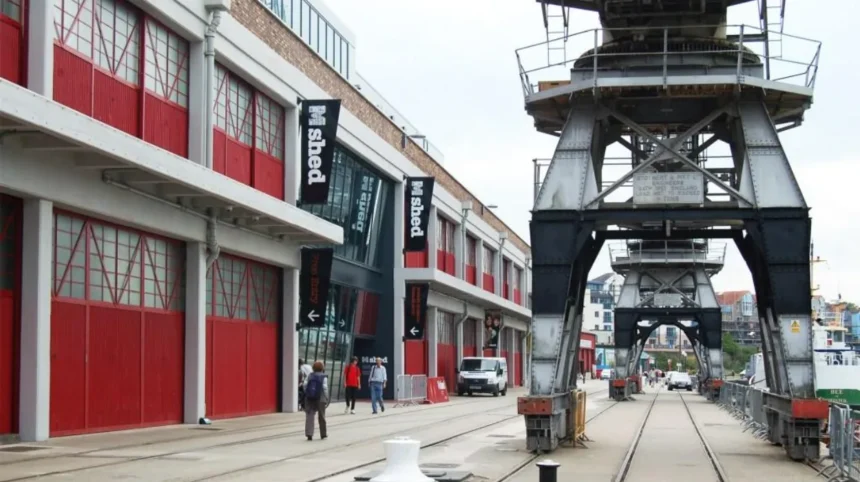
1. M Shed
M Shed is a museum dedicated to Bristol’s history and the experiences of its people.
Located on the Harbourside, the museum occupies a former transit shed associated with the city’s commercial dock operations.
Its collections explore Bristol’s industrial development, maritime trade, transportation, social history and cultural identity.
The four electric cargo cranes outside the museum are particularly important industrial landmarks. Built in 1951, they originally served the general cargo wharf and provide a visible connection with Bristol’s twentieth-century port operations.
Bristol Museums identifies these cranes as important surviving examples of the machinery that supported the city’s working harbour.
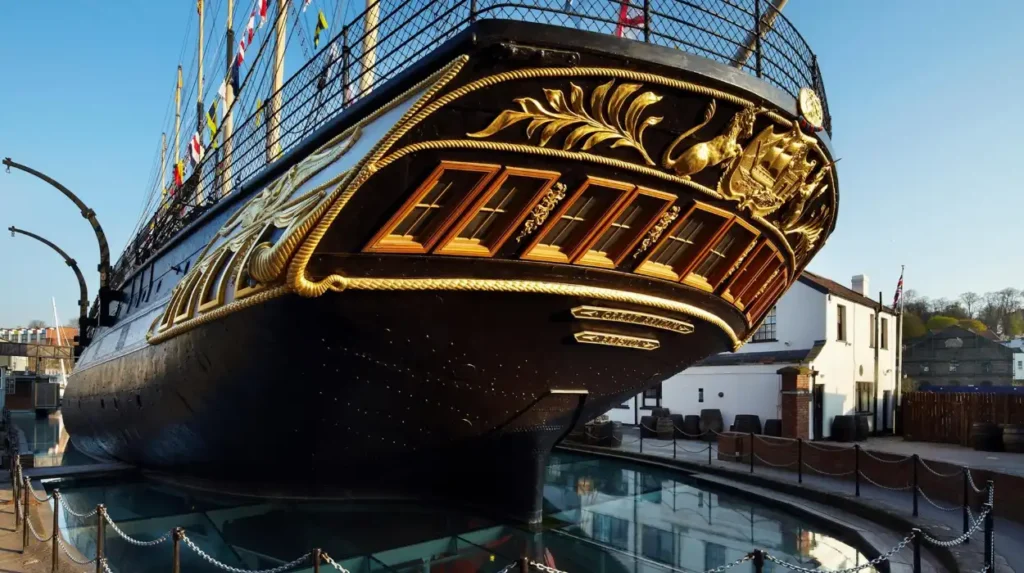
2. SS Great Britain
The SS Great Britain is one of Bristol’s most significant engineering and maritime heritage attractions.
Designed by Isambard Kingdom Brunel, the vessel was built at Bristol’s Great Western Dockyard and launched in 1843.
It was the first iron-hulled, screw-propelled ocean-going ship and represented an important stage in the development of modern maritime engineering.
The ship operated in passenger and commercial transportation before later serving other maritime purposes.
Its preserved location at the Great Western Dockyard allows visitors to examine Victorian shipbuilding, marine engineering and the development of steam-powered transportation.
3. Underfall Yard
Underfall Yard provides an understanding of the engineering systems required to maintain Bristol Harbour.
The site contains historic workshops, a hydraulic Power House, engineering machinery and a traditional slipway.
Its industrial significance comes from the relationship between the harbour’s water-management system and the workers responsible for maintaining it.
The visitor centre explains the development of the Floating Harbour and the technologies used in dock operations.
Underfall Yard also demonstrates the continued relevance of traditional marine engineering skills.
4. Bristol Temple Meads
Bristol Temple Meads is an important example of Victorian railway engineering.
The original station was constructed between 1839 and 1841 for the Great Western Railway. Isambard Kingdom Brunel designed the original railway station.
Its historic structures demonstrate the architectural and engineering requirements of nineteenth-century railway transportation.
The original Brunel station and later station buildings are recognised through Grade I listed status.
Railways strengthened Bristol’s industrial economy by connecting manufacturers, warehouses, ports and commercial markets.
5. Aerospace Bristol
Aerospace Bristol explores the city’s aircraft manufacturing and aviation engineering history.
The museum is located at Filton, an area closely associated with the development of the Bristol Aeroplane Company.
Its collection includes Concorde 216, the final Concorde to fly, which returned to Filton in November 2003.
The museum explains how Bristol’s aircraft manufacturing industry developed through aircraft design, engine production and international aerospace collaboration.
How Did Railways and Engineering Transform Bristol’s Industrial Economy?
Railways and engineering transformed Bristol by improving connections between manufacturing districts, ports and national markets. Brunel’s Great Western Railway strengthened transportation, while industrial workshops developed machinery, locomotives, bridges, ships and engineering equipment for commercial and public infrastructure.
Railway development was a major part of Bristol’s nineteenth-century industrial transformation.
Before railway expansion, manufacturers relied heavily on waterways, horse-drawn transport and road networks. These systems restricted the speed and capacity of commercial distribution.
The Great Western Railway introduced a more efficient transportation connection between Bristol and London.
What Was Brunel’s Contribution to Bristol’s Engineering Heritage?
Isambard Kingdom Brunel was one of the most influential engineers associated with Bristol’s industrial history.
He worked on major transportation and engineering projects, including:
- Great Western Railway, connecting Bristol with London.
- Bristol Temple Meads, the city’s historic railway station.
- SS Great Britain, an innovative iron-hulled steamship.
- Floating Harbour improvements, including engineering solutions for sediment management.
- Railway bridges and tunnels, supporting the expansion of railway infrastructure.
Brunel’s work demonstrated the relationship between engineering innovation and industrial development.
How Did the Great Western Railway Support Manufacturing?
The Great Western Railway connected Bristol with important commercial destinations and industrial regions.
The Bristol to London Paddington railway service began in 1841 following the completion of the route. The railway improved passenger transportation and enabled more efficient movement of goods.
Railway connections supported several industrial activities, including:
- Transporting manufactured goods to national markets.
- Delivering raw materials to factories.
- Connecting warehouses with commercial distribution networks.
- Supporting industrial employment and regional investment.
Railway infrastructure also influenced the development of industrial buildings near stations, sidings and goods yards.
Bristol Temple Meads remains a visible example of the relationship between railway engineering and urban development.
How Did Bristol Develop into an Aerospace and Manufacturing Centre?
Bristol developed into an aerospace manufacturing centre through early aircraft production at Filton, aircraft engine engineering, military aviation and international commercial aircraft programmes. The legacy continues through aerospace research, aircraft wing development, advanced engineering and specialist manufacturing.
Bristol’s industrial development continued beyond traditional shipbuilding and port-related manufacturing.
During the twentieth century, the city and surrounding areas developed a significant aircraft manufacturing industry. Filton became a major centre for aircraft design, construction and engineering.
What Was the Bristol Aeroplane Company?
The Bristol Aeroplane Company was established at Filton in 1910. It became an important British aircraft manufacturer and contributed to the development of military and commercial aviation.
Its early manufacturing activities included aircraft production and the development of aero-engine technology.
During the First World War, the company produced aircraft including the Bristol Fighter.
During the Second World War, its manufacturing operations expanded to meet military aviation requirements. Aircraft such as the Bristol Blenheim and Beaufighter became important products of the company’s engineering programme.
The Filton manufacturing complex grew into a major aircraft production site.
Why Is Concorde Important to Bristol’s Industrial History?
Concorde represents one of the most significant achievements in Bristol’s aerospace manufacturing history.
The supersonic passenger aircraft was developed through British and French engineering cooperation. Bristol’s aircraft manufacturing industry played an important role in its design and production.
Filton became one of the two principal Concorde assembly locations, alongside Toulouse in France.
The first British-built Concorde prototype completed its maiden flight from Filton on 9 April 1969.
Concorde used four Rolls-Royce/SNECMA Olympus engines. Its development required advanced aerodynamic design, engine technology, materials engineering and manufacturing coordination.
The final Concorde flight took place on 26 November 2003, when Concorde 216 returned to Filton.
Today, the aircraft remains a major part of Aerospace Bristol’s collection and represents the city’s contribution to international aerospace engineering.
Which Aerospace Companies Continue Bristol’s Engineering Legacy?
Bristol’s aerospace heritage continues through major engineering and manufacturing organisations.
Airbus has a significant presence at Filton, where aircraft wing design and engineering activities support commercial aviation programmes.
Rolls-Royce is associated with the region’s historic aero-engine manufacturing development.
BAE Systems also has historical links with the Bristol aircraft manufacturing industry.
These organisations demonstrate how traditional manufacturing capabilities developed into specialised aerospace engineering.
According to Airbus, its UK commercial aircraft workforce numbers approximately 12,000 employees across four UK sites. Filton contributes specialist expertise in wing design and development.

What Can Historic Industrial Buildings Reveal About Bristol’s Working Communities?
Bristol’s historic industrial buildings reveal how manufacturing shaped employment, housing, transport and neighbourhood development. Factories, warehouses, workshops and dock facilities provide evidence of working conditions, specialist occupations, industrial investment and the relationship between commercial activity and everyday life.
Industrial heritage is not limited to machinery and architecture. It also includes the people who worked in factories, maintained ships, operated railway systems and supported commercial distribution.
Bristol’s manufacturing industries created employment for skilled and unskilled workers. Industrial occupations included:
- Factory workers, involved in processing and packaging products.
- Engineers, responsible for designing and maintaining machinery.
- Shipwrights, specialising in vessel construction and repair.
- Dockworkers, handling imported and exported cargo.
- Railway workers, maintaining trains and transportation infrastructure.
- Metalworkers, producing and repairing industrial equipment.
These occupations contributed to the development of industrial communities across Bristol.
How Did Factories Influence Bristol’s Neighbourhoods?
Large manufacturing businesses influenced the physical development of Bristol’s neighbourhoods.
Bedminster developed important connections with tobacco and manufacturing industries. Industrial employment also influenced surrounding housing, commercial premises and transportation routes.
Other parts of Bristol developed around docks, railway facilities, engineering workshops and food-processing businesses.
Industrial buildings frequently occupied large areas of land because manufacturing required production floors, storage facilities, loading spaces and machinery rooms.
These buildings also influenced the appearance of local streets through their brick façades, chimneys, large windows and distinctive industrial architecture.
What Was the Social Impact of Industrialisation?
Industrialisation changed employment patterns and working conditions.
Factory employment created regular industrial occupations, but workers also faced demanding physical environments, long working hours and occupational hazards.
Industrial communities developed around workplaces, transport routes and local commercial services.
Bristol’s industrial history also reflects inequalities associated with wealth, colonial trade and labour exploitation. Understanding these issues provides a more complete account of the city’s economic development.
The history of tobacco, sugar and cocoa manufacturing cannot be separated from the international supply chains that supported these industries.
How Is Bristol Preserving Its Industrial Heritage Today?
Bristol preserves its industrial heritage through museums, listed buildings, historic dock infrastructure, conservation programmes, educational collections and adaptive reuse projects. These activities protect important industrial structures while giving former factories, warehouses and engineering sites new cultural and economic purposes.
Industrial preservation protects the physical evidence of historic manufacturing and transportation.
In Bristol, conservation activities focus on maintaining historic structures, documenting industrial processes and making heritage accessible to residents, researchers and visitors.
What Role Do Museums Play in Industrial Preservation?
Museums provide collections, exhibitions and educational resources that explain Bristol’s industrial development.
M Shed is particularly important because its collections connect industrial history with the city’s wider social and maritime development.
Aerospace Bristol preserves the history of aircraft manufacturing and technological innovation.
The SS Great Britain provides direct access to an important example of Victorian shipbuilding.
Bristol Archives also supports historical research through documents, photographs, maps and other records. The archives preserve evidence covering ten centuries of the city’s history.
Why Are Historic Industrial Buildings Reused?
Adaptive reuse is the process of converting an existing building for a different purpose while retaining important historic features.
Bristol’s former industrial and dock buildings offer opportunities for cultural, commercial, residential and educational uses.
Examples include:
- Former warehouses converted into museums and cultural spaces.
- Historic dock buildings adapted for visitor facilities.
- Industrial premises reused for offices and creative businesses.
- Former engineering sites maintained as working heritage facilities.
The former transit shed occupied by M Shed demonstrates how an industrial building can serve a new public function while retaining its connection with Bristol Harbour.
Adaptive reuse also reduces the need to demolish historically important structures.
How Does Industrial Archaeology Support Conservation?
Industrial archaeology identifies, documents and interprets physical evidence associated with manufacturing and transportation.
The Bristol Industrial Archaeological Society contributes to this work through historical research and documentation of industrial sites.
Its resources include historic manufacturing records, maps, photographs and information about industries such as tobacco processing, sugar refining, engineering, glassmaking and shipbuilding.
These records help researchers identify industrial buildings and understand their original functions.
Bristol City Council also uses conservation policies and heritage assessments to recognise the significance of historic buildings and industrial landscapes.
Explore More Area Guide
Bristol Maritime History: From Roman Port to Global Shipping Hub
Bristol Architecture Guide: Historic Buildings, Styles and Landmarks
What Is the Future of Bristol’s Industrial Heritage?
Bristol’s industrial heritage remains relevant through historic building conservation, advanced manufacturing, aerospace engineering, industrial tourism and technical education. Future development connects the city’s manufacturing traditions with modern technologies, sustainable production and the continued reuse of historic industrial infrastructure.
Bristol’s industrial past continues to influence its economic and cultural identity.
The city retains important engineering capabilities, particularly in aerospace, advanced manufacturing and marine technology. These industries build on technical knowledge developed through earlier generations of manufacturing.
How Does Industrial Heritage Support Tourism?
Industrial heritage attracts visitors interested in engineering, transportation, architecture and local history.
Museums, preserved ships, historic railway stations and former industrial buildings provide opportunities to understand Bristol’s development.
Heritage tourism also supports local businesses, hospitality services, educational activities and cultural organisations.
Visitors can combine industrial heritage attractions with walks around Bristol Harbour, historic waterfront districts and former manufacturing neighbourhoods.
Why Is Sustainable Industrial Development Important?
Sustainable industrial development focuses on reducing environmental impacts while maintaining productive economic activity.
Bristol’s industrial heritage offers opportunities to examine how manufacturing systems have changed over time.
Modern industrial development increasingly involves:
- Energy-efficient manufacturing equipment.
- Sustainable construction and building refurbishment.
- Reduced industrial waste and improved material recycling.
- Low-carbon transportation and logistics.
- Advanced engineering and research.
Historic industrial buildings also contribute to sustainability when they are maintained and adapted instead of unnecessarily demolished.
How Can Future Generations Learn About Bristol’s Industrial Past?
Education and historical research help future generations understand the relationship between industrial development, technology, employment and social change.
Museums, universities, archives and heritage organisations provide resources for studying Bristol’s industrial history.
Schools and educational groups can examine historic machinery, engineering achievements, manufacturing processes and the experiences of industrial workers.
Preserving industrial records also ensures that important information about former businesses, working communities and manufacturing technologies remains accessible.
Why Does Bristol Industrial Heritage Matter?
Bristol industrial heritage explains how maritime trade, manufacturing, engineering and transportation shaped the city’s development over several centuries. Its history includes the Floating Harbour, tobacco and chocolate factories, sugar refineries, glassmaking, shipbuilding, Victorian railway engineering and modern aerospace manufacturing.
Historic locations such as M Shed, SS Great Britain, Underfall Yard, Bristol Temple Meads and Aerospace Bristol preserve important evidence of these developments.
The city’s industrial history also provides an opportunity to examine the economic inequalities and exploitation associated with colonial trade and industrial production.
Today, Bristol’s industrial heritage supports education, tourism, conservation and economic regeneration. Protecting these historic assets ensures that the city’s manufacturing achievements, engineering innovations and working communities remain part of its cultural identity.
What is Bristol industrial heritage?
Bristol industrial heritage refers to the historic factories, warehouses, docks, shipyards, railway buildings and manufacturing industries that shaped the city’s economic and social development. It includes maritime trade, tobacco production, chocolate manufacturing, shipbuilding and aerospace engineering.