Bristol maritime history explains how the River Avon, the Severn Estuary and international sea routes transformed Bristol into one of England’s most important trading ports. From Roman settlements and medieval commerce to Atlantic shipping, industrial engineering and modern container terminals, the city’s maritime development shaped its economy, architecture, population and cultural identity.
- What Is Bristol’s Maritime History?
- How Did Bristol Become an Important Maritime Port?
- How Did Medieval Bristol Develop Its Maritime Trade?
- What Role Did Bristol Play in Atlantic Exploration?
- How Did the Transatlantic Slave Trade Shape Bristol’s Maritime History?
- Why Was Bristol’s Floating Harbour Built?
- How Did Isambard Kingdom Brunel Transform Bristol’s Maritime Industry?
- What Is the Historical Importance of the SS Great Britain?
- How Did Avonmouth and Royal Portbury Expand Bristol’s Maritime Trade?
- What Happened to Bristol’s Historic City Docks?
- Which Historic Maritime Attractions Can Visitors Explore in Bristol?
- How Does Bristol’s Maritime Heritage Influence the City Today?
- What Is the Future of Bristol’s Maritime History and Port Heritage?
- Why Is Bristol’s Maritime History Important?
Located in South West England, Bristol developed around the River Avon, approximately six miles inland from the river’s meeting point with the Severn Estuary. Its geographical position provided access to inland markets and international shipping routes. The city’s harbour connected merchants, sailors, manufacturers and overseas trading communities for centuries.
Today, Bristol’s maritime heritage remains visible around the Floating Harbour, historic dockyards, maritime museums and working port facilities at Avonmouth and Royal Portbury. These locations preserve evidence of the city’s commercial expansion, technological achievements and difficult connections with colonialism and the transatlantic slave trade.
What Is Bristol’s Maritime History?
Bristol’s maritime history is the development of its port, shipping industry, overseas trade and seafaring communities from Roman times to the present. It includes medieval commerce, Atlantic exploration, slavery, shipbuilding, industrial engineering and modern international shipping operations.
Maritime history examines the relationship between communities and the sea, including navigation, commercial shipping, ship construction, naval activity and coastal economies. In Bristol, this history also includes river transportation because the River Avon provided the city’s principal connection with the Bristol Channel.
Bristol’s maritime development began with its advantageous position beside navigable waterways. The River Avon provided access to the Severn Estuary and the wider Atlantic trading network. The surrounding landscape also offered sheltered locations for vessels and opportunities for establishing settlements, markets and warehouses.
The city’s port became increasingly important as merchants developed connections with Ireland, continental Europe, North America, the Caribbean and West Africa.
Bristol’s maritime economy involved several interconnected industries:
- Commercial shipping, including the transportation of imported and exported goods.
- Shipbuilding, including wooden sailing vessels and industrial steamships.
- Dock engineering, including locks, sluices and harbour infrastructure.
- Maritime finance, including insurance, investment and merchant credit.
- Port employment, including sailors, dockworkers, shipwrights and warehouse workers.
These industries created employment and supported Bristol’s urban expansion. They also connected local economic development with international political and commercial systems.
How Did Bristol Become an Important Maritime Port?
Bristol became an important maritime port because its position between the River Avon and Severn Estuary provided access to inland markets and international shipping routes. Roman settlement, medieval trading privileges and expanding commercial networks established its importance.
The earliest documented maritime foundations of the Bristol area extend to Roman Britain. The Roman port of Portus Abonae operated at Sea Mills, northwest of modern Bristol, during the first century AD.
Sea Mills served a military and commercial settlement connected to Roman transportation networks. Archaeological evidence establishes the area’s importance during Roman occupation, which ended during the fourth century AD. The Bristol Port Company
Following the Roman period, Bristol developed into an important settlement around the meeting points of the River Avon and River Frome.
The settlement was historically known as Brigstow, meaning the place at the bridge. Its position supported trade between inland communities and maritime markets.
In 1155, Bristol received its official charter, marking an important stage in its development as a recognised commercial centre. Its merchants gradually expanded trading relationships with Ireland, Wales and continental European ports.
By the thirteenth century, Bristol’s commercial infrastructure was developing rapidly. In 1239, the first quays were constructed along the River Frome near its meeting point with the Avon. These facilities improved the movement of goods between ships and the city’s markets. The Bristol Port Company+1
The harbour’s geographical position offered both advantages and disadvantages. Ships accessed the city through the tidal River Avon, but the river’s winding course and changing water levels created navigational difficulties.
Nevertheless, Bristol’s commercial importance continued to increase. By the fifteenth century, its market and harbour had achieved national and international significance.
How Did Medieval Bristol Develop Its Maritime Trade?
Medieval Bristol developed maritime trade through commercial connections with Ireland, Wales, continental Europe and Atlantic fishing communities. Its merchants exported manufactured products and imported valuable commodities, while expanding quays, markets and shipping networks supported growing international commerce.
During the medieval period, Bristol became one of England’s leading ports outside London. Its merchants traded across the Irish Sea and developed connections with European commercial centres.
The port handled a variety of goods, including wool, cloth, wine, timber, agricultural products and metals. Wool and woollen textiles formed important parts of England’s medieval export economy.
Bristol’s maritime position also supported trade with Ireland. Ships transported manufactured goods and other supplies while returning with agricultural products and materials.
The city gradually developed the infrastructure required to manage increasing commercial activity. Quays provided access for loading and unloading vessels, while warehouses supported the storage and distribution of imported goods.
Bristol Bridge and the surrounding commercial district became important centres of trade. The River Avon connected these commercial areas with the wider maritime network.
By the fifteenth century, Bristol merchants had established a strong reputation in international commerce. Their business activities provided the financial foundations for subsequent Atlantic exploration and overseas trading ventures.
The medieval harbour also influenced Bristol’s physical development. Commercial buildings, streets, warehouses and residential districts expanded around the waterfront, creating a close relationship between the city’s economy and its waterways.
What Role Did Bristol Play in Atlantic Exploration?
Bristol played an important role in Atlantic exploration through voyages seeking new trading routes, fishing grounds and overseas commercial opportunities. Its merchants supported expeditions towards Newfoundland and North America, establishing connections that influenced England’s later Atlantic expansion.
During the fifteenth and sixteenth centuries, Bristol merchants increasingly looked towards the Atlantic Ocean.
The city developed commercial interests in Newfoundland fisheries, North American coastal waters and the Caribbean. These activities reflected wider European competition for maritime routes, resources and overseas markets.
One of the most significant figures associated with Bristol’s exploration history was John Cabot.
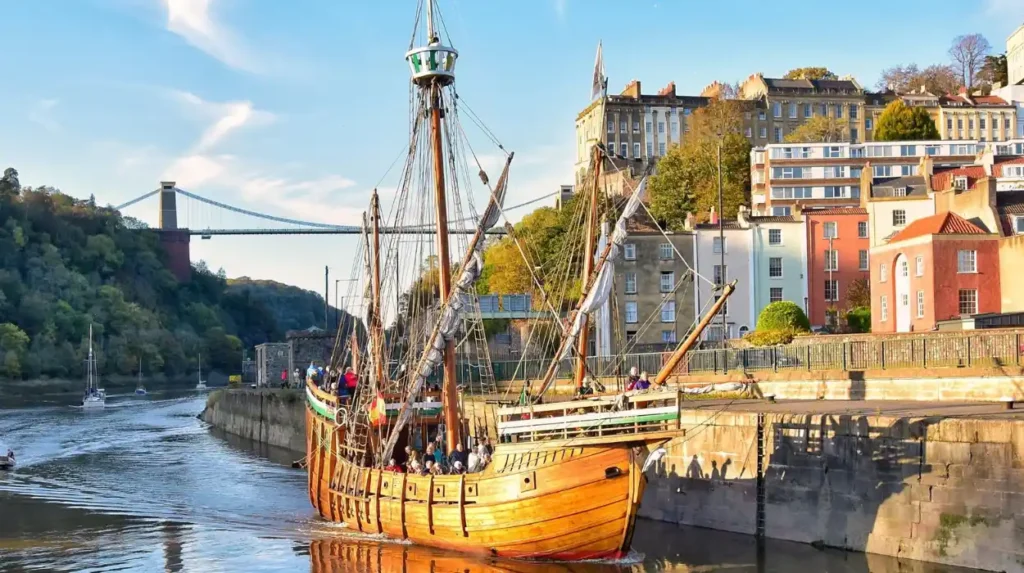
Cabot, also known as Giovanni Caboto, received support from Henry VII for an Atlantic expedition. In 1497, he sailed west aboard a vessel traditionally identified as the Matthew.
The voyage reached land in North America, although the precise location remains debated. Cabot’s expedition became an important milestone in English-sponsored Atlantic exploration.
The Matthew is particularly significant to Bristol’s maritime identity. A modern replica represents the type of vessel associated with Cabot’s voyage and helps visitors understand the city’s early Atlantic connections.
During the sixteenth and seventeenth centuries, Bristol merchants expanded their interests in Newfoundland fisheries, North American colonies and Caribbean commerce.
These developments connected Bristol with wider imperial expansion. They also established commercial networks that later became closely associated with plantation economies and the transatlantic trafficking of enslaved Africans.
How Did the Transatlantic Slave Trade Shape Bristol’s Maritime History?
The transatlantic slave trade became a major part of Bristol’s maritime economy after 1698, when the Royal African Company’s trading monopoly ended. Bristol merchants organised thousands of voyages, transporting enslaved Africans across the Atlantic and generating wealth through shipping, manufacturing and plantation commerce.
Bristol’s involvement in the transatlantic slave trade represents one of the most significant and damaging chapters in its maritime history.
Before 1698, the Royal African Company controlled the English trade with West Africa. The company received its royal charter in 1672 under King Charles II. Bristol merchants, including members of the Society of Merchant Venturers, campaigned for access to this trade.
Edward Colston, a Bristol-born merchant and prominent member of the Royal African Company, became closely associated with the city’s involvement in slavery.
Following the removal of the company’s monopoly in 1698, Bristol merchants expanded their direct participation in the trafficking of enslaved Africans.
The commercial system operated through interconnected Atlantic routes:
- Ships transported manufactured goods from Bristol to West Africa.
- Merchants exchanged goods for enslaved African people.
- Enslaved people were forcibly transported across the Atlantic to the Caribbean and North America.
- Ships returned with plantation commodities, including sugar, tobacco and rum.
This system is commonly described as the triangular trade. It depended on the forced labour, displacement and suffering of millions of African people across the Atlantic world.
Bristol became Britain’s leading slave-trading port during the early eighteenth century. Historical research identifies 2,108 slave-trading voyages fitted out in Bristol between 1698 and 1807. Estimates indicate that Bristol merchants transported approximately 587,000 enslaved Africans during this period, although the number of people who survived the crossing was substantially lower.
The economic consequences extended far beyond individual shipowners. Shipbuilders, sailors, warehouse operators, insurers, manufacturers and merchants participated in industries connected to slave-trading voyages and plantation commodities.
Bristol’s sugar refineries and tobacco businesses also benefited from goods produced through enslaved labour.
By the mid-eighteenth century, Liverpool had overtaken Bristol as Britain’s leading slave-trading port. However, Bristol’s commercial connections with slavery continued into the late eighteenth century.
The British Parliament passed the Abolition of the Slave Trade Act in 1807, prohibiting British participation in the transatlantic slave trade. Slavery itself was abolished throughout most of the British Empire through the Slavery Abolition Act 1833, which took effect in 1834, with important exceptions and a subsequent period of forced apprenticeship.
Understanding this history is essential to understanding Bristol’s historic wealth, commercial architecture and present-day discussions about historical responsibility.
The collections at M Shed provide historical material relating to Bristol’s involvement in the slave trade, abolition and the experiences of affected communities.
Why Was Bristol’s Floating Harbour Built?
Bristol’s Floating Harbour was constructed between 1804 and 1809 to overcome the navigational difficulties caused by the River Avon’s extreme tidal changes. Engineer William Jessop designed the system, allowing ships to remain afloat regardless of external tidal conditions.
The Floating Harbour represents one of the most important engineering developments in Bristol’s maritime history.
Before its construction, ships entering Bristol depended on the tidal movement of the River Avon. The Severn Estuary experiences exceptionally large tidal variations, while water levels around Bristol can change dramatically between high and low tide.
During low tide, sections of the river became shallow and muddy. Larger vessels frequently grounded, restricting commercial movement and creating delays for merchants.
By the late eighteenth century, Bristol’s increasing shipping activity had placed additional pressure on the existing harbour system. The number of vessels using the port had doubled during the latter half of the century.
The situation reached a crisis in 1788, creating demand for a more reliable harbour design.
In 1802, the Bristol Docks Company commissioned engineer William Jessop to develop an improvement scheme.
Construction began in 1804. The project transformed approximately two miles of tidal river into a controlled, non-tidal harbour.
The engineering system included:
- Cumberland Basin, which controlled vessel access from the River Avon.
- Entrance locks, which regulated movement between tidal and non-tidal water.
- The New Cut, a separate tidal channel that maintained the river’s flow.
- Harbour dams and sluices, which controlled water levels.
The Floating Harbour officially opened on 1 May 1809. It enclosed approximately 80 acres of water and enabled vessels to remain afloat at different stages of the tide. museums.bristol.gov.uk+2
The project helped protect Bristol’s commercial position during a period of increasing competition from other British ports.
It also created the foundation for further dock development, industrial investment and maritime engineering during the nineteenth century.
Today, Bristol’s Floating Harbour remains an important geographical and historical feature. The water level is maintained through harbour infrastructure rather than following the external tide directly.
How Did Isambard Kingdom Brunel Transform Bristol’s Maritime Industry?
Isambard Kingdom Brunel transformed Bristol’s maritime industry through innovative ship design, harbour engineering and industrial construction. His work included the SS Great Britain, Underfall sluices and improvements that strengthened the city’s position in nineteenth-century maritime transportation.
Isambard Kingdom Brunel was one of the most influential engineers associated with Bristol’s industrial development.
Brunel worked across several major infrastructure projects, including railways, bridges, tunnels and ships. His maritime engineering contributed to the development of modern ocean transportation.
One of his most significant contributions was the design of the SS Great Britain.
Brunel also addressed practical problems affecting the Floating Harbour. Silt accumulation reduced water depth and created difficulties for vessels using the docks.
His engineering improvements included the Underfall sluices, which helped remove accumulated sediment by controlling water movement.
The Underfall system formed part of a wider programme of dock improvements during the nineteenth century. Its engineering principles remain visible at Underfall Yard.
Brunel’s contribution demonstrates how maritime history involved more than ships and overseas trade. Engineering systems, harbour maintenance and transportation infrastructure were equally important to Bristol’s commercial development.
His work also connected Bristol’s maritime industry with the wider Industrial Revolution, when iron construction, steam power and mechanical systems transformed transportation across Britain.
What Is the Historical Importance of the SS Great Britain?
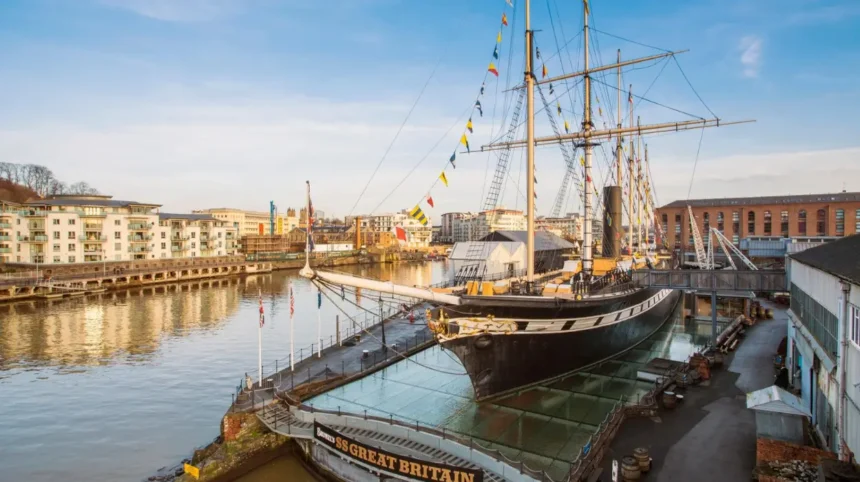
The SS Great Britain is an internationally significant nineteenth-century steamship designed by Isambard Kingdom Brunel. Launched in Bristol in 1843, it introduced pioneering iron-hulled and screw-propelled engineering to large ocean-going passenger transportation.
The SS Great Britain represents a major achievement in Bristol’s maritime and industrial history.
The ship was constructed at the Great Western Dockyard in Bristol under Brunel’s direction. Shipbuilder William Patterson undertook the construction work.
The vessel was launched into Bristol’s Floating Harbour on 19 July 1843, with Prince Albert attending the ceremony.
At the time of its launch, the SS Great Britain was the world’s largest ship. Its design combined an iron hull with screw propulsion, distinguishing it from conventional wooden sailing ships and paddle-driven steamships.
Its important technical characteristics included:
- An iron hull that supported a larger vessel structure.
- A screw propeller that provided mechanical propulsion.
- Steam-powered engines for ocean transportation.
- A design suitable for long-distance passenger and cargo services.
The SS Great Britain began its passenger service in 1845, travelling between Liverpool and New York.
In 1852, it entered the Australian passenger trade, transporting emigrants and other travellers between Britain and Australia.
During its working life, the vessel travelled across five continents and completed 32 circumnavigations of the world.
Following damage from a storm in 1886, the ship eventually ended its active ocean-going career. It was later used as a storage vessel in the Falkland Islands.
In 1970, a rescue operation brought the ship back to Bristol, approximately 127 years after its original launch.
The vessel returned to the same dry dock where it had been constructed. A major conservation programme subsequently restored and preserved the historic ship.
Today, visitors can explore its decks, engineering spaces and reconstructed Victorian interiors at the Bristol Museums’ SS Great Britain attraction.
How Did Avonmouth and Royal Portbury Expand Bristol’s Maritime Trade?
Avonmouth and Royal Portbury expanded Bristol’s maritime trade by providing larger dock facilities closer to the Severn Estuary. Their development accommodated increasing vessel sizes, industrial cargoes and modern container shipping as the older city docks became less suitable.
By the nineteenth century, the increasing size of commercial vessels created new challenges for Bristol’s traditional harbour.
The six-mile route between Bristol’s city docks and the Severn Estuary became increasingly difficult for larger ships to navigate. Vessels frequently encountered shallow water and navigational restrictions.
Commercial competition also encouraged investment in new facilities closer to the sea.
Avonmouth Dock opened in 1877, providing a new location for handling larger vessels and commercial cargoes.
Initially, Avonmouth struggled financially because it competed with the existing City Docks. The Port of Bristol Authority took control of Avonmouth Docks in 1884, bringing the facilities under a common management structure.
In 1908, the Royal Edward Dock opened as an extension of Avonmouth’s facilities. King Edward VII attended its opening. The Bristol Port Company
During the twentieth century, shipping technology continued to change.
Containerisation transformed international cargo transportation by introducing standardised metal containers that could move between ships, trains and lorries.
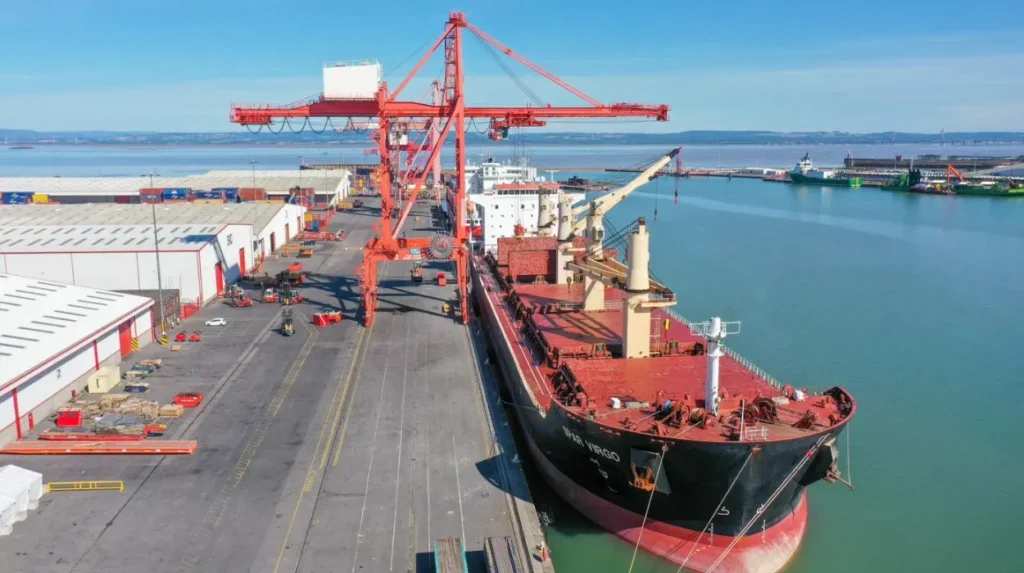
Existing facilities struggled to accommodate increasingly large container vessels. Bristol therefore developed Royal Portbury Dock across the River Avon from Avonmouth.
Royal Portbury Dock officially opened in 1977. Its large locks supported vessels that required greater dimensions and deeper water access.
The development strengthened Bristol’s ability to participate in modern international shipping.
Today, Avonmouth and Royal Portbury form the principal operational facilities of the Bristol Port complex. They handle commercial shipping and distribution activities that connect South West England with international markets.
What Happened to Bristol’s Historic City Docks?
Bristol’s historic City Docks gradually lost their commercial importance as larger ships, containerisation and modern port facilities changed shipping requirements. Commercial dock operations ended in 1975, leading to redevelopment of the historic waterfront for cultural, residential and leisure activities.
For much of the nineteenth and twentieth centuries, Bristol’s Floating Harbour remained central to the city’s commercial economy.
The docks supported cargo handling, ship repair, warehousing and industrial transportation. Warehouses, cranes, shipyards and engineering facilities operated along the waterfront.
However, changes in international shipping gradually reduced the suitability of the historic docks.
Larger ships required deeper water, wider entrances and improved loading facilities. Containerisation also changed the way commercial cargo moved between ships and land transportation.
The development of Avonmouth and Royal Portbury provided more suitable facilities for these operations.
In 1975, Bristol’s historic City Docks closed to commercial port activity. This marked the end of an important period in the city’s traditional maritime economy.
The closure created opportunities for waterfront redevelopment.
Bristol began transforming former industrial and commercial dockland into public spaces, museums, cultural attractions and residential developments.
The Bristol Industrial Museum opened in 1978, preserving aspects of the city’s industrial and maritime heritage. It later closed in 2006 as part of the development of M Shed.
M Shed opened in 2011, providing a museum dedicated to Bristol’s history, including its industrial, maritime and social development.
The redevelopment also included new public spaces and waterfront developments such as Wapping Wharf, which opened its first phase in 2016.
The historic docks therefore remain an important part of Bristol’s identity, even though their original commercial function has changed.
Which Historic Maritime Attractions Can Visitors Explore in Bristol?
Bristol preserves its maritime history through historic ships, museums, dockyards, engineering structures and waterfront landmarks. Important locations include the SS Great Britain, M Shed, Underfall Yard, the Floating Harbour and the replica Matthew.
Bristol’s maritime attractions provide access to different periods of the city’s development. Visitors can explore Roman archaeological remains, medieval commercial locations, Victorian engineering and twentieth-century dock operations.
SS Great Britain
The SS Great Britain provides an opportunity to explore Brunel’s pioneering ship design. Its original dry dock, restored ship interiors and museum collections explain the development of nineteenth-century ocean transportation.
M Shed
M Shed is a museum on Bristol’s Harbourside. Its collections explore the city’s industrial development, maritime commerce, working communities and connections with the transatlantic slave trade.
Underfall Yard
Underfall Yard preserves important elements of Bristol’s historic dock engineering. Its hydraulic machinery, workshops, slipways and harbour infrastructure demonstrate how engineers maintained the Floating Harbour.
The Matthew
The Matthew is a replica of the type of vessel associated with John Cabot’s 1497 Atlantic voyage. It provides a visible connection with Bristol’s early exploration history.
Bristol Floating Harbour
The Floating Harbour remains one of the most recognisable parts of the city’s maritime landscape. Historic quays, warehouses, bridges and waterfront buildings reveal the former commercial importance of the docks.
Sea Mills Roman Port
Sea Mills contains archaeological evidence associated with Portus Abonae, the Roman port that operated before the development of medieval Bristol.
These locations demonstrate how Bristol’s maritime history extends beyond individual ships. Its heritage includes commercial infrastructure, engineering achievements, industrial buildings and the communities connected with port employment.
How Does Bristol’s Maritime Heritage Influence the City Today?
Bristol’s maritime heritage continues to influence its economy, architecture, tourism and cultural identity. Historic docklands support museums and leisure activities, while Avonmouth and Royal Portbury maintain the city’s role in international shipping and regional logistics.
Bristol’s maritime development created lasting economic and physical changes across the city.
The historic harbour remains a major destination for visitors, businesses and cultural organisations. Former industrial buildings have been adapted for new uses, while historic vessels and engineering structures provide evidence of earlier commercial activity.
The city also retains an active relationship with maritime transportation.
The Bristol Port Company operates modern commercial port facilities at Avonmouth and Royal Portbury. These facilities support shipping, cargo handling, distribution and logistics.
Their operations connect the regional economy with international markets and supply chains.
Bristol’s maritime history also contributes to educational and cultural activities.
Museums and heritage organisations preserve historical records, ship models, photographs, engineering equipment and personal accounts. These collections help researchers examine commercial development, technological change and the experiences of maritime workers.
The city’s relationship with the transatlantic slave trade remains particularly important.
Historical research and museum exhibitions examine how Bristol’s wealth was connected to the forced transportation and exploitation of African people. These discussions also address the long-term consequences of slavery and the responsibilities associated with preserving historical evidence.
Maritime heritage therefore contributes to several areas of contemporary Bristol:
- Tourism and heritage education, including visits to the SS Great Britain and M Shed.
- Urban regeneration, including the redevelopment of former docklands.
- International commerce, including modern shipping at Avonmouth and Royal Portbury.
- Historical research, including the study of slavery, abolition and Atlantic trade.
- Engineering conservation, including the preservation of historic harbour machinery.
Bristol’s maritime identity continues to develop through the combination of commercial port operations and heritage conservation.
Explore More Area Guide
Bristol Architecture Guide: Historic Buildings, Styles and Landmarks
Banksy Locations in Bristol: Famous Murals and Where to Find Them
What Is the Future of Bristol’s Maritime History and Port Heritage?
The future of Bristol’s maritime heritage depends on maintaining historic infrastructure, supporting international shipping, protecting museum collections and interpreting difficult historical experiences. Modern port investment and waterfront conservation will continue to connect Bristol’s commercial future with its maritime past.
Modern shipping faces changing requirements involving vessel capacity, cargo handling, environmental standards and transportation efficiency.
Bristol’s commercial port facilities continue to adapt to these developments. The Bristol Port Company has invested in infrastructure and logistics to maintain the competitiveness of Avonmouth and Royal Portbury.
Container shipping remains particularly important because international trade depends on efficient movement between maritime and land-based transportation systems.
Environmental management is another important part of future port development. Modern maritime operations require attention to emissions, energy use, water quality and the ecological conditions of the Severn Estuary.
Heritage conservation also remains essential.
Historic locations such as Underfall Yard and the SS Great Britain require continued maintenance to preserve their engineering and historical significance.
Bristol’s museums and archives also have an important educational responsibility. Their collections provide opportunities to examine the city’s achievements alongside the exploitation, inequality and environmental consequences associated with maritime expansion.
The future of Bristol’s maritime identity therefore involves both economic development and historical understanding.
The city continues to benefit from its geographical position, commercial infrastructure and international connections. At the same time, its historic harbour preserves evidence of the people, technologies and trading systems that shaped its development.
Why Is Bristol’s Maritime History Important?
Bristol maritime history explains the development of one of England’s most influential historic ports. From the Roman settlement at Sea Mills and medieval trading networks to Atlantic exploration, the Floating Harbour and Brunel’s SS Great Britain, maritime activity shaped the city’s economy and physical landscape.
The city’s involvement in the transatlantic slave trade also demonstrates the human consequences of international commercial expansion. Understanding this history requires recognising both Bristol’s engineering achievements and its connections with exploitation and colonialism.
Although the historic City Docks stopped commercial operations in 1975, Bristol remains an important maritime centre through Avonmouth and Royal Portbury.
Today, museums, historic ships, restored dockyards and working port facilities preserve different aspects of this heritage. Together, they demonstrate how Bristol developed from a historic river port into a city with lasting international maritime connections.
What is Bristol famous for in maritime history?
Bristol is famous for its historic seaport, Atlantic exploration, international trading networks, shipbuilding and maritime engineering. The city is also associated with Brunel’s SS Great Britain and the development of the Floating Harbour.