Bristol has one of the UK’s most established and diverse live music ecosystems. The city combines major concert halls, independent venues, grassroots rooms, community arts centres, converted historic buildings and specialist spaces. Its programme covers rock, indie, electronic music, jazz, classical, folk, reggae, hip-hop, drum and bass, soul and global music.
- What are the main live music venues in Bristol?
- How did Bristol develop its live music scene?
- Which Bristol venues are best suited to different types of live music?
- What makes Bristol Beacon important to live music in Bristol?
- Why is St George’s Bristol different from other music venues?
- Which grassroots and independent venues matter most in Bristol?
- What genres of live music can you hear in Bristol?
- What should visitors know before attending a Bristol live music venue?
- How important are live music venues to Bristol’s cultural economy?
- What is the future relevance of Bristol’s live music venues?
The modern scene reflects a long musical history. Bristol Beacon, formerly Colston Hall, opened in 1867 and has hosted more than 150 years of performances. Trinity Centre has presented major musical events since 1976 and identifies itself with the development of the “Bristol Sound”.
Today, venues operate at very different scales. Bristol Beacon provides large-scale concerts and multiple performance rooms. St George’s Bristol focuses heavily on acoustic-led concert experiences. The Fleece provides a 450-capacity independent room. Exchange combines community ownership with independent programming.
For visitors and residents, this variety makes venue selection dependent on the artist, genre, event format, capacity and location rather than on one single definition of a “best” venue.
What are the main live music venues in Bristol?
Live music venues in Bristol range from major concert halls and independent clubs to historic churches and grassroots rooms. Bristol Beacon, St George’s, The Fleece, Trinity Centre and Exchange illustrate the city’s scale, history, genres and community-focused live music infrastructure.
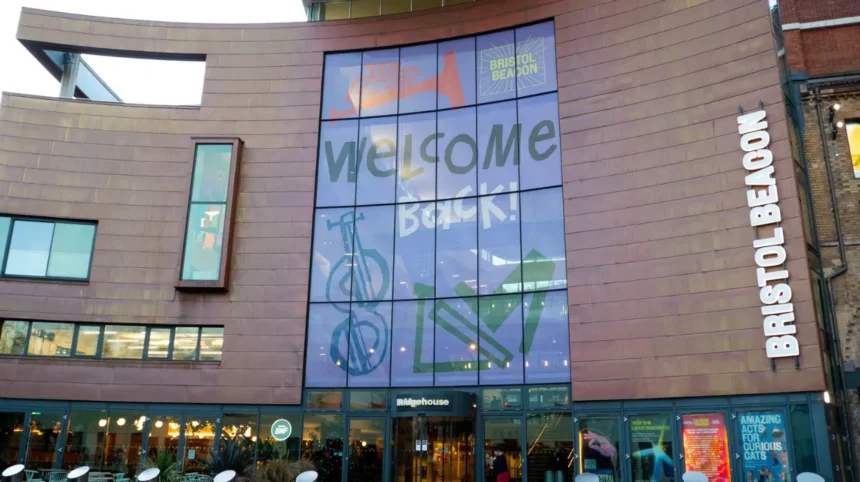
Bristol Beacon is the city’s major concert institution. Its restored building contains multiple performance spaces and presents orchestral concerts, contemporary gigs, festivals, club nights and other cultural events. The venue describes its programme as more than 800 gigs and festivals each year, including free performances and major festivals.
St George’s Bristol provides a different environment. The venue operates from a Grade II* listed former church dating from the early 19th century. Its 580-seat concert hall is recognised for its acoustic qualities and hosts classical, jazz, folk and contemporary music.
The Fleece is one of Bristol’s best-known independent venues. It has operated as a live music venue since 1982 and provides a 450-capacity room. Its programme combines live bands with club nights.
Trinity Centre is a community arts venue with a substantial live music heritage. The organisation states that it has hosted major musical events since 1976 and describes the venue as one of the few remaining independent music venues in the UK.
Exchange operates in Old Market as a community-owned, not-for-profit independent music venue. It opened as a live music and club venue in 2012 and now operates two stages, including a 250-capacity main stage and a 100-capacity basement stage opened in 2025.
Visit Bristol also identifies Thekla, Lakota, Strange Brew and The Louisiana among the city’s grassroots music venues.
How did Bristol develop its live music scene?
Bristol’s live music history combines Victorian concert institutions, independent clubs, grassroots rooms and community spaces. Bristol Beacon opened in 1867, while Trinity Centre has presented major musical events since 1976, creating a long institutional and grassroots framework for today’s scene.
The historical development of Bristol’s music venues follows several stages. Large cultural institutions established formal concert infrastructure during the Victorian period. Independent venues later created smaller spaces for popular music and emerging performers. Community organisations added spaces where music connected with local culture, education and social activity.
Bristol Beacon provides the clearest example of institutional continuity. The building opened on 20 September 1867. Its history includes orchestras, entertainers and popular music performances across more than 150 years. Its archive and Story Wall document more than 400 artists associated with its history.
The venue was known as Colston Hall until 2020. Bristol Music Trust announced the intention to adopt a new name in 2017. The name changed to Bristol Beacon on 23 September 2020 following consultation and a wider redevelopment process. The former name referred to Edward Colston, a merchant and slave trader.
Trinity Centre represents another part of Bristol’s musical history. Its organisers state that the venue has hosted major musical events since 1976 and identify it as a birthplace of the Bristol Sound. The venue has also supported local acts, international touring artists and sound-system culture.
The University of Bristol’s “Know Your Bristol” project also documents Bristol’s Black Afrikan Caribbean music heritage during the 1970s and 1980s. Its research highlights historic spaces such as the Bamboo Club and stresses the importance of preserving community-based musical histories.
This historical depth explains why Bristol’s live music identity extends beyond headline concerts. It includes popular music, electronic culture, sound-system traditions, jazz, classical performance, independent promotion and community arts.
Which Bristol venues are best suited to different types of live music?
Choose Bristol Beacon for major concerts, St George’s for acoustic-focused performances, The Fleece for established touring bands, Trinity Centre for grassroots and global sounds, and Exchange for independent programming. These venues cover different capacities, settings, genres and audience experiences locally.
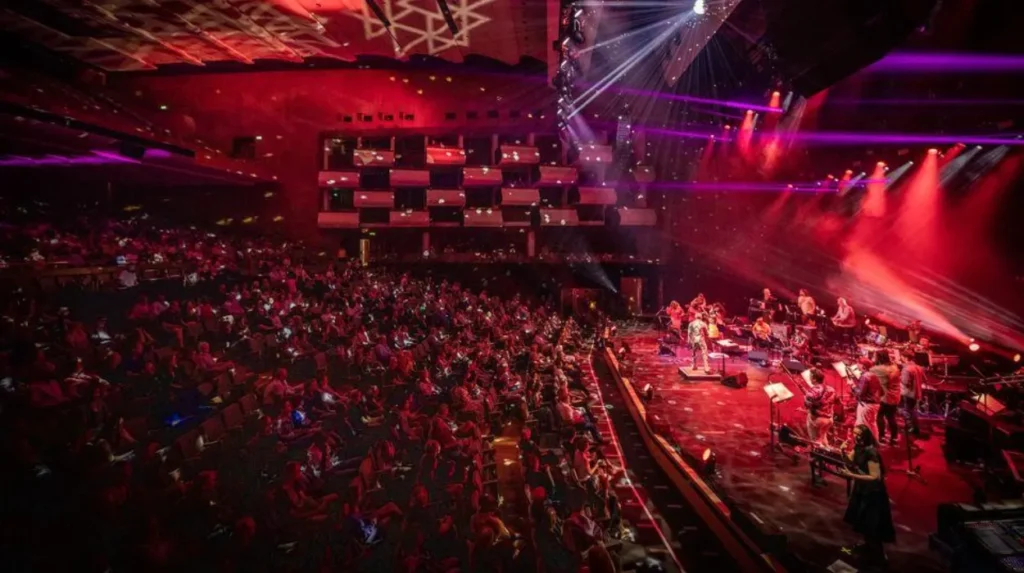
Bristol Beacon is appropriate for large-scale concerts and major touring productions. Its flagship Beacon Hall has a seated capacity of 1,866 and a standing capacity of 2,124. The space is designed for both orchestral performances and amplified contemporary music.
St George’s Bristol is particularly important for music where acoustic detail matters. Its main auditorium seats 580 people. The venue presents classical, jazz, folk and contemporary programmes. Its Glass Studio provides an additional performance space with capacity for up to 80 seated or 160 standing.
The Fleece occupies a smaller scale. Its 450-capacity room supports touring bands, emerging artists and club nights. Its long operating history has included performances by artists such as Radiohead, Oasis, Muse, Amy Winehouse, Ed Sheeran and Idles.
Trinity Centre has a particularly broad cultural programme. Recent programming has included reggae, electronic music, global sounds, Northern Soul, folk and community events. Its 2026 programme also includes performances and festivals connected with international and local music traditions.
Exchange is strongly associated with independent music and subculture. The venue has hosted artists including The 1975, Haim, George Ezra, IDLES, Sleaford Mods and Four Tet. Its two-room structure allows smaller emerging acts and established performers to occupy different scales.
This range means audiences can select venues according to musical style and performance scale. A large orchestral concert requires a different room from an underground electronic event or a small touring-band show.
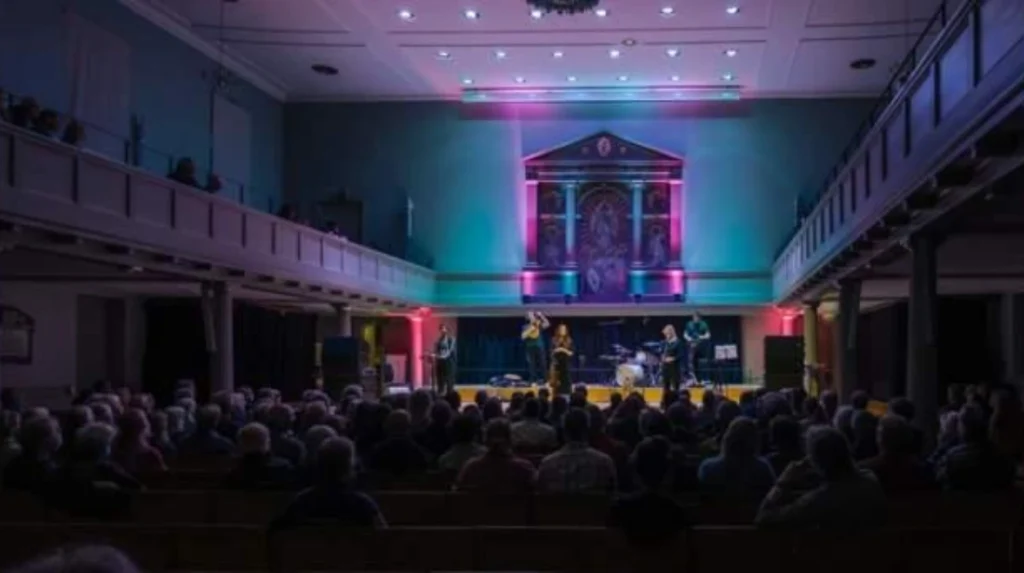
What makes Bristol Beacon important to live music in Bristol?
Bristol Beacon is the city’s major concert hub, with Beacon Hall, Lantern Hall, Weston Stage and Bridgehouse. Its programme includes orchestral concerts, gigs, club nights and festivals, while its education work connects live music with young people, artists and communities.
Bristol Beacon sits in the city centre on Trenchard Street. The organisation describes itself as a music charity, renowned venue and music education hub. Its programme operates across several performance spaces and extends beyond ticketed concerts into education and community activity.
The transformation of the venue was completed in 2023 after five years of redevelopment. The project created modern performance facilities while retaining elements of the building’s historic character. Bristol Beacon states that the transformed building reopened on 30 November 2023.
Beacon Hall is the flagship auditorium. It combines a traditional shoebox configuration with modern technology and flexible audience arrangements. Its stated capacity is 1,866 seated or 2,124 standing.
Lantern Hall provides another performance environment. Bristol Beacon describes it as an elegant and versatile space combining Victorian architecture with modern performance requirements. Its programming includes contemporary music and emerging artists.
Weston Stage occupies restored historic cellar areas. The venue describes the space as suitable for club nights, intimate performances and emerging creative work. Bridgehouse also operates as a flexible performance and event area.
The organisation’s wider impact is significant. Bristol Beacon reports more than 30,000 young people reached annually through its creative learning programme, with activity extending across 92% of Bristol’s schools. Its wider artistic programme attracts audiences exceeding 300,000 each year.
The venue therefore functions as more than a concert hall. It combines performance, education, artist development and community engagement within Bristol’s wider music infrastructure.
Why is St George’s Bristol different from other music venues?
St George’s Bristol occupies a converted 200-year-old Georgian church and operates as a music venue. Its 580-seat concert hall hosts classical, jazz, folk and contemporary performances, while its Glass Studio provides a smaller setting for intimate events and emerging work.
St George’s Bristol is located just off Park Street in the city centre. The Grade II* listed building began life as a church in 1823. It later became a concert venue and now operates as an independent music organisation.
The building’s architecture is central to its performance function. Its main auditorium seats 580 people and provides an environment designed around acoustic performance. The venue hosts classical music, jazz, folk, contemporary music and other cultural events.
Its programming also supports local ensembles and community participation. St George’s states that it welcomes internationally recognised performers alongside local creators and operates learning and community projects. A typical year brings around 120,000 visitors to the building.
The venue’s smaller Glass Studio expands its programme capacity. It can seat up to 80 people or accommodate up to 160 standing. This provides a separate format for smaller performances and cultural events.
St George’s also participates in city-wide musical initiatives. During Make Music Day in June 2026, it joined venues including Bristol Cathedral, Bristol Beacon, Bristol Old Vic, Arnolfini and Bristol Folk House for free live music across central Bristol.
Its role demonstrates that Bristol’s live music scene includes both amplified popular music and acoustic-led concert traditions.
Which grassroots and independent venues matter most in Bristol?
The Fleece, Trinity Centre and Exchange represent Bristol’s grassroots music infrastructure through different models. The Fleece is an independent 450-capacity venue, Trinity is a community arts centre with music heritage since 1976, and Exchange is a community-owned, not-for-profit independent venue.
Grassroots venues are smaller spaces that provide essential opportunities for emerging musicians, independent promoters and specialist audiences. Bristol has a substantial network of these venues alongside its larger concert halls.
The Fleece is located on St Thomas Street. It has operated since 1982 and describes itself as Bristol’s largest independent venue, with a 450-person capacity. The venue runs live music seven days a week alongside weekend club nights.
The Fleece building has an earlier history. The Grade II* listed property was originally used as a sheep trading market during the 19th century. Its modern music operation therefore combines historic architecture with contemporary production facilities.
Exchange operates from Old Market. It opened in August 2012 and became community-owned after a 2018 share campaign in which 389 people invested and became part owners. Its community ownership model distinguishes it from conventional privately operated venues.
Exchange’s main room holds 250 people. Its basement stage, opened in 2025, provides a 100-capacity space. The venue presents live bands, DJs and club nights and supports independent music culture.
Trinity Centre adds another model. It is operated by Trinity Community Arts and combines music with community activity, education and cultural programming. The organisation continues to present international touring artists and local performers.
These venues provide the smaller-scale infrastructure that allows artists to develop audiences before moving into larger rooms.
What genres of live music can you hear in Bristol?
Bristol’s live music programme spans rock, indie, electronic, jazz, classical, folk, reggae, hip-hop, drum and bass, soul and global music. Visit Bristol specifically highlights local venues including Bristol Beacon, St George’s, Lakota, Trinity Centre, The Fleece, Thekla and Strange Brew.
Bristol’s musical identity is not restricted to one genre. The city has established audiences for rock and indie alongside strong electronic, sound-system and bass-music cultures.
Electronic music has a particularly important place in Bristol. Trinity Centre’s programme includes electronic events and the work of Bristol-based Livity Sound, an independent label launched in the city in 2011. The label has played a role in developing Bristol’s underground electronic music culture.
Reggae and global music also form part of the venue network. Trinity’s programming includes reggae performances and global sound-system events. Its 2026 Tambor festival presented samba, maracatu, Afoxé, reggae-samba, capoeira music and related Brazilian musical traditions.
Classical music has a strong institutional presence. Bristol Beacon hosts orchestral performances and major classical programmes, while St George’s Bristol maintains a year-round programme involving classical music, chamber music and other acoustic traditions.
Rock, indie and alternative music remain important at independent venues. The Fleece has hosted major artists across rock and alternative music, while Exchange supports independent and specialist programming.
The University of Bristol also maintains an active music research and performance environment covering composition, musicology, popular music, hip-hop, film music, jazz, opera and other traditions.
The result is a city-wide ecosystem where different genres operate through different venues and audiences.
Explore more Area Guide
River Walks in Bristol: Best Riverside Routes, Harbour Paths, and Green Trails
Woodland Walks in Bristol: Best Trails, Estates and Routes
What should visitors know before attending a Bristol live music venue?
Access, transport, age rules and event format vary by venue. Check the individual event listing before travelling, because standing or seated arrangements, age restrictions, accessibility provisions, ticket policies and entry requirements differ between Bristol’s major halls and independent music rooms.
Event format is one of the most important practical differences. Bristol Beacon states whether individual events use seated or standing arrangements, while Trinity notes that most live music events are standing unless otherwise specified.
Age requirements also vary. Exchange states that its gigs are normally 14+ unless otherwise stated, with under-18s accompanied by an adult. Its club nights are strictly 18+. Individual event pages should therefore be checked before purchasing tickets.
Accessibility information is available from individual venues. Exchange works with Attitude is Everything on access policy and advises visitors with specific requirements to contact the venue before attending.
Trinity also advises visitors with accessibility requirements to contact the venue before an event. Its live music events are generally standing-room events unless the individual listing states otherwise.
Transport is another consideration. Many central venues are within walking distance of Bristol’s main shopping, hospitality and transport areas. Visitors travelling by car should check current parking restrictions and Clean Air Zone requirements. St George’s specifically notes that parts of the surrounding area fall within Bristol’s Clean Air Zone.
Ticket conditions also differ. Some venues operate through direct ticketing systems, while others use independent ticketing platforms or promoters. Checking the official event page provides the most reliable information on start times, entry requirements, curfews and accessibility.
How important are live music venues to Bristol’s cultural economy?
Live music supports Bristol’s cultural identity through performance, education, community activity and independent enterprise. Bristol Beacon reports more than 800 gigs and festivals annually, 60 free performances, six major festivals and audiences exceeding 300,000, alongside music education programmes and initiatives.
The value of live music extends beyond ticket sales. Venues create employment for performers, promoters, technicians, hospitality workers, security teams, administrators and other cultural workers.
Bristol Beacon employs more than 100 staff across activities including event promotion, education, ticketing, finance and development. Its programme also supports emerging artists and music-industry professionals.
Independent venues contribute through a different economic model. Exchange operates as a community-owned, not-for-profit organisation. Its 2018 community share campaign involved 389 investors, demonstrating direct local participation in venue sustainability.
Bristol City Council also recognises live music venues within the business environment. In 2026, the council reported that eligible pubs and live music venues could apply for an additional 15% business-rates relief announced by the UK Government.
Cultural participation is another important component. Bristol Beacon’s education programme reaches more than 30,000 young people annually. The organisation also states that its work reaches 92% of Bristol’s schools.
St George’s Bristol reports around 120,000 visitors in a typical year, while its charitable operation supports local ensembles, learning projects and community partnerships.
The city’s universities also strengthen its musical infrastructure. The University of Bristol provides academic research, performance opportunities and specialist study across musicology, composition and performance.
These activities show that live music functions as cultural infrastructure. Venues support artistic development, employment, education, tourism and community participation simultaneously.
What is the future relevance of Bristol’s live music venues?
Bristol’s venue network remains relevant because it connects touring acts with independent promoters, emerging artists, community programmes and specialist audiences. Community ownership, charitable operation, education, restoration and support all contribute to the resilience and diversity of the city’s music ecosystem.
The future of Bristol’s live music scene depends on maintaining venues at different scales. Large halls provide space for internationally recognised artists. Medium-sized venues support established touring acts. Grassroots rooms provide opportunities for emerging performers and specialist scenes.
Bristol Beacon’s 2023 reopening demonstrates the importance of long-term investment in major cultural infrastructure. Its redevelopment introduced modern performance spaces while preserving more than 150 years of musical heritage.
The venue has also established a sustainability target to become the UK’s first net-zero concert hall by 2030. This places environmental performance alongside artistic programming and audience development.
Exchange demonstrates another long-term model through community ownership. Its 2025 basement stage expanded its capacity for smaller events and strengthened the venue’s ability to host different types of programming.
Trinity Centre’s 50-year music celebrations in 2026 also demonstrate the continuing importance of grassroots cultural spaces. Its programme combines historic music traditions with contemporary artists, community activity and emerging sounds.
The wider Bristol ecosystem therefore operates through interconnected venue types. Concert halls, independent venues, community centres, churches and specialist rooms each fulfil different functions.
For visitors, this means Bristol remains a city where live music can be experienced at many scales. A single trip can involve a large concert at Bristol Beacon, an acoustic performance at St George’s, a touring band at The Fleece or an independent event at Exchange or Trinity.
For artists, the network provides multiple stages for development. For communities, it provides cultural participation and shared spaces. For the city, it supports tourism, employment, education and cultural identity.
Bristol’s live music venues are therefore not simply locations for individual concerts. They form a connected cultural infrastructure shaped by history, independent enterprise, community ownership, education, artistic development and continued investment.
What are the best live music venues in Bristol?
Bristol has a wide range of live music venues, including Bristol Beacon, St George’s Bristol, The Fleece, Trinity Centre, Exchange, Thekla, Lakota and Strange Brew. Each venue offers different genres, capacities and event formats.