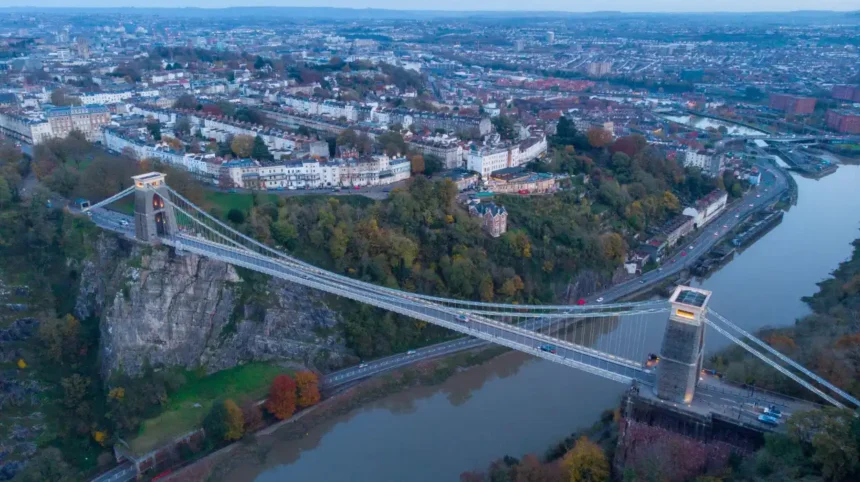
Bristol is a historic port city in South West England with a history spanning more than 1,000 years of recorded urban development. Located between the River Avon and River Frome, near the Severn Estuary, Bristol developed through maritime trade, medieval commerce, exploration, manufacturing, engineering and cultural change. Its historical identity includes Roman settlements, Anglo-Saxon trading networks, Norman fortifications, the transatlantic slave trade, Georgian architecture, Victorian engineering and modern urban regeneration.
- What Is the History of Bristol and How Did the City Develop?
- What Evidence of Prehistoric and Roman Bristol Still Exists?
- How Did Bristol Become an Anglo-Saxon and Medieval Trading Port?
- When Did Bristol Become a City and Why Was Its Maritime Trade Important?
- Bristol’s expanding maritime economy
- John Cabot and overseas exploration
- Bristol’s changing commercial identity
- How Did the Transatlantic Slave Trade Shape Bristol’s History?
- Bristol’s involvement in the Atlantic slave trade
- Edward Colston and Bristol’s merchant wealth
- Abolition and the end of legal slavery
- How Bristol remembers this history
- What Happened to Bristol During the Georgian Period?
- Georgian architecture in Bristol
- The Bristol Bridge Riot of 1793
- Religious and educational development
- How Did the Industrial Revolution Transform Bristol?
- Manufacturing and industrial employment
- The Floating Harbour
- Isambard Kingdom Brunel and Bristol’s engineering heritage
- Why Is the Clifton Suspension Bridge Important to Bristol’s History?
- How Did the First and Second World Wars Affect Bristol?
- How Has Bristol Developed Since the Second World War?
- Which Historic Places Should Visitors Explore in Bristol?
- Bristol Cathedral
- M Shed
- SS Great Britain
- Clifton Suspension Bridge
- Bristol Old City
- Queen Square
- The New Room
- How Does Bristol Preserve Its Historic Buildings and Archaeological Heritage?
- Why Is Bristol’s History Important to Its Modern Identity?
- Historical identity and cultural diversity
- Tourism and economic importance
- Future challenges for historic Bristol
- What Is the Best Way to Understand Bristol’s Historical Timeline?
- How Has Bristol’s Past Shaped the City Today?
Today, Bristol’s historic environment connects these different periods through surviving streets, churches, warehouses, bridges, museums and industrial landmarks. Understanding Bristol’s history explains how the city became an important commercial centre and how its maritime past continues to influence its economy, architecture, communities and cultural identity.
What Is the History of Bristol and How Did the City Develop?
Bristol developed from an Anglo-Saxon settlement called Brycgstow into an important medieval port and later a major British industrial city. Its history includes Roman occupation, international maritime trade, colonial commerce, engineering innovation and significant social change.
Bristol stands in a strategically important geographical position in South West England. The River Avon connects the city with the Severn Estuary and the Bristol Channel, providing access to maritime routes and international markets. The River Frome also contributed to the development of the original settlement and its harbour.
The name Bristol comes from the Old English name Brycgstow, meaning a place at the bridge. An early settlement developed around a river crossing where people could travel, exchange goods and establish commercial connections.
Bristol’s development followed several historical stages. Roman settlements established early regional connections, while Anglo-Saxon communities created a more substantial trading centre. Norman rulers strengthened its defensive importance through castle construction.
During the medieval period, Bristol became one of England’s significant commercial towns. Its merchants developed trading relationships with Ireland and continental Europe. Later, maritime expansion connected Bristol with Africa, the Caribbean and North America.
The city’s economic structure changed during the Industrial Revolution. Manufacturing, engineering, shipbuilding and railway development expanded employment and transformed the urban landscape.
Bristol subsequently experienced wartime destruction, economic restructuring and harbour regeneration. Its historical identity now combines preserved heritage with modern residential, educational, cultural and commercial development.
According to Bristol City Council, the city contains archaeological evidence ranging from Lower Palaeolithic artefacts to Roman settlements, medieval buildings and twentieth-century industrial sites. This archaeological record demonstrates the depth of human activity across the Bristol area.
What Evidence of Prehistoric and Roman Bristol Still Exists?
Prehistoric archaeological discoveries demonstrate human activity around Bristol long before its development as a town. Roman settlements, particularly Abona at Sea Mills, established important military, residential and commercial connections during the first centuries AD.
Bristol’s history begins long before its medieval streets and harbour. Archaeological discoveries across the wider area provide evidence of prehistoric communities, agricultural activity and changing settlement patterns.
Prehistoric Bristol
Prehistoric evidence includes Lower Palaeolithic artefacts discovered in locations such as Shirehampton and St Anne’s. These finds demonstrate early human activity in the Bristol region.
The wider landscape also contains evidence of Bronze Age and Iron Age occupation. Archaeological investigations have identified prehistoric settlement activity around Avonmouth, Kings Weston and other elevated areas.
Iron Age hillforts provide further evidence of organised communities and defensive settlement. Notable examples include:
- Blaise Castle hillfort, associated with prehistoric occupation.
- Kings Weston Down, which contains evidence of an Iron Age defended settlement.
- Clifton Down, another location associated with prehistoric defensive activity.
These archaeological sites help explain how communities used Bristol’s hills, river valleys and surrounding agricultural land before Roman occupation.
Roman Bristol and Abona
The Romans established a settlement called Abona at Sea Mills, near the River Avon. The settlement functioned as a port and regional centre during the Roman period.
Abona provided connections between inland settlements and wider Roman transport networks. Its location allowed goods and people to move through the river system towards the Severn Estuary.
Archaeological evidence indicates that the Roman settlement developed during the early second century, although Roman occupation in the wider area began earlier.
Other Roman remains have been identified at Kings Weston, Henbury and locations near Bristol city centre.
Kings Weston Roman Villa provides evidence of Roman domestic life and the wealth associated with rural settlements. Its remains help researchers understand the agricultural and residential structures that existed around Roman Bristol.
Roman occupation in the area declined during the fourth century AD. However, archaeological discoveries continue to provide information about the region’s early history.
How Did Bristol Become an Anglo-Saxon and Medieval Trading Port?
Bristol developed into an important trading port during the Anglo-Saxon and medieval periods because of its position beside the River Avon. Trade with Ireland, Wales and continental Europe supported commercial growth, population expansion, defensive construction and urban development.
The settlement of Brycgstow became a recognised trading community around the tenth and eleventh centuries. Its river crossing encouraged merchants, travellers and craftspeople to establish businesses in the area.
The Anglo-Saxon Chronicle recorded Bristol as a port in 1051. Its merchants traded with Ireland, Somerset and North Devon, exporting products such as wool and leather.
Norman Bristol
The Norman Conquest of 1066 changed Bristol’s political and defensive structure. William the Conqueror secured control of the town in 1067 and established a wooden fortification.
During the early twelfth century, a stone castle replaced the original timber structure. Bristol Castle occupied a strategically important position near the commercial centre.
The castle protected the settlement and represented royal authority. Its location also reflected Bristol’s importance as a defensive and administrative centre.
Medieval trade and urban expansion
Bristol received its first charter from Henry II in 1155. The charter strengthened its position as an established commercial town.
Trade expanded during the twelfth and thirteenth centuries. Bristol merchants developed connections with Ireland, Iceland, France, Spain and other European markets.
The River Frome required improvements as shipping activity increased. Between 1240 and 1247, engineering works altered its course around St Augustine’s Marsh to create additional space for ships.
A new stone bridge across the Avon was also constructed in 1247. Bristol Bridge became an important connection between different parts of the growing town.
By the middle of the fourteenth century, Bristol ranked among England’s largest urban settlements. Historical estimates place its population at approximately 15,000–20,000 people.
The Black Death of 1348–1349 caused severe population losses throughout England, including Bristol. The resulting economic and demographic disruption affected the town for generations.
In 1373, Edward III granted Bristol county status through a royal charter. This recognised its administrative importance and strengthened its independent civic identity.
When Did Bristol Become a City and Why Was Its Maritime Trade Important?
Bristol formally became a city in 1542 when Henry VIII established the Diocese of Bristol. Its maritime trade had already created extensive international connections, supporting commercial wealth, shipbuilding, manufacturing and the expansion of merchant institutions.
Bristol’s transition from medieval town to recognised city reflected its growing religious, administrative and commercial importance.
The Diocese of Bristol was established in 1542 following the English Reformation and the dissolution of monasteries under Henry VIII. The former Augustinian Abbey of St Augustine became Bristol Cathedral.
This religious transformation gave Bristol formal city status.
Bristol’s expanding maritime economy
During the sixteenth century, Bristol merchants increased their international trading activities. Shipping connected the city with European markets, Newfoundland and other overseas destinations.
The Society of Merchant Venturers became an influential organisation in Bristol’s commercial life. Established under royal charter in 1552, it represented merchant interests and played a major role in maritime commerce.
The organisation supported shipping infrastructure and helped manage commercial facilities around the harbour.
John Cabot and overseas exploration
One of Bristol’s significant maritime events occurred in 1497 when Italian navigator John Cabot sailed from Bristol under the sponsorship of Henry VII.
Cabot’s expedition crossed the Atlantic and reached the coast of Newfoundland, in present-day Canada. The voyage contributed to England’s later claims and commercial ambitions in North America.
His expedition remains an important part of Bristol’s maritime heritage.
However, historical accounts must distinguish European exploration from the history of the Indigenous peoples already living in North America. Cabot did not discover an uninhabited continent.
Bristol’s changing commercial identity
Bristol’s shipping industry transported different commodities, including wool, wine, tobacco, sugar and manufactured products.
Its maritime economy also supported associated industries such as shipbuilding, rope-making, metalworking and warehousing.
These commercial activities created wealth for merchant families and influenced the city’s architecture. Historic merchant houses, warehouses and commercial streets reflect the importance of maritime trade.UWE Bristol+2
How Did the Transatlantic Slave Trade Shape Bristol’s History?
Bristol became a major British slave-trading port during the late seventeenth and eighteenth centuries. Its merchants transported enslaved Africans across the Atlantic, generating commercial wealth while contributing to exploitation, racial inequality and lasting social consequences.
The transatlantic slave trade represents one of the most significant and difficult chapters in Bristol’s history. It connected the city’s maritime economy with British colonial expansion and plantation production in the Caribbean and North America.
Before Bristol became involved in the Atlantic slave trade, its merchants had participated in earlier forms of human trafficking. During the Anglo-Saxon period, enslaved people from Britain were transported through Bristol to Ireland.
The Atlantic system expanded considerably after the Royal African Company’s trading monopoly ended in 1698.
Bristol’s involvement in the Atlantic slave trade
Bristol merchants organised voyages connecting three major geographical regions:
- Britain, where merchants prepared manufactured goods and financed shipping.
- West Africa, where enslaved Africans were forcibly purchased and transported.
- The Caribbean and Americas, where enslaved people were sold to plantation owners.
This commercial system became known as triangular trade. It generated profits for shipping companies, merchants, manufacturers and other businesses connected with plantation economies.
Bristol’s first recorded slave-trading voyage under the new commercial conditions involved the ship The Beginning, which sailed towards the African coast in 1698.
Between 1698 and 1807, approximately 2,108 known slave-trading voyages departed from Bristol. Historical estimates suggest that ships associated with the city transported approximately 500,000 enslaved Africans.
These figures demonstrate the scale of Bristol’s involvement in the forced transportation of African people.
Edward Colston and Bristol’s merchant wealth
Edward Colston became one of the most prominent historical figures associated with Bristol’s slave-trading economy.
Colston joined the Royal African Company in 1680 and later became its deputy governor. The company participated directly in the trafficking of enslaved Africans.
His financial and political connections contributed to his influence in Bristol. He also supported charitable institutions, including schools, almshouses and religious organisations.
However, his philanthropy must be understood alongside his involvement in the slave trade.
The legacy of Colston became a major subject of public debate, particularly following the removal of his statue during the Black Lives Matter protests in June 2020.
Abolition and the end of legal slavery
Opposition to slavery developed during the eighteenth century. Campaigners, religious groups and political activists challenged the commercial and moral foundations of the trade.
Thomas Clarkson visited Bristol in 1787 to collect evidence about the slave trade. Local abolitionist activity subsequently developed, including the formation of an abolition committee in 1788.
The British Parliament passed the Slave Trade Act in 1807, prohibiting British participation in the transatlantic slave trade.
However, this legislation did not immediately end slavery throughout the British Empire.
The Slavery Abolition Act received royal assent in 1833 and came into effect in 1834. Its apprenticeship system delayed full freedom for many formerly enslaved adults until 1838.
The history of abolition therefore requires an important distinction between ending the slave trade and ending legal slavery.
How Bristol remembers this history
Bristol preserves and interprets its involvement in slavery through museums, historical research, public memorials and educational programmes.
M Shed explores the city’s commercial and social history, including the experiences of people affected by the slave trade.
Bristol Archives holds historical documents, including records relating to the trafficking of enslaved Africans.
The University of Bristol has also investigated the connections between its institutional development, historical benefactors and slavery.
These resources help visitors understand the economic benefits received by Bristol’s merchants and the human suffering behind that wealth.
What Happened to Bristol During the Georgian Period?
Georgian Bristol developed between 1714 and 1837 through maritime commerce, manufacturing, residential expansion and architectural investment. Merchant wealth supported elegant streets, public buildings and cultural institutions, while the city remained connected to colonial trade and slavery.
The Georgian period transformed Bristol’s appearance and commercial structure. Increasing trade created demand for larger houses, improved infrastructure, commercial premises and public institutions.
Merchant families invested in residential developments outside the older medieval centre.
Georgian architecture in Bristol
Bristol’s Georgian architecture includes symmetrical building fronts, sash windows, decorative doorways and formal terraces.
Several historic areas preserve examples of this architectural development.
Queen Square was laid out in 1699 and became an important example of formal urban planning. Its surrounding buildings reflect the commercial and residential development of Georgian Bristol.
Clifton developed into an affluent residential district during the eighteenth and nineteenth centuries. Its terraces and townhouses demonstrate the architectural ambitions of the period.
Corn Street and the Old City also preserve evidence of Bristol’s commercial development, including historic trading buildings and merchant premises.
The Bristol Bridge Riot of 1793
The Bristol Bridge Riot was an important event in the city’s social history.
The medieval Bristol Bridge had become increasingly congested as the population and commercial traffic expanded.
Between 1764 and 1768, the bridge was rebuilt. A toll was introduced to finance the work, and a later decision to extend toll collection generated significant opposition.
In 1793, protests developed into violent disturbances known as the Bristol Bridge Riot.
The confrontation resulted in 11 deaths and 45 injuries.
The event demonstrated tensions surrounding public infrastructure, taxation and access to transport in Georgian Bristol.
Religious and educational development
The Georgian period also supported religious and educational expansion.
The New Room, built in 1739, is associated with John Wesley and the development of Methodism. It is recognised as the oldest Methodist chapel in the world.
Bristol’s cultural and educational institutions also developed during this period and the following century, creating foundations for its modern academic and cultural identity.
How Did the Industrial Revolution Transform Bristol?
The Industrial Revolution transformed Bristol through engineering, manufacturing, railway construction, shipbuilding and expanding transport networks. Although its maritime economy remained important, industrial development diversified employment and connected the city with Britain’s growing national economy.
During the eighteenth and nineteenth centuries, Bristol developed beyond its traditional dependence on maritime commerce.
Manufacturing industries expanded across the city and surrounding Avon Valley. Metalworking, copper production, brass manufacturing, glassmaking, tobacco processing and chocolate production contributed to economic growth.
The city’s industrial development also depended on access to transport, raw materials, labour and international markets.
Manufacturing and industrial employment
Bristol’s manufacturing economy included several important sectors.
Copper and brass industries supplied materials for domestic goods, machinery and international markets. Metalworking businesses benefited from connections with the wider trading economy.
Tobacco processing became another important industry. The city’s commercial connections with North America and the Caribbean supported the importation and processing of tobacco.
Chocolate manufacturing later became an important part of Bristol’s industrial identity.
Companies such as Fry’s developed major manufacturing operations in the city. The Fry family established a long-lasting connection between Bristol and British chocolate production.
The Floating Harbour
One of Bristol’s most important engineering developments was the opening of the Floating Harbour in 1809.
Before its construction, the harbour experienced significant tidal fluctuations. Ships faced difficulties when water levels dropped, affecting loading and unloading operations.
The Floating Harbour addressed this problem by maintaining a controlled water level.
Approximately 80 acres of tidal river were enclosed, allowing ships to remain afloat regardless of the tide.
The project improved commercial shipping conditions and strengthened Bristol’s position as a major port.
The harbour continued serving commercial shipping for more than 160 years before the city docks closed to commercial traffic in 1975.
Isambard Kingdom Brunel and Bristol’s engineering heritage
Isambard Kingdom Brunel played a major role in Bristol’s nineteenth-century engineering history.
Brunel designed major transport infrastructure and contributed to the development of railway and maritime engineering.
His Bristol-related achievements include the Great Western Railway, the Clifton Suspension Bridge project and the SS Great Britain.
The SS Great Britain was launched in 1843. It represented a significant development in iron-hulled steamship design.
Today, the ship is preserved in Bristol’s historic harbour and operates as a museum attraction.
The Great Western Railway connected Bristol with London and other important commercial centres. Its development improved passenger movement and freight transportation.
These engineering achievements established Bristol as an important centre for British technological development.
Why Is the Clifton Suspension Bridge Important to Bristol’s History?
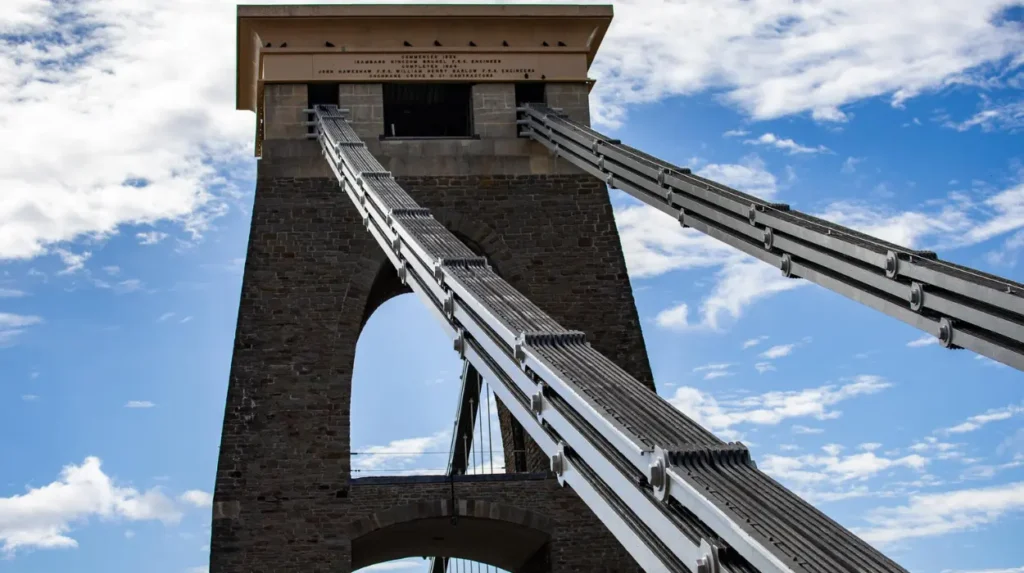
The Clifton Suspension Bridge is one of Bristol’s most recognisable historical engineering landmarks. Designed by Isambard Kingdom Brunel, it crosses the Avon Gorge and represents the city’s nineteenth-century advances in civil engineering, transport infrastructure and industrial design.
The Clifton Suspension Bridge connects Clifton in Bristol with Leigh Woods in North Somerset. Its position above the Avon Gorge makes it a defining feature of the city’s landscape.
The project began as a proposal to construct a bridge across the gorge, improving movement between communities on either side of the River Avon.
Brunel won the design competition in 1830. Construction began in 1831 but experienced delays caused by financial and political difficulties.
Brunel died in 1859 before the bridge was completed.
The Clifton Suspension Bridge Trust subsequently helped complete the structure, which officially opened in 1864.
Engineering significance
The bridge uses suspension technology, with its deck supported by cables connected to large stone towers and anchoring structures.
Its design demonstrates the engineering principles that enabled longer bridges to cross difficult geographical features.
The structure became a major example of Victorian engineering and remains an important part of Bristol’s transport infrastructure.
Historical and cultural importance
The Clifton Suspension Bridge is not simply a transport crossing. It represents the development of engineering expertise in nineteenth-century Britain.
It also connects Bristol’s industrial history with its modern tourism economy.
Visitors can explore the bridge, access viewing points around the Avon Gorge and learn about its construction through the visitor information centre.
Its continuing use demonstrates how historic engineering infrastructure remains relevant to modern urban life.
How Did the First and Second World Wars Affect Bristol?
The two World Wars changed Bristol’s economy, population, industrial priorities and built environment. The city experienced wartime manufacturing demands, military activity and extensive bombing during the Second World War, followed by reconstruction and urban redevelopment.
Bristol’s industrial and transport infrastructure made it strategically important during both world wars.
Bristol during the First World War
During the First World War, Bristol’s manufacturing businesses contributed to Britain’s wartime economy.
Engineering companies, factories and transport businesses supported military production and logistical requirements.
The city’s industrial workforce also experienced changes as workers entered military service and women took on additional employment.
These developments influenced Bristol’s industrial structure and social conditions.
Bristol during the Second World War
The Second World War had a particularly significant impact on Bristol.
The city’s aircraft manufacturing industry and transport facilities made it a target for German bombing.
The Bristol Blitz caused extensive damage to residential areas, commercial buildings, churches and historic streets.
Air raids destroyed or damaged buildings across the city centre. Residents experienced displacement, casualties and disruption to everyday life.
The bombing also affected important historic structures and changed the appearance of several neighbourhoods.
Post-war reconstruction
After 1945, Bristol entered a period of reconstruction and urban planning.
Damaged buildings required repair or replacement, while housing shortages encouraged new residential development.
Road infrastructure, commercial districts and public facilities were redesigned to meet changing transport and population requirements.
The rebuilding process introduced modern architectural styles alongside surviving historic buildings.
Consequently, contemporary Bristol contains visible contrasts between medieval streets, Georgian terraces, Victorian structures and post-war architecture.
These differences reflect the city’s response to industrial growth, wartime destruction and changing urban priorities.
How Has Bristol Developed Since the Second World War?
Post-war Bristol developed through reconstruction, industrial restructuring, university expansion, residential growth and cultural investment. The closure of traditional commercial docks in 1975 encouraged harbour regeneration, creating new public spaces, businesses, museums and residential developments.
The second half of the twentieth century introduced major changes to Bristol’s economy and urban landscape.
Traditional manufacturing and maritime industries experienced restructuring as international shipping, technology and employment patterns changed.
The closure of the City Docks to commercial shipping in 1975 marked an important turning point.
The harbour had supported Bristol’s commercial economy for centuries. Its declining industrial role created opportunities for alternative uses.
Harbour regeneration
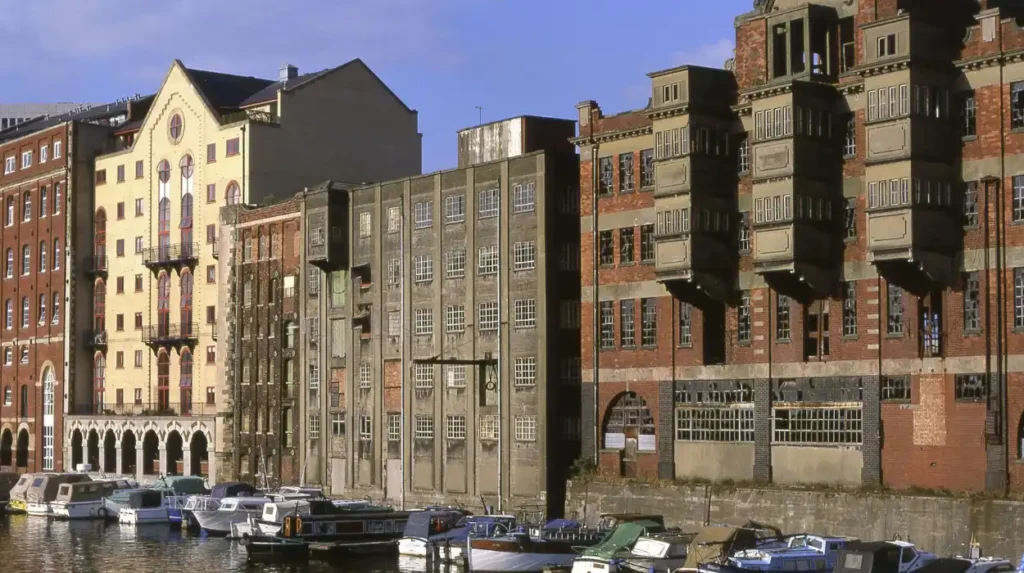
Former warehouses, industrial buildings and dockside spaces gradually acquired new functions.
The Harbourside became an important centre for tourism, cultural activity, residential development and leisure.
M Shed opened in 2011 as a museum dedicated to Bristol’s history and people. Its exhibitions explore the city’s maritime connections, industries, social movements and communities.
The development of the harbourside also strengthened Bristol’s cultural infrastructure.
Growth of universities and education
Higher education became increasingly important to Bristol’s identity.
The University of Bristol developed into a major research institution with international academic connections.
The University of the West of England (UWE Bristol) also became an important educational institution, supporting research, professional training and regional employment.
University development contributed to population growth and demand for housing, public transport, commercial services and cultural facilities.
Bristol’s modern economy
Bristol’s economy now includes several major sectors, including:
- Aerospace and advanced engineering, including aircraft design and manufacturing.
- Financial and professional services, including business consultancy and technology.
- Education and research, including university teaching and scientific development.
- Creative industries, including film, digital media, animation and design.
- Tourism and hospitality, including museums, cultural attractions and accommodation.
These industries demonstrate how Bristol has moved beyond its traditional dependence on shipping and manufacturing.
Which Historic Places Should Visitors Explore in Bristol?
Bristol’s historic attractions include medieval religious buildings, Georgian streets, Victorian engineering landmarks, maritime museums and former industrial sites. Locations such as Bristol Cathedral, the Floating Harbour, Clifton Suspension Bridge and SS Great Britain explain different stages of the city’s development.
Bristol’s historical environment is distributed across the city rather than concentrated in one location. Visitors can explore different periods by walking between the Old City, Harbourside, Queen Square and Clifton.
Bristol Cathedral
Bristol Cathedral is one of the city’s most important religious and architectural landmarks.
Its origins date to the establishment of St Augustine’s Abbey in 1140.
The former abbey became a cathedral in 1542 following the establishment of the Diocese of Bristol.
The building contains significant medieval and later architectural features, making it an important location for understanding Bristol’s religious history.
M Shed
M Shed explores the history of Bristol through objects, photographs, historical records and personal accounts.
Its collections cover maritime commerce, industrial development, transport, social history and the experiences of local communities.
The museum is particularly relevant to understanding Bristol’s involvement in the transatlantic slave trade and the changing identity of its harbour.
SS Great Britain
SS Great Britain is a preserved nineteenth-century passenger ship designed by Isambard Kingdom Brunel.
Launched in 1843, it represents an important development in iron-hulled steamship technology.
Visitors can explore the ship and learn about Victorian engineering, international travel and maritime commerce.
Clifton Suspension Bridge
Clifton Suspension Bridge remains one of the city’s most recognisable landmarks.
Its construction reflects the engineering ambitions of Victorian Britain and Brunel’s contribution to transport infrastructure.
Bristol Old City
The Old City contains historic streets and buildings associated with Bristol’s medieval and commercial development.
Corn Street is particularly important because of its connection with historical merchant activity.
The Nails, four historic bronze or brass trading tables, are associated with commercial transactions conducted by Bristol merchants.
Nearby streets preserve historic buildings and architectural details from different periods.
Queen Square
Queen Square is a historic Georgian square laid out in 1699.
Its formal layout and surrounding architecture reflect Bristol’s commercial and residential expansion during the eighteenth century.
The New Room
The New Room was built in 1739 and is associated with John Wesley and the early Methodist movement.
It provides an important connection to Bristol’s religious and social history.
These attractions collectively demonstrate how Bristol developed from a medieval trading town into a major industrial and maritime city.
How Does Bristol Preserve Its Historic Buildings and Archaeological Heritage?
Bristol preserves its historic environment through archaeological investigations, conservation policies, listed-building protection, historic environment records and museum collections. Bristol City Council and Historic England help identify significant buildings, archaeological remains and historically important neighbourhoods.
Bristol’s historic environment includes buildings, streets, archaeological discoveries, industrial structures and historic landscapes.
Protecting these resources helps maintain the city’s architectural identity and provides evidence for future historical research.
Listed buildings and conservation areas
Listed buildings receive legal protection under the planning system because of their special architectural or historic interest.
Conservation areas protect neighbourhoods with distinctive historic character.
These protections influence decisions about demolition, alterations, extensions and new development.
Bristol contains historic buildings from different periods, including medieval churches, Georgian townhouses and Victorian industrial structures.
Archaeological investigations
Archaeological research helps identify remains beneath streets, buildings and development sites.
Bristol City Council uses historic environment information to assess the archaeological significance of locations affected by planning and construction.
This process helps identify evidence from prehistoric, Roman, medieval and industrial periods.
Know Your Place
Know Your Place is a digital heritage resource that allows users to explore historic maps, photographs and information about neighbourhoods.
It helps residents and researchers compare earlier street layouts with modern Bristol.
Bristol Archives
Bristol Archives holds almost two million historical documents relating to Bristol and the surrounding area.
Its collections include:
- Historical maps and photographs.
- Letters and personal diaries.
- Institutional minutes and financial records.
- Films and sound recordings.
- Records relating to the transatlantic trafficking of enslaved Africans.
These materials provide valuable evidence for understanding how Bristol changed over time.
Conservation also has practical importance. Historic buildings support tourism, education, cultural activity and local economic development. Protecting them ensures that future generations retain access to the city’s historical evidence.
Why Is Bristol’s History Important to Its Modern Identity?
Bristol’s history remains important because its maritime economy, industrial development, architectural heritage and involvement in slavery continue to shape the city’s identity. Historical preservation, public education and cultural regeneration connect its past with contemporary communities and economic activity.
Bristol’s modern identity reflects the interaction of several historical developments.
Its maritime heritage explains the city’s early commercial importance and international connections. Its industrial past demonstrates the development of manufacturing and engineering expertise.
Its Victorian infrastructure reflects the role of technological innovation in shaping modern Britain.
Its involvement in slavery provides essential context for understanding wealth distribution, colonial history, racial inequality and contemporary discussions about historical responsibility.
Historical identity and cultural diversity
Bristol’s port attracted merchants, sailors, workers and migrants from different parts of the world.
These connections contributed to the city’s cultural development and changing population.
Today, Bristol’s communities reflect a long history of migration, international trade and social change.
The city’s cultural institutions continue to document these developments through exhibitions, educational programmes and historical collections.
Tourism and economic importance
Historic attractions contribute to Bristol’s visitor economy.
Museums, heritage buildings, historic ships and engineering landmarks create opportunities for tourism-related businesses.
The Floating Harbour, for example, combines historical preservation with modern leisure, hospitality and cultural activity.
Clifton Suspension Bridge attracts visitors interested in engineering, architecture and the natural landscape of the Avon Gorge.
These locations demonstrate that heritage is not separate from modern economic development. It remains an important part of Bristol’s commercial and cultural infrastructure.
Future challenges for historic Bristol
Bristol faces continuing challenges in balancing conservation with housing, transport, infrastructure and economic development.
Historic buildings require maintenance, while archaeological remains need protection during construction.
Climate change also creates risks for historic structures, particularly those near waterways and flood-prone locations.
Sustainable planning requires careful assessment of new development and the preservation of historically significant places.
Bristol’s historical environment therefore remains relevant to decisions about the city’s future.
Explore More Area Guide
Bike-Friendly Areas in Bristol: Best Neighbourhoods and Routes
Cycling Routes for Beginners in Bristol: Best Easy Bike Paths
What Is the Best Way to Understand Bristol’s Historical Timeline?
Bristol’s historical timeline shows how the city evolved through prehistoric settlement, Roman occupation, medieval trade, maritime expansion, industrialisation, wartime reconstruction and modern regeneration. Each period contributed buildings, institutions, industries and cultural influences that remain visible today.
The following chronology highlights the major milestones in Bristol’s development.
How Has Bristol’s Past Shaped the City Today?
Bristol’s history explains its development as a major British port, industrial centre and cultural destination. Its Roman remains, medieval streets, maritime heritage, Victorian engineering and modern museums preserve evidence of the economic and social changes that shaped the city.
Bristol has developed through more than a thousand years of recorded urban history. Its geographical position encouraged early settlement, while maritime trade established its commercial importance.
Medieval expansion created the foundations of the historic city. Overseas commerce subsequently brought wealth, international connections and involvement in the transatlantic slave trade.
The Industrial Revolution introduced manufacturing, engineering and transport innovations that transformed Bristol’s economy. Victorian landmarks such as the SS Great Britain and Clifton Suspension Bridge continue to demonstrate this engineering heritage.
The closure of commercial docks in 1975 encouraged a new phase of urban development, turning historic waterfront locations into cultural, residential and commercial destinations.
Today, Bristol’s history remains visible throughout its streets, museums, architectural landmarks and communities. Understanding these historical connections provides a comprehensive picture of how the city developed and why its heritage remains important to its future.
How old is Bristol, England?
Bristol has more than 1,000 years of recorded urban history. The settlement developed as Brycgstow during the Anglo-Saxon period, although archaeological evidence confirms human activity in the wider area thousands of years earlier.