Bristol is one of the South West’s major housing markets and has a property market shaped by employment, transport, education, regeneration, housing supply and strong demand for homes. The city combines historic neighbourhoods, Victorian terraces, modern apartments, suburban family housing and new-build developments.
- What is the average property price in Bristol?
- How have property prices in Bristol changed over time?
- How much do different property types cost in Bristol?
- Which parts of Bristol have the highest property prices?
- Why are Bristol property prices relatively high?
- How affordable are homes in Bristol compared with local earnings?
- How much do first-time buyers pay for property in Bristol?
- How do mortgage and cash purchases affect Bristol property prices?
- How do Bristol rents compare with property prices?
- What role does new housing supply play in Bristol property prices?
- What costs should buyers consider when purchasing property in Bristol?
- What does the future of Bristol property prices depend on?
- How should buyers and sellers use Bristol property price data?
- What is the overall outlook for property prices in Bristol?
The latest official figures provide a clear picture of current Bristol property prices. The Office for National Statistics (ONS), using the UK House Price Index from HM Land Registry, recorded an average Bristol house price of £355,000 in May 2026, up 2.2% from £347,000 in May 2025. Bristol’s average remained above the South West average of £303,000 and the UK average of £271,000.
Property prices differ substantially according to property type, location and tenure. Detached houses sit at the upper end of the market, while flats and maisonettes provide a lower average entry price. The same variation exists between neighbourhoods, with central, established and highly sought-after areas generally operating at different price levels from outer residential districts.
Understanding Bristol property prices therefore requires more than looking at one city-wide average. Buyers, sellers, landlords and investors need to consider property type, location, transaction method, affordability, rental costs, historical trends and the supply of new homes.
What is the average property price in Bristol?
The average property price in Bristol was £355,000 in May 2026, according to ONS and HM Land Registry data. This represented a 2.2% annual increase from £347,000 in May 2025, keeping Bristol above regional and national averages.
The average price is a useful starting point for understanding Bristol’s housing market. It represents a mix-adjusted measure designed to make price movements more comparable over time. It does not mean that a typical individual property costs exactly £355,000.
Bristol’s average price was higher than the £303,000 South West average in May 2026. It was also substantially above the £271,000 UK average recorded during the same month.
The UK House Price Index is produced using transaction data from HM Land Registry alongside ONS statistical methods. The data cover completed residential property transactions rather than advertised asking prices.
This distinction matters because asking prices represent seller expectations, while sold-price statistics represent completed transactions. Buyers researching Bristol property prices should therefore distinguish between advertised listings and official completed-sale data.
The latest official data also show a relatively moderate annual change. Bristol prices increased by 2.2% between May 2025 and May 2026. This provides a more reliable indicator of market direction than a single month’s movement.
ONS also warns that local housing data are based on smaller numbers of transactions than national estimates. Short-term movements therefore require careful interpretation, while longer-term trends provide stronger evidence.
How have property prices in Bristol changed over time?
Bristol property prices have experienced substantial long-term growth, with official housing data providing a continuous local series from 2005. Recent growth has been slower than some earlier periods, while affordability has remained an important issue.
The ONS Bristol housing series tracks house-price changes from January 2005. This long-term dataset allows current prices to be considered within a broader market history rather than viewed in isolation.
Bristol’s housing market has experienced several distinct phases. The financial crisis affected UK housing activity after 2007, while the following decade included periods of strong price growth. The pandemic period introduced another major change in housing demand, followed by higher mortgage costs and a slower market.
The Bank of England’s interest-rate environment affects housing affordability because mortgage borrowing represents a major source of property finance. Changes in mortgage rates influence the amount buyers can borrow and therefore affect purchasing power.
The recent Bristol market demonstrates a more measured pattern. The official average increased from £347,000 in May 2025 to £355,000 in May 2026. This equates to a 2.2% annual increase.
Long-term data also show why property-price analysis should not rely on one annual percentage. Housing markets respond to employment, credit conditions, construction levels, population changes, household formation and buyer confidence.
ONS affordability research shows that affordability across England and Wales improved after reaching a peak in 2021. Between 2021 and 2025, median house prices increased by 5%, while average earnings increased by 25%.
Bristol’s own market remains relatively expensive compared with many UK cities. Its position within the South West and its economic role contribute to sustained housing demand.
How much do different property types cost in Bristol?
Property type creates a major price difference in Bristol. In May 2026, average prices were £693,000 for detached homes, £450,000 for semi-detached homes, £385,000 for terraced homes and £244,000 for flats and maisonettes.
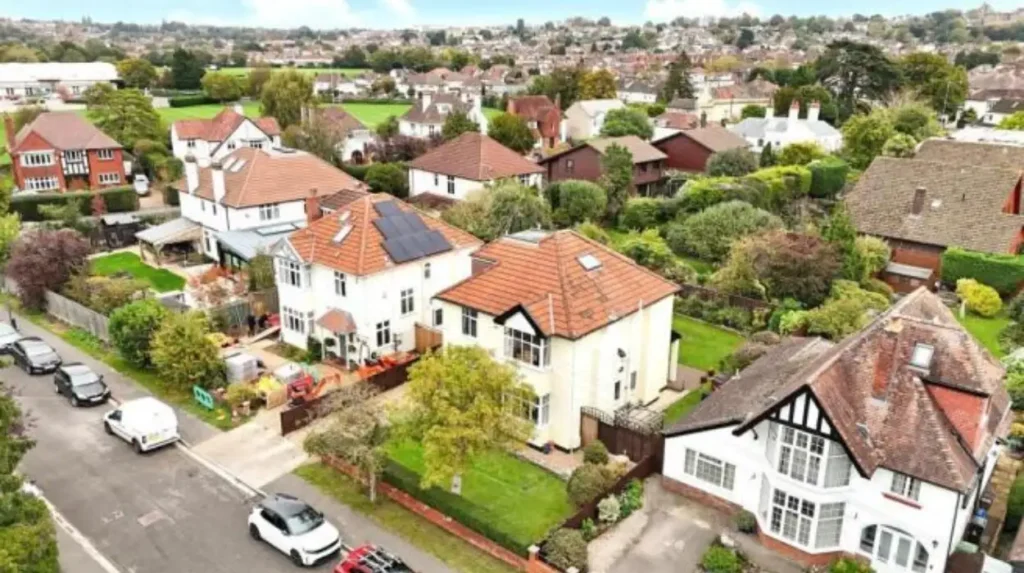
Detached houses represent the highest average price category. The May 2026 average was £693,000. Detached properties generally provide larger internal accommodation and private outdoor space, which contributes to their higher market value.
Semi-detached properties averaged £450,000. This category occupies an important part of Bristol’s family housing market and includes properties across established residential areas and suburban neighbourhoods.
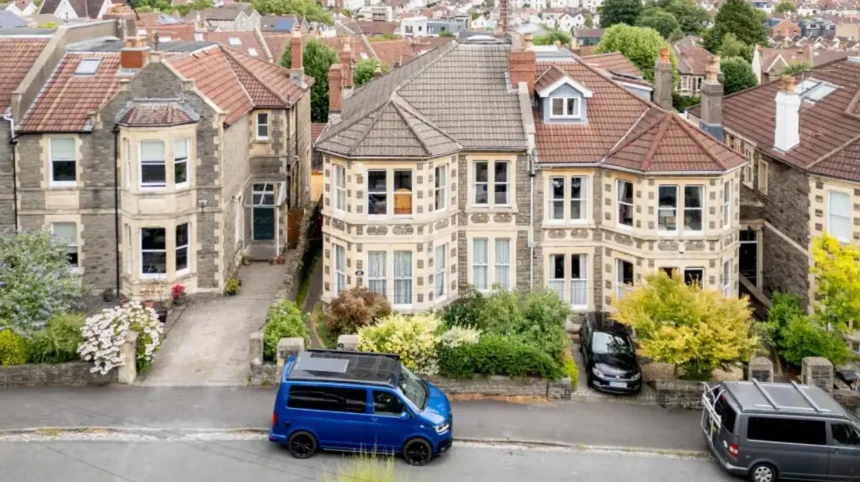
Terraced properties averaged £385,000. Bristol has a substantial stock of historic and Victorian-era terraces, particularly across inner-city and established residential districts.
Flats and maisonettes averaged £244,000, making this category the lowest-priced major property type in the official Bristol figures. Flats form an important part of the city-centre, regeneration and higher-density housing market.
Property type also affects annual price movement. In the year to May 2026, semi-detached property prices increased by 4.1%, while average flat prices remained broadly unchanged.
These figures demonstrate why the city-wide £355,000 average should not be used as a direct valuation for an individual property. A detached house, terraced house and apartment in Bristol operate in different segments.
Property condition, floor area, energy performance, parking, gardens, tenure and lease terms also affect the final transaction price.
Which parts of Bristol have the highest property prices?
Bristol property prices vary significantly between neighbourhoods because location affects access to employment, schools, transport, green space, amenities, housing character and local demand. Established central and sought-after neighbourhoods typically form higher-value segments than many outer residential areas.
Bristol contains a large number of distinct neighbourhood markets. Examples include Clifton, Redland, Cotham, Southville, Bedminster, Bishopston, Horfield, Fishponds, Brislington, Filton-area suburbs and residential districts across south and east Bristol.
Clifton is associated with substantial historic housing, Georgian architecture, terraces and larger residential properties. The neighbourhood’s proximity to central Bristol, the University of Bristol and major amenities contributes to its established property market.
Redland and Cotham contain substantial Victorian and Edwardian housing alongside apartments and converted properties. Their location close to central employment, education and leisure facilities makes them established residential markets.
Southville and neighbouring areas include Victorian terraces and renovated homes. Their proximity to central Bristol and the Harbourside has contributed to strong residential demand.
Bedminster provides another important inner-city market with terraces, apartments and redevelopment. The wider area benefits from access to central Bristol and major transport corridors.
North Bristol includes residential districts connected with major employment locations and transport infrastructure. South and east Bristol contain a broad range of housing, including terraces, semi-detached houses, detached homes and newer developments.
Official ONS neighbourhood affordability data are particularly useful because they allow property prices to be considered at smaller geographic levels. The ONS neighbourhood calculator uses median house prices for Middle-layer Super Output Areas and compares them with local earnings.
The correct way to compare Bristol neighbourhoods is therefore to examine sold prices for similar properties rather than relying on a single city-wide average.
Why are Bristol property prices relatively high?
Bristol property prices reflect the city’s economic role, employment base, housing demand, limited supply in established areas, transport connections and regional importance. These factors combine to create sustained demand across several residential property segments.
Bristol is a major economic centre in South West England. Its economy includes professional services, creative industries, technology, aerospace, advanced engineering, education, healthcare and financial services.
The city also has two major universities, the University of Bristol and the University of the West of England. These institutions contribute to demand for both owner-occupied and rented accommodation.
Transport connectivity strengthens Bristol’s housing market. Bristol Temple Meads is a major railway station, while the city’s road network connects it with Bath, South Wales, the M4 corridor and other regional centres.
Bristol’s geographic position also supports employment and commuting. The city sits close to Bath, South Gloucestershire and North Somerset, creating a wider urban employment and housing market.
Housing supply represents another important factor. Established neighbourhoods have limited opportunities for large-scale new development because existing buildings, infrastructure, conservation considerations and land availability constrain redevelopment.
Bristol City Council’s housing planning framework identifies substantial future housing requirements. The city’s Local Plan sets targets including 2,000 homes per year by 2025, a further 15,000 homes by 2030 and at least 34,650 homes by 2040, alongside a target of 12,000 affordable homes by 2040.
These targets demonstrate the scale of housing demand and supply planning within Bristol.
How affordable are homes in Bristol compared with local earnings?
Housing affordability measures compare house prices with earnings rather than examining prices alone. ONS defines five times earnings as a broad affordability threshold, making the relationship between Bristol property prices and household income central to market analysis.
An affordability ratio divides the median house price by annual gross earnings. A higher ratio indicates lower affordability.
ONS uses five times annual earnings as a broad affordability threshold. This measure does not represent a mortgage approval limit. It provides a consistent statistical benchmark for comparing areas and years.
The national picture illustrates the long-term affordability challenge. In 2025, the median home in England cost £300,000, equivalent to 7.6 times median annual full-time earnings of £39,300.
The ONS series shows that affordability has changed substantially since the late 1990s. In 1997, average homes across England and Wales generally cost three to four times average full-time salaries. By 2025, ratios had doubled in both countries.
Bristol’s affordability should be assessed using local median prices and earnings rather than the city-wide average alone. The ONS neighbourhood tool provides smaller-area affordability estimates and allows users to compare property costs with earnings.
For buyers, affordability involves more than the purchase price. Mortgage interest, deposit requirements, council tax, insurance, maintenance, service charges and energy costs all affect the total cost of home ownership.
How much do first-time buyers pay for property in Bristol?
First-time buyers in Bristol paid an average of £316,000 in May 2026, up from £309,000 in May 2025. The first-time buyer average remained below Bristol’s overall average price of £355,000.
First-time buyers form an important segment of the Bristol housing market. Their purchases are concentrated in properties that fit deposit and mortgage affordability constraints.
The May 2026 average first-time buyer price of £316,000 represented a 2.3% annual increase from £309,000.
The difference between the first-time buyer average and the overall Bristol average reflects the types of properties purchased. First-time buyers frequently enter the market through flats, maisonettes and smaller terraced properties rather than larger detached homes.
Deposit size is a critical component of affordability. A buyer purchasing a £316,000 property requires £31,600 for a 10% deposit before accounting for transaction costs. The actual deposit requirement varies according to mortgage product and lender criteria.
Stamp Duty Land Tax rules also affect purchasing costs. First-time buyer relief provides specific thresholds and conditions, which buyers should check against the current HM Revenue & Customs rules before completing a purchase.
The affordability calculation should therefore include the deposit, mortgage interest, taxes, legal costs and property running costs.
How do mortgage and cash purchases affect Bristol property prices?
Mortgage and cash buyers recorded similar Bristol purchase prices in the latest official data. Mortgage buyers paid an average of £356,000 in May 2026, while cash buyers paid approximately £350,000.
Mortgage purchases represent a large part of the owner-occupier market. The May 2026 average price for Bristol homes bought with a mortgage was £356,000, compared with £348,000 in May 2025.
Cash buyers paid an average of approximately £350,000 in May 2026. The difference between these averages was relatively small compared with the overall price level.
Mortgage affordability depends on income, deposit, interest rate, loan term, credit history and lender criteria. Changes in mortgage rates therefore influence purchasing power even when property prices remain stable.
Cash buyers do not require mortgage approval, but they still face conveyancing, survey, tax and ownership costs.
For Bristol sellers, the funding method can affect transaction circumstances, but the property’s condition, location and market value remain central to the completed sale price.
How do Bristol rents compare with property prices?
Bristol’s rental market remains closely connected to property prices. Average private rent reached £1,883 per month in June 2026, up 7.4% from £1,753 a year earlier, according to ONS data.
Rental prices provide another measure of housing demand. In June 2026, Bristol’s average private rent was £1,883 per month, compared with £1,753 in June 2025. This represented annual rental inflation of 7.4%.
Rental prices differed by bedroom count. Average June 2026 rents were £1,225 for one-bedroom properties, £1,544 for two-bedroom properties, £1,757 for three-bedroom properties and £2,549 for properties with four or more bedrooms.
Rents also differed by property type. Flats and maisonettes averaged £1,508 per month, while detached properties averaged £2,104.
The rental market matters to property investors because rental income forms part of the financial calculation for buy-to-let property. Investors also need to account for mortgage interest, tax, maintenance, insurance, management fees, void periods and regulatory requirements.
For renters, higher rents increase the income required to maintain housing affordability. For buyers, strong rental demand can influence investment demand for particular property types.
What role does new housing supply play in Bristol property prices?
New housing supply is a central factor in Bristol’s long-term property market. Bristol’s planning framework targets at least 34,650 new homes by 2040, including 12,000 affordable homes, to address housing requirements across the city.
New development adds housing stock and creates additional choices for buyers and renters. Bristol’s housing programme therefore has direct relevance to future property-market conditions.
The city’s affordable housing delivery programme recorded 607 new affordable homes in 2023/24. Between 2021/22 and 2023/24, Bristol delivered 1,390 affordable homes.
Affordable housing is defined by Bristol City Council as low-cost housing for households whose income does not meet private market housing costs. It includes housing for people who cannot afford market rents and households unable to enter the property market.
Social rent remains a priority within the council’s affordable housing delivery programme. The policy framework also addresses different housing needs and supports the delivery of homes through council programmes, registered housing providers and private development.
Housing supply does not operate independently from demand. New homes are absorbed into the market according to location, tenure, price, property type and household requirements.
Regeneration areas also influence the composition of Bristol’s housing stock. New apartments, mixed-use developments and transport-led regeneration create different housing products from traditional suburban construction.
What costs should buyers consider when purchasing property in Bristol?
The purchase price is only one part of the cost of buying a Bristol property. Buyers also need to budget for deposits, mortgage costs, Stamp Duty Land Tax, conveyancing, surveys, removals, insurance, maintenance and ongoing household expenses.
The deposit is normally the largest upfront cost after the purchase price. The required percentage depends on the mortgage product and lender.
Stamp Duty Land Tax applies to residential property transactions in England and has specific rates and reliefs. First-time buyers have separate relief rules subject to eligibility and property-price conditions.
Legal conveyancing covers the transfer of ownership and associated searches. Buyers also normally commission a property survey to identify structural or maintenance issues.
Leasehold properties introduce additional costs. Flats and maisonettes frequently involve service charges and, in some cases, ground rent arrangements. Buyers must examine the lease, remaining term, service-charge history and planned major works.
Freehold houses generally have a different ownership structure, although maintenance and insurance responsibilities remain important.
Mortgage costs include interest and potentially product fees, valuation fees and other lender charges. Buyers should calculate total borrowing costs rather than focusing only on the advertised interest rate.
Energy performance also affects household expenditure. A property with poor energy efficiency can carry higher heating costs than a comparable efficient property.
These costs demonstrate why a Bristol property budget should be based on total ownership expenditure rather than the advertised purchase price alone.
What does the future of Bristol property prices depend on?
The future direction of Bristol property prices depends on interest rates, household incomes, employment, housing supply, construction activity, buyer demand, mortgage affordability and economic conditions. Local planning decisions will also influence the quantity and type of homes available.
Mortgage affordability remains one of the most important market factors. Lower borrowing costs increase purchasing capacity, while higher borrowing costs reduce the amount households can borrow at a given income.
Income growth also affects affordability. ONS data show that earnings have grown faster than house prices across England and Wales since 2021, improving the national affordability ratio.
Bristol’s economic performance is another important factor. Employment growth supports household formation and housing demand, while economic weakness affects purchasing power.
Housing supply represents the principal local policy factor. Bristol’s targets for new housing through 2040 establish a long-term framework for expanding the city’s housing stock.
Affordable housing delivery also remains significant. Bristol’s 2025–27 affordable housing plan focuses on increasing delivery and addressing different housing needs across the city.
Property prices therefore require ongoing monitoring rather than a single forecast. Official ONS and HM Land Registry data provide the strongest basis for tracking completed sale prices, while local planning data provide information about future housing supply.
Explore More Area Guide
Electric Vehicle Charging Points in Bristol 2026
Bristol Airport Guide: Flights, Transport & Travel Tips
How should buyers and sellers use Bristol property price data?
Buyers and sellers should use official sold-price data, property-type averages, neighbourhood-level information, affordability measures and current market conditions together. A city-wide average provides context, but comparable properties offer stronger evidence for individual decisions.
A buyer comparing Bristol properties should start with the property type. A £355,000 city-wide average has limited value when comparing a detached house with a studio apartment.
The next step is location. Comparable properties within the same neighbourhood provide stronger evidence because local housing characteristics vary significantly across Bristol.
Property condition also matters. Two terraced houses with similar floor areas can have different values because of extensions, renovation, gardens, parking, energy performance and lease or title conditions.
Completed sale prices provide more reliable market evidence than asking prices. HM Land Registry data underpin the UK House Price Index used by ONS.
Buyers should also compare the purchase price with household income and borrowing capacity. ONS affordability tools provide a statistical framework for assessing local house prices against earnings.
Sellers should examine recent completed sales for properties with similar characteristics. An asking price should reflect local evidence, property condition and current demand rather than the city-wide average alone.
What is the overall outlook for property prices in Bristol?
Bristol remains a high-value South West housing market, with an average price of £355,000 in May 2026 and annual growth of 2.2%. Property type, location, affordability, rental demand and future housing supply remain central to the market.
The latest official figures show a market with moderate annual price growth rather than rapid inflation. Bristol’s £355,000 average in May 2026 was 2.2% higher than the revised £347,000 recorded in May 2025.
The city remains more expensive than the South West average of £303,000 and the UK average of £271,000.
The market also contains substantial variation. Detached properties averaged £693,000, while flats and maisonettes averaged £244,000. First-time buyers paid £316,000 on average, while home movers paid £428,000.
Rental demand remains strong. Average private rent reached £1,883 in June 2026, representing annual growth of 7.4%.
Long-term housing affordability remains a major consideration. National ONS evidence shows that housing affordability has improved from its 2021 peak, but homes remain substantially more expensive relative to earnings than they were in the late 1990s.
Bristol’s future housing market will therefore depend on the interaction between demand and supply. Employment, earnings, mortgage conditions and household formation influence demand, while new construction, affordable housing delivery and planning policy influence supply.
For anyone researching property prices in Bristol, official ONS and HM Land Registry statistics provide the most appropriate starting point. Local neighbourhood comparisons, property-type data and affordability measures then provide the detail needed to understand individual parts of the market.
What is the average property price in Bristol?
The average property price in Bristol was £355,000 in May 2026, according to the Office for National Statistics and HM Land Registry. This represented a 2.2% annual increase from £347,000 in May 2025.