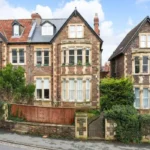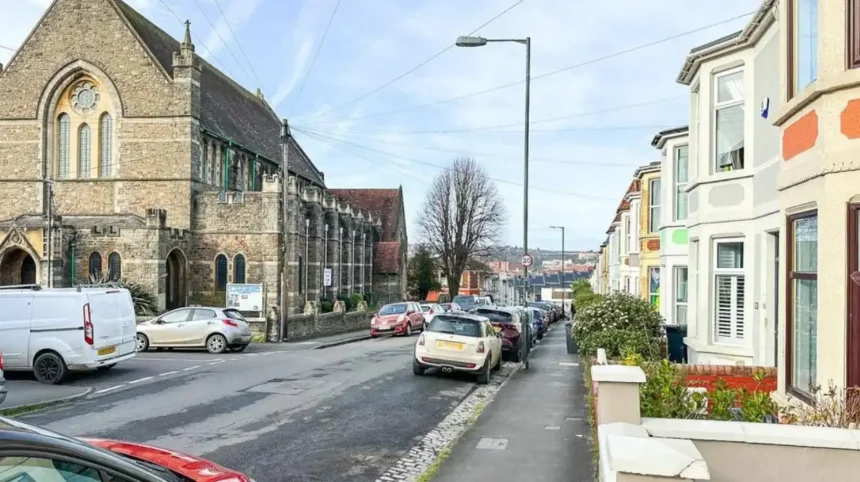
Bedminster is a historic inner-south Bristol neighbourhood with a strong high-street identity, Victorian housing, independent businesses, green spaces, cultural venues and direct links towards central Bristol. It sits south of the River Avon and combines established residential streets with major regeneration around Bedminster Green.
- Where is Bedminster and what is it like to live there?
- How did Bedminster develop historically?
- What types of homes are available in Bedminster?
- How much does it cost to live in Bedminster?
- How good is transport from Bedminster?
- Is Bedminster good for commuting to Bristol city centre?
- What shops and services are available in Bedminster?
- What schools and family facilities are available in Bedminster?
- What parks and green spaces can residents use?
- What is there to do in Bedminster?
- How does Bedminster’s community and local identity compare with central Bristol?
- What regeneration is changing in Bedminster?
- What are the main advantages of living in Bedminster?
- What should you consider before moving to Bedminster?
- What is the future of living in Bedminster?
Bedminster is not a single uniform residential environment. The wider area includes distinct places such as Bedminster East, The Chessels, parts of Bedminster Down, Windmill Hill and areas around Southville. The exact character changes between the busy commercial streets, traditional terraces, quieter residential roads and newer developments.
The area has also become an important part of Bristol’s urban growth strategy. Bristol City Council identifies Bedminster Green as a major regeneration location, with new homes, transport improvements, public-space upgrades, walking and cycling infrastructure, River Malago restoration and a low-carbon district heating network forming part of the project.
For people researching living in Bedminster, the key issues are housing, transport, shopping, schools, parks, employment access, community facilities, regeneration and the area’s historic character.
Where is Bedminster and what is it like to live there?
Bedminster is a south Bristol neighbourhood located close to the city centre, separated from central Bristol by the River Avon and New Cut. It combines Victorian terraces, busy shopping streets, independent businesses, parks, cultural venues and newer residential developments.
Bedminster sits immediately south of central Bristol. Its location gives residents relatively direct access to the city centre while providing a distinctly local high-street environment.
North Street is one of the area’s main commercial streets. It contains independent shops, cafés, restaurants, bars, creative businesses and community-focused venues. East Street and Bedminster Parade provide additional shopping and everyday services. VisitBristol describes the wider Southville and Bedminster area as a destination for independent shopping, dining, markets, urban art, parks and cultural activity.
The residential environment is varied. Victorian and Edwardian terraces dominate many established streets. Some properties were originally built for industrial workers during Bristol’s nineteenth-century expansion. Modern apartment developments are increasingly visible around regeneration areas.
The area also benefits from its proximity to Southville, Windmill Hill, Ashton and Totterdown. These neighbouring districts expand the range of parks, cafés, restaurants, community facilities and walking routes available to residents.
Bedminster therefore suits people who want an urban location with substantial local amenities rather than a purely residential suburban environment.
How did Bedminster develop historically?
Bedminster began as an ancient settlement with Roman activity and developed as a separate Somerset town before becoming an industrial suburb of Bristol. Coal mining, manufacturing, railways and nineteenth-century housing transformed its economy, population and physical landscape.
Bedminster has a long history. Historic England identifies Roman activity around present-day East Street and West Street. By 1086, Bedminster was a substantial royal manor. The settlement remained separate from Bristol for centuries and was historically associated with Somerset.
The medieval period brought stronger connections with Bristol. North Street developed as an important route westwards from the city. Bedminster remained a relatively prosperous community until the seventeenth century.
A major historical disruption occurred in 1644 during the English Civil War. Bedminster was attacked and largely destroyed by forces commanded by Prince Rupert before the second siege of Bristol. Historic England records that the area took more than a century to recover.
Coal mining later became a major part of the local economy. Historic England describes the Bristol coalfield as one of the earliest mined coalfields, with evidence extending back to medieval times. Industrial activity eventually expanded into ironworking, brickmaking, candlemaking, smelting and tanning.
The nineteenth century changed Bedminster dramatically. Industrialisation created employment but also produced overcrowded housing and serious public-health problems. The Malago River became heavily affected by industrial waste.
The Bristol and Exeter Railway reached Bedminster in 1840. The railway strengthened industrial and residential growth and contributed to the area’s transformation from a market town into an urban suburb.
By the late nineteenth century, terraced housing had expanded across Bedminster and neighbouring hills. Much of the built environment visible today reflects this Victorian expansion.
What types of homes are available in Bedminster?
Housing in Bedminster includes Victorian and Edwardian terraces, converted houses, flats, purpose-built apartments and new-build developments. Property character changes significantly between older residential streets, commercial corridors and regeneration areas such as Bedminster Green.
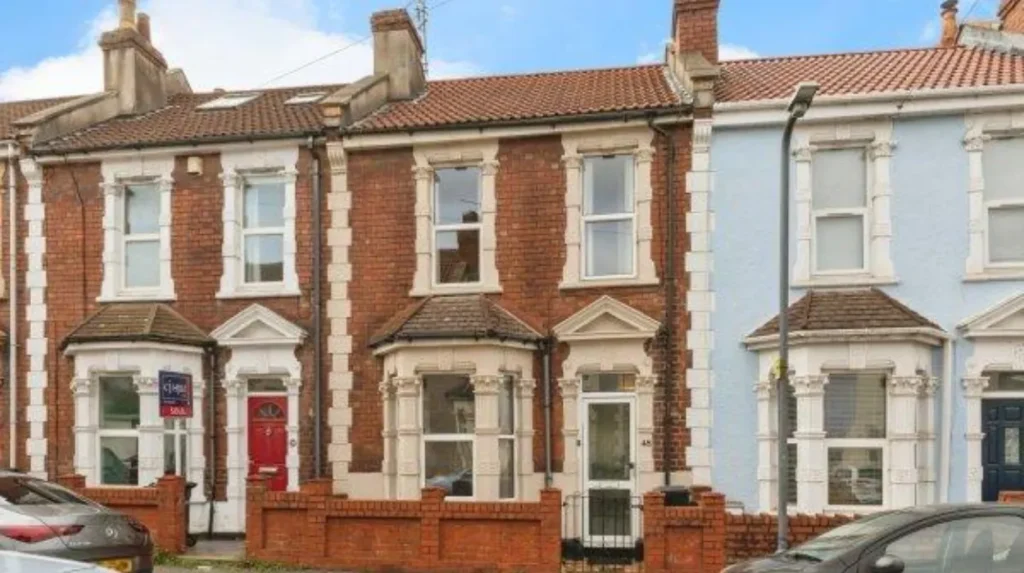
Traditional terraced houses are one of Bedminster’s defining housing types. Many streets were developed during the nineteenth-century population expansion and industrial growth of Bristol.
These homes commonly feature narrow frontages, two or three storeys, brick or rendered façades and compact rear gardens. Internal layouts vary because many historic properties have been modernised or converted.
Flats provide another significant housing option. Conversions of older properties create apartments in established streets, while purpose-built developments provide newer accommodation.
Bedminster Green is adding another layer to the housing market. Bristol City Council’s regeneration programme includes affordable housing, private rented homes, homes for sale and student accommodation.
The area’s housing stock therefore serves several groups. First-time buyers often look at smaller terraces and flats. Families generally focus on larger houses with gardens and access to schools. Renters have options across flats, houses and purpose-built developments.
Property condition varies considerably. Older terraces can require maintenance associated with age, including roof repairs, damp management, insulation upgrades and window replacement. Buyers should assess individual buildings rather than judging the whole neighbourhood from its housing type.
How much does it cost to live in Bedminster?
The cost of living in Bedminster depends primarily on housing type, property size, tenure, household composition and energy use. Housing close to major amenities and transport links generally represents a significant part of a household’s monthly expenditure.
There is no single reliable figure for the cost of living across Bedminster because rents, purchase prices and household expenses vary by property and street.
Housing represents the largest variable for most residents. A compact flat has a different cost profile from a three-bedroom Victorian terrace. New-build apartments also have different service charges and energy characteristics from older properties.
Renters should calculate the full monthly housing cost rather than looking only at advertised rent. Additional expenses can include council tax, energy, water, broadband, insurance and parking.
Homebuyers should also budget for mortgage payments, building insurance, maintenance, legal costs and, where applicable, service charges.
Transport can be comparatively manageable because Bedminster is close to central Bristol. Residents living near North Street, East Street or Bedminster railway station can often combine walking with public transport rather than depending entirely on a private car.
Food costs also vary by household. Bedminster has supermarkets, convenience stores, independent food shops, bakeries, delis, cafés and restaurants. VisitBristol identifies both independent retailers and larger stores among the area’s shopping options.
The most useful approach is to calculate the total household budget against a specific property rather than applying a generic Bedminster cost estimate.
How good is transport from Bedminster?
Bedminster has strong transport connections through local bus routes, Bedminster railway station, walking routes and cycling infrastructure. Its proximity to central Bristol makes walking practical for many journeys, while transport improvements are being developed around Bedminster Green.
Transport is one of Bedminster’s major advantages.
Bedminster railway station is located on the Bristol–Exeter railway corridor and provides rail connections towards Bristol and destinations across the wider network. Its position makes the railway particularly useful for commuters and regional journeys.
Bus services provide another major transport option. VisitBristol states that several bus routes connect Bedminster and Totterdown with Bristol city centre and other parts of the city.
The area is also included in wider transport investment. Bristol City Council lists Bedminster Green bus, walking and cycling improvements among its transport projects.
Walking is particularly relevant because Bedminster is close to the city centre. Bristol’s South Bristol Liveable Neighbourhood project identifies the area’s proximity to central Bristol as a reason why walking, wheeling, cycling and scootering can form realistic commuting options.
Cycling infrastructure is also being improved. Bedminster Green plans include cycle lanes, improved crossings and better pedestrian infrastructure.
Road travel remains important, particularly for households travelling beyond Bristol. However, traffic management and transport changes form an important part of current planning in south Bristol.
Is Bedminster good for commuting to Bristol city centre?
Bedminster is well positioned for commuting into central Bristol because it sits close to the city centre and has railway, bus, walking and cycling connections. The short geographic distance makes active travel particularly relevant for many daily journeys.
The central location is one of Bedminster’s strongest practical advantages.
The area sits close to Bristol’s central employment districts, including the city centre and Temple Quarter. Bristol City Council specifically identifies Bedminster Green’s walking-distance relationship with the city centre and Temple Quarter as an important regeneration advantage.
Walking can be suitable for residents living close to the northern part of Bedminster. Cycling provides another direct option, especially for people working in central Bristol.
Bus services connect Bedminster with central destinations and other parts of the city. Railway services provide an alternative for journeys where rail is convenient.
The development of Temple Quarter also strengthens the strategic importance of south Bristol neighbourhoods. Bedminster’s location allows residents to remain close to major employment and education investment without living directly within the central commercial district.
Commuters should still assess their individual route. Travel time depends on the precise street, destination, working hours and transport mode.
What shops and services are available in Bedminster?
Bedminster has a strong local retail network centred on North Street, East Street and Bedminster Parade. Residents have access to supermarkets, independent shops, bakeries, delis, charity shops, cafés, restaurants, professional services and specialist retailers.
Bedminster has a well-established high-street economy.
North Street is particularly important. VisitBristol identifies it as the centre of much of the area’s independent retail, food and leisure activity.
Residents can find everyday food shopping alongside specialist retailers. The area includes bakeries, delis, butchers, charity shops, vintage retailers, cafés and independent food businesses.
East Street provides another important commercial corridor. Bedminster Parade adds further everyday services and retail activity.
The combination is significant for residents because it reduces the need to travel into central Bristol for every basic purchase.
The retail environment also supports local social activity. Cafés and restaurants provide places for informal meetings, while markets and cultural venues add regular community activity.
The Sunday market at the Tobacco Factory is one of the area’s established attractions. VisitBristol also highlights independent design, jewellery, homeware and food businesses around North Street.
What schools and family facilities are available in Bedminster?
Bedminster and its surrounding neighbourhoods contain primary schools, parks, community facilities and family attractions. The local education environment includes established schools serving Bedminster, Southville, Ashton and nearby areas, with school-place planning responding to population change.
Families living in Bedminster have access to schools within the wider south Bristol education network.
School catchment areas are important. They do not follow informal neighbourhood boundaries and can change through official admissions arrangements. Parents should therefore check the current Bristol City Council admissions information for a specific address.
Bristol City Council’s recent school-planning evidence records 12,916 people in the Bedminster ward and 12,882 people in the Southville ward according to the 2021 Census.
The same evidence shows changing demand for primary school places. In the Bedminster and Southville planning area, school-place numbers and pupil rolls have changed between the 2022/23 and 2024/25 academic years.
Family facilities extend beyond schools. Windmill Hill City Farm provides a working farm, community garden and outdoor play area. Parks in the wider area include Greville Smyth Park, Dame Emily Park, South Street Park and Gores Marsh Park.
These facilities provide important outdoor space for households living in a dense urban environment.
What parks and green spaces can residents use?
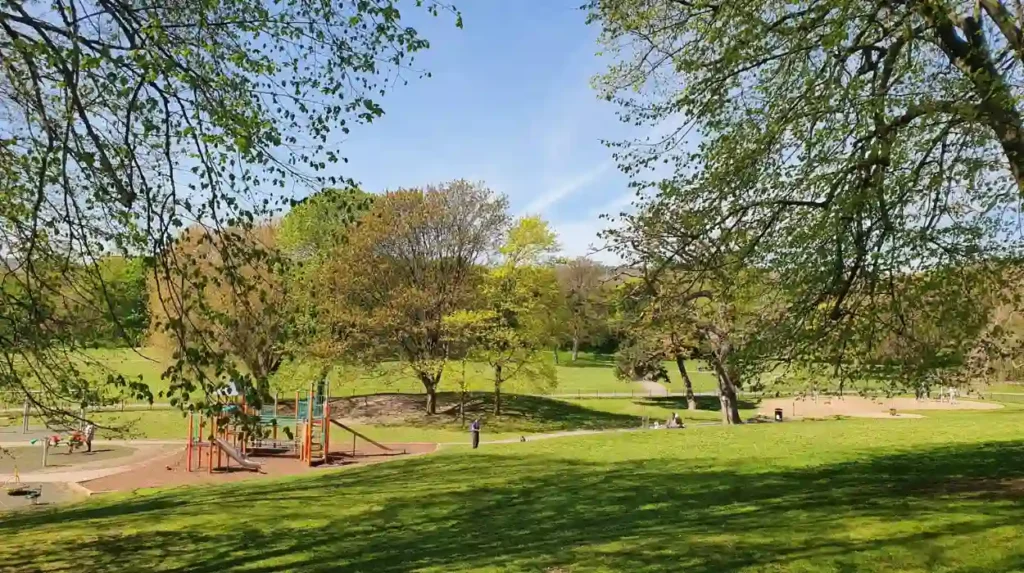
Residents have access to several parks and open spaces across Bedminster and neighbouring south Bristol. Key examples include Windmill Hill City Farm, Greville Smyth Park, Dame Emily Park, South Street Park and Gores Marsh Park.
Green space is an important part of life in Bedminster because much of the housing is urban and relatively dense.
Greville Smyth Park provides substantial open space near Southville and Bedminster. It supports informal recreation, walking and community activities.
Windmill Hill City Farm combines green space with education, community gardening, animals and outdoor activities. It provides a distinctive local facility within an urban neighbourhood.
Dame Emily Park and South Street Park provide additional recreational space.
Gores Marsh Park forms part of the wider network of south Bristol green areas.
The Bedminster Green regeneration programme also includes public-space improvements and River Malago restoration. Bristol City Council states that restoring the Malago will support wildlife, flood defence and public spaces.
These projects demonstrate that green infrastructure is increasingly incorporated into the area’s long-term development strategy.
What is there to do in Bedminster?
Bedminster has a strong cultural and leisure scene built around North Street, the Tobacco Factory, street art, independent businesses, markets, parks, food venues and Ashton Gate Stadium. Residents have access to entertainment without travelling into central Bristol.
Culture is a defining part of modern Bedminster.
The Tobacco Factory is one of the area’s best-known cultural institutions. Its theatre programme includes productions and performances across different genres, while its café-bar provides food, drink and events.
Street art is another major feature. Bedminster is closely associated with Upfest, an established street-art festival. VisitBristol reports more than 170 murals across the area.
Food is another major part of local life. North Street and East Street contain restaurants representing different cuisines, alongside bakeries, cafés and specialist food businesses.
Sport is represented by Ashton Gate Stadium, home to Bristol City Football Club and Bristol Bears Rugby.
Markets provide another regular activity. The Tobacco Factory hosts a Sunday market, while independent shops and creative businesses contribute to the area’s local economy.
This combination makes Bedminster a neighbourhood where leisure, shopping and culture overlap with everyday residential life.
How does Bedminster’s community and local identity compare with central Bristol?
Bedminster has a distinct local identity shaped by its historic high streets, Victorian housing, independent businesses, creative culture and strong community facilities. Its proximity to central Bristol adds urban connectivity while preserving a neighbourhood-focused commercial and residential character.
Bedminster has developed a strong identity separate from central Bristol.
Its historic streets reflect industrial and working-class development. Its modern identity is increasingly associated with independent businesses, street art, cultural venues and community activity.
North Street acts as an important social and commercial spine. The concentration of cafés, restaurants, shops and creative businesses supports regular local activity.
The area’s identity is also influenced by neighbouring Southville and Windmill Hill. Residents frequently access facilities across these boundaries because the neighbourhoods are physically connected.
The combination of historic buildings and newer development creates a mixed urban landscape. Victorian terraces sit close to modern apartments, regenerated commercial spaces and improved public infrastructure.
This mixture is central to understanding the experience of living in Bedminster. It is neither a traditional suburb detached from the city nor a purely central urban district.
What regeneration is changing in Bedminster?
Bedminster is undergoing significant regeneration focused on housing, transport, public space, walking, cycling, River Malago restoration and low-carbon infrastructure. Bedminster Green is the central project, while wider south Bristol transport planning addresses future population and housing growth.
Bedminster Green is one of the most important long-term changes affecting the neighbourhood.
The project responds to Bristol’s housing demand and the area’s strategic location. Bristol City Council describes the site as close to the city centre, Temple Quarter, local employment, shops and public transport.
The programme includes new housing, improved public spaces, River Malago restoration, transport improvements, walking and cycling infrastructure and a low-carbon district heating network.
Transport improvements include planned bus-priority measures, pedestrian crossings, cycle routes and improved public spaces.
The wider South Bristol Liveable Neighbourhood programme also reflects the scale of development pressure. Bristol City Council states that since 2010, 3,250 new homes have been approved within Bedminster, Southville and Windmill Hill, with a further 10,000 approved in surrounding wards.
This growth creates both opportunities and infrastructure challenges. More homes increase demand for transport, schools, parks, healthcare, shops and public space.
For residents, regeneration is therefore directly relevant to everyday life rather than being solely a planning issue.
What are the main advantages of living in Bedminster?
The main advantages of living in Bedminster are its proximity to central Bristol, strong local shopping, independent businesses, public transport, Victorian housing, green spaces, cultural venues and ongoing investment in housing, streets, cycling and public infrastructure.
Location is the strongest advantage. Bedminster is close to central Bristol and Temple Quarter.
Local amenities are another major benefit. North Street, East Street and Bedminster Parade provide substantial everyday retail and food options.
The area’s transport network provides rail, bus, walking and cycling choices. This is particularly valuable for households seeking alternatives to regular car travel.
The housing stock is varied. Residents can choose between historic terraces, flats, conversions and new developments.
Green spaces provide recreational opportunities despite the neighbourhood’s urban density.
The cultural scene is also unusually strong for a residential district. The Tobacco Factory, Upfest street art, markets and Ashton Gate create a broad range of activities.
Regeneration adds another advantage. Investment in housing, public space, transport and environmental infrastructure is reshaping parts of the neighbourhood.
Explore More Area Guide
Living in Clifton, Bristol: Complete Area Guide 2026
Guide to Clifton Village Bristol 2026
What should you consider before moving to Bedminster?
Before moving to Bedminster, assess the exact street, property condition, transport route, parking situation, school catchment, council tax, noise levels and regeneration activity. Bedminster varies significantly between busy commercial corridors, established residential streets and development zones.
The first consideration is the exact location.
A home on or near a busy commercial street has a different environment from a quieter residential terrace. Traffic, nightlife, deliveries and pedestrian activity vary by location.
Property condition is particularly important in older terraces. Buyers should inspect roofs, windows, insulation, damp, drainage and structural condition.
Parking also requires careful assessment. A property listing should not be treated as evidence that convenient parking is always available.
Families should check school admissions separately for every property because catchment boundaries and admission arrangements are address-specific.
Transport works and regeneration should also be considered. Bedminster Green and wider south Bristol projects are designed to improve connectivity and public space, but construction programmes affect local roads and movement patterns during delivery.
The Clean Air Zone is another wider Bristol transport consideration. Bristol’s Clean Air Zone launched in November 2022, and the South Bristol Liveable Neighbourhood project identifies the area as being close to its boundary.
A thorough property decision therefore requires assessment of both current conditions and planned infrastructure changes.
What is the future of living in Bedminster?
The future of Bedminster is closely connected to Bristol’s housing growth, transport investment, sustainable travel strategy and regeneration programme. New homes, improved public spaces, cycling infrastructure, transport upgrades and environmental projects will continue shaping the neighbourhood.
Bedminster is positioned to remain an important residential district within Bristol.
Bristol’s population continues to grow. Bristol City Council estimates the city’s mid-2025 population at 495,300, with an estimated increase of 43,500 people between 2015 and 2025.
This population growth increases demand for homes in well-connected inner-city neighbourhoods.
Bedminster’s proximity to the city centre makes it strategically important for accommodating some of this demand. The regeneration programme provides new housing while attempting to improve transport, public spaces and environmental infrastructure.
The River Malago restoration also represents a long-term environmental intervention. It connects flood management, biodiversity and public-space improvements.
Transport planning is equally important. Bedminster Green improvements and the wider South Bristol Liveable Neighbourhood programme focus on walking, cycling and public transport while managing pressure from increased development.
For people considering living in Bedminster, the neighbourhood’s future is therefore defined by both its established identity and its transition into a denser, better-connected and more sustainable part of Bristol.
Living in Bedminster provides access to a well-connected part of south Bristol with a distinctive combination of historic housing, independent commerce, culture, green space and transport links. The neighbourhood’s history extends from Roman activity and medieval settlement through coal mining and industrialisation to its modern role as an inner Bristol residential district.
Its current identity centres on North Street, East Street, Bedminster Parade, the Tobacco Factory, local parks, independent businesses and the wider Southville-Bedminster area.
The most important long-term factor is regeneration. Bedminster Green is bringing new housing, transport infrastructure, public-space improvements, River Malago restoration and low-carbon infrastructure.
For prospective residents, the strongest reasons to consider Bedminster are its location, amenities, transport options and established community environment. The most important checks are property condition, parking, school catchment, exact street location and the impact of ongoing development.
Is Bedminster a good place to live?
Yes. Bedminster offers convenient access to central Bristol, strong local shopping, independent businesses, green spaces, cultural venues and public transport. The neighbourhood combines Victorian housing with newer developments and benefits from ongoing regeneration around Bedminster Green.